BRAIN HEALTH: “DEMENTIA” – SYMPTOMS AND CONDITIONS

We ARE our brains. Reduce the function of any other organ, and we may be sick, but reduce the function of the brain, and WE have changed.

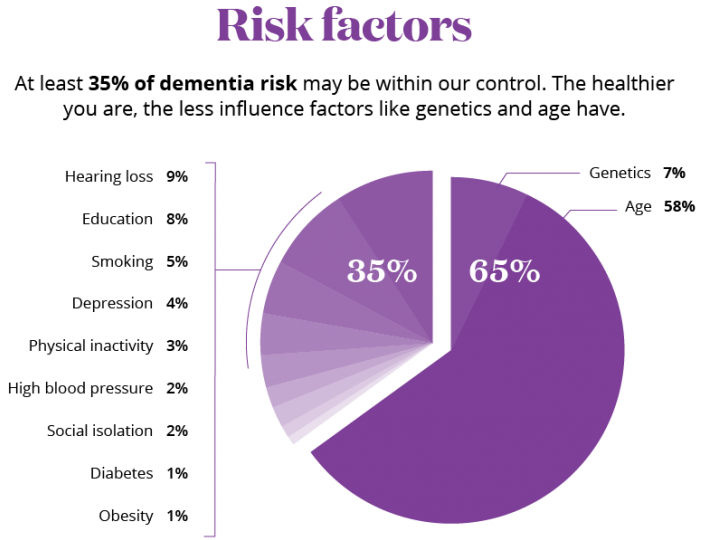
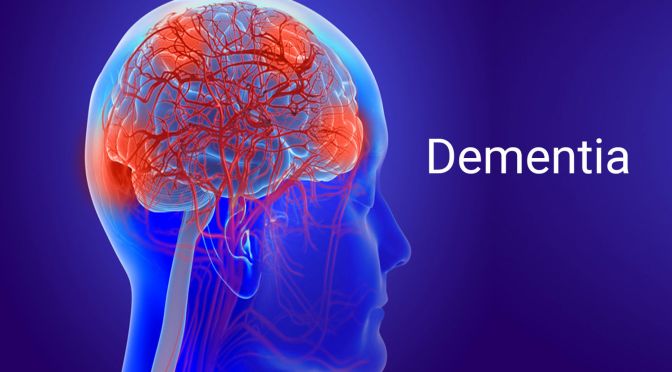
PROGRESSIVE LOSS of brain function is called DEMENTIA. A sudden, temporary (if the cause can be found) is called Delirium. A variety of bad things can cause dementia, such as infections (AIDS), toxins (lead, mercury), chemicals (alcohol), traumatic (CTE from football), diet deficiencies (B12, folic acid), Endocrine deficiencies (thyroid),Psychiatric problems (depression), drugs, and Vascular problems.

The Preceding article on dementia discussed APATHY, as opposed to the somewhat similar DEPRESSION, as a warning sign for SVD, or small blood-vessel disease. SVD is the most common VASCULAR cause of Dementia.

The most common overall cause of Dementia, especially in old age, is ALZHEIMER’S disease (AD). “Senior Moments” are so common as to be a cliche. But this problem is not limited to old age. My 3-year-old Grandson came crying to me that he lost his favorite toy. “Where was it when you last saw it”?, I asked. “It was in my hand” he answered.

He had laid it somewhere, unthinkingly. You can’t remember something unless you ENCODE it. You must be paying attention to, be “mindful” of an action if you are to remember that action.. You will not remember where you put your glasses if you wander around in “default mode”, daydreaming, preoccupied. Everybody occasionally forgets a name, or item which hangs on “the end of my tongue”.

These things, especially “short term memory” do DETERIORATE AS WE GET OLDER. It is common to wonder if we, or a loved one. are getting Alzheimer’s disease, as our mental powers wane.It is often difficult to distinguish the normal forgetfulness of age from DEMENTIA, including Alzheimer’s Disease (AD) It might be a source of REASSURANCE to realize that if you are worried about getting AD YOURSELF, you almost certainly don’t have it; It takes a lot of mental functioning to contemplate that possibility.

Most often, you will be wondering about the possibility in a loved one having AD. There are 2 ideas that I ran across in my reading that might help you do a little evaluation Yourself.
BCGuidelines.ca has a 21 item questionnaire that you can score yourself. 4 points or less is considered normal, so common is forgetfulness. 5-14 points suggests mild cognitive impairment. 15 or more points suggests Dementia, of which AD is the most common type.

The test I really liked was the “Clock Test”. In this test, you draw a large circle. You then ask your loved one to draw a clock, with all the numbers and hands that will indicate 10 minutes after 11. If it is drawn correctly, you can with reasonable certainty EXCLUDE Dementia.

If incorrect, further tests are warranted. I consulted with a Neurologist regarding a friend of mine who has marked memory loss, but is very sweet, is physically capable, takes care of herself personally, doesn’t wander around, has no apparent anxiety, depression or other psychological problems.

I asked if it was reasonable to just watch without any medical intervention. The neurologist said that she should have a blood test, a metabolic panel, TSH (thyroid), LFTs, folic acid and B12 tests, and a CT to rule out NPH (normal pressure hydrocephalus). It is rare to find anything treatable, but a shame to neglect it if present.

If you do see a doctor about a Spouse or Parent with possible dementia, you might request that they discuss the possibilities with you, but ask them not to write the diagnosis of “Alzheimer’s “ in the chart. Private Assisted Living Homes CHARGE A LOT MORE for that Diagnosis– locked facilities, more personnel and the like. BDNF- brain derived neurotrophic factor- can fend off Dementia.
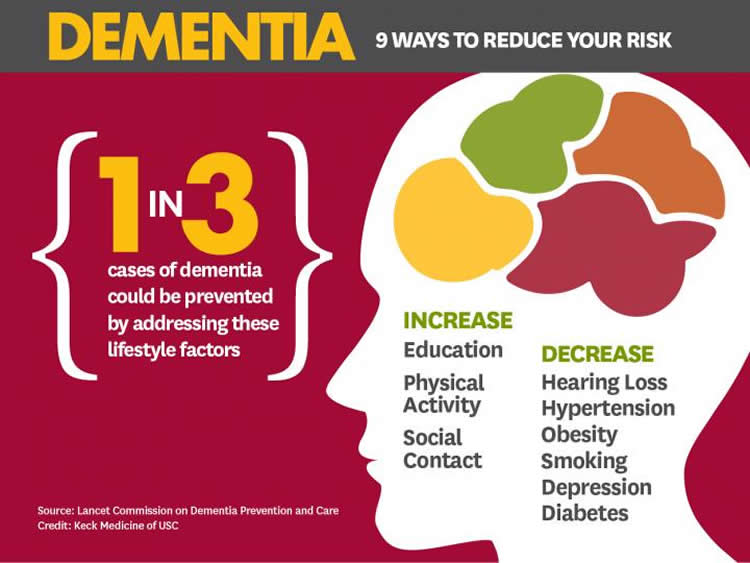
That is the good news. The bad news is that it takes effort and discipline to increase your level od BDNF.; I’m sure medical science is hot on the trail of a pill. But until then, our old friends, Sleep, Diet and Exercise ride to the rescue. Sleep, both N3 and REM stages, increases BDNF. Dietary polyphenols and butyrate increase BDNF. exercise of all kinds will do it.

The BDNF gene codes for the BDNF protein, which promotes the survival, expansion, and differentiation of Neuronal stem cells, and promotes neuronal PLASTICITY, neuronal response to experience. Grit your teeth and develop the HABIT of exposing your Postmodern Body to 3 of the most ICONIC and NATURAL things mandated by Evolution, Treat your Body to the Health-giving Benefits of SLEEP, DIET and EXERCISE!
–Dr. C

DIABETES MANAGEMENT: “SMART INSULIN PUMPS”

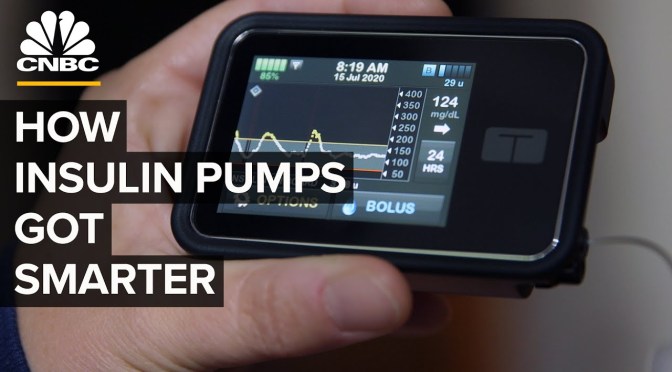
Technology is finally innovating diabetes management. With the advancement in technologies like continuous glucose monitors, traditional insulin pumps are evolving into smarter devices that can automate insulin delivery.

Medtronic and Tandem Diabetes are the only two companies to offer hybrid closed loop systems. A community of diabetics are also hacking pumps to do the same thing. CNBC’s Erin Black just switched from the hacked system to Tandem’s Control-IQ and takes a look at how insulin pumps are getting smarter.

COGNITION & BRAIN STUDIES: APATHY, NOT DEPRESSION, ASSOCIATED WITH DEMENTIA

jnnp-2020-July-91-7-677-F1.medium

We tested the hypothesis that apathy, but not depression, is associated with dementia in patients with SVD. We found that higher baseline apathy, as well as increasing apathy over time, were associated with an increased dementia risk. In contrast, neither baseline depression or change in depression was associated with dementia. The relationship between apathy and dementia remained after controlling for other well-established risk factors including age, education and cognition. Finally, adding apathy to models predicting dementia improved model fit. These results suggest that apathy may be a prodromal symptom of dementia in patients with SVD.

Cerebral small vessel disease (SVD) is the leading vascular cause of dementia and plays a major role in cognitive decline and mortality.1 2 SVD affects the small vessels of the brain, leading to damage in the subcortical grey and white matter.1 The resulting clinical presentation includes cognitive and neuropsychiatric symptoms.1

Apathy is a reduction in goal-directed behaviour, which is a common neuropsychiatric symptom in SVD.3 Importantly, apathy is dissociable from depression,3 4 another symptom in SVD for which low mood is a predominant manifestation.5 Although there is some symptomatic overlap between the two,6 research using diffusion imaging reported that apathy, but not depression, was associated with white matter network damage in SVD.3 Many of the white matter pathways underlying apathy overlap with those related to cognitive impairment, and accordingly apathy, rather than depression, has been associated with cognitive deficits in SVD.7 These results suggest that apathy and cognitive impairment are symptomatic of prodromal dementia in SVD.

Read full study

TELEMEDICINE: “HEAL PASS” – PHYSICIAN “HOUSE CALLS” FOR FIXED MONTHLY FEE

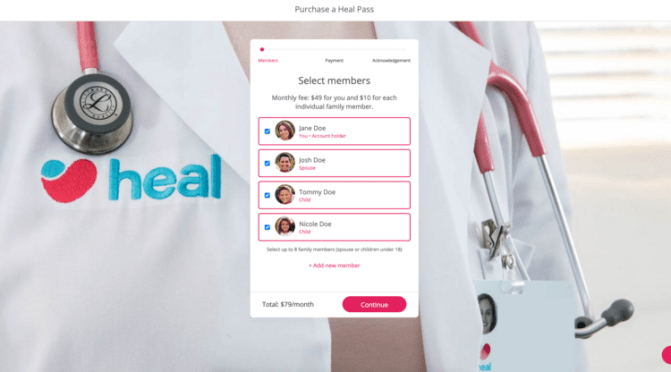
By providing house calls and telemedicine from physicians at a fixed monthly fee with no copays, no deductibles, and no insurance required, Heal Pass is making affordable healthcare possible for the estimated 27 million Americans who recently lost their health insurance along with their jobs because of COVID-19.

  • Heal patients can register now for the new service starting at $49 per month.
  • Adults can add members of their household to their Heal Pass account for an additional $10 per person each month and may register up to six people to the account.
  • Patients spend an average of $800 out of pocket each year, in addition to $2,000 for an emergency room visit.
  • With Heal Pass, a family of four would receive up to 36 total appointments at an average cost of less than $27.
  • Individual patients can save up to $1,100 per year and the average family can save up to $2,200 per year.

Uninsured individuals and their families are fearful of getting sick and accumulating high medical bills during this time of economic uncertainty.

Heal Pass is not health insurance, but it is health assurance, giving the uninsured the comfort of knowing they can get the care they need at a fixed, low fee with no surprise bills or out of pocket costs.

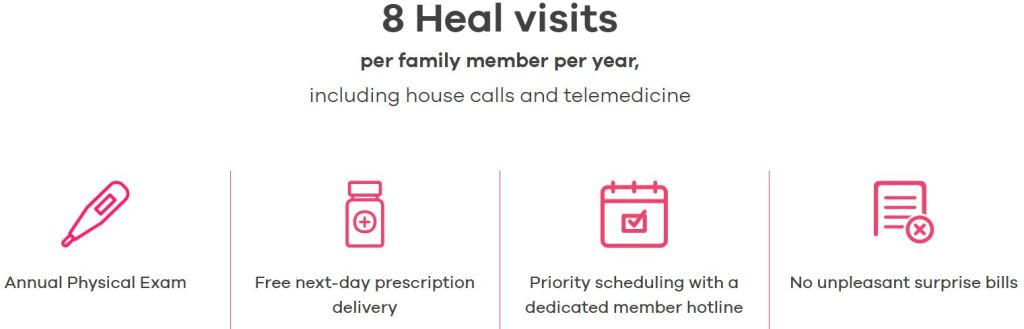
The new program allows up to eight house calls or telemedicine appointments per member each year in addition to an annual physical, helping with patients’ most common needs, including primary care, preventive care, non-emergency urgent care and chronic disease management.

It also includes free next day delivery of medications prescribed by a Heal doctor. Heal doctors are highly qualified and deliver house calls and care in a way that keeps patients safe from COVID-19 exposure as the country sees a pronounced second spike with 58,618 cases per day on average over the last seven days.

Read more

COMMENTARY

Telemedicine and Covid 19 are fermenting together and creating some new ideas for medical care.

Safety is a concern, and what could be better than your own home, using telemedicine, or a futuristic telemedicine booth located at convenient locations for the busy traveler?

Convenience is another attraction, with a PREPAID aliquot of healthcare; this idea was featured by Forward Health, reviewed a couple of weeks ago, which offered a package of remote monitors and 24/7 access for $149 per month.

Now, Heal pass offers 24/7 access they call “house calls” for $49. a month, with a blizzard of statistics on what you will save. We will see.

You usually get what you pay for.

The Onmed station sounds doable, and has the advantage of self-contained units that may be available to you at the right place and time. You could conceivably even wind up with a prescription as you exit the booth.

—Dr. C.

INNOVATIONS: “ONMED STATION” – SELF-CONTAINED, HI-TECH TELEMEDICAL UNIT

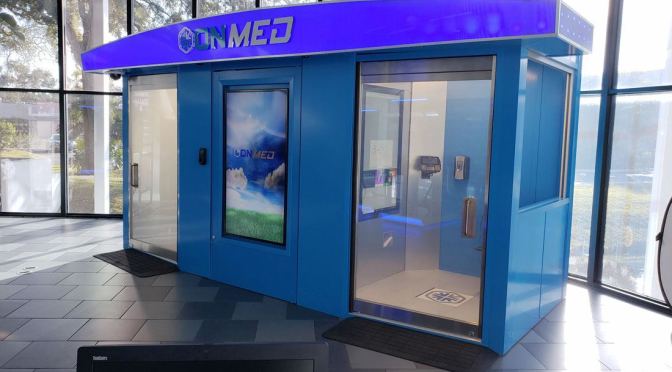
The OnMed® station is the only self-contained medical unit in the world currently using patented technologies to directly connect patients with doctors, nurse practitioners, and pharmacists for both consultative needs and on-site prescriptions.

The OnMed station utilizes advanced technology, including thermal imaging and facial recognition, to provide patients with a safe, private, and secure consultation with a licensed clinician. An ultra-high definition camera ensures the patient and clinician experience a real-time eye to eye connection. These same high-definition cameras also make it possible for the clinician to look down a patient’s throat or even examine a tiny skin lesion in detail.

If necessary, not only can the clinician provide a script, but the station itself can safely dispense hundreds of common prescription medications with the approval of a clinician or pharmacist through a secure, robotically automated vault.

Website

BLOOD VESSELS: HUMAN “PULMONARY CIRCULATION”

Humans have a high energy requirement. Like a sports car we need to be turbosupercharged. We need an entirely separate Pulmonary circulation to handle our great oxygen demand.

Fish can get by on a single heart and circulation. They are “cold-blooded” and have no elevation of temperature above that in the environment. The water buoys them up, and they don’t need to constantly fight gravity.

Birds, and by extension, therapod dinosaurs, need more efficiency, and have a separate pulmonary circulation, just like we do. They share with us a DOUBLE CIRCULATION, a 4-chambered heart, with 2 entirely separate circuits.

In my residency, I saw a lot of congenital heart disease. In the process of development, the very early human embryo has a single circulation, just like “early” vertebrates, like fish.

In the process of development, the Systemic and Pulmonary circulations divide the previously unitary system into 2 separate systems, by a continuous spiral of partitions, or “septae”.

Ontogeny recapitulates Phylogeny: Development recaps Evolution. If this process of separation fails to happen in a given child, Congenital Heart Disease is the result:

  • IASD. Interatrial Septal Defect is failure to separate the Atria, the upper chambers of the heart;
  • IVSD, Interventricular Septal Defect, is failure to separate the Ventricles, the lower chambers of the heart;
  • AV Communis is both of the above, plus failure of Atria and Ventricles, the upper and lower chambers, to separate, giving one big inefficient chamber.

When you listen to the hearts of these children, there are prominent murmurs, or noises, which betray the presence of turbulence and inefficiency, the very thing that evolution “tried” to prevent.

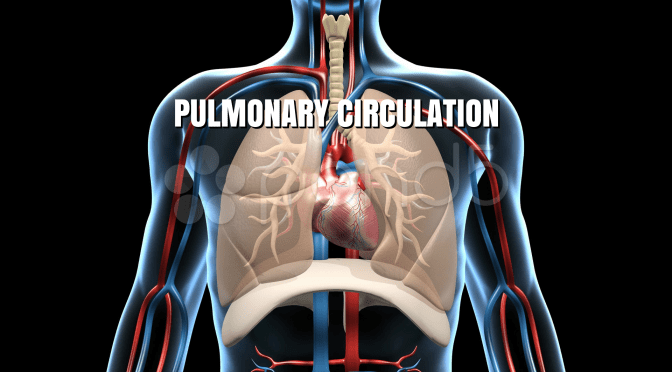
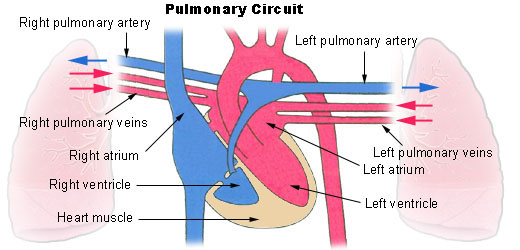
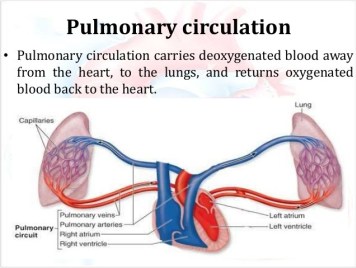
In the normal Human Heart, the blood returns from it’s systemic circuit through the capillaries, depleted of oxygen, into the vena cava. It passes to the Right Atrium, through the tricuspid valves, to the right ventricle.

With the contraction of the heart, the blood goes through the pulmonary artery, into the pulmonary capillaries, into close contact with air-containing alveoli. The oxygen passes through the alveolar membrane into the capillary blood, which becomes red. The oxygenated blood then passes into the pulmonary veins and on into the left atrium, and the systemic circulation.

It is interesting, and essential that the systemic arteries contain red, oxygenated blood, and the Pulmonary artery contains blue, oxygen-depleted blood. The “tired” blood, returning from the body must be “pepped up” by passing through the pulmonary circuit, picking up oxygen in the process.

Similarly a clot, originating in a quiet vein, perhaps a dilated, or varicose vein, is pumped into the Pulmonary circuit, where it lodges in the tiny capillaries and produces a PULMONARY EMBOLISM.

The embolus clogs the pulmonary circuit, increasing resistance, raises the normally-low pulmonary artery pressure and produces PULMONARY HYPERTENSION, placing more load and strain on the Right Ventricle.

Pulmonary Hypertension is also caused by a variety of Lung, heart, inherited and kidney diseases, as well as by certain drugs, high altitude, and Obstructive Sleep Apnea.

Please check the Mayo Clinic discussion that follows.

–Dr. C

Pulmonary Hypertension Article