Tag Archives: Patients

DR. C’S MEDICINE CABINET: “FOLIC ACID” SUPPLEMENTS

Folic acid has a secure place in my medicine cabinet, and is there for one of the best reasons. In screening for possible causes for heart disease, my doctor ordered a HOMOCYSTEINE LEVEL. The Laboratory value came back elevated.

The treatment given was folic acid. Some background is necessary. Homocysteine is a rather toxic amino acid that can cause heart disease and neurological problems, among other things. If you do not get enough folic acid in your diet with green vegetables, legumes, nuts, eggs and the like (it is hard to be deficient with a good diet), your Homocysteine may become elevated.
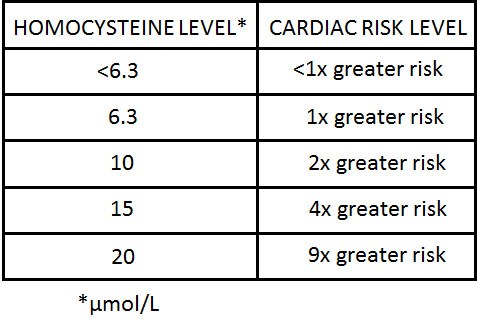
You need folic acid to convert Homocysteine to the essential amino acid, Methionine. 10-15% of the population, and up to 30% of older people have elevated Homocysteine levels. Stiffness, slow gait, and heart disease can be related to these elevated levels.

Since I have a good diet, I assume that I have a weak form of an enzyme called Tetrahydrofolate Reductase, which is the rate limiting enzyme in converting Homocysteine to Methionine. A weak enzyme needs more folic acid to do its job. The MDR of Folic acid is 0.4 mg./day. I started supplementing with 1 mg. Daily, without effect on the Homocysteine level. I doubled the dose to 2 mg., and my blood level was still above the upper limits of normal, 15 micromoles/L.. I doubled it again to 4 mg., 2 mg. Twice daily.
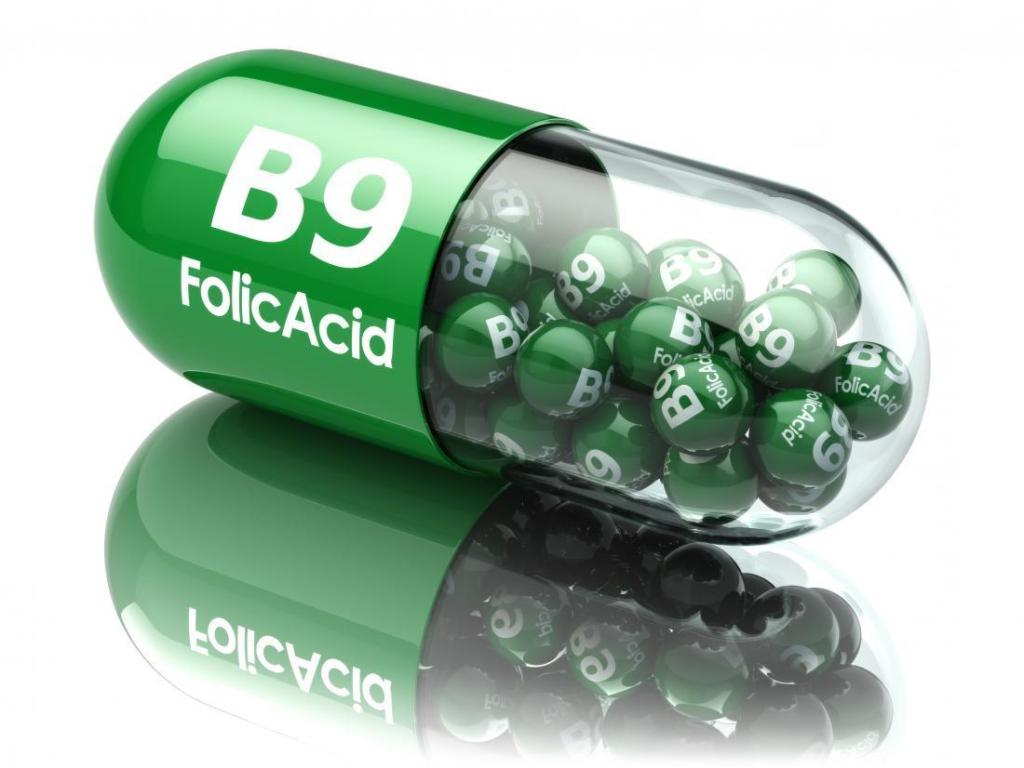
Finally my level became normal at 10, This was a decade ago. Recently, I have been doing some research on Alzheimer’s Disease, because a Friend is losing her short term memory. I talked to a neurologist to see if a medical evaluation was mandatory, and found that he has recently BEEN GIVING FOLIC ACID supplements to his AD Patients.

Folic acid deficiency is now being suspected as being a factor in AD! This story is similar to the Vitamin D conundrum. Should I take Vitamin D or not? Am I a “believer” or not. The resolution is easy. You get a Vitamin D blood level.

The lab test will report “normal” if your level is above 20 ng,/ml. I prefer 50, which I achieve with 4000 i.u. Daily supplement. The NFL likes their players to be above 50 to be in best shape. The point is, take a measurement, and then decide.

If you chose to take a Folic acid supplement, I would suggest checking both your Folic acid blood level, and Homocysteine blood level as a reference.

Also, if you take folic (B9) supplements, you should also take extra B12, and B6, since they are involved in the same metabolic pathways. Balance is necessary in metabolism.
–Dr. C

TELEMEDICINE: “HEAL PASS” – PHYSICIAN “HOUSE CALLS” FOR FIXED MONTHLY FEE

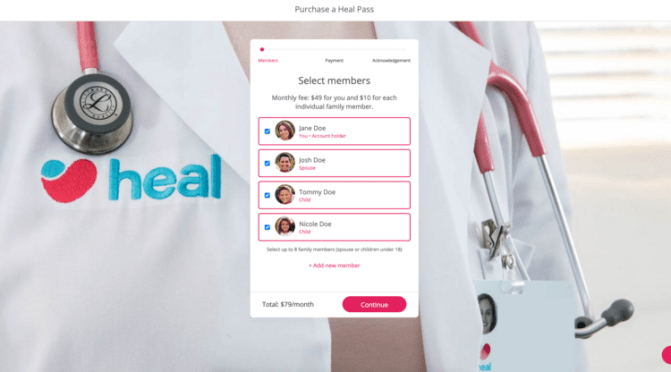
By providing house calls and telemedicine from physicians at a fixed monthly fee with no copays, no deductibles, and no insurance required, Heal Pass is making affordable healthcare possible for the estimated 27 million Americans who recently lost their health insurance along with their jobs because of COVID-19.

  • Heal patients can register now for the new service starting at $49 per month.
  • Adults can add members of their household to their Heal Pass account for an additional $10 per person each month and may register up to six people to the account.
  • Patients spend an average of $800 out of pocket each year, in addition to $2,000 for an emergency room visit.
  • With Heal Pass, a family of four would receive up to 36 total appointments at an average cost of less than $27.
  • Individual patients can save up to $1,100 per year and the average family can save up to $2,200 per year.

Uninsured individuals and their families are fearful of getting sick and accumulating high medical bills during this time of economic uncertainty.

Heal Pass is not health insurance, but it is health assurance, giving the uninsured the comfort of knowing they can get the care they need at a fixed, low fee with no surprise bills or out of pocket costs.

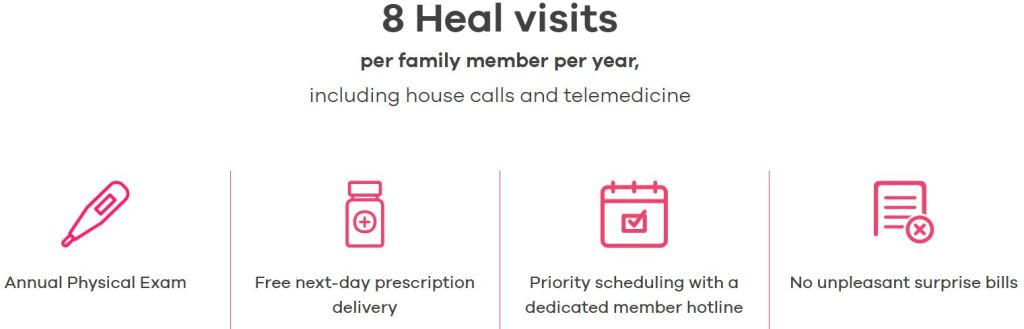
The new program allows up to eight house calls or telemedicine appointments per member each year in addition to an annual physical, helping with patients’ most common needs, including primary care, preventive care, non-emergency urgent care and chronic disease management.

It also includes free next day delivery of medications prescribed by a Heal doctor. Heal doctors are highly qualified and deliver house calls and care in a way that keeps patients safe from COVID-19 exposure as the country sees a pronounced second spike with 58,618 cases per day on average over the last seven days.

Read more

COMMENTARY

Telemedicine and Covid 19 are fermenting together and creating some new ideas for medical care.

Safety is a concern, and what could be better than your own home, using telemedicine, or a futuristic telemedicine booth located at convenient locations for the busy traveler?

Convenience is another attraction, with a PREPAID aliquot of healthcare; this idea was featured by Forward Health, reviewed a couple of weeks ago, which offered a package of remote monitors and 24/7 access for $149 per month.

Now, Heal pass offers 24/7 access they call “house calls” for $49. a month, with a blizzard of statistics on what you will save. We will see.

You usually get what you pay for.

The Onmed station sounds doable, and has the advantage of self-contained units that may be available to you at the right place and time. You could conceivably even wind up with a prescription as you exit the booth.

—Dr. C.

SURVEY: 67% OF PENN MEDICINE PATIENTS AND PHYSICIANS VIEW VIDEO & PHONE VISITS AS POSITIVE

From Penn Medicine (June 24, 2020):

After surveying almost 800 gastroenterology and hepatology patients and their physicians at Penn Medicine, 67 percent of both viewed their video and telephone appointments held during the peak of the COVID-19 pandemic as positive and acceptable substitutes to in-person appointments.

From March 16 to April 10, 2020, 94 percent of gastroenterology and hepatology appointments at Penn Medicine were performed using telemedicine in order to mitigate risks of COVID-19 spread while continuing to advance care as patients self-isolated at home. A telemedicine visit meant either a video visit (similar to FaceTime or Skype) or one via phone in which clinicians largely performed routine and non-urgent care. 

Read more

TELEHEALTH CARE: PATIENTS CAN EXPECT EXPANDED “CONTACTLESS EXPERIENCES”

From Healthcare IT News (June 12, 2020):

Technology-enabled workflows now enable patients to complete most of the registration formalities prior to the visit, be it a virtual consult or a clinic visit. Registration kiosks in hospital lobbies may soon be enabled with facial recognition software to eliminate the need for touching any surface.

Routine examinations are also going virtual, with many diagnostic procedures now possible through remotely controlled devices. Caregivers are beginning to do their patient rounds through virtual visits. This trend will only grow in the coming years.

A vast and growing array of automated communication tools allows caregivers to use rule-based messaging to push everything from health coaching, post-discharge care instructions, and appointment reminders through IVR, text, SMS, and mobile alerts.

Read full article

TELEMEDICINE: WHAT ITS FUTURE GROWTH LOOKS LIKE OVER THE NEXT 5-10 YEARS

From McKinsey & Company (June 11, 2020):

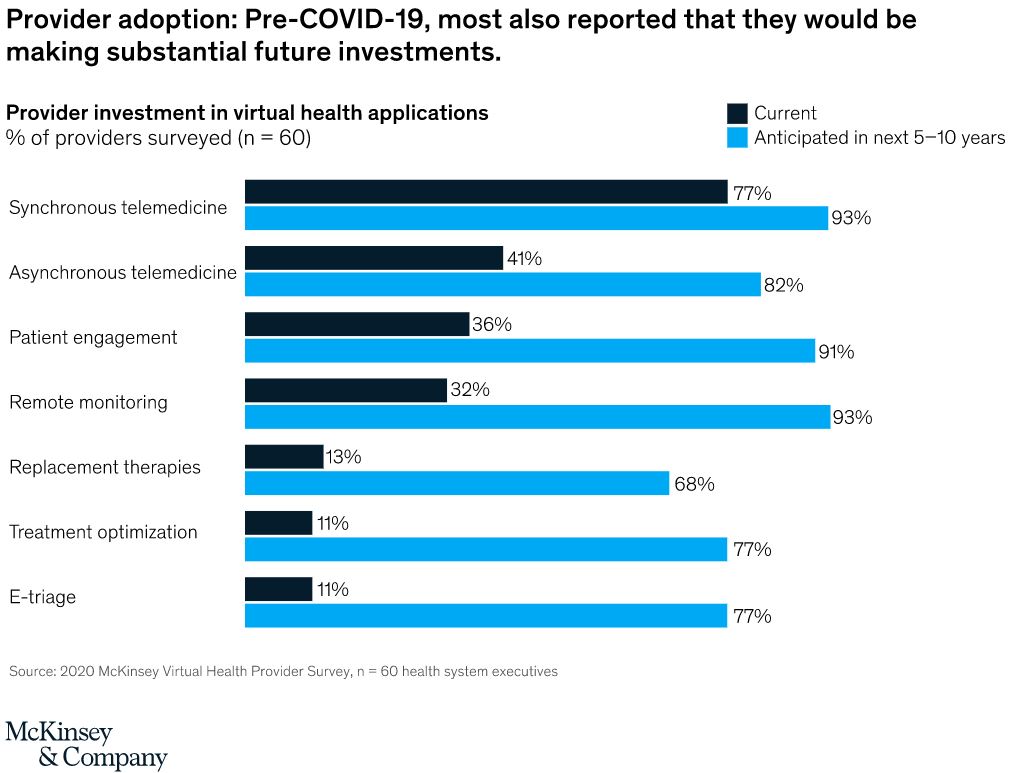
For the past 10 to 15 years, virtual health has been heralded as the next disrupter in the delivery of care, but there has been minimal uptick in adoption. The COVID-19 pandemic is pushing against structural barriers that had previously slowed health system investment in integrated virtual health applications.

Read full article

COMMENTARY

Health Providers, especially the systems and networks, are the key to “next Generation” health care delivery. They are the main target audience of this article. If they invest in Telehealth, and make it easy and integrated, Patients will adopt Telemedicine happily.

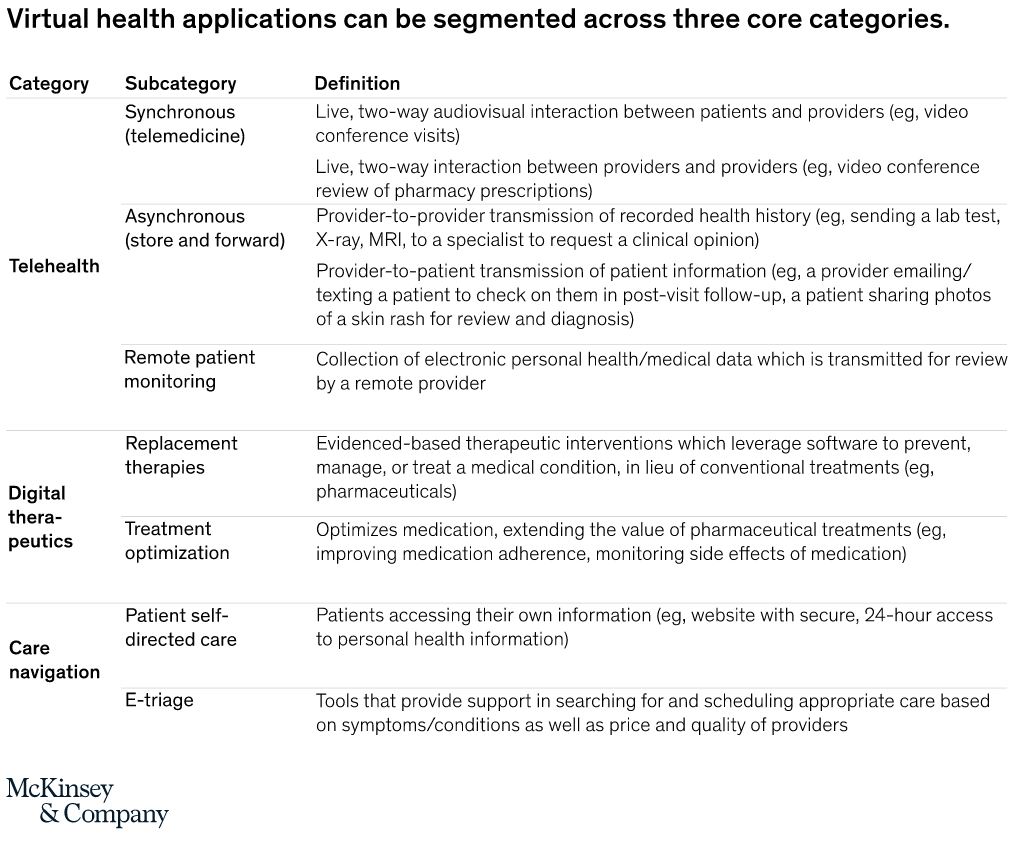
The article Classified the elements of the future Telehealth,  citing Telemedicine As the digital equivalent of the traditional Doctor-Patient verbal Interaction. They call this “synchronized” Telehealth.

Everything else, the myriads of other activities that comprise the totality of health care, is labeled something else. The Patient is involved in some of these activities, such as being monitored by a device at home, being the recipient of her records or medications, or even interfacing with technology as in “E-triage”.

Many interactions such as Doctor-Doctor, Doctor-Pharmacist, Doctor-insurance,  Rounding, To mention a few, take place away from the Patients’ sphere. The REAL change will be when these are Eventually taken over by Computers, aided by Artificial intelligence.

In the meanwhile, Providers should invest in Technology to remain competitive. Also, it goes without saying, Patients should invest in Knowledge and Technology if they are to get the most out of this new Reality.

—Dr, C.

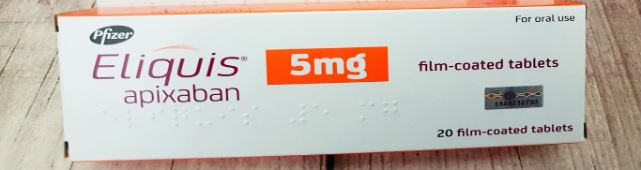
DR. C’S MEDICINE CABINET: “WHY PATIENTS TAKE ELIQUIS”

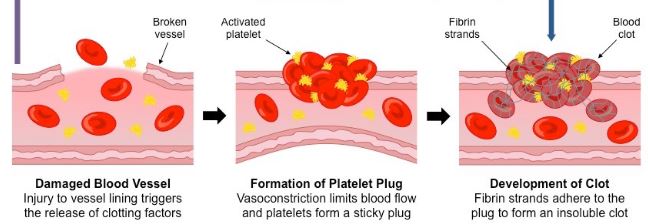
Eliquis nicely illustrates my contention in the Overview of Metabolism, that the body is a vast collection of pathways, or “supply chains”. Eliquis blocks a critical enzyme in the pathway leading to coagulation, or clotting” as the product.

Why in the world you want to block clotting? The staunching of blood flow, clotting, has saved countless hordes of early, Paleolithic humans, and continued useful through the bloody Roman and Medieval times, right through the violent 20th Century.

Recently, however, wars are becoming somewhat less popular, and eating excessively more popular, leading to a strange situation. Our evolutionarily-preserved CLOTTING mechanism is now leading to MORE problems than it is solving.

Obesity and type 2 Diabetes are leading to the production of so much fat, that it has to be stored in our arterial walls, clogging the blood flow to our Hearts and Brain, among other areas. This, and the somewhat surprising trend towards longer lives has led to an increase in a variety of age-related illnesses.

When I reached 80 years of age I developed Atrial Fibrillation, a condition leading to a tendency to form clots in my quivering atria, the upper chambers of my heart. To decrease the likelihood of clots getting into my blood stream, lodging in my brain and causing STROKE, my cardiologist started me on Eliquis, an anti-coagulant/blood thinner.

Drugs have three names. The proprietary name, Eliquis in this case, is given by the patenting company to be memorable; q,z,and x are popular letters. The second is the FDA drug name, Apixaban. The drug name often gives the doctor a clue as to its type: xaban refers to inhibiting (banning) of factor 10a (Xa). The third name is a chemical name of interest to biochemists and drug researchers.

When I started the Eliquis, at first unknown to me, I started to bleed internally, leading to a drop in my hemoglobin down to 8.6. I will go into this story when I start going through “how to read your laboratory report”.

I found that reducing my Eliquis from 5mg. to 3.75 mg. allowed me stabilize my hemoglobin by taking extra iron, which I will discuss later.

The doseage selected when the drug company markets a drug is fairly arbitrary, and usually involves round numbers. Interestingly, there is a 2.5mg. Eliquis, which is given if you meet 2 out of 3 criteria. I meet only one and am only 5 pounds shy of the second, in case you think (like my cardiologist does) that I’m taking a risk.

I believe that, whenever you are given a medication, you should be educated about the medicine, and the problem it is intended to benefit. Today’s physician often does not have the time to do this. The internet, including this website, offers a corrective.

I am trying my best to be helpful to you as a Patient Advocate. You and I both must have a doctor to rely upon. But to get the most out of our care, WE MUST BE INFORMED.

–Dr. C

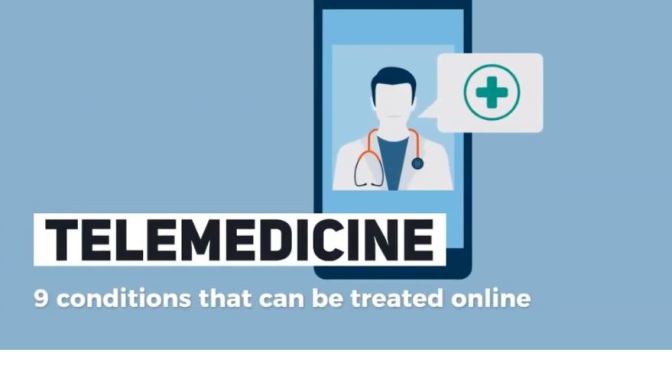
TELEMEDICINE: A REVIEW OF 9 CONDITIONS THAT CAN BE TREATED ONLINE (VIDEO)

TELEMEDICINE is here to stay! With all its’ advantages Patients will demand It!

This video is one of the few to highlight WOMENS’ HEALTH as an appropriate field for Telehealth. A remote visit first may at least let the Doctor order some tests that will accelerate your care.

Urinary problems can also be appropriate for telemedicine; the MEDICAL HISTORY is such a VALUABLE DIAGNOSTIC TOOL!

Psychological and Psychiatric care could be completely remote, by telemedicine. The Doctor could save on expenses, and deliver care less expensively.

Distance disappears as a barrier to Consultations and second opinions. A University medical center or prestigious multi specialty Clinic are on your doorstep.

Of course, barriers remain in the form of regulations, litigation, bureaucracy, and Insurance, but these can be overcome, if the Will is there.

—Dr. C

DOCTORS CALL: “CHRONIC COUGH – DIAGNOSIS AND TREATMENT” (MAYO CLINIC)

On the Mayo Clinic Radio program, Dr. Kaiser Lim, a Mayo Clinic pulmonary and critical care physician, explains chronic cough and how it can be treated.

Read more

COMMENTARY

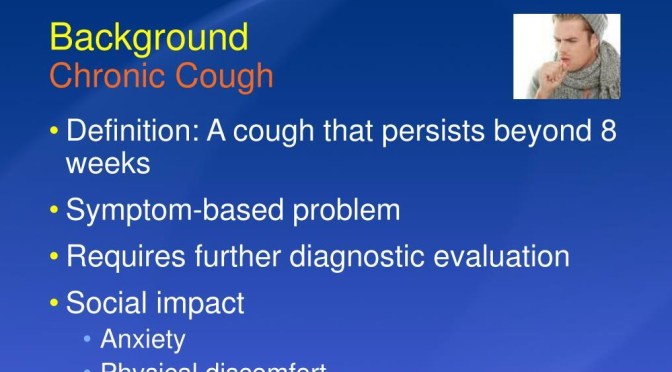
If you have had a cough for more than 8 weeks, the good news is that you don’t have Covid 19. The bad news is that you need a Medical evaluation, tests and imaging to find out what is going on.

COUGH is not a disease, but is a manifestation, a SYMPTOM of a disease.

Your Primary Care Doctor will do a Medical History, an examination and a chest X-Ray which may allow her to DIAGNOSE what disease or problem Is causing the cough, and allow her to treat it.

If you continue to cough, you will be referred to a specialist, such as an Allergist or a Pulmonologist. ENT (sinusitis) and Gastroenterology (GERD) are 2 other medical fields often involved.

Usually blessed relief comes when Chronic Cough is properly diagnosed and treated, but a few Patients continue to suffer, challenging the best of medical care. 2 of my friends continue to cough after Medical School Level evaluations.

Nature continues to hide some of her secrets from Medical Science.

—Dr. C.

TELEMEDICINE BENEFITS: PATIENT’S “CONVENIENCE & SAFETY” TOP THE LIST

From a Permanente.org online article (May 11, 2020):

“Our patients are glad we offer telehealth options because they don’t want to come to the medical centers. This allows them to stay home and stay safe,” Dr. Lee says. “Before, telehealth was a choice and convenience, but now it’s one of the ways patients remain healthy with social distancing.”

The majority of telehealth visits are phone appointments, but Dr. Lee says video usage is increasing as more patients become comfortable with the platform.

Telehealth can also include services such as remote patient monitoring, which allows patients to take blood pressure measurements and blood sugar readings at home so that their care teams can monitor ongoing health conditions. In the case of the Kaiser Permanente Mid-Atlantic States region, doctors also use telehealth to do rounds virtually for patients who have suspected or confirmed COVID-19.

Patients at higher risk for complications are given pulse oximeters so their doctor can monitor for signs of severe respiratory infection before other symptoms might indicate a need for additional care, including hospitalization.

COMMENTARY

TELEHEALTH is HERE TO STAY. It came in with the telephone, and has been gaining in recent decades. The distancing and Patient convenience so characteristic of Telehealth made it a natural fit for Covid 19, which has accelerated its’ adoption.

Your CLINICAL HISTORY, led by the Story of your Present Illness, has since time immemorial been the MOST IMPORTANT ELEMENT leading to accurate  DIAGNOSIS. During a TELEMEDICINE VISIT, your doctor must make the MOST out of your clinical history. She can’t do a proper Physical Exam, although she can usually see you, and maybe direct a SELF exam. Teledata, such as EKG,B.P., and blood sugar will become increasingly available.

Your Doctor can usually get enough information to order Lab work and Imaging; and prolix ordering can be tempered, since a good HISTORY of the PRESENT ILLNESS, systems review, past and family history can narrow the diagnostic possibilities considerably. The pressure of time and demanding computer Records may lead the overworked Doctor to use Lab Tests to make up for insufficient Medical History.

Integrated medical systems, such as Kaiser, can also easily access your past medical information, one of the advantages of having everything under one roof.

Informed Patients, SELF-EDUCATING themselves from the vast trove of medical information on the internet (and maybe DWWR) can author their own MEDICAL NARRATIVE, or at least make the Doctors job easier.

—Dr. C.

Read full article