Mayo Clinic (May 11, 2023) – In the U.S., HPV is linked to about 70% of throat and mouth cancers. And more than 70% of those cancers are diagnosed in men, according to the Centers for Disease Control and Prevention.
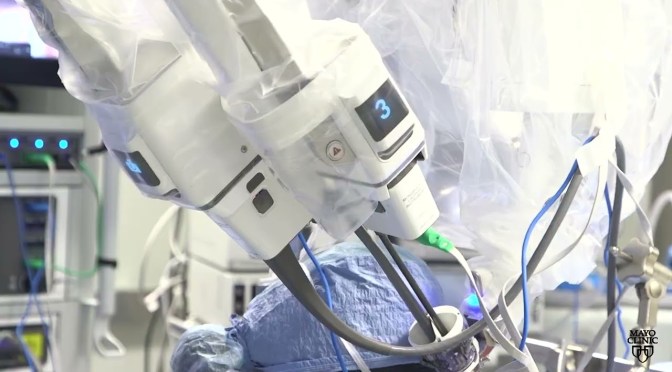
Treatment for throat and mouth cancers, also referred to as oropharyngeal or head and neck cancers, will depend on location and stage of the cancer as well as other factors. Dr. Phillip Pirgousis, a Mayo Clinic head and neck surgeon, says patients have safer, less invasive surgical treatments available to them thanks to ongoing innovation.
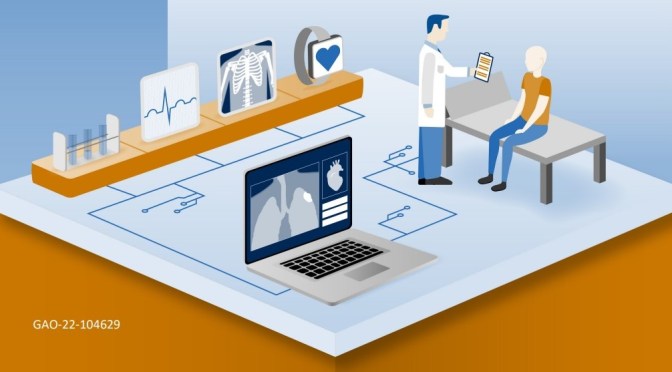
Scripps Research (April 11, 2023) – From smartwatches and fitness bands to glucose monitors and in-home ultrasounds, the proliferation of digital devices is igniting a revolution in healthcare and medical research.
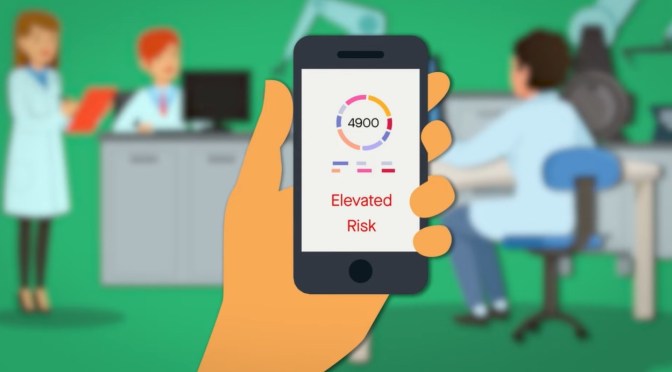
Patients can now collect thousands of data points about themselves and share that information with their healthcare providers. At the Scripps Research Translational Institute, researchers are taking advantage of new technology to study disease in novel ways.
Their projects include a platform for early detection of disease outbreaks, a sleep quality study, and even a way to predict and individual’s risk of certain disease based on their genetics. In this video, hear directly from the team about this exciting new frontier.
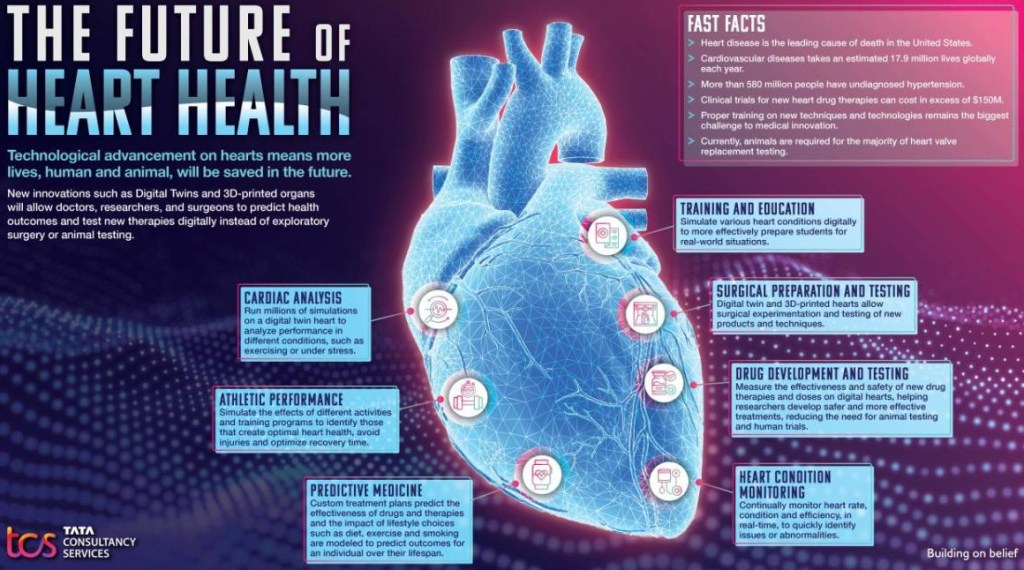
After a digital twin of a heart is created, researchers can go a step further and use 3D printing to create a physical version of a heart. This is then used to practice surgical techniques and test solutions such as new heart valves or drugs without ever touching an actual body.
March 2, 2023: Following National Heart Health Month in February, TCS futurists took a look at how a digital twin of the heart can save more lives – human and animal – in the future. From boosting athletic performance to developing predictive medicine, new advances in technology will help keep hearts healthier than ever.
TCS is on the leading edge of “Digital BioTwin” research, modeling human organs digitally to find new ways for researchers and doctors to test experimental drugs and surgical techniques without risk. With heart disease the leading cause of death in the U.S., it is more important than ever to innovate techniques to keep hearts healthy.
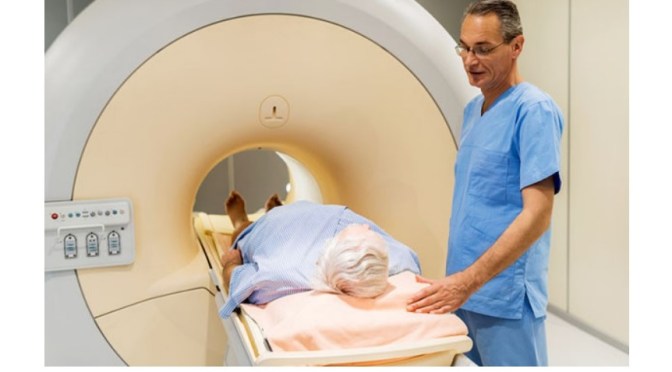
Using information from a MRI of someone’s heart, TCS can create a fully modeled human heart in cyberspace. By applying various historical and speculative data sets, doctors can see the impact of different conditions and situations such as beginning a long-term exercise program or quitting smoking. This approach to predictive medicine demonstrates the real impact of health choices to patients.
“We found that the information we could get from PSMA scanning in patients with newly-diagnosed prostate cancer before surgery was at least as reliable and useful as other information from biopsy, PSA levels, or clinical exam for predicting how patients would do after surgery or other treatment,” says Farshad Moradi, a radiologist at Stanford who co-authored the study.
In December, scientists at Stanford University reported promising findings with a new technology that lights up prostate tumors on specialized imaging scans. The approach relies on a minimally-radioactive tracer that travels the body hunting for cancer cells.
Called 68Ga-PSMA-11, and delivered intravenously, the tracer binds exclusively with a protein called prostate- specific membrane antigen (PSMA). Prostate cancer cells contain far more of this protein on their surfaces than normal prostate cells do. Tumors flagged by 68Ga-PSMA-11 show up on an imaging scan like lit matches in a dark room. Doctors are already using PSMA scans to diagnose early metastatic cancer, and the tracer can also be used to ferry drugs directly into malignant tumors.
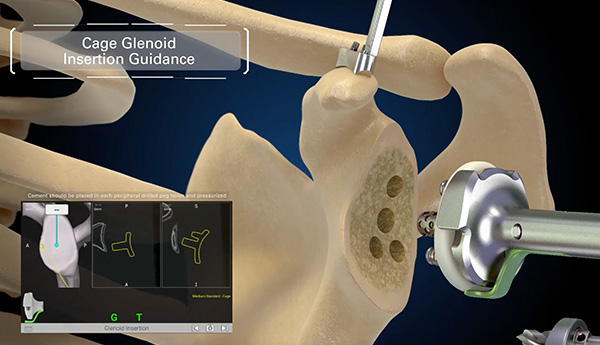
Shoulder replacement is a major surgery where all or part of the shoulder joint is replaced. In the past, it would take weeks for the patient to gain mobility, but new technology is changing all that.
Laura Britt has degenerative joint disease and as a result has had several surgeries, including shoulder replacements.
Abbott Laboratories newest continuous glucose monitor is now available at participating retail pharmacies and through durable medical equipment suppliers. The Freestyle Libre 3 was approved by the FDA in June and is a step up from previous Abbott systems.
Abbott Laboratories and Dexcom are the leaders in the CGM market, which hit $5.1 billion in revenue in 2021 and is expected to reach $13.2 billion by 2028, according to Vantage Market Research. Abbott’s CGM systems, called FreeStyle Libre, generated $3.7 billion in revenue last year, with 4 million users globally.
CNBC’s Erin Black, a type 1 diabetic, tested out the Libre 3 for over a month. Here is her review.
Each year, medical diagnosis errors affect the health of millions of Americans and cost billions of dollars. Machine learning technologies can help identify hidden or complex patterns in diagnostic data to detect diseases earlier and improve treatments.
Several machine learning (ML) technologies are available in the U.S. to assist with the diagnostic process. The resulting benefits include earlier detection of diseases; more consistent analysis of medical data; and increased access to care, particularly for underserved populations. GAO identified a variety of ML-based technologies for five selected diseases
Certain cancers,
Diabetic retinopathy,
Alzheimer’s disease,
Heart disease,
COVID-19
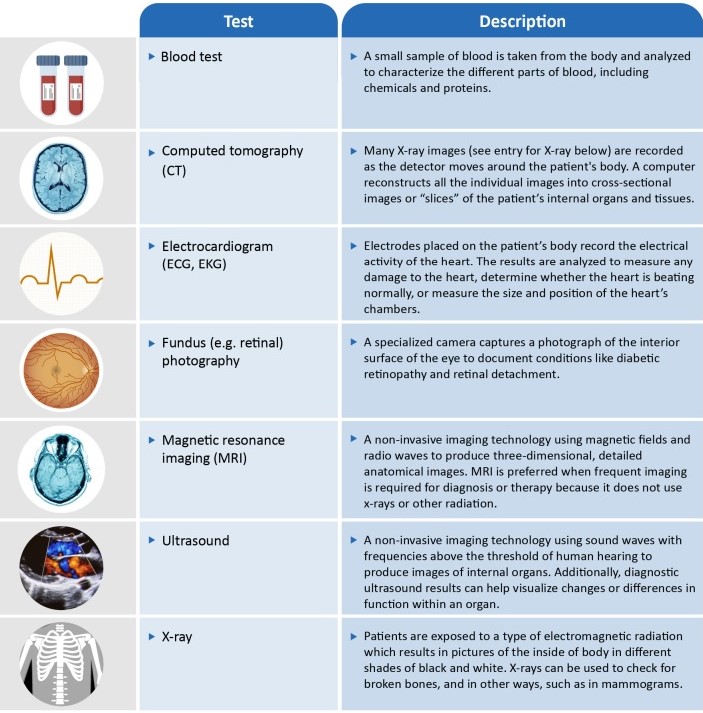
Most technologies relying on data from imaging such as x-rays or magnetic resonance imaging (MRI). However, these ML technologies have generally not been widely adopted.
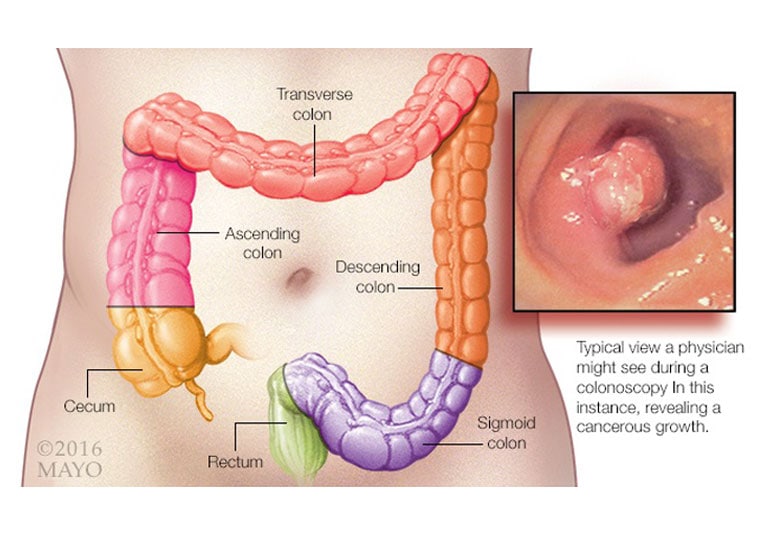
“Colorectal cancer is almost entirely preventable with proper screening,” says senior author Michael B. Wallace, M.D., division chair of Gastroenterology and Hepatology at Sheikh Shakhbout Medical City in Abu Dhabi, United Arab Emirates, and the Fred C. Andersen Professor at Mayo Clinic in Jacksonville, Florida. “The substantial decrease in miss rate using AI reassures health care providers on the decreased risk of perceptual errors.”
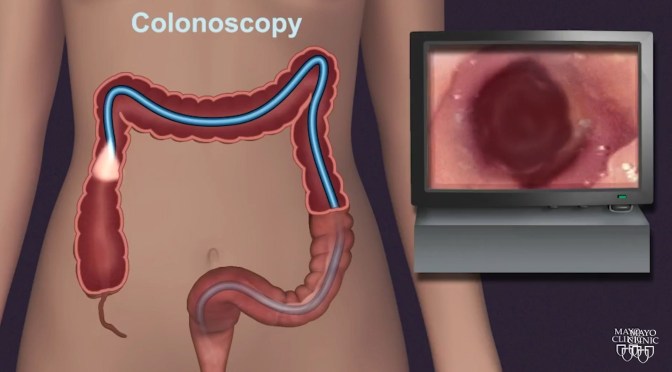
The most relevant cause of post-colonoscopy colorectal cancer (CRC) is the miss rate of colorectal neoplasia — the rate at which neoplastic lesions are not detected in a screening or surveillance colonoscopy. Some studies suggest that 52% to 57% of post-colonoscopy CRC cases are due to missed lesions at patients’ colonoscopies. It’s estimated that 25% of neoplastic lesions are missed following screening colonoscopy.
Mayo Clinic Gastroenterology and Hepatology, in collaboration with colleagues from around the world, found that using artificial intelligence (AI) in colorectal cancer screening produced a 50% reduction in the miss rate for colorectal neoplasia. Results of the study were published in the July 2022 edition of Gastroenterology.
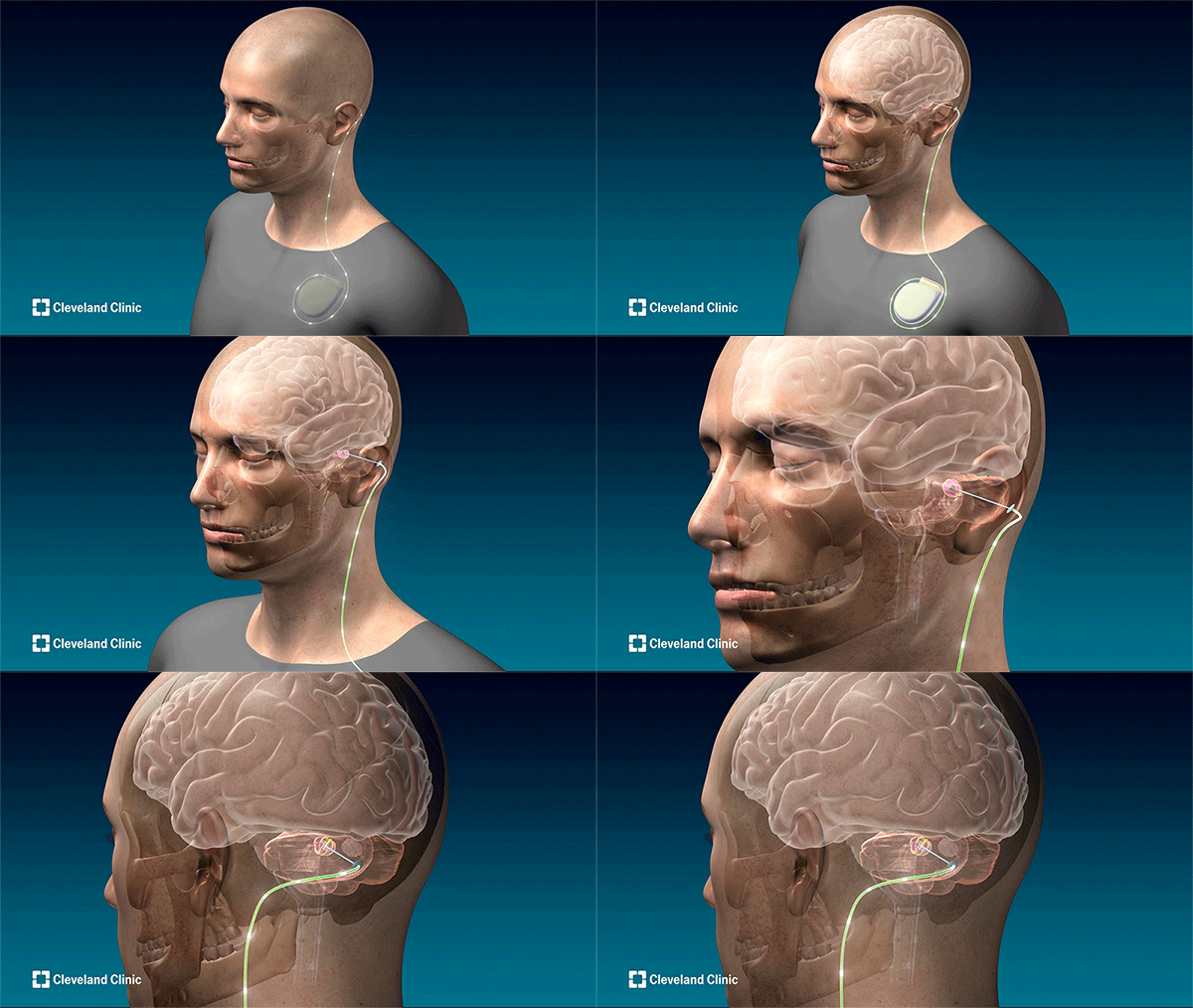
Deep brain stimulation is a surgical procedure that involves implanting electrodes in the brain, which deliver electrical impulses that block or change the abnormal activity that cause symptoms. (Courtesy: Cleveland Clinic)
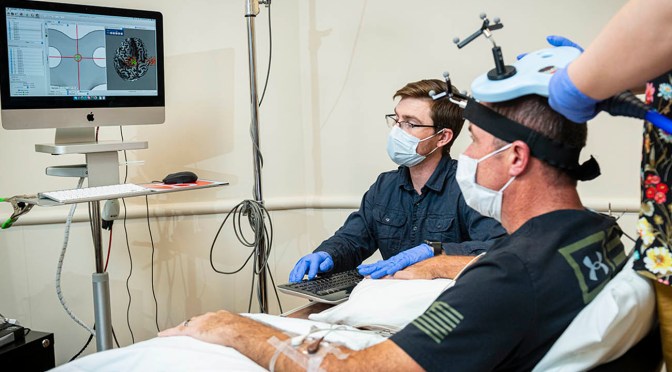
“He had limited use of his hand. It really wasn’t functioning,” explains Andre Machado, MD, PhD, who is Chairman of the Cleveland Clinic Neurological Institute. “He couldn’t do as much manual work, with both hands, and that was a limitation for his quality of life.”
For the study, Joe first underwent two surgical procedures — one to insert the DBS device under the skin of his chest, just below the collarbone, and the other, to implant the DBS electrode in a part of the cerebellum called the dentate nucleus. Once activated, the device, called an implantable pulse generator, serves as a specially-calibrated pacemaker for the brain, stimulating it to try and enhance motor rehabilitation.
COMMENTARY:
Many times in science, application precedes understanding. Deep brain stimulation, either by electrical or magnetic pulses is a good example.
It is not at all understood how the brain really works, much less how electrical and magnetic stimulation in the brain works. It may stimulate or slow down neural impulses, or interrupt the incoming signals or the outgoing messages. Are there any other possibilities?
At least it does work, Apparently.
One thing for certain is that deep brain stimulation is preferable to previous treatments, which produced small, destructive, irreversible lesions in the brain. At least these stimulations can be stopped if they don’t work.
I enjoyed this posting, since it reignited my interest in the cerebellum. This amazing Organ has more neurons than the rest of the brain combined, represented by innumerable small granule cells. I wasn’t even aware of the dentate nucleus, which is an island of cerebral cortex-like neurons in the white matter of the cerebellum. Apparently the action of the cerebellum is orchestrated through this and a couple of other islands of neurons. All of the coordination, movement, and thought processing accomplished in the cerebellum takes place through these nuclei.
It was also fascinating to learn of a patient who has complete lack of a cerebellum, and suffers only some mild incoordination and speech problems. Apparently, absent the cerebellum, the rest of the brain is largely capable of taking over the function of the missing cerebellum. Once the brain is formed, However, and dependent upon the cerebellum, damage to this organ causes a great deal of coordination, movement, and balance problems.
I’ll put another plug-in for sleep, diet and exercise, as well as being careful with your body. Prevention is far better than treatment.






 Doctors Without Waiting Rooms