

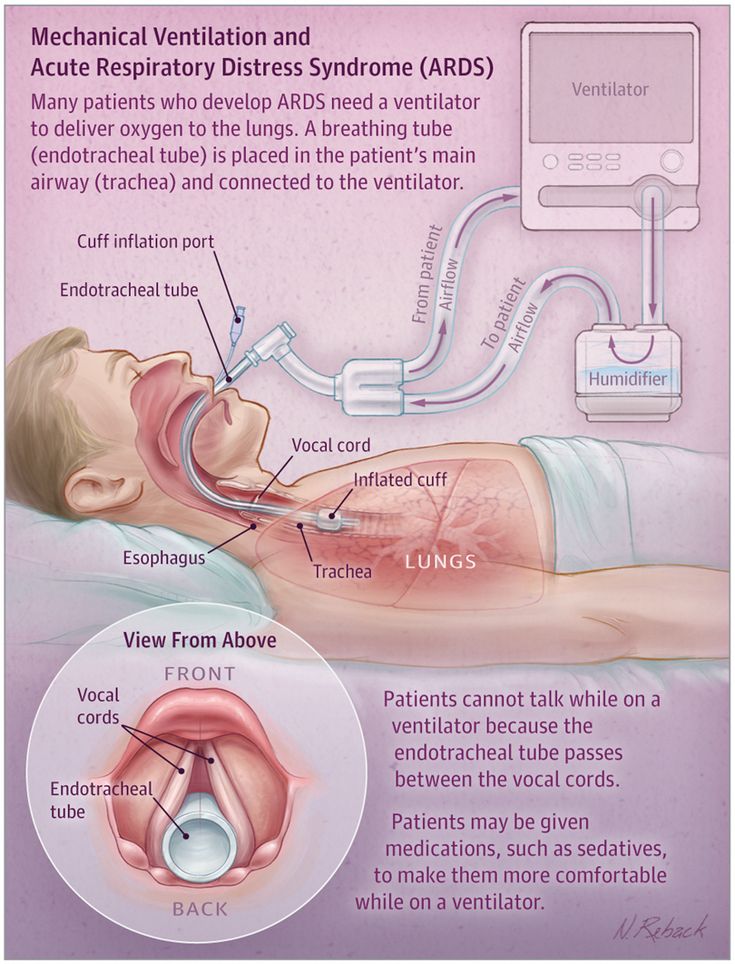
A growing number of hospitals are relying on remote ICUs to monitor and evaluate patients virtually, which helps to cope with an unrelenting COVID-19 caseload.

The Journal Science recently reported on nearly 77,000 patients hospitalized with Covid 19. 29% were overweight and 48% were Obese. A total of 77% of admissions for Covid were overweight or worse.
Overweight was defined as BMI of 25-29.9 Kg. per Square Meter, and Obese was defined as BMI of 30 or greater. Another way of stating the data is giving the rate of Hospital admissions per 10,000 People.
BMI calculators are everywhere to be found on the internet. Put in your weight and height, and find your BMI displayed.
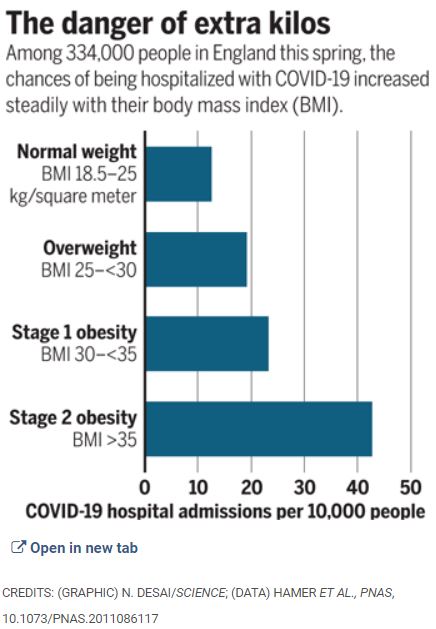
These are striking figures, the more so because of the LARGE SAMPLE, and the LINEAR Relationship; the greater the overweight, the greater the hospitalization rate.
Every way you look at it, obesity is hazardous. More hip and knee replacements, harder to exercise, find comfortable seats, more difficult to do surgery, more diabetes, heart attacks, stroke, Hypertension, Sleep apnea, worse immunity, and now, confirming previous suspicions, clearly higher risk of being hospitalized (and dying) with Covid.
I realize that nobody chooses to be Obese; in addition to the health problems, overweight people are Subjected to discrimination.
Obesity is notoriously hard to treat; one of the few, seldom mentioned medical truths is that Diets fail long term. Starting and maintaining a diet takes Herculean Will Power, which is in short supply in our overindulgent, overadvertised, and overfed society.
If I were morbidly Obese, I might opt for Bariatric Surgery, and try my best to hold the short term weight loss, since even with surgery the pounds tend to creep back on over time.
The best way to treat Obesity is to treat it as the Plague it is. CHILDHOOD OBESITY should be treated aggressively. Keep the Obese Child from becoming an obese adult, and maybe carry yourself along with the Family.
Better yet, Good SLEEP, DIET, and EXERCISE come as an interactive mutually reinforcing package deal. Prevention always beats treatment.
My article on ABDOMINAL FAT is suggested reading, and there is a link to the Infographic which Displays the above date in graphic form.
Finasteride is a medication that I was given by my urologist, after my operation for an enlarged prostate with restricted urine flow. It was used to prevent the re-growth of the prostate, and subsequent recurrence of urinary obstruction.
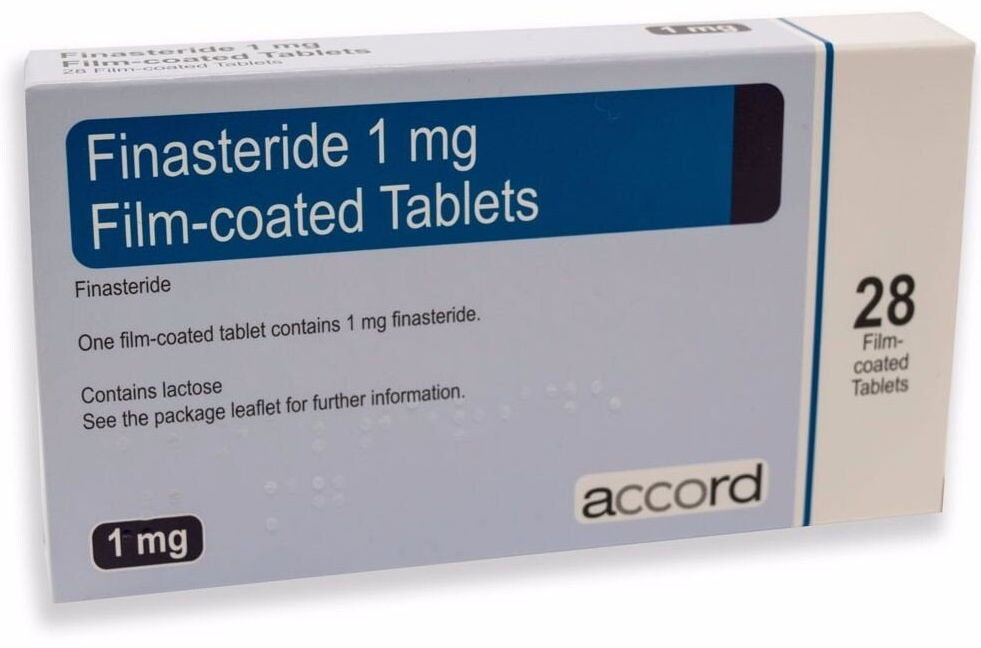
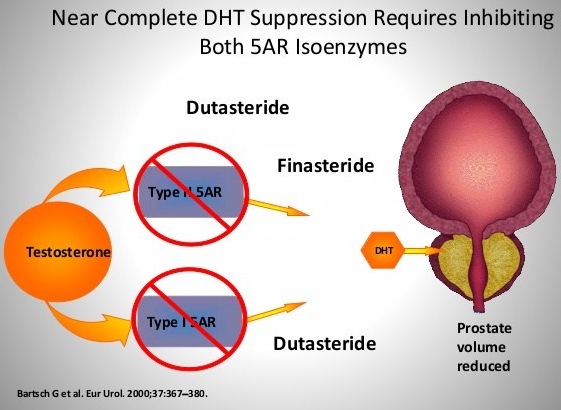
It is also recommended to treat male-pattern baldness. That it is used to treat male problems suggests that it has something to do with testosterone, and indeed it does. Finasteride (proscar) is a 5-alpha reductase inhibitor, preventing testosterone from being converted to dihydrotesterone, the active form, in the prostate and the skin.
Finasteride is well studied, and has been found to decrease PSA in the blood, and is suspected of interfering with the use of PSA as a screening device for Prostatic Cancer. It has also been suspected of increasing severe, high grade cancer. These findings have been refuted in later papers.
It has also been found to decrease sexual function, which it has in my case. I have continued it for several reasons.
First, my urine flow remains fine. Second, the bulk of the data indicates that it hinders prostatic cancer formation; and in a previous posting, I stated that Prostatic cancer in 88 year-olds is almost universal. Third, we are continuing in a Covid 19 pandemic.
One of the markers for severe infection is male-pattern baldness, which finasteride prevents. I did find in my reading about finasteride that there is a 1 mg. dose, and I am taking 5 mg..
When the Covid epidemic slows, I will probably opt for the 1 mg. Dose, which produces a significant effect, though of course less than the 5 mg. Less medication is usually better.
For Patients with BPH opting for medical treatment, Finasteride is usually recommended along with an alpha adrenergic agonist to relax the bladder sphincter.
For the men out there, facing an ever-increasing likelihood of BPH, or wanting to slow down baldness, you may eventually be making the decision whether or not to take this effective medication.

COMMENTARY
COVID 19 is a nasty disease, in case you hadn’t noticed. It is SNEAKY: you can catch it from a person who has no symptoms.
It is UNPREDICTABLE: you may develop no symptoms or Die from it. It can affect any part of your body, including HEART and BRAIN.
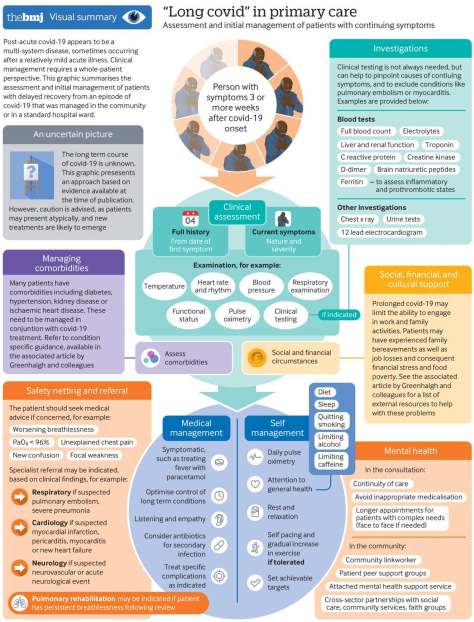
And now we hear that it can DRAG ON. The outstanding infographic, “a multi-systems disease, which is intended for PRIMARY CARE PROVIDERS, has a lot to offer patients, who can do a lot to Care for themselves:
You should also RESTRICT Alcohol, Caffeine and it goes without saying CIGARETTE SMOKING. Of course PREVENTION, with DISTANCING, MASKING and being Outside, coupled with SLEEP, DIET and EXERCISE is always best.

Science Editor-in-Chief Holden Thorp joins host Sarah Crespi to discuss his editorial on preventing vaccine hesitancy during the coronavirus pandemic. Even before the current crisis, fear of vaccines had become a global problem, with the World Health Organization naming it as one of the top 10 worldwide health threats in 2019. Now, it seems increasingly possible that many people will refuse to get vaccinated. What can public health officials and researchers do to get ahead of this issue?
Also this week, Sarah talks with Science Senior Correspondent Jon Cohen about his story on Chinese scientist Shi Zhengli, the bat researcher at the center of the COVID-19 origins controversy—and why she thinks President Donald Trump owes her an apology.
Finally, Geert Van der Snickt, a professor in the conservation-restoration department at the University of Antwerp, talks with Sarah about his Science Advances paper on a new process for peering into the past of paintings. His team used a combination of techniques to look beneath an overpainting on the Ghent Altarpiece by Hubert and Jan Van Eyck—a pivotal piece that showed the potential of oil paints and even included an early example of painting from an aerial view.
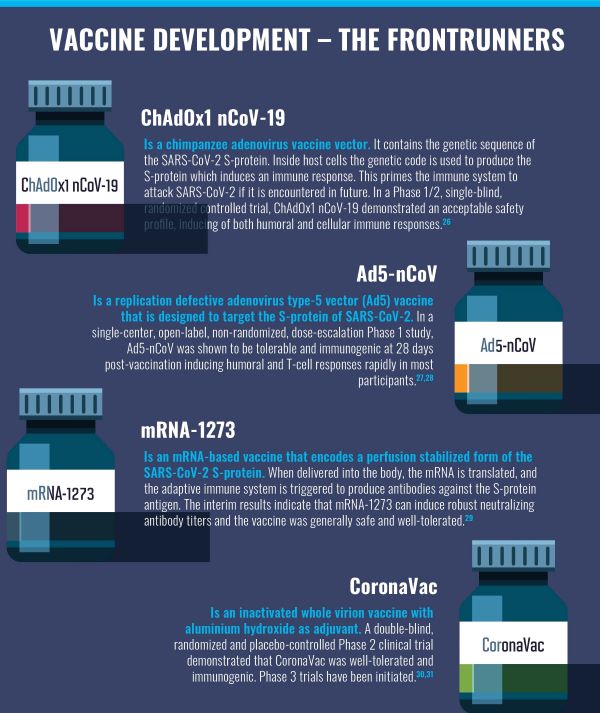
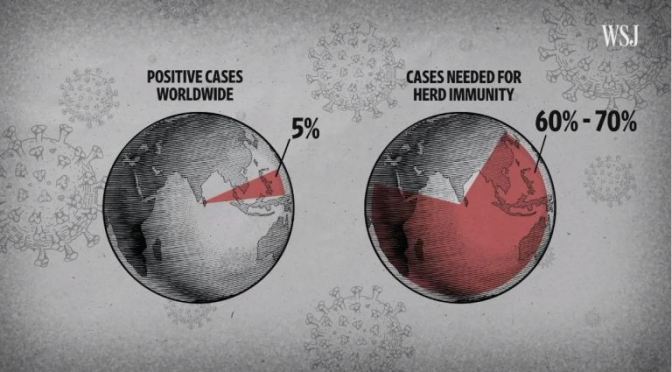
Scientists are working at breakneck speed to develop an effective vaccine for the coronavirus. Their ultimate goal: to immunize enough of the world’s population to reach herd immunity. WSJ explains.
Illustration: Jacob Reynolds
It’s one of the tiniest machines on the planet — about a hundred times smaller than the average cell. It’s so small that no scientist can spot it through a typical light microscope. Only with an electron microscope can we see its spiky surface. It’s not alive, and it’s not what most of us would think of as “dead.” This teensy machine seems to survive in a kind of purgatory state, yet it has traveled across continents and oceans from host to host, and brought hundreds of nations to a standstill. Despite its diminutive size, the novel coronavirus, dubbed SARS-CoV-2, has seemingly taken the world by surprise with its virulence.



 Doctors Without Waiting Rooms