Tag Archives: Covid-19

OPINION: FACE MASKS AND SHIELDS TO PREVENT COVID

My main exercise for the day is a 45 minute fast walk around my community.

Hat – check. Sunglasses – check, FACE SHIELD – check.

Yes, face shield. The shield has the advantage of allowing me to talk, plus being more comfortable to wear. I clean it with a woolen cloth on one side and cotton on the other, hoping for a condenser electrostatic effect (I’m open to suggestion from engineers).
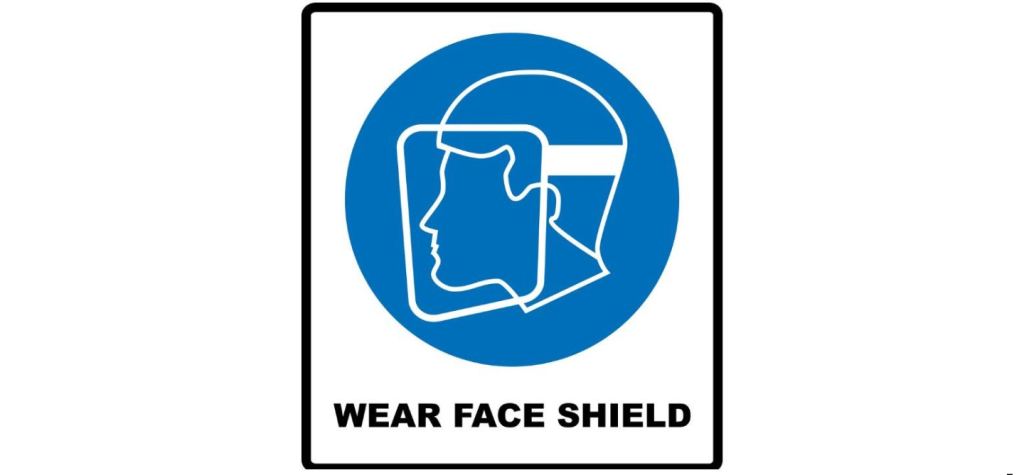
If I cough, any large particles of mucus would impact the shield, leaving only tiny aerosol particles to escape around the edges into the environment to endanger others.

It is Saturday today, and I pass a man and a woman pushing a baby buggy, and give them wide berth. I don’t consider 6-feet far enough distancing. 12-18 feet would be better, since, at 88-years of age, I am at least 2-3 times more susceptible.

A 12-year old zooms by me on a scooter. His age predicts less viral effluent, and the exposure time is less. I then go by a large collection of 20-year olds, Wide berth again, and, holding my breath, continuing to walk fast.

As I walk, I breathe air in through my nose, and out through my mouth. I feel the warmth (and purity) of the exhaled air, which may push aside and dilute any contaminants coming from the outside.

Another group of young adults! Well, maybe the risk is not as bad as the numbers would indicate. Odds are there would be only one spreader in the group, and the healthy ones would act as particle filters for me.

So far, not a single young person had a mask on. They are probably just thoughtless young people, and not necessarily “objectors” believing that mask-wearing is a sign of submission. As Peggy Noonan said in her column in today’s WSJ:

“…IT’S A SIGN OF RESPECT, RESPONSIBILTY AND ECONOMIC ENCOURAGEMENT”.

Going forward, we must all do our part to reduce the likelihood of another Covid surge. WEARING A MASK PROTECTS OTHERS.

I finally spied 2 masks! They were fitted on 2 ceramic lions flanking a front door. It is true that felines can catch Covid. But ceramic ones?

I thought I was walking fast, but was overtaken from the rear by a long-legged young lady. She passed within 4 feet of me, and of course had no mask on. I only hope she didn’t have Covid, and that my shield worked.

On the subject of the effectiveness of wearing a shield, while walking I tune into the odors along the way. I use the odors as surrogate aerosols, especially a recently fertilized curbside flower bed, I compare walking by the flowers, with and without my face shield, and find that the shield reduces but does not eliminate the odor. For more distant odors, like a barbecue, it does not make a difference.

Perhaps the shield, like the prow of a ship, pushes aside STREAMS of particle-laden air. Like coughing or talking nearby. But if the particles (yes, odors are nanometer particles) are well mixed with the air, there is no effect. Air must be breathed, after all.

There are a couple of other things I practice on my walk. I exercise my EYES by looking into the DISTANCE as much as possible. I try to walk as erect as I can. Gravity, my friend in grounding many big Covid-containing mucus particles, tries to bend me over.
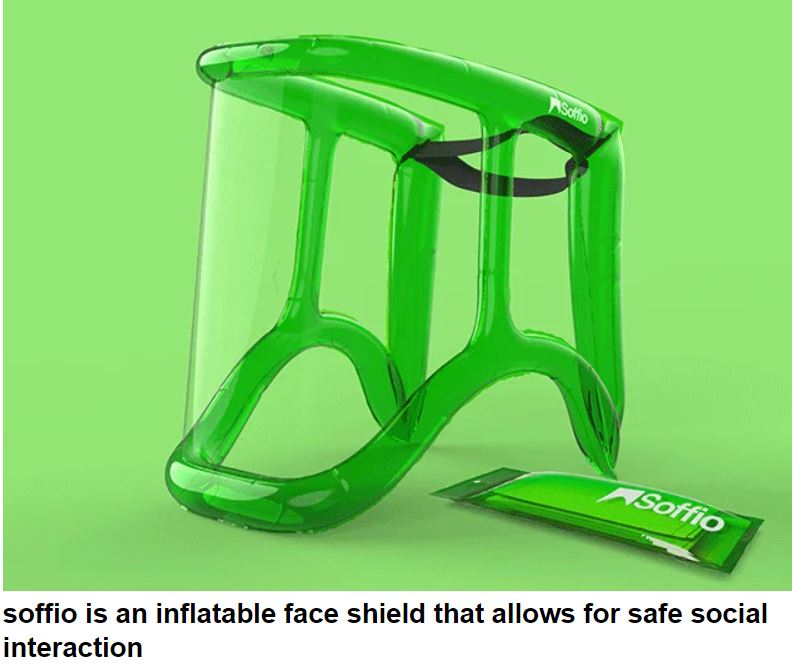
The BOTTOM LINE, until more information is available), is: SPREADERS WEAR MASKS, SUSCEPTIBLES  WEAR SHIELDS. Of course, hand-washing, social-distancing, coughing into your elbow, and staying at home, especially if sick, are all still important admonitions.,
-Dr. C.

For further reading

THE HEALING POWERS OF YOUR POSITIVE ATTITUDE

Do not go gentle into that good night,
Old age should burn and rave at close of day;
Rage, rage against the dying of the light.

From “Do Not Go Gentle Into That Good Night” by Dylan Thomas

My brother recently sent me a video  featuring a confident man with a famous last name and a winning message: You beat Covid by fighting it. I would like to comment on several recommendations in his inspiring speech.

It is usually best to approach a problem with a POSITIVE ATTITUDE and a PLAN (1). This is particularly true with the ravages of old age (my area of expertise). Memory loss? Try to memorize poems. Balance loss? Practice standing on one leg. However………….

One person’s good experience is not a medical study. Medicine calls it a testimonial. This applies to my individual experiences as well. Going forward, I will be recounting many personal experiences with common diseases and conditions. Be careful about applying my solutions to your condition.. EXERCISE CRITICAL THINKING.

Be especially careful not to equate fame with medical expertise.

Mr. Cuomo’s result, if indeed the outcome was changed by his efforts, was most likely influenced by a powerful PLACEBO effect (2) which can be associated with striking outcomes, as we know from countless inspiring testimonials  of “hopeless” cancer and other terminal conditions.

Even if we KNOW a treatment is likely due to the placebo effect, it remains effective. I don’t believe I’m doing harm with my speculations.

A couple of generations ago, confidence in doctors was much greater than it is now. We had fewer effective treatments, but surprisingly good results. As medical information of various quality proliferates and medicine loses prestige, it it is losing a valuable tool. Still, we have the placebo effect.

Mr. Cuomo was fortunate to have a good, positive doctor, and to believe in him. Positive affect is powerful.

FEVER is not the virus incarnate, but the bodies RESPONSE to the virus. Fever survived the culling of evolution because it confers a survival advantage, and is helpful.(3) Viruses replicate less rapidly at higher body temperatures.

I always told my patients: “ if you are stuck with the infection, enjoy the fever”. Of course high fevers, above 104 degrees F should be reduced.

I’m not sure that Covid patients should hold their breaths to “fight the virus”, although the length of time you can hold your breath is a good measure of breathing difficulty.  Blood CO2, the main driver of dyspnea (shortness of breath), must not be allowed to accumulate. The accompanying hypoxemia (low blood oxygen ) is not desirable either.

I agree with most of the advice quoted by Mr. Cuomo. Lying on the back has proven dangerous in severe Covid. Taking deep breaths (even if painful) will help keep the alveoli (air sacs) expanded. Change of position is important for the same reason,  and adequate fluids, including water, is always beneficial.

So educate yourself as much as you can about your condition. Pick out the best doctor you can find (the subject of a future opinion piece) and place yourself in her care. Enjoy a sense of relief and confidence. Even physicians need the objectivity and support of their own doctor.

Finally, armed with a positive attitude, make the most of whatever placebo effect you are accorded.

—Dr. C.

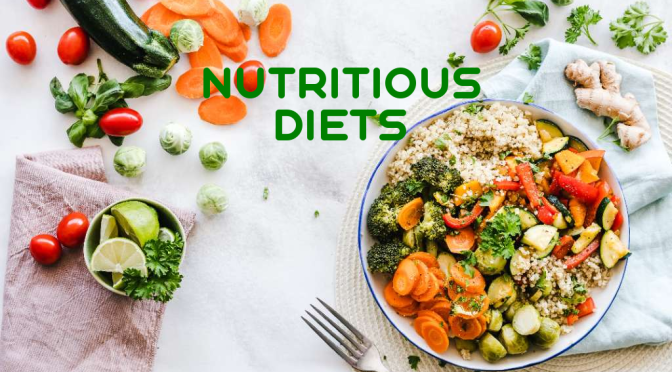
OPINION: THE BENEFITS OF HIGHLY NUTRITIOUS DIETS

Vitamins and minerals, as we all know, are of critical importance to our health. Gone are the days when scurvy(vitamin C) was the scourge of the high seas, and rickets (vitamin D) was common in the children of smoke-filled industrial cities with insufficient sunlight.

We are in a state of such overabundance that many medical authorities feel that vitamin supplementation merely makes our toilets healthier.

Covid 19, with a deficit of prevention and treatment options, has forced a new appreciation of the role of our immune systems in fending off Covid, and future viral plagues that are certain to follow. Optimum Health has never been more important.

A May 4, 2020, British Medical Journal (BMJ) article highlights the role of vitamins C and D, and minerals, especially Zinc, in functioning of our immune systems. Here are several highlights from the article:

  • Foods that are naturally abundant in vitamin C such as broccoli (60 mg/100 g), blackcurrants (130 mg/100 g), fortified breakfast cereals (up to 134 mg/100 g) and oranges (37–52 mg/100 g)45  should be made accessible to older individuals who are most in need of their nutritional benefits.
  • In the UK 5.5% of men and 4% of women 65 years and over (around 1 in 20) presently have zinc intakes lower than the lower reference nutrient intake (the level below which deficiency could occur).46 The consumption of foods naturally abundant in zinc such as canned crab (5.7 mg/100 g), canned shrimps (3.7 mg/100 g), canned adzuki beans (≈2.3 mg/100 g) and boiled eggs (1.3 mg/100 g) should be encouraged as a supplementation strategy to reinforce immunity.
  • Tolerable upper intake levels (ULs) are intake levels which should not be surpassed as toxicity problems could appear.47 For vitamin D a UL of 50 µg/day is advised and for zinc a UL of 25 mg/day is recommended. 47 There is insufficient evidence to establish UL for vitamin C, but available human data suggest that supplemental daily doses of up to about 1 g, in addition to normal dietary intake, are not associated with adverse gastrointestinal effects.47 Not having an adverse effect, however, is not necessarily indicative of a benefit either, and ongoing trials are warranted.
  • Among those with established respiratory conditions or pneumonia, specific nutrients such as vitamin C, D or zinc could be considered as potential adjuvants to conventional treatment pathways.

Susceptible people, particularly the old, should use every safe measure to stay well.

– Dr. C

Read full article

OPINION: THE IMPORTANCE OF VITAMIN D3 SUPPLEMENTS

EVERYBODY should have a SERUM VITAMIN D level!

The medical establishment has been slowly acknowledging that the importance of vitamin D is not limited to just calcium absorption and the bones, or to the athletes and elderly.The lower limits of normal has been slowly creeping up, as has the RDA.

But how much vitamin D you have in your body depends upon your diet, supplements, how much sunshine your skin gets, how much sunshine is screened out ( sunscreen, melanin), and other factors. Measuring the vitamin D serum level tells you directly.

My own Vitamin D level was at first in the low 20’s (ng./ml.), and I raised it to the low 50’s when I started taking 4,000 I.U. daily, the lower limit suggested by the NFL.

Serum Vitamin D levels cost almost $100. Why not just take 4-6,000 I.U.? For me, adding to  already nauseating handfuls of pills (to be enumerated later) was unappetizing. I needed a Serum D level to convince me.

But I didn’t need to be convinced of the importance (with hospitalized Covid Patients the VITAL importance) of this amazingly versatile Vitamin. Vitamin D tends to benefit the innate immune system, helping to ameliorate infections when they first hit. It then helps to turn off “the first responder” when the “big gun” adaptive immune system kicks in at 5-10 days. Failure of this shift ( with continuing interleukin production) may contribute to the “cytokines storm” of the seriously ill Covid-19 patient.

Many Doctors, inured to “health food industry” hype, give little attention to Vitamin D.  You might need to expressly ask for a vitamin D test on your next visit. I hope you do!

—Dr. C.

Further reading:

Vitamin D is crucial for immune health

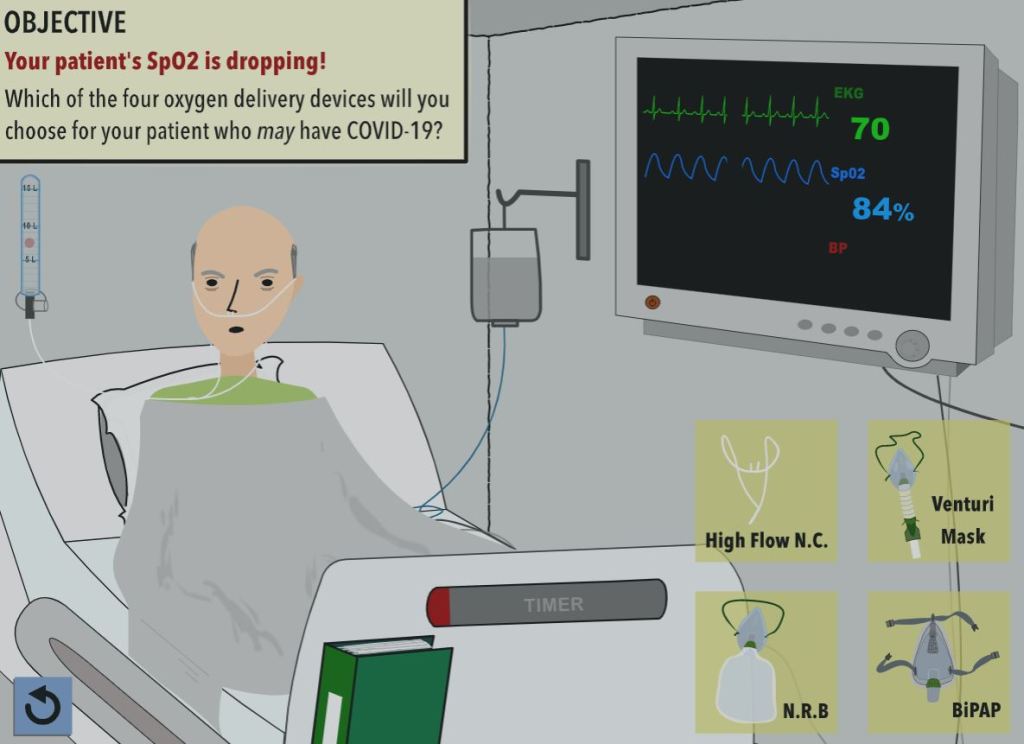
PHYSICIAN’S CORNER: NEJM “COVID-19 PRIMER – VIRTUAL PATIENT SIMULATION” (2020)

CLICK ON PATIENT BELOW TO LAUNCH “VIRTUAL PATIENT SIMULATION”

COMMENTARY

This interactive simulated case of Covid 19 (SARS CoV-2) is remarkable: a unique opportunity to stand in the shoes of a ER Doctor without any risk, except to our egos.

This is meant for doctors, but the intellectually curious  Guests of this site might enjoy the experience, especially Doctor Lisa Sanders fans.
The vocabulary is full Medical, and will give a foretaste of the words I will slowly be exploring. I believe that patients should not be intimidated by their lab reports.

I’ll start the vocabulary journey with FERRITIN which is a marker for IRON STORES in the body. You can have too much iron, which is dangerous (iron overload), in which case the ferritin is high.

There was a time when I had too little iron ( was anemic, with a hemoglobin of 8.6, and felt terrible) and my ferritin was low. I now check my ferritin every 6 months to make sure I am taking enough iron to offset my blood loss, which is another story I will tell when I start go through my medicine cabinet and discuss the Meds one at a time.

The reason for testing ferritin in our interactive Covid 19 case was because ferritin is markedly elevated in cases of inflammation/ infection. It is an “acute phase reactant”, and may reflect the “cytokines storm” that may be a contributor to the lethality of Covid 19.

There is another way to benefit from this simulation: the train-wreck of a patient serves as a cautionary tale of what you wish NOT to become. Our present medical profession is so DISEASE oriented. How much better if our society and our medical profession were HEALTH oriented instead.

—Dr. C.

CORONAVIRUS PODCAST: TRACING APPS, Antiviral remdesivir’S PROMISE

The Coronapod team pick through the latest news, plus we hear from the researchers making lemonade out of lockdown lemons.

In this episode:

01:10 Can contact-tracing apps help?

Governments around the world are banking on smartphone apps to help end the spread of the coronavirus. But how effective might these apps might be? What are the risks? And how should they fit into wider public health strategies?

Editorial: Show evidence that apps for COVID-19 contact-tracing are secure and effective

13:30 Antiviral remdesivir shows promise

Early results from a US trial of the antiviral drug remdesivir suggest it shortens recovery time for patients with COVID-19. We unpick the findings.

News: Hopes rise for coronavirus drug remdesivir

16:52 One good thing

Our hosts pick out things that have made them smile in the last week, including blooming trust in scientists, cooking experiments, and a neighbourhood coming together to clap for healthcare workers.

21:34 Unexpected opportunities

We hear from three researchers making the most of lockdown, studying tiny earthquakes, building balcony-based citizen science projects, or enlisting gamers to fight the coronavirus.

Fold-it, the protein-folding computer game

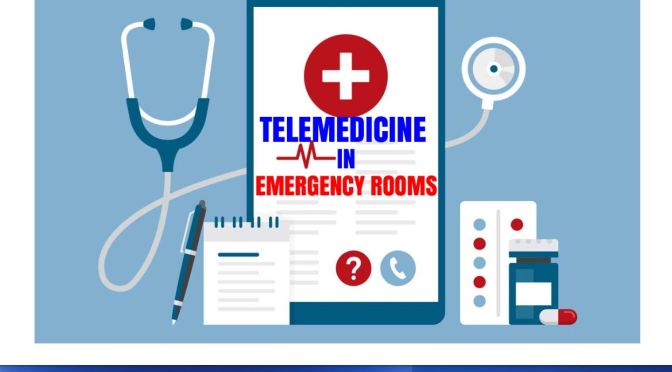
TELEMEDICINE: “FORWARD TRIAGE” FOR SCREENING PATIENTS DURING COVID-19

 Direct-to-consumer (or on-demand) telemedicine, a 21st-century approach to forward triage that allows patients to be efficiently screened, is both patient-centered and conducive to self-quarantine, and it protects patients, clinicians, and the community from exposure.

Interview with Dr. Judd Hollander on how health systems can use telemedicine services during the Covid-19 pandemic.

It can allow physicians and patients to communicate 24/7, using smartphones or webcam-enabled computers. Respiratory symptoms — which may be early signs of Covid-19 — are among the conditions most commonly evaluated with this approach. 

Health care providers can easily obtain detailed travel and exposure histories. Automated screening algorithms can be built into the intake process, and local epidemiologic information can be used to standardize screening and practice patterns across providers.

Disasters and pandemics pose unique challenges to health care delivery. Though telehealth will not solve them all, it’s well suited for scenarios in which infrastructure remains intact and clinicians are available to see patients. Payment and regulatory structures, state licensing, credentialing across hospitals, and program implementation all take time to work through, but health systems that have already invested in telemedicine are well positioned to ensure that patients with Covid-19 receive the care they need. In this instance, it may be a virtually perfect solution.

Read full article at NEJM

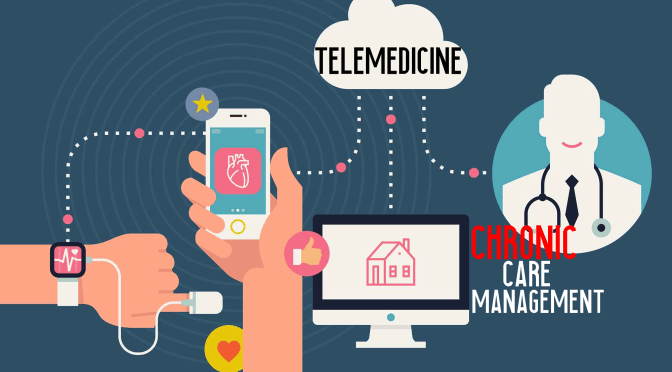
VIRTUAL HEALTH: “CHRONIC CARE MANAGEMENT” PROVES VALUE OF TELEMEDICINE

From a ComputerWorld article (April 27, 2020):

While the pandemic will prove the value of virtual care in a crisis, it will also demonstrate the effectiveness for ongoing chronic care management,” she said. “This moment will have a lasting effect on the adoption of virtual care and accelerate the shift from in-person care to virtual first engagement for multiple conditions and use cases.”

While the need for remote care will not be as acute once the pandemic crisis subsides, demand for telehealth systems will likely remain high. Forrester now expects more than one billion virtual care visits this year, the vast majority of them related to COVID-19.

“…After the crisis subsides, there will be a patient population that will want to continue to receive care online for some things, like managing chronic conditions, follow-up visits after an inpatient stay, surgery or to discuss diagnostic results,” she said.

In this case, it will be important for healthcare providers to ensure that patients are aware of the availability of services.

Read full article

TELEMEDICINE: STANFORD MEDICINE UTILIZES IPADS IN EMERGENCY DEPARTMENT

From a Stanford Medicine article (April 27, 2020):

“Far from separating us from our patients, it is actually expanding on what we can do,” said Ryan Ribeira, MD, clinical assistant professor of emergency medicine at the Stanford School.

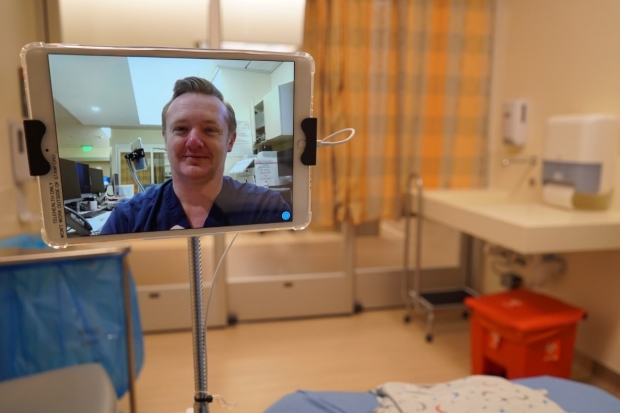
An iPad in a patient room at Stanford Health Care’s emergency department. Photo by Susan Coppa

Caring for patients remotely greatly reduces the use of protective equipment — an estimated 80-120 sets per day. The risk of exposure has also been minimized for physicians, nurses and other caregivers, particularly those who are pregnant, immune-compromised or otherwise at high risk of complications from COVID-19. 

When the staff at Stanford Health Care’s Marc and Laura Andreessen Emergency Department started connecting with patients in isolation via iPad, they found an unexpected benefit: The approach offered a more personal, human-centered experience. 

The iPad project moved from conception to implementation in just eight days, starting with a drive-through program in a Stanford Health Care garage: Patients remained in their cars while a physician assessed them by video from inside the emergency department. 

To bring the program into patient rooms, technology specialists at Stanford Health Care ensured the tablets had necessary features, such as the ability to auto-answer calls. When a caregiver calls to check in, the patient receives a few rings as advance notice, then the iPad answers itself. 

The iPad has also been paired with portable handheld ultrasound scanners that quickly plug in, eliminating the need for a bulky ultrasound cart that requires decontamination after every use. And patients participating in clinical research can consent via iPad.

Read full article