

HEALTH & RETIREMENT: A LOOK AT MEDICARE, MEDIGAP AND PART D DRUG PLANS

If you’re enrolled only in original Medicare with a Medigap supplemental plan, and don’t use a drug plan, there’s no need to re-evaluate your coverage, experts say. But Part D drug plans should be reviewed annually. The same applies to Advantage plans, which often wrap in prescription coverage and can make changes to their rosters of in-network health care providers.

“The amount of information that consumers need to grasp is dizzying, and it turns them off from doing a search,” Mr. Riccardi said. “They feel paralyzed about making a choice, and some just don’t think there is a more affordable plan out there for them.”

November 13, 2020

When creation of the prescription drug benefit was being debated, progressive Medicare advocates fought to expand the existing program to include drug coverage, funded by a standard premium, similar to the structure of Part B. The standard Part B premium this year is $144.60; the only exceptions to that are high-income enrollees, who pay special income-related surcharges, and very low-income enrollees, who are eligible for special subsidies to help them meet Medicare costs.

“Given the enormous Medicare population that could be negotiated for, I think most drugs could be offered through a standard Medicare plan,” said Judith A. Stein, executive director of the Center for Medicare Advocacy.

“Instead, we have this very fragmented system that assumes very savvy, active consumers will somehow shop among dozens of plan options to see what drugs are available and at what cost with all the myriad co-pays and cost-sharing options,” she added.

Advocates like Ms. Stein also urged controlling program costs by allowing Medicare to negotiate drug prices with pharmaceutical companies — something the legislation that created Part D forbids.

Read full article in NY Times

COMMENTARY

Medicare is a blessing. It is a great help to retired and elderly people and generally does the job it was intended to do. There are a great variety of Medicare supplement plans and pharmaceutical purchase plans, And they jockey and change every year.

I get a headache just thinking about how to compare these plans from my individual needs and and whether their cost is worth it. The take-home message from the New York Times article is that you can get individual attention from an advisor who presumably knows the field well.

The key acronyms are SHIP and HICAP, which stands for state health insurance assist program and California health insurance counseling and advisor program respectively.

The California number is 1-800-434-0222. Be sure to write down the medications that you are taking and Your diagnosed illnesses, as well as your financial status in order to make best use of the service.

—Dr. C.

HEALTH: ‘RISKS & BENEFITS OF AI REVOLUTION IN MEDICINE’

It has taken time — some say far too long — but medicine stands on the brink of an AI revolution. In a recent article in the New England Journal of Medicine, Isaac Kohane, head of Harvard Medical School’s Department of Biomedical Informatics, and his co-authors say that AI will indeed make it possible to bring all medical knowledge to bear in service of any case.

Properly designed AI also has the potential to make our health care system more efficient and less expensive, ease the paperwork burden that has more and more doctors considering new careers, fill the gaping holes in access to quality care in the world’s poorest places, and, among many other things, serve as an unblinking watchdog on the lookout for the medical errors that kill an estimated 200,000 people and cost $1.9 billion annually.

“I’m convinced that the implementation of AI in medicine will be one of the things that change the way care is delivered going forward,” said David Bates, chief of internal medicine at Harvard-affiliated Brigham and Women’s Hospital, professor of medicine at Harvard Medical School and of health policy and management at the Harvard T.H. Chan School of Public Health. “It’s clear that clinicians don’t make as good decisions as they could. If they had support to make better decisions, they could do a better job.”

Read more

THE DOCTORS 101 CHRONIC SYMPTOMS & CONDITIONS #22: MIGRAINE HEADACHE

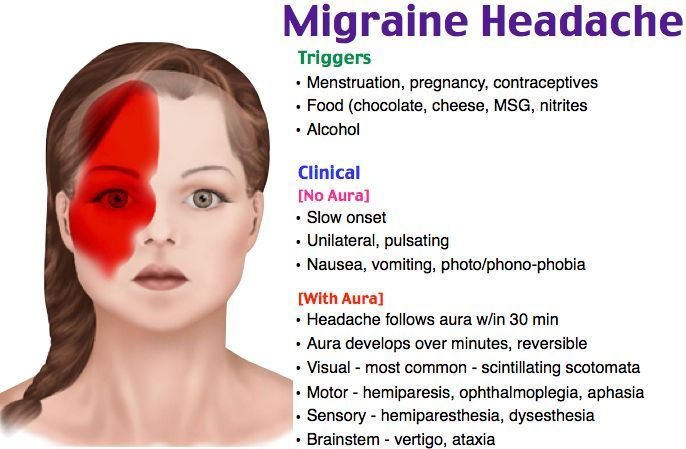
Migraine Headache in its classic form is a unique syndrome, or grouping of symptoms. There is often a PRODROME of anxiety, mood changes or fatigue a day or two before the Headache. There may also be an AURA, such as visual or other sensory symptoms, preceding the headache by minutes.

The Headache is often ONE-SIDED (hence the name, HeMigraine). The Headache is SEVERE, and accompanied by NAUSEA AND VOMITING, a “sick” Headache.

There are a variety of TRIGGERS, such as ripened Cheeses, Red wine, Nitrate-containing foods like hot dogs and pepperoni, and missing your cup of coffee. Stress and Hormonal Changes (menstrual periods) may trigger Migraine.

Migraine often has a FAMILY HISTORY. If one parent has migraine, the risk is 50%, and if both parents, 75%. It is more common in women. During the Headache, Migraine sufferers often seek out a quiet, dark room, and avoid stimulation.

My own experience with Migraine is with isolated OPHTHALMIC MIGRAINE. I have the aura, but luckily have no pain. In my day, 50 years ago, Migraine was considered a Vascular Headache Problem, with Vasodilation being the cause. Many triggers result in Vasodilation.

After a half century of intense study, including the discovery of Calcitonin Gene Related Product (CGRP) in the blood during Migraine, It is now considered a NEUROVASCULAR Headache Problem, and there is optimism for future progress.

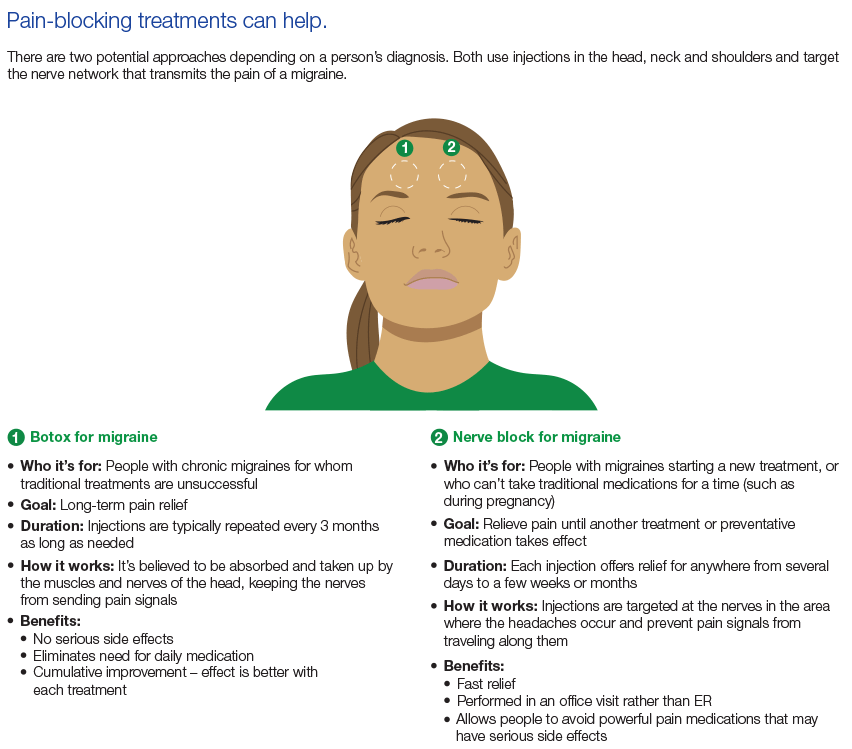
TREATMENT can be to abort, to shorten the attack after the warning Prodrome or Aura start. If the attacks are too frequent, such as several times a week,

PREVENTATIVE treatment may be needed. Medications include a host of chemicals, including Hormones, and most recently, CGRP. Many of these chemicals are vasoconstrictors, which narrow blood vessels.

Please refer to the Mayo Clinic article for more information.

–Dr. C

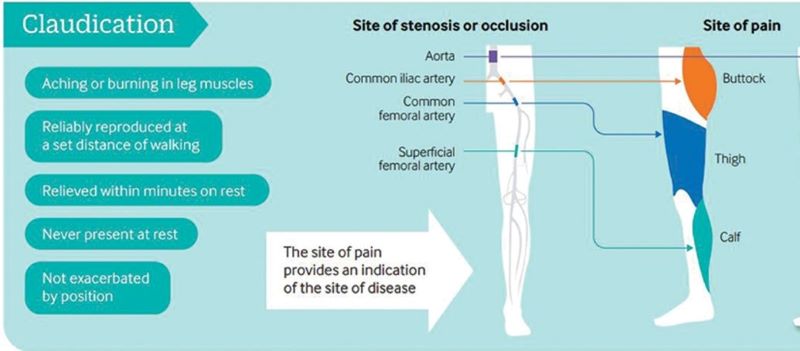
INFOGRAPHIC: EXERCISE FOR ‘CLAUDICATION’ (BMJ STUDY)

Exercise training is a safe, effective and low-cost intervention for improving walking ability in patients with IC. Additional benefits may include improvements in QoL, muscle strength and cardiorespiratory fitness. Clinical guidelines advocate supervised exercise training as a primary therapy for IC, with walking as the primary modality.

However, evidence is emerging for the role of various other modes of exercise including cycling and progressive resistance training to supplement walking training. In addition, there is emerging evidence for home-based exercise programmes. Revascularisation or drug treatment options should only be considered in patients if exercise training provides insufficient symptomatic relief.

Abstract

Peripheral artery disease (PAD) is caused by atherosclerotic narrowing of the arteries supplying the lower limbs often resulting in intermittent claudication, evident as pain or cramping while walking. Supervised exercise training elicits clinically meaningful benefits in walking ability and quality of life. Walking is the modality of exercise with the strongest evidence and is recommended in several national and international guidelines. Alternate forms of exercise such as upper- or lower-body cycling may be used, if required by certain patients, although there is less evidence for these types of programmes. The evidence for progressive resistance training is growing and patients can also engage in strength-based training alongside a walking programme. For those unable to attend a supervised class (strongest evidence), home-based or ‘self-facilitated’ exercise programmes are known to improve walking distance when compared to simple advice. All exercise programmes, independent of the mode of delivery, should be progressive and individually prescribed where possible, considering disease severity, comorbidities and initial exercise capacity. All patients should aim to accumulate at least 30 min of aerobic activity, at least three times a week, for at least 3 months, ideally in the form of walking exercise to near-maximal claudication pain.

Read full study

COVID-19 VIDEO: ‘CRITICAL CORONAVIRUS-BUSTING THERAPIES EXPLAINED’

Health experts say having a vaccine is just one front in a two-front battle against COVID-19. The other is effective treatments for those who are already sick with the disease. WSJ breaks down the three most promising types in development. Photo Illustration: Jacob Reynolds/WSJ.

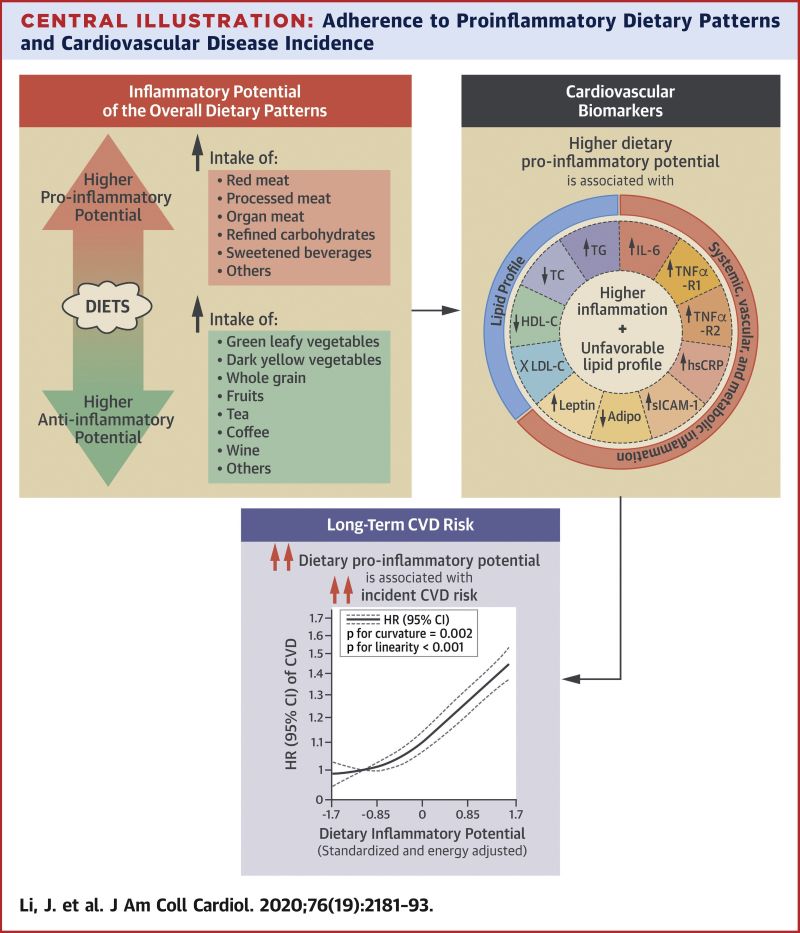
STUDY: “ANTI-INFLAMATORY” DIET OF VEGETABLES, FRUITS, COFFEE & TEA LOWERS HEART DISEASE AND STROKE RISKS

Dietary patterns with a higher proinflammatory potential were associated with higher CVD risk. Reducing the inflammatory potential of the diet may potentially provide an effective strategy for CVD prevention.

Background

Inflammation plays an important role in cardiovascular disease (CVD) development. Diet modulates inflammation; however, it remains unknown whether dietary patterns with higher inflammatory potential are associated with long-term CVD risk.

Read full study

INFOGRAPHIC: ‘DIFFERENCES BETWEEN COVID-19, THE FLU AND ALLERGIES (2020)

COMMENTARY:

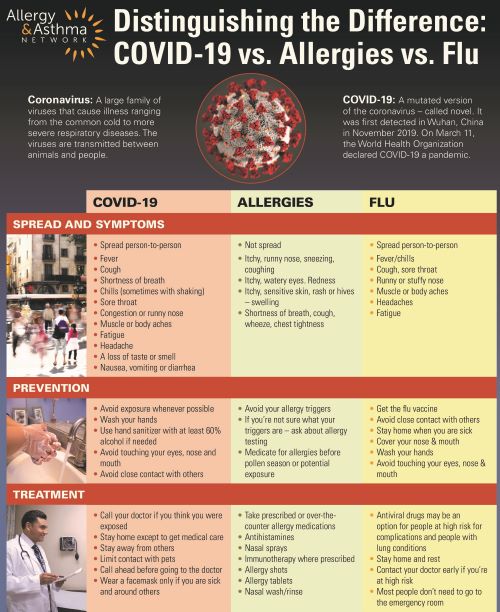
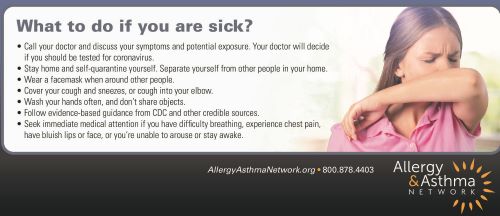
The infographic by the allergy and asthma foundation aims to distinguish between Covid, Influenza and allergy. I would like to discuss more than symptoms. Covid and Influenza are both caused by invading infectious viruses.

Allergy is an over-response by the sensitized body to harmless proteins from the environment Covid and Influenza viruses cause direct damage to the lining membranes of the respiratory tract provoking a protective response by the body which produces inflammation in the nose and lung. Rhinitis, bronchitis and pneumonia result, depending on the site of the inflammation.

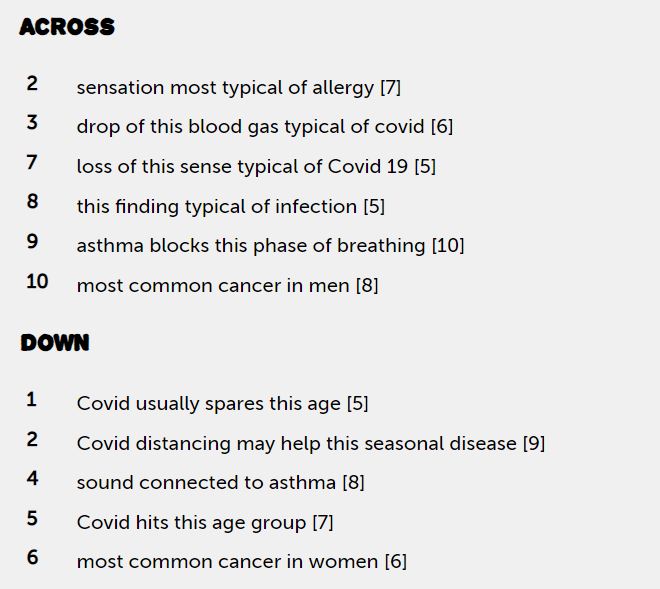
The symptoms of Allergy are far different from both Influenza and covid. ITCHING of the nose, eyes and skin is the hallmark of allergic Rhinitis, allergic conjunctivitis and Hives, respectively. Influenza or Covid Infection of the nose, eyes and airways can produce sneezing, redness, coughing and difficulty breathing, but not usually itching.

Fever is characteristic of Influenza and Covid, but not of uncomplicated Allergy. Asthma can result from either infection or allergy, but is a separate beast, caused by release of different inflammatory cytokines.

The ASTHMATIC REACTION shows itself in the BLOCKAGE of breathing of air OUT of the lung, on EXHALATION. This blockage on exhalation in asthma is heard as wheezing, a musical sound. Just ask the wheezing person to take a deep breath IN, which should be easier, and then breathe out as fast as possible, which should be slower and more difficult. Fever is not a feature of uncomplicated Asthma. Influenza and Covid.

Both produce FEVER, fatigue, aching and usually coughing. Covid has the greater linkage with Coughing, which often progresses to Shortness of breath. Both Influenza and Covid can produce a sore throat and runny nose. LOSS OF SENSE OF SMELL is unique to Covid, although if your nose is stuffy, the sense of smell can be impaired. Influenza preys on the very young, which are generally spared from Covid.

If you are careful about social distancing and wear masks in public, and get sick, Covid is more likely, since COVID IS MORE CONTAGIOUS THAN INFLUENZA. Covid protections will probably result in fewer cases of Influenza this winter.

To summarize,both the “flu” and Covid 19 are infectious conditions, vastly different from allergy, which is a derailed body defense mechanism. Any of the three can result in an asthmatic reaction, though the fever of influenza often lessens the Asthmatic response to that condition.. Covid is much more contagious and severe than influenza and can cause more widespread organ damage. Be sure to practice MASK WEARING AND SOCIAL DISTANCING.

If you have asthma and it worsens, in my opinion, this favors covid. My asthmatic patients often got better with the fever of Influenza. If you have a CHILD that gets sick, it is more likely to be Influenza than Covid.

–Dr. C

Empowering Patients Through Education And Telemedicine