Category Archives: Medicine

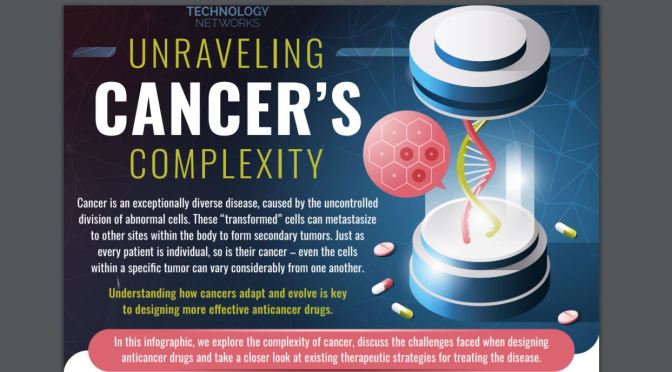
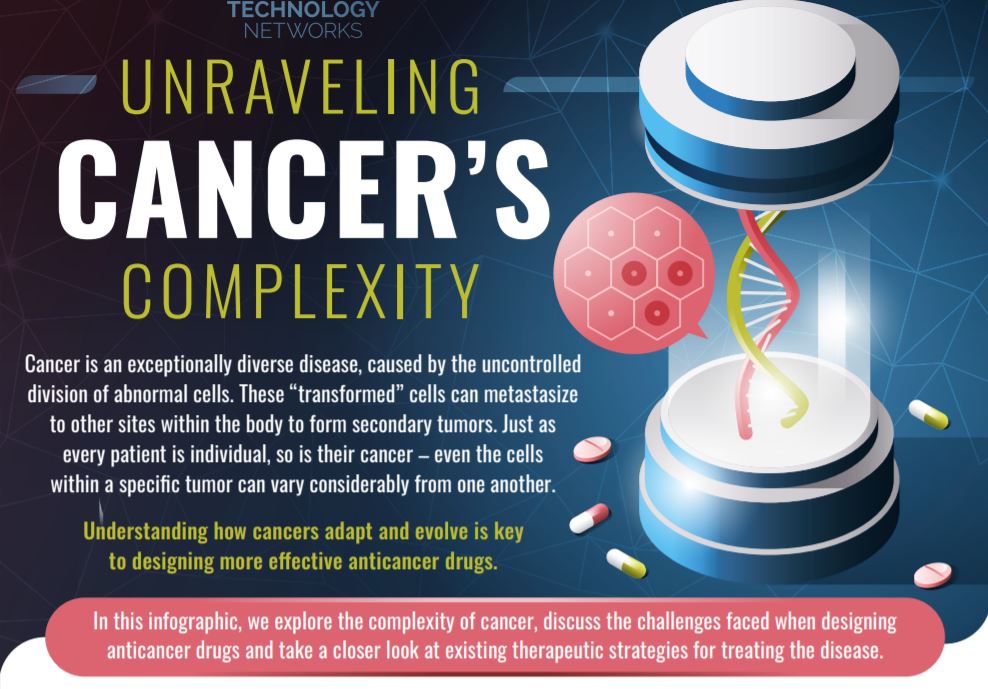
INFOGRAPHIC: A LOOK INTO “CANCER’S COMPLEXITY”

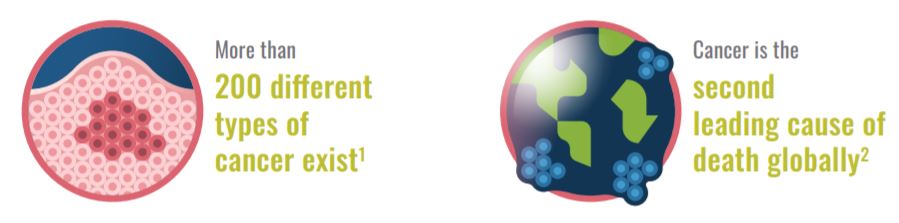
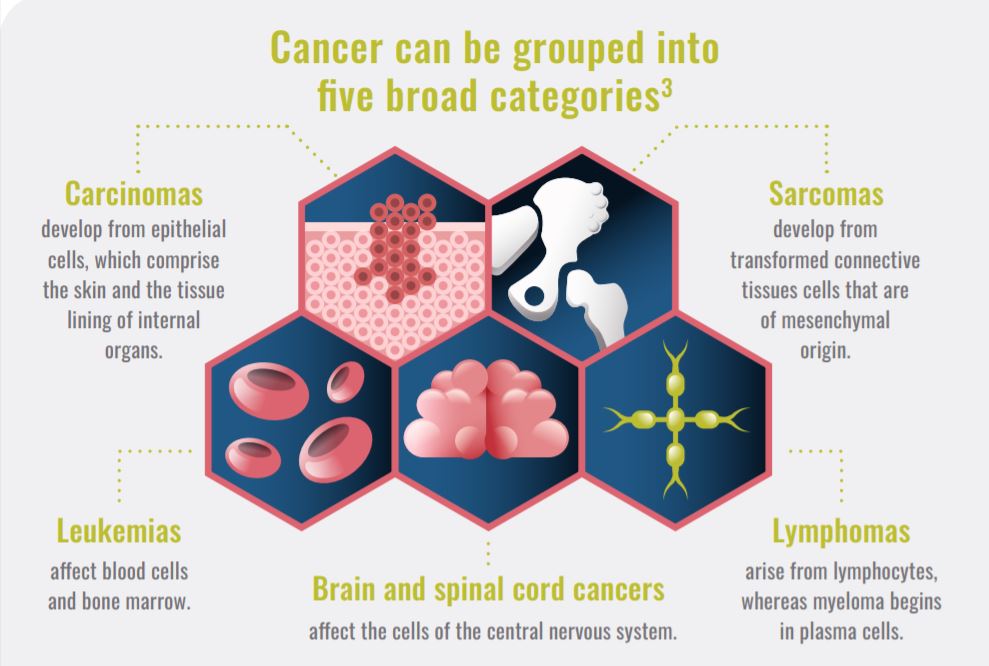
Technology Networks Cancer Drug Discovery-page-0

COMMENTARY

This infographic is a high-level discussion of cancer, with plenty of information to keep a Physicians’ interest.

The Human Body is a complex Community of individual cells that normally work together with admirable Harmony. Each individual cell is supplied with all its’ wants, and vigorously does its’ part for the Body.

Occasionally a ROGUE CELL escapes constraints and GOES ITS’ OWN WAY.

This has been happening from the beginning of multicellular life, and these MISCREANTS have EVOLVED to preserve themselves and have an amazing bag of TRICKS.

They are Very resourceful just like VIRUSES, which can also cause CANCER.

These twin threats give modern medical technology about all it can handle, and more.

PREVENTATIVE care offers a remedy.

Prevention is not at all complex, but of course requires thought, energy and planning. Prevention is difficult to square up with the easy, effortless, intuitive  life we yearn for.

Do you have the resolve to give SLEEP, DIET and EXERCISE a chance?

–DR. C

PODCAST INTERVIEWS: DIAGNOSIS AND EARLY TREATMENT OF COVID-19

In this audio interview conducted on June 3, 2020, the editors discuss two new studies: one comparing test swabs collected by health care workers with swabs collected by the patients themselves and one assessing hydroxychloroquine treatment in people who had been exposed to Covid-19 but weren’t yet ill.

The continuing spread of SARS-CoV-2 remains a Public Health Emergency of International Concern. What physicians need to know about transmission, diagnosis, and treatment of Covid-19 is the subject of ongoing updates from infectious disease experts at the Journal.

Eric Rubin is the Editor-in-Chief of the Journal. Lindsey Baden is a Deputy Editor of the Journal. Stephen Morrissey, the interviewer, is the Executive Managing Editor of the Journal.

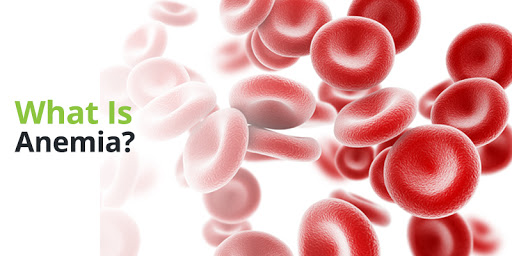
IN THE LAB: TESTS FOR AND DIAGNOSING “aNEMIA”

I should have known something was wrong.

I was getting short of breath with a third of a 45-minute exercise I had done for years, but I rationalized it away. I reasoned that I hadn’t been sleeping well, I am getting old. And my heart isn’t working as well because of the Atrial Fibrillation.

Physicians have a big armamentarium of excuses they can generate, and besides it is their Karma to GIVE Medical care rather than to RECEIVE it.

The AHA moment came when I bumped my leg, and peeled back some skin. My skin is old and fragile, and I’m always tearing it in small areas.

This time, I got to see the blood run all the way down my leg like a drop of grape juice, not the thick blood I’m used to. If anything, my blood should be thicker, more viscous, since my average Hemoglobin is 16 gm., on the high side of normal.

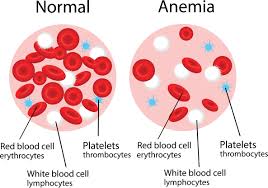
I got my blood drawn, and ordered a CBC and a ferritin. The CBC shows the Hemoglobin level, and a number of other measurements bearing on anemia, and the ferritin gives a measure of IRON STORES.

I can’t remember the first time my ferritin was ordered, or why, but it has for years been borderline, just barely in the normal range, dipping down as low as 18, and rising as high as 35.

Since a common cause of low iron stores with a good diet is colon cancer, I had about 3 colonoscopies to rule out cancer over a period of 6 years; lucky me.

At least they were all negative, and without polyps.

This time the ferritin was 12, well into the abnormal range, and the Hemoglobin was 8.6 gm. little more than half my usual.

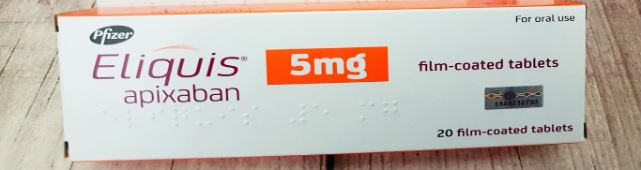
I had been fibrillating for 5 months, and been on 5 mg. Eliquis ( an anticoagulant/blood thinner) for the same period. Having a recent normal colonoscopy, the most likely diagnosis was AVMs (arteriovenous malformations) of the small bowel, with bleeding accelerated by the Eliquis,

Since small bowel surgery contraindicated a diagnostic videocapsule, this diagnosis would have to remain an assumption.

I reduced the Eliquis by 25%, calculated my blood loss rate and started 2 capsules of feosol alternating with 3 capsules daily. Over a period of 4 months, my Hemoglobin came back up to 15 gm., and my ferritin came up to 50. I am due another test as soon as I get enough nerve to brave the Covid and go to the lab.

This story is a good illustration of treating one illness, and thereby creating another in this world awash with medication. How much better it is to stay as healthy as possible.

However, I am becoming increasingly aware of the fact that Health is not often the top priority in most peoples lives.

As an illustration, I refer to todays’ Sunday New York Times, which reviewed 2 books on walking, one written to praise its’ health benefits. To quote the reviewer, “

The issue with ‘ in praise of walking’ is Mr. O’Mara’s assumption that how good an activity may be for us is the most essential measure of its worth”. Praising health raises an issue?

Personally, my main exercise is walking, and I do it expressly for health. That doesn’t mean that I don”t enjoy walking and have other motivations. I would not be walking as FAST, however, it it were not so healthy.

–Dr.C.

PRESCRIPTION DRUGS: “ON MEDICATIONS IN GENERAL”

Several ideas apply to ALL MEDICINES. Terminology should be clarified. Medicine, Pharmaceutical, and Drug, in my mind are equivalent.

The term “drug” is pejorative, and I try to use it so. The term “Pharmaceutical” is too long, leaving me with “medication”.

There are some Practical points. You should look at your prescription when you first get it, to make sure it is the right one. Yes, pharmacists rarely make some mistakes. They are human.

You should ask the Pharmacist if she knows WHERE the drug was manufactured. Foreign countries, especially China and India, are less reliable, and the USA is safer. The original Brand Name drugs are more often domestically produced, but even these are being “offshored”.

Next, check the prescription date and expiration date.You should get a ” SHELF LIFE” (the difference between the two) of about 2 years, otherwise, you might ask the pharmacist the next time to give you the “best dating” in his stock.

Store your medications in a cool, dark, dry place in order to prolong their life. Light, heat and moisture degrade most compounds. Remember the O.J. Simpson case? Part of the reason he was acquitted is that a critical DNA sample was stored in a plastic bag, which retained moisture, rather than a paper bag, which is recommended because paper is porous, and allows moisture to escape.

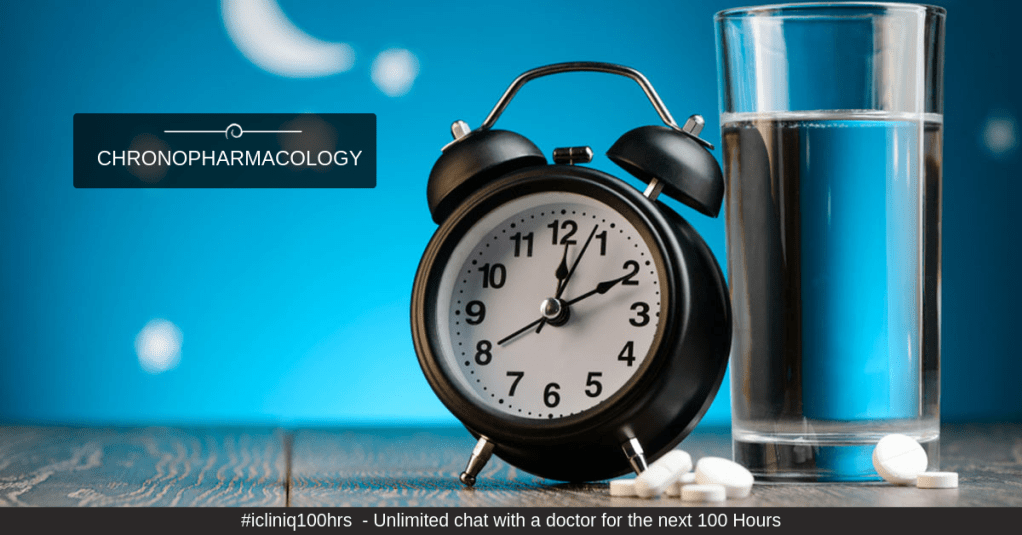
You should follow the suggested TIME to take the medication, because there is almost always an optimal time to take a given medication.

CHRONOPHARMACOLOGY is an emerging field, which is finding that more than 50% of medications are TIME SENSITIVE in their effect in the body. This is an unimportant, academic consideration for most Patients, given the high THERAPEUTIC WINDOW (dosage latitude) of most medications, the mild illness of most patients, and the disinclination of most Doctors to add one more detail onto their already heavy load.

In discussing the medicines in my cabinet and a few other important ones, I will be addressing TIMING.

What about OUTDATED MEDICATIONS? As discussed by the following article from Harvard, the dating is not critical except for liquids, and a few others, like Tetracycline.

This is fortunate, given the expense of medications today. What if I drop a pill on the floor, at home. I usually pick it up and take it. if i just dropped it, unless it is very inexpensive.

What if a pill sticks in your throat, like happens to me a lot? I drink water first, to moisten my throat to make it slipperier.

Next, I take a good sip of water, try to swish it back and go back with my head to accelerate the pill backward, and think confidence. Certain sizes of pills are my nemesis and i have to break them in two.

Please follow Dr. Cs Medicine Cabinet in future postings of DWWR.

–Dr.C.

Further reading

CORONAVIRUS: CONFUSING HYDROXYCHLOROQUINE STUDIES (NATURE PODCAST)

President Trump’s preferred coronavirus treatment is the focus of a new study suggesting it could cause more harm than good, but not everybody agrees. We discuss the fallout as trials around the world are paused and countries diverge over policy advice.

12:12 Are we rushing science?

Coronavirus papers are being published extremely quickly, while normally healthy scientific debate is being blown up in the world’s press. Is there a balancing act between timely research and accurate messaging?

18:49 One good thing

Our hosts pick out things that have made them smile in the last week, including hedgerow brews and a trip into the past using AI.

Recipe: Elderflower ‘Champagne’

Video: Denis Shiryaev restores historic footage with AI

22:30 The latest coronavirus research papers

Noah Baker takes a look through some of the key coronavirus papers of the last few weeks.

News: Coronavirus research updates

medRxiv: Full genome viral sequences inform patterns of SARS-CoV-2 spread into and within Israel

Harvard Library: Reductions in commuting mobility predict geographic differences in SARS-CoV-2 prevalence in New York City

Science: DNA vaccine protection against SARS-CoV-2 in rhesus macaques

DR. C’S MEDICINE CABINET: “WHY PATIENTS TAKE ELIQUIS”

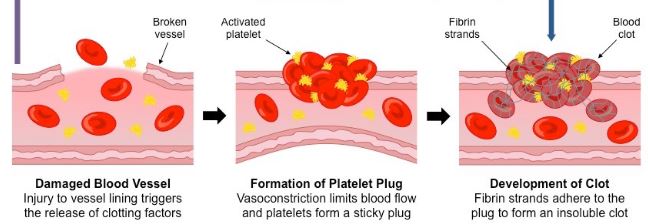
Eliquis nicely illustrates my contention in the Overview of Metabolism, that the body is a vast collection of pathways, or “supply chains”. Eliquis blocks a critical enzyme in the pathway leading to coagulation, or clotting” as the product.

Why in the world you want to block clotting? The staunching of blood flow, clotting, has saved countless hordes of early, Paleolithic humans, and continued useful through the bloody Roman and Medieval times, right through the violent 20th Century.

Recently, however, wars are becoming somewhat less popular, and eating excessively more popular, leading to a strange situation. Our evolutionarily-preserved CLOTTING mechanism is now leading to MORE problems than it is solving.

Obesity and type 2 Diabetes are leading to the production of so much fat, that it has to be stored in our arterial walls, clogging the blood flow to our Hearts and Brain, among other areas. This, and the somewhat surprising trend towards longer lives has led to an increase in a variety of age-related illnesses.

When I reached 80 years of age I developed Atrial Fibrillation, a condition leading to a tendency to form clots in my quivering atria, the upper chambers of my heart. To decrease the likelihood of clots getting into my blood stream, lodging in my brain and causing STROKE, my cardiologist started me on Eliquis, an anti-coagulant/blood thinner.

Drugs have three names. The proprietary name, Eliquis in this case, is given by the patenting company to be memorable; q,z,and x are popular letters. The second is the FDA drug name, Apixaban. The drug name often gives the doctor a clue as to its type: xaban refers to inhibiting (banning) of factor 10a (Xa). The third name is a chemical name of interest to biochemists and drug researchers.

When I started the Eliquis, at first unknown to me, I started to bleed internally, leading to a drop in my hemoglobin down to 8.6. I will go into this story when I start going through “how to read your laboratory report”.

I found that reducing my Eliquis from 5mg. to 3.75 mg. allowed me stabilize my hemoglobin by taking extra iron, which I will discuss later.

The doseage selected when the drug company markets a drug is fairly arbitrary, and usually involves round numbers. Interestingly, there is a 2.5mg. Eliquis, which is given if you meet 2 out of 3 criteria. I meet only one and am only 5 pounds shy of the second, in case you think (like my cardiologist does) that I’m taking a risk.

I believe that, whenever you are given a medication, you should be educated about the medicine, and the problem it is intended to benefit. Today’s physician often does not have the time to do this. The internet, including this website, offers a corrective.

I am trying my best to be helpful to you as a Patient Advocate. You and I both must have a doctor to rely upon. But to get the most out of our care, WE MUST BE INFORMED.

–Dr. C

VIDEO: “IS TELEMEDICINE THE FUTURE OF HEALTH CARE?”

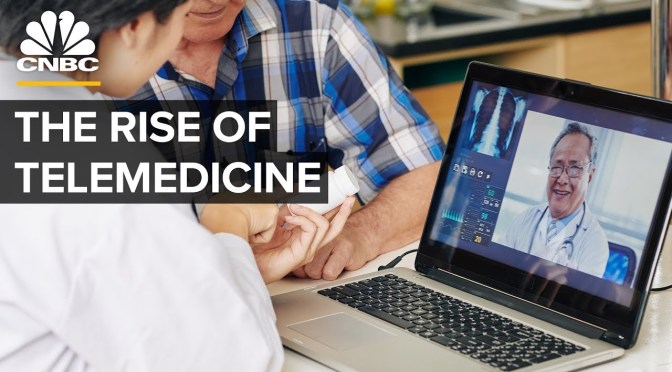
The coronavirus pandemic has overwhelmed hospitals, physicians and the medical community. That’s pushed telemedicine into the hands of providers and patients as the first response for primary care. Telemedicine isn’t new to the medical community, however it hasn’t been embraced due to insurance coverage, mindset and stigma. Here’s how it works and what it means for the future of health care.

COMMENTARY

The safety and convenience of Telemedicine have been amply illustrated by Covid 19. It’s place in the future of Medicine would seem to be assured.

Once the epidemic is over, however, some sticky details, waved away by fiat during the early days, must be addressed.

Will Payment parity be allowed by the Health insurance companies (And Medicare) be continued? Will cross-border Practice still be allowed by the states. Will more Doctors modernize? Will lawyers (and litigious patients) restrain themselves?
Stay Tuned!

—Dr. C.