Category Archives: Dr. C “Comments”

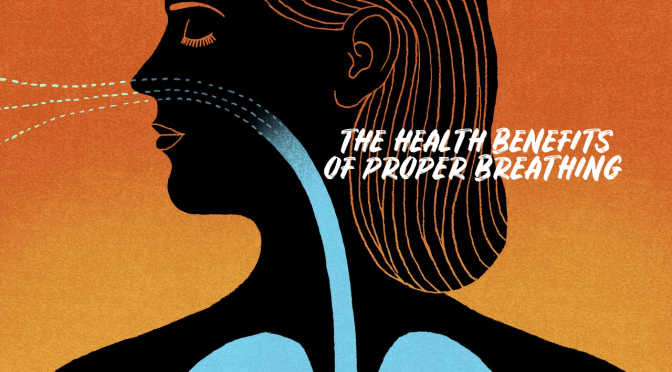
PREVENTION: THE HEALTH AND HEALING BENEFITS OF PROPER BREATHING

From a Wall Street Journal article (May 21, 2020):

Breathing properly can allow us to live longer and healthier lives. Breathing poorly, by contrast, can exacerbate and sometimes cause a laundry list of chronic diseases: asthma, anxiety, attention deficit hyperactivity disorder, hypertension and more. Poor breathing habits can even change the physical structure of our skeletons, depleting essential minerals and weakening our bones.

Most of us misunderstand breathing. We see it as passive, something that we just do. Breathe, live; stop breathing, die. But breathing is not that simple and binary. How we breathe matters, too.

Last year, I wanted to see just how dramatically breathing habits—good and bad ones—could affect my own brain and body. I’d learned that up to 50% of us are chronic mouth breathers, a problem well described by an ancient Tao text: “The breath inhaled through the mouth is called ‘Ni Ch’i, adverse breath,’ which is extremely harmful.”
Scientists have known for decades that inhaling through this pathway saps the body of moisture, irritates the lungs and loosens the soft tissues at the back of the mouth. Mouth breathing has also been linked with neurological disorders, periodontal disease and increased risk of respiratory infection. But nobody knew how quickly this damage came on.

Read full article

COMMENTARY

Breathing is something we don’t think about. It comfortably transcends the merely habitual, and there is a complex of controllers in the brain to Drive breathing should we be unable or forget to breathe voluntarily.
Breathing has it’s own poets and cults, one of which is MINDFULNESS MEDITATION, which uses our BREATHING as the focus of our consciousness, to get us outside ourselves.

With DEEP breathing,  I noticed an INCREASED pO2, as registered on my Pulse Oximeter.

In the 1960’s asthma was not so well controlled as now. The mechanics of breathing were more important, so we taught our Patients how to breathe properly.

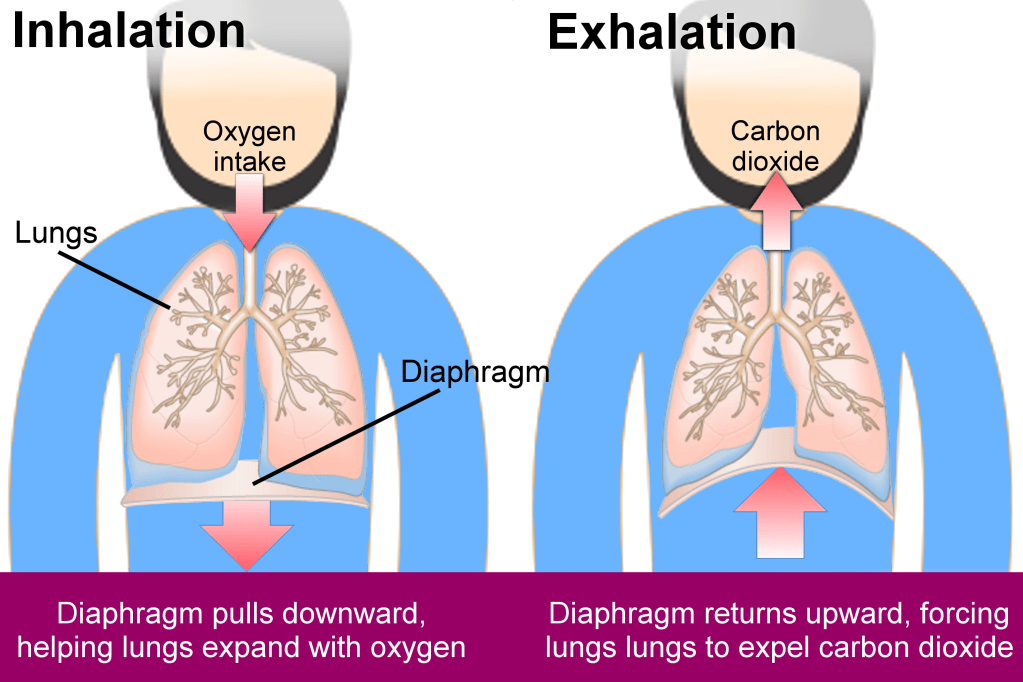
There are 2 sets of muscles we use to EXPAND our lungs, the DIAPHRAGM at the bottom of the chest, and the chest muscles themselves, the INTERCOSTALS. We refer to diaphragmatic breathing as “stomach” breathing, because the stomach bulges out as the descending diaphragm compresses the abdominal contents.

We refer to intercostal breathing as “chest” breathing because the chest expands when the inspiratory intercostals contract.

Diaphragmatic breathing is more efficient, and we encourage our asthmatic patients to Use their more efficient diaphragm to prevent them from tiring as they struggle to get their air out through their narrated airways.

You can squeeze a little extra air out of your lungs by contracting your abdominal muscles.

So to take a DEEP BREATH, see that your stomach rises and your chest expands with the breath IN, and that you squeeze both your abdomen and your chest with the breath out.

Your AIR SACS expand, your lungs are flushed with fresh air, and you blood oxygen, and BRAIN OXYGEN INCREASES with a deep breath in. The “stale air” is cleared by a full breath out.

When you are quietly breathing, letting that vital process take place automatically, notice that a deep breath, or “sigh”, occurs about once every 2 minutes. This is nature’s way to help lung surfactant PREVENT LUNG COLLAPSE and PNEUMONIA.

It is HEALTHFUL to PAY ATTENTION to your BREATHING occasionally! If uninclined to breathe deeply yourself, take a brisk walk up a hill, and let Nature do it for you.
—Dr. C.

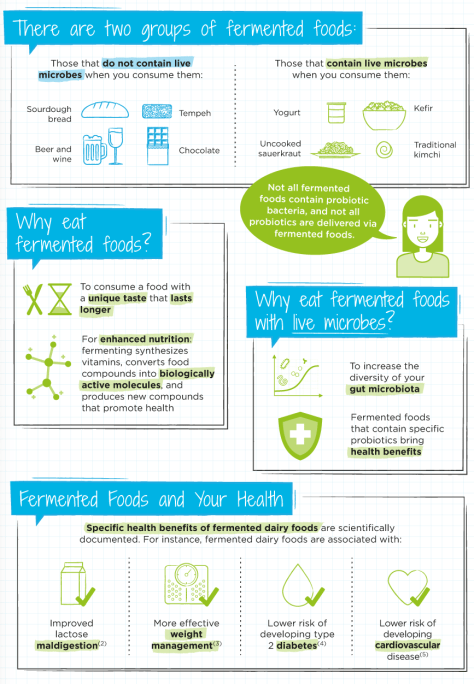
INFOGRAPHICS: “WHAT ARE, HOW WE GET AND WHY DO WE EAT FERMENTED FOODS”

Read more

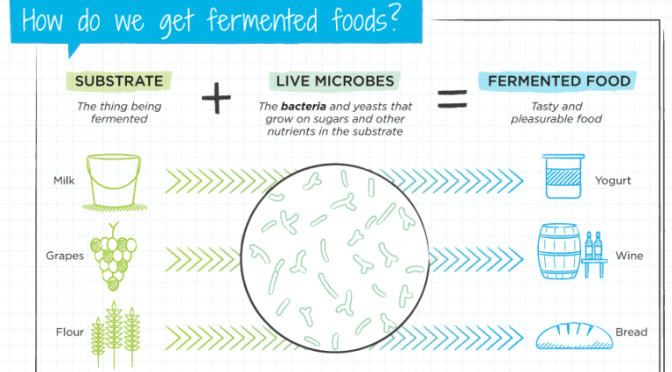
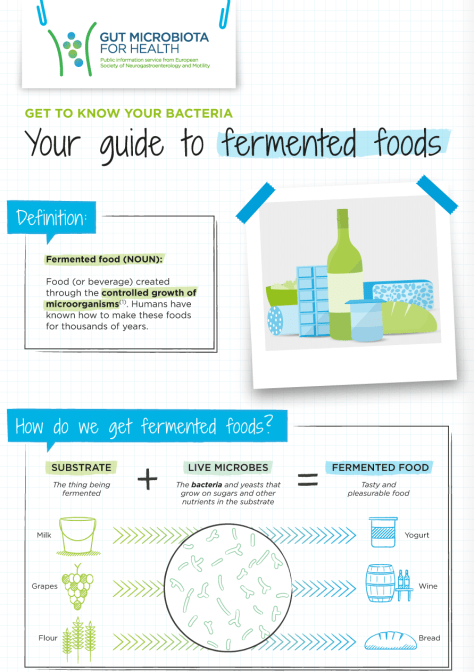
This article gave an interesting classification of fermented foods, pointing out that with some, like bread and wine, we eat the products of fermentation without the living organisms, while with others like kefir and yogurt, we eat the viable critters also.

Lactobacilli are called probiotics, and are supposed to have health benefits. It is not proven that they do, but at least the lactobacilli use up some of the sugar we would otherwise be eating, and taste good.

The problem with the claim that they diversify and benefit our microbiome, and crowd out the bad germs, is that they do not generally attach to our intestinal walls, and go right through with the rest of our food. They don’t stick around long enough to do any good.

My late wife had a bad infection with a bad actor called Clostridium difficile, which caused her to have a severe, bloody enterocolitis. After the second hospitalization with this affliction, an Infectious disease doctor suggested “culturelle”, which contained a patented Lactobacillus rhamnosus GG, which WAS supposedly proven to attach for a while. My wife took this, and never had another attack.

I still take this daily, “on faith”. Gullible me. Fecal transplants are now used effectively for C. Dif. enterocolitis. Avoiding unnecessary antibiotics, which wipe out your normal microbiome, your “good guy competition”, is An even better idea, but seems risky.

BOTTOM LINE:  Kefir and yogurt are calorie depleted, and taste good. What is not to like?

–Dr. C

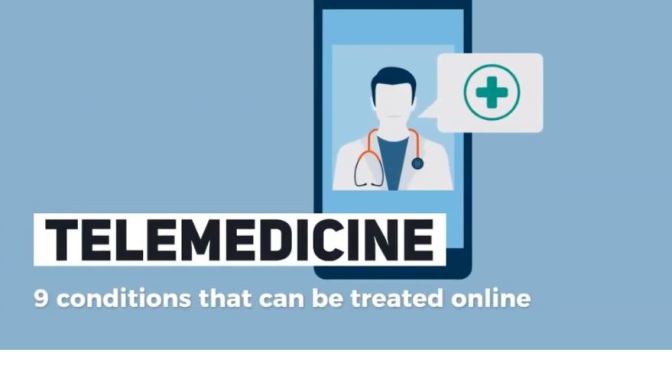
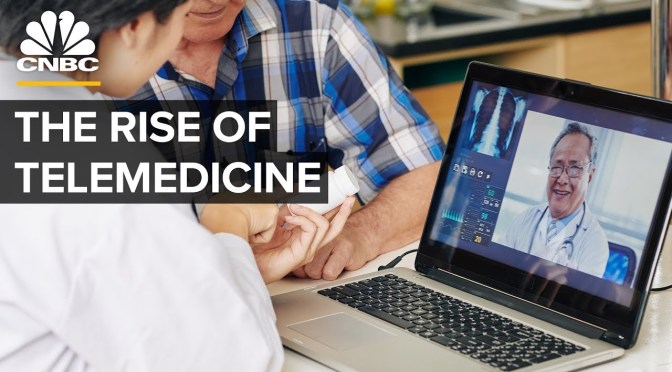
TELEMEDICINE: A REVIEW OF 9 CONDITIONS THAT CAN BE TREATED ONLINE (VIDEO)

TELEMEDICINE is here to stay! With all its’ advantages Patients will demand It!

This video is one of the few to highlight WOMENS’ HEALTH as an appropriate field for Telehealth. A remote visit first may at least let the Doctor order some tests that will accelerate your care.

Urinary problems can also be appropriate for telemedicine; the MEDICAL HISTORY is such a VALUABLE DIAGNOSTIC TOOL!

Psychological and Psychiatric care could be completely remote, by telemedicine. The Doctor could save on expenses, and deliver care less expensively.

Distance disappears as a barrier to Consultations and second opinions. A University medical center or prestigious multi specialty Clinic are on your doorstep.

Of course, barriers remain in the form of regulations, litigation, bureaucracy, and Insurance, but these can be overcome, if the Will is there.

—Dr. C

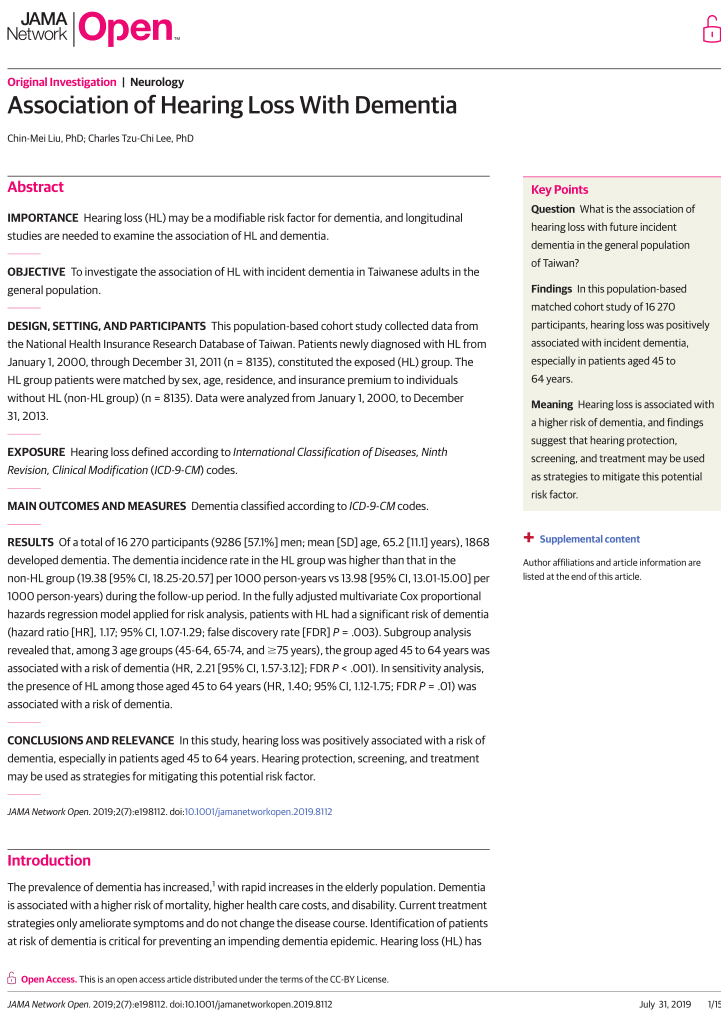
PODCAST: “THE EFFECTS OF HEARING LOSS ON COGNITIVE DECLINE” (JAMA REVIEWS)

Even limited hearing loss might be associated with cognitive decline. If true, early intervention with hearing aids might help people have better cognitive performance. 

Michael Johns III, MD, online editor for JAMA Otolaryngology, speaks with Justin Golub, MD, MS, assistant professor of otolaryngology at Columbia University, whose research has shown that very mild hearing loss can be associated with cognitive disability.

COMMENTARY

Hearing loss and cognitive ability decline together as we age, starting earlier in some people than others.

LIVING A HEALTHY LIFE STYLE-with good SLEEP, DIET, EXERCISE and COGNITIVE STIMULATION -seems to help benefit almost everything, including hearing, while a poor life style, neglecting the 4 Pillars, smoking, and drinking alcohol to excess seems to hasten our aging.

Certain medications, often taken to treat the results of a poor life style, can also harm our hearing.

LOUD SOUNDS (such as AMPLIFIED MUSIC), especially if prolonged, are particularly bad. SOUND POLLUTION contaminates the modern world as much as industries‘ excesses. I would often wear ear plugs to Football games (108 dB on my meter) and even in row 4 of the Symphony.

Once damaged, the delicate HAIR CELLS of our inner ear don’t grow back, although medical science once again is working feverishly to save us from ourselves.

Hearing aids can now be programmed to compensate for our particular pattern of frequency loss.

The premise made in the above article and podcast, that decreased HEARING is accompanied by (and Causes?)decreased COGNITION could be supported by a study demonstrating that Improved hearing restores the cognition. I understand that early results may suggest a cognitive benefit of hearing aids.

But PRESERVING BOTH with healthy living would of course be better- at least in my opinion.

Prevention, unfortunately, is a very hard sell in a world of costly medical treatments, where we are protected from directly confronting those costs by ever-expanding insurance. How about Medical savings accounts?

—Dr. C.

.

Read more

VIDEO: “IS TELEMEDICINE THE FUTURE OF HEALTH CARE?”

The coronavirus pandemic has overwhelmed hospitals, physicians and the medical community. That’s pushed telemedicine into the hands of providers and patients as the first response for primary care. Telemedicine isn’t new to the medical community, however it hasn’t been embraced due to insurance coverage, mindset and stigma. Here’s how it works and what it means for the future of health care.

COMMENTARY

The safety and convenience of Telemedicine have been amply illustrated by Covid 19. It’s place in the future of Medicine would seem to be assured.

Once the epidemic is over, however, some sticky details, waved away by fiat during the early days, must be addressed.

Will Payment parity be allowed by the Health insurance companies (And Medicare) be continued? Will cross-border Practice still be allowed by the states. Will more Doctors modernize? Will lawyers (and litigious patients) restrain themselves?
Stay Tuned!

—Dr. C.

TELEMEDICINE 2020: guidance to move forward in a POST-PANDEMIC world

From a John Locke Foundation article (May 13, 2020):

A combination of stay-at-home orders, recommendations from health professionals, and the rollback of restrictive telehealth regulations boosted the use of telehealth.

….with an eye toward the future, the authors offer recommendations for all interested parties to consider moving forward. These recommendations were informed by our research and a stakeholder meeting of industry groups who work with telehealth. These groups included Doctor on Demand, the American Medical Association, and the Center for Connected Health Policy. The paper’s recommendations are as follows:

  1. Data on COVID-19 telehealth administration and programs must be collected and analyzed.
  2. Regulatory flexibility should be built into telehealth to accommodate the range of use cases.
  3. Telehealth services should be utilized for primary care to reduce service redundancies.
  4. States should be empowered to move away from parity models to reduce the cost of telehealth services.
  5. Telehealth services should be available to the medically underserved.
  6. Innovation, privacy, and data security in telehealth services should be the norm.

Read more

COMMENTARY

Telemedicine  is an “almost perfect” extension of Medical Care for the Covid epidemic (1). As we ease away from Panic, we will not be abandoning distancing, cleanliness, and other personal measures that keep us well. SARS-CoV-2, or the next Pandemic Virus will be lurking in the background. 

Likewise, Medicine will always embrace Telemedicine for its’ convenience, safety, and efficiency, if we can overcome the roadblocks discussed in the above article.

One efficiency in particular, discussed in the previous RPA( from Australia) article stood out; the use of Nurse-triage to direct telephone (or someday audio-visual) Patients to the most appropriate destination; ER, Urgent Care, after-hours clinic, or home care.

The Schmidtt-Thompson protocol ( which guides triage) has been used since 1980, having stood the test of time and lawyers. It is available in electronic form, and when fully automated, it should be made available without cost.

Just imagine all of the unnecessary ER visits And Physician Visits potentially saved!

Telemedicine has indeed added convenience and safety in the Era ( it seems like forever) of Covid.

There are many Telemedicine ideas that will still be used when Covid hopefully  takes its’ place in the Influenza immunization vial.

—Dr. C.

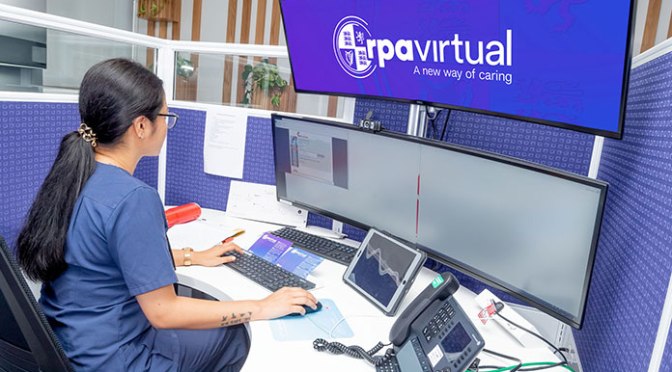
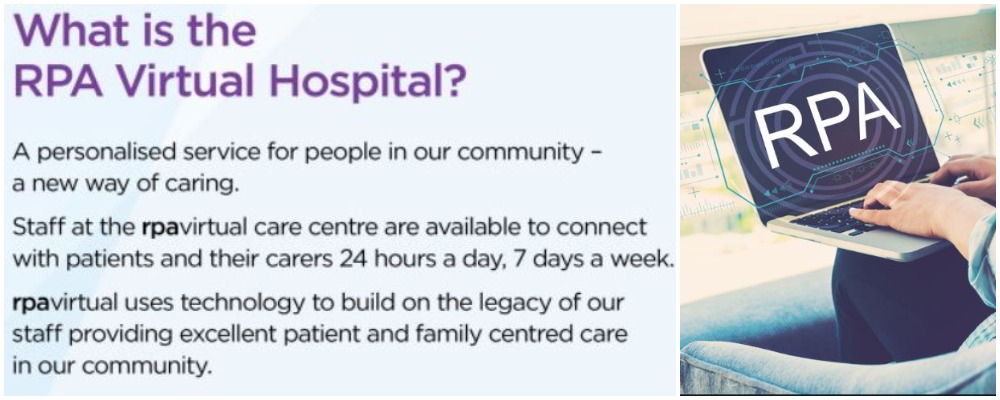
TELEHEALTH IN AUSTRALIA: “RPA VIRTUAL HOSPITAL” IS A 24/7 PATIENT CARE SYSTEM

From The Guardian (May 12, 2020):

“Now, everybody is on board,” says Dr Teresa Anderson, chief executive of the Sydney Local Health District. “There is not one clinical department across the district that is not providing care virtually.”

hat

What a difference a pandemic makes. Although RPA Virtual Hospital was well into development when news broke from Wuhan in January, pandemic preparations meant it was scaled up far quicker than had been envisaged.

Anderson says RPA Virtual Hospital opened on 3 February with just six nurses. It now has more than 30 nurses, as well as medical and allied health teams, and 600 registered patients. Operating out of Royal Prince Alfred Hospital campus, it functions in many ways like a regular hospital, with a clinical handover, ward rounds, multidisciplinary team meetings and its own governance structures.

The virtual hospital is part of a wider suite of innovations developed at breakneck speed during the pandemic response, which include providing care in rented hotel and apartment accommodation to Covid-19 patients and others in quarantine, thus freeing up hospital beds.

Read more

COMMENTARY

The Covid epidemic spurred development of an addition to an already good medical care system.

A group of chronically ill patients were invited into the virtual care system. Nurses are used on initial encounter. They direct the enhanced home care, referrals or hospital care as needed. Electronic devices record the care given.

Hotels are used to quarantine suspected Covid patients, with telemonitoring.

As in America, the Covid epidemic has exposed the excesses of unneeded “elective” surgery, most notoriously surgery for back pain.
We can learn a lot by studying the health care of other countries.

—Dr. C.

TELEMEDICINE BENEFITS: PATIENT’S “CONVENIENCE & SAFETY” TOP THE LIST

From a Permanente.org online article (May 11, 2020):

“Our patients are glad we offer telehealth options because they don’t want to come to the medical centers. This allows them to stay home and stay safe,” Dr. Lee says. “Before, telehealth was a choice and convenience, but now it’s one of the ways patients remain healthy with social distancing.”

The majority of telehealth visits are phone appointments, but Dr. Lee says video usage is increasing as more patients become comfortable with the platform.

Telehealth can also include services such as remote patient monitoring, which allows patients to take blood pressure measurements and blood sugar readings at home so that their care teams can monitor ongoing health conditions. In the case of the Kaiser Permanente Mid-Atlantic States region, doctors also use telehealth to do rounds virtually for patients who have suspected or confirmed COVID-19.

Patients at higher risk for complications are given pulse oximeters so their doctor can monitor for signs of severe respiratory infection before other symptoms might indicate a need for additional care, including hospitalization.

COMMENTARY

TELEHEALTH is HERE TO STAY. It came in with the telephone, and has been gaining in recent decades. The distancing and Patient convenience so characteristic of Telehealth made it a natural fit for Covid 19, which has accelerated its’ adoption.

Your CLINICAL HISTORY, led by the Story of your Present Illness, has since time immemorial been the MOST IMPORTANT ELEMENT leading to accurate  DIAGNOSIS. During a TELEMEDICINE VISIT, your doctor must make the MOST out of your clinical history. She can’t do a proper Physical Exam, although she can usually see you, and maybe direct a SELF exam. Teledata, such as EKG,B.P., and blood sugar will become increasingly available.

Your Doctor can usually get enough information to order Lab work and Imaging; and prolix ordering can be tempered, since a good HISTORY of the PRESENT ILLNESS, systems review, past and family history can narrow the diagnostic possibilities considerably. The pressure of time and demanding computer Records may lead the overworked Doctor to use Lab Tests to make up for insufficient Medical History.

Integrated medical systems, such as Kaiser, can also easily access your past medical information, one of the advantages of having everything under one roof.

Informed Patients, SELF-EDUCATING themselves from the vast trove of medical information on the internet (and maybe DWWR) can author their own MEDICAL NARRATIVE, or at least make the Doctors job easier.

—Dr. C.

Read full article

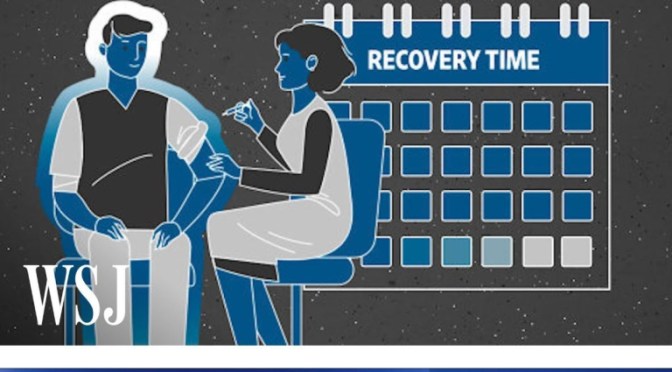
HEALTH: “HOW THE BODY CLEARS COVID-19” (VIDEO)

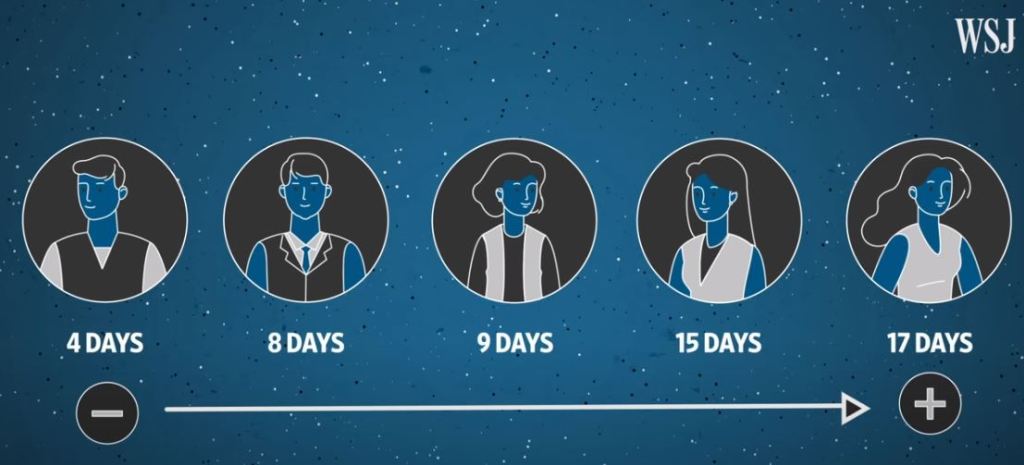
Understanding how the body clears the new coronavirus is becoming more important as the U.S. begins to reopen. WSJ’s Daniela Hernandez explains how the body fights infection and why feeling better doesn’t equal being virus-free. Photo illustration: Laura Kammermann

COMMENTARY

This excellent video is well worth watching and listening to. It revisits how the immune system, both innate and adaptive responds to SARS CoV and other viruses.

It shows graphically how long the body takes to clear the the Covid 19 virus.

And it makes me, a susceptible 88 year old, even more alert to infection. We should keep our guards up.

Even if an effective vaccine is found, it will probably take its place, incorporated into influenza vaccine as an annual immunization.

Dr. C.

PHYSICIAN’S CORNER: NEJM “COVID-19 PRIMER – VIRTUAL PATIENT SIMULATION” (2020)

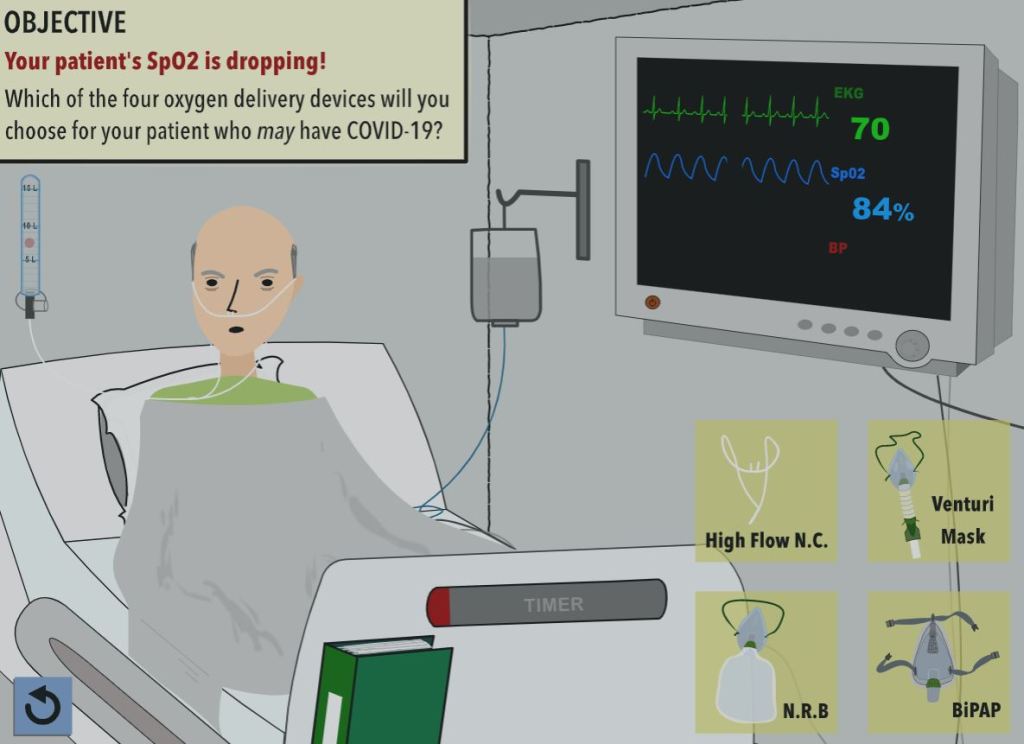
CLICK ON PATIENT BELOW TO LAUNCH “VIRTUAL PATIENT SIMULATION”

COMMENTARY

This interactive simulated case of Covid 19 (SARS CoV-2) is remarkable: a unique opportunity to stand in the shoes of a ER Doctor without any risk, except to our egos.

This is meant for doctors, but the intellectually curious  Guests of this site might enjoy the experience, especially Doctor Lisa Sanders fans.
The vocabulary is full Medical, and will give a foretaste of the words I will slowly be exploring. I believe that patients should not be intimidated by their lab reports.

I’ll start the vocabulary journey with FERRITIN which is a marker for IRON STORES in the body. You can have too much iron, which is dangerous (iron overload), in which case the ferritin is high.

There was a time when I had too little iron ( was anemic, with a hemoglobin of 8.6, and felt terrible) and my ferritin was low. I now check my ferritin every 6 months to make sure I am taking enough iron to offset my blood loss, which is another story I will tell when I start go through my medicine cabinet and discuss the Meds one at a time.

The reason for testing ferritin in our interactive Covid 19 case was because ferritin is markedly elevated in cases of inflammation/ infection. It is an “acute phase reactant”, and may reflect the “cytokines storm” that may be a contributor to the lethality of Covid 19.

There is another way to benefit from this simulation: the train-wreck of a patient serves as a cautionary tale of what you wish NOT to become. Our present medical profession is so DISEASE oriented. How much better if our society and our medical profession were HEALTH oriented instead.

—Dr. C.