PODCAST INTERVIEWS: DIAGNOSIS AND EARLY TREATMENT OF COVID-19

In this audio interview conducted on June 3, 2020, the editors discuss two new studies: one comparing test swabs collected by health care workers with swabs collected by the patients themselves and one assessing hydroxychloroquine treatment in people who had been exposed to Covid-19 but weren’t yet ill.

The continuing spread of SARS-CoV-2 remains a Public Health Emergency of International Concern. What physicians need to know about transmission, diagnosis, and treatment of Covid-19 is the subject of ongoing updates from infectious disease experts at the Journal.

Eric Rubin is the Editor-in-Chief of the Journal. Lindsey Baden is a Deputy Editor of the Journal. Stephen Morrissey, the interviewer, is the Executive Managing Editor of the Journal.

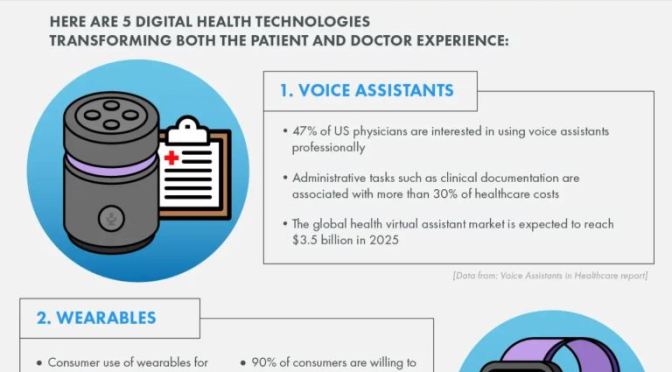
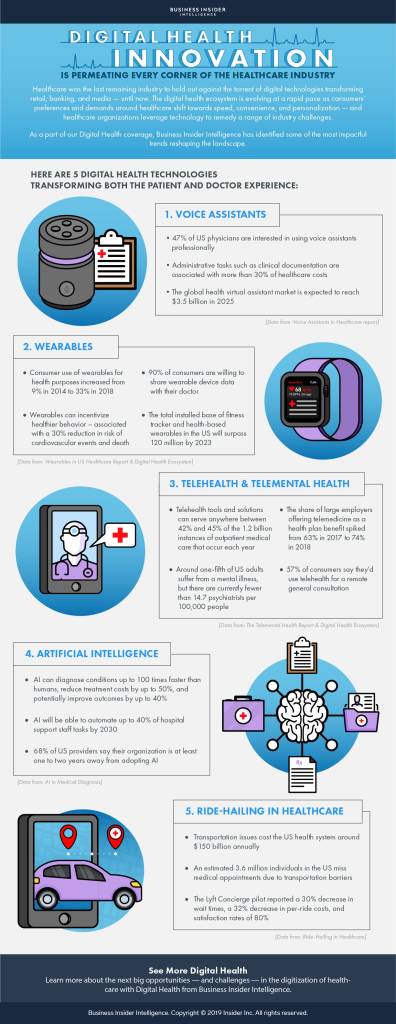
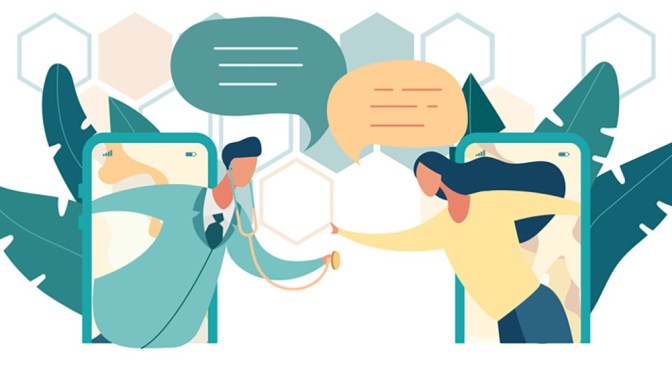
INFOGRAPHICS: “DIGITAL HEALTH TECHNOLOGIES IMPROVING PATIENT CARE”

COMMENTARY

The technology of telemedicine will predictably and steadily get better.
Medical assistants, mostly human at present, are commonplace, notably in specialty offices, and machines using improving voice-to-text transcription are getting better.

Wearable devices are proliferating and hopefully coming down in cost, and platform technology is improving though still glitchy.

Patients generally accept Telemedicine. They like the saving of travel time and infection exposure.

Doctors may drag their feet because the increased effort and legal exposure is not compensated by increase in payment. On the contrary, pre-Covid compensation was LESS for a televisit. Continuing Parity would help.

The politicians at the state level should eventually make licenses valid across state borders.

The big wild card is the Legal Profession. Unless they develop restraint( and litigious patients reform), there could be a feeding Frenzy, which would delay implementation of a very good idea.

Eventually telemedicine deserves to be 50% or more of medical practice.

—Dr. C.

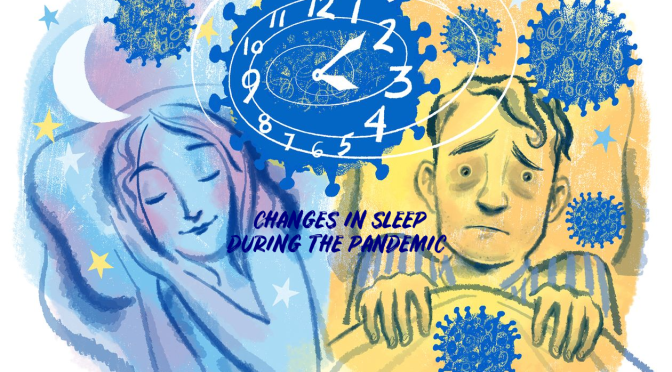
HEALTH: HOW SLEEP HAS CHANGED DURING COVID-19

From the Wall Street Journal (June 1, 2020):

The biggest problem has been staying asleep,” says Philip Muskin, a professor of psychiatry at Columbia University Medical Center in New York. “People aren’t exercising, their days have no structure at all.”

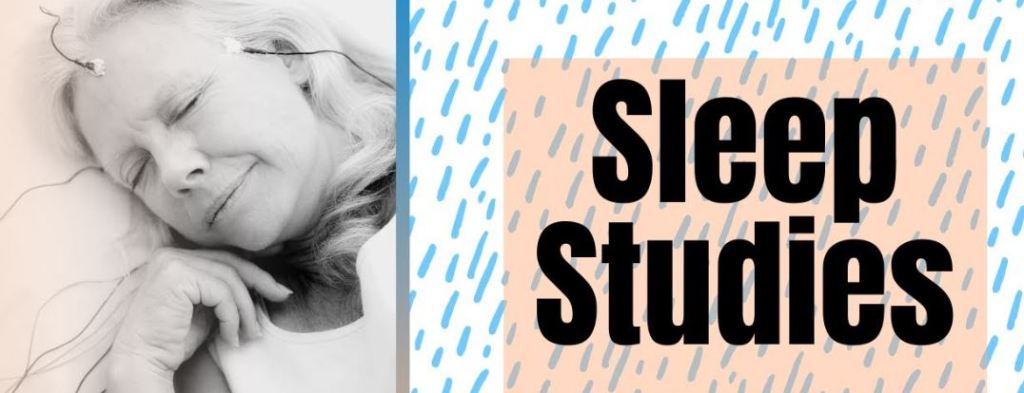
Preliminary results from a survey taken by around 1,600 people from 60 countries show that 46% reported poor sleep during the pandemic, while only 25% said they had slept poorly before it, according to Melinda Jackson, a senior lecturer at the Turner Institute for Brain and Mental Health at Monash University in Melbourne, who studies how stressful events affect people’s sleep. Forty percent also reported increased alcohol consumption.

The key is to prevent the sleep problem from becoming chronic, she says. It is important to avoid associating your bed or bedroom with a place where you are awake. Experts recommend that if you can’t fall asleep, or wake up in the middle of the night and are unable to go back to sleep after 20 minutes, get out of bed and do something relaxing.

Read full article

IN THE LAB: TESTS FOR AND DIAGNOSING “aNEMIA”

I should have known something was wrong.

I was getting short of breath with a third of a 45-minute exercise I had done for years, but I rationalized it away. I reasoned that I hadn’t been sleeping well, I am getting old. And my heart isn’t working as well because of the Atrial Fibrillation.

Physicians have a big armamentarium of excuses they can generate, and besides it is their Karma to GIVE Medical care rather than to RECEIVE it.

The AHA moment came when I bumped my leg, and peeled back some skin. My skin is old and fragile, and I’m always tearing it in small areas.

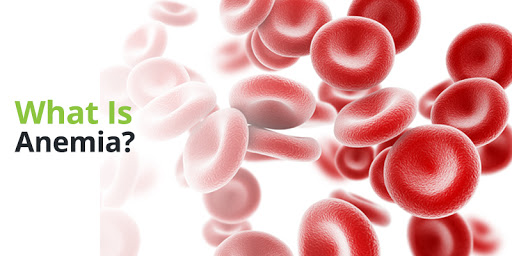
This time, I got to see the blood run all the way down my leg like a drop of grape juice, not the thick blood I’m used to. If anything, my blood should be thicker, more viscous, since my average Hemoglobin is 16 gm., on the high side of normal.

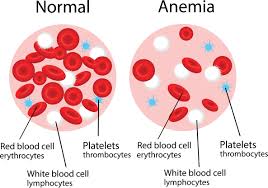
I got my blood drawn, and ordered a CBC and a ferritin. The CBC shows the Hemoglobin level, and a number of other measurements bearing on anemia, and the ferritin gives a measure of IRON STORES.

I can’t remember the first time my ferritin was ordered, or why, but it has for years been borderline, just barely in the normal range, dipping down as low as 18, and rising as high as 35.

Since a common cause of low iron stores with a good diet is colon cancer, I had about 3 colonoscopies to rule out cancer over a period of 6 years; lucky me.

At least they were all negative, and without polyps.

This time the ferritin was 12, well into the abnormal range, and the Hemoglobin was 8.6 gm. little more than half my usual.

I had been fibrillating for 5 months, and been on 5 mg. Eliquis ( an anticoagulant/blood thinner) for the same period. Having a recent normal colonoscopy, the most likely diagnosis was AVMs (arteriovenous malformations) of the small bowel, with bleeding accelerated by the Eliquis,

Since small bowel surgery contraindicated a diagnostic videocapsule, this diagnosis would have to remain an assumption.

I reduced the Eliquis by 25%, calculated my blood loss rate and started 2 capsules of feosol alternating with 3 capsules daily. Over a period of 4 months, my Hemoglobin came back up to 15 gm., and my ferritin came up to 50. I am due another test as soon as I get enough nerve to brave the Covid and go to the lab.

This story is a good illustration of treating one illness, and thereby creating another in this world awash with medication. How much better it is to stay as healthy as possible.

However, I am becoming increasingly aware of the fact that Health is not often the top priority in most peoples lives.

As an illustration, I refer to todays’ Sunday New York Times, which reviewed 2 books on walking, one written to praise its’ health benefits. To quote the reviewer, “

The issue with ‘ in praise of walking’ is Mr. O’Mara’s assumption that how good an activity may be for us is the most essential measure of its worth”. Praising health raises an issue?

Personally, my main exercise is walking, and I do it expressly for health. That doesn’t mean that I don”t enjoy walking and have other motivations. I would not be walking as FAST, however, it it were not so healthy.

–Dr.C.

COVID-19: CASE SEVERITY IS DEPENDENT ON VIRAL LOAD

From the New York Times

….in the case of the new coronavirus, people who have no symptoms seem to have viral loads — that is, the amount of virus in their bodies — just as high as those who are seriously ill, according to some studies.

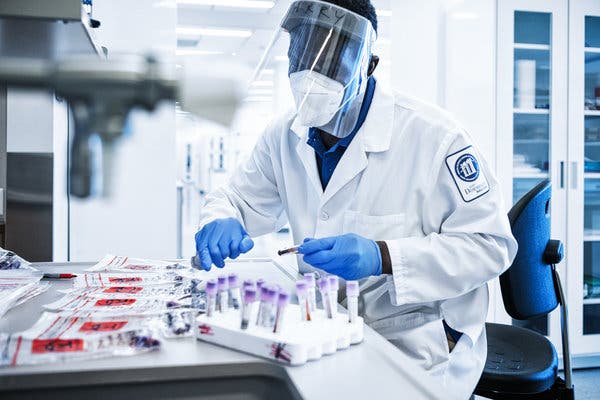
Harry Henri, a research assistant, working with blood samples from coronavirus patients at SUNY Downstate’s BioBank in Brooklyn.Credit…Misha Friedman for The New York Times

When experts recommend wearing masks, staying at least six feet away from others, washing your hands frequently and avoiding crowded spaces, what they’re really saying is: Try to minimize the amount of virus you encounter.

A few viral particles cannot make you sick — the immune system would vanquish the intruders before they could. But how much virus is needed for an infection to take root? What is the minimum effective dose?

And coronavirus patients are most infectious two to three days before symptoms begin, less so after the illness really hits.

Some people are generous transmitters of the coronavirus; others are stingy. So-called super-spreaders seem to be particularly gifted in transmitting it, although it’s unclear whether that’s because of their biology or their behavior.

On the receiving end, the shape of a person’s nostrils and the amount of nose hair and mucus present — as well as the distribution of certain cellular receptors in the airway that the virus needs to latch on to — can all influence how much virus it takes to become infected.

Read full article

COMMENTARY

HEALTH: THE HISTORY OF FACEMASKS AND DISEASE THROUGH THE CENTURIES

Originating during the Black Death of the Middle Ages, face coverings to protect against the transmission of disease are not just medical requirements; they’re now a fashion statement. Mark Phillips talks with medical historian Mark Honigsbaum (“The Pandemic Century”) about the purpose and style of facemasks.

COMMENTARY

Medicine has always operated in the context of theory, which is easier to generate than fact. The medieval physician with the “bird mask” thought he was protecting himself from “miasma”, which was theorized to be the means by which PLAGUE was spread. In fact, the masks’ main function was to hide his identity from his Patient, whom he could not help. The painting makes him appear to be the Grim Reaper himself.

The story of Guaiac, another illustration medieval medicine, is entwined with Syphillis, the stigmatizing STD of post Columbian Europe. Each country blamed Syphillis on its’ rival- the English called it the French disease, for instance-until they were able to blame it on the “new world”. Since it came from the Americas, so must its’ HERBAL REMEDY, according to theory.

GUAIAIC, the resin from the small tree from the Caribbean, became a popular cure. It might have even lessened suffering from Siphillis, since it was used instead of the highly toxic MERCURY.

Guaiac eventually found a use in Criminology, as a test for blood at the crime scene. When Guaiac is mixed with a suspicious spot and peroxide, it changes color rapidly to a bright blue. Medicine later used Guaiac as a test for hidden (occult) Blood In the stool; a positive, brilliant blue test throws suspicion on intestinal cancer as the culprit.

We come full circle to present day mask usage in the Covid epidemic. Some countries outlaw masks because masks interfere with criminal investigation. This interdict had to be relaxed during The Pandemic. How convenient for the rioters and looters in Minnesota!

—Dr. C.

PRESCRIPTION DRUGS: “ON MEDICATIONS IN GENERAL”

Several ideas apply to ALL MEDICINES. Terminology should be clarified. Medicine, Pharmaceutical, and Drug, in my mind are equivalent.

The term “drug” is pejorative, and I try to use it so. The term “Pharmaceutical” is too long, leaving me with “medication”.

There are some Practical points. You should look at your prescription when you first get it, to make sure it is the right one. Yes, pharmacists rarely make some mistakes. They are human.

You should ask the Pharmacist if she knows WHERE the drug was manufactured. Foreign countries, especially China and India, are less reliable, and the USA is safer. The original Brand Name drugs are more often domestically produced, but even these are being “offshored”.

Next, check the prescription date and expiration date.You should get a ” SHELF LIFE” (the difference between the two) of about 2 years, otherwise, you might ask the pharmacist the next time to give you the “best dating” in his stock.

Store your medications in a cool, dark, dry place in order to prolong their life. Light, heat and moisture degrade most compounds. Remember the O.J. Simpson case? Part of the reason he was acquitted is that a critical DNA sample was stored in a plastic bag, which retained moisture, rather than a paper bag, which is recommended because paper is porous, and allows moisture to escape.

You should follow the suggested TIME to take the medication, because there is almost always an optimal time to take a given medication.

CHRONOPHARMACOLOGY is an emerging field, which is finding that more than 50% of medications are TIME SENSITIVE in their effect in the body. This is an unimportant, academic consideration for most Patients, given the high THERAPEUTIC WINDOW (dosage latitude) of most medications, the mild illness of most patients, and the disinclination of most Doctors to add one more detail onto their already heavy load.

In discussing the medicines in my cabinet and a few other important ones, I will be addressing TIMING.

What about OUTDATED MEDICATIONS? As discussed by the following article from Harvard, the dating is not critical except for liquids, and a few others, like Tetracycline.

This is fortunate, given the expense of medications today. What if I drop a pill on the floor, at home. I usually pick it up and take it. if i just dropped it, unless it is very inexpensive.

What if a pill sticks in your throat, like happens to me a lot? I drink water first, to moisten my throat to make it slipperier.

Next, I take a good sip of water, try to swish it back and go back with my head to accelerate the pill backward, and think confidence. Certain sizes of pills are my nemesis and i have to break them in two.

Please follow Dr. Cs Medicine Cabinet in future postings of DWWR.

–Dr.C.

Further reading

CORONAVIRUS: CONFUSING HYDROXYCHLOROQUINE STUDIES (NATURE PODCAST)

President Trump’s preferred coronavirus treatment is the focus of a new study suggesting it could cause more harm than good, but not everybody agrees. We discuss the fallout as trials around the world are paused and countries diverge over policy advice.

12:12 Are we rushing science?

Coronavirus papers are being published extremely quickly, while normally healthy scientific debate is being blown up in the world’s press. Is there a balancing act between timely research and accurate messaging?

18:49 One good thing

Our hosts pick out things that have made them smile in the last week, including hedgerow brews and a trip into the past using AI.

Recipe: Elderflower ‘Champagne’

Video: Denis Shiryaev restores historic footage with AI

22:30 The latest coronavirus research papers

Noah Baker takes a look through some of the key coronavirus papers of the last few weeks.

News: Coronavirus research updates

medRxiv: Full genome viral sequences inform patterns of SARS-CoV-2 spread into and within Israel

Harvard Library: Reductions in commuting mobility predict geographic differences in SARS-CoV-2 prevalence in New York City

Science: DNA vaccine protection against SARS-CoV-2 in rhesus macaques