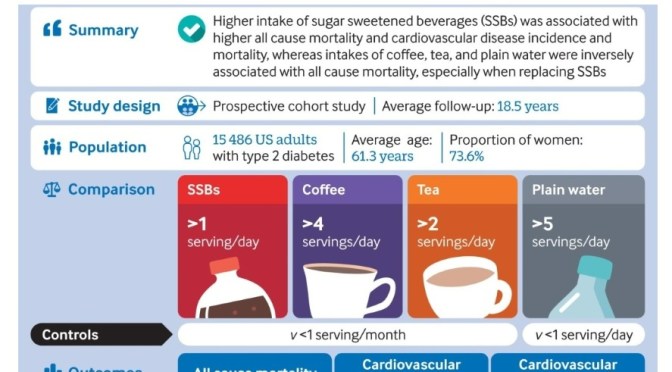
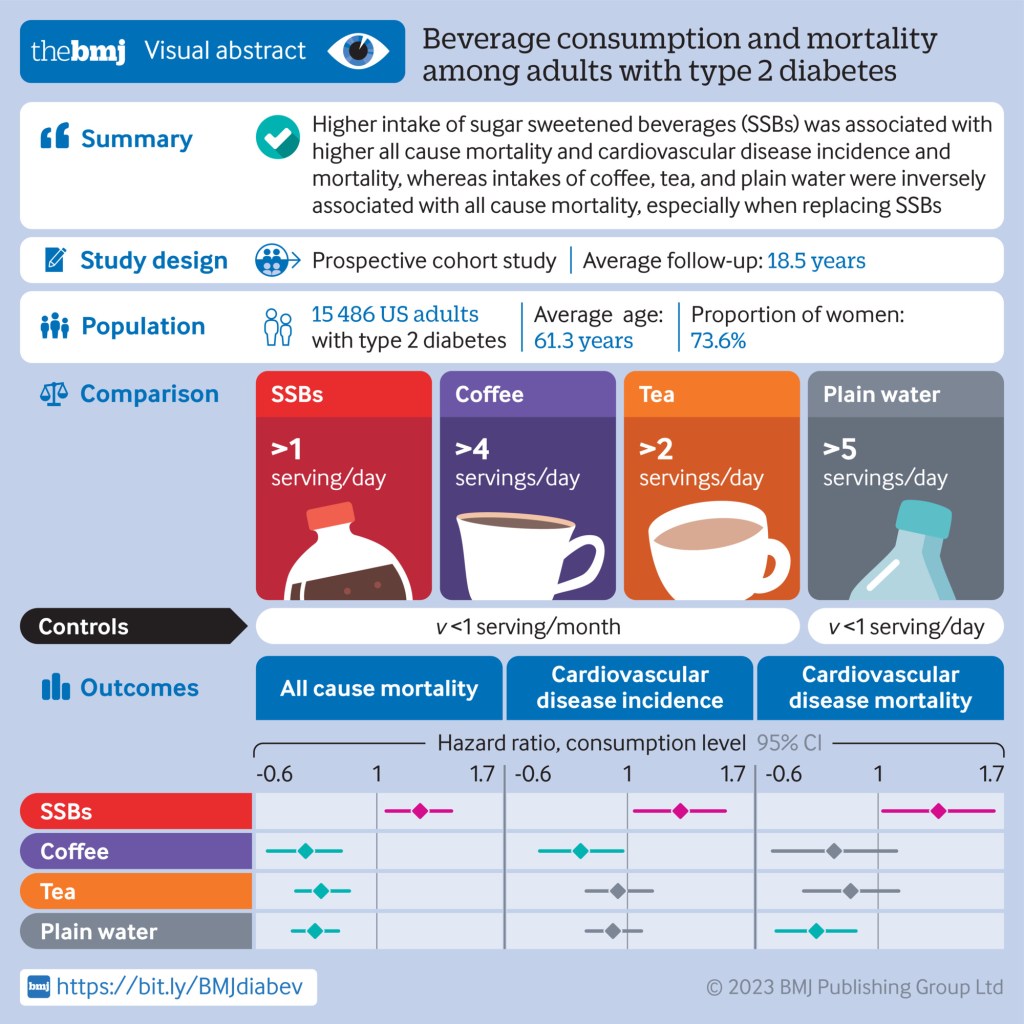
Conclusions: Individual beverages showed divergent associations with all cause mortality and CVD outcomes among adults with type 2 diabetes. Higher intake of SSBs was associated with higher all cause mortality and CVD incidence and mortality, whereas intakes of coffee, tea, plain water, and low fat milk were inversely associated with all cause mortality. These findings emphasize the potential role of healthy choices of beverages in managing the risk of CVD and premature death overall in adults with type 2 diabetes.
In this episode of the Heart podcast, Digital Media Editor, Dr James Rudd, is joined by Professor Carolyn Lam, a world expert in heart failure from the University of Singapore and the National Heart Centre, also in Singapore.
They discuss updates in the diagnosis and management of heart failure, including wearables, biomarkers, the 4 pillars of therapy, and how and why there has historically been an under-representation of women in heart failure trials. This episode is sponsored by an educational grant from the Boehringer Ingelheim-Lilly Alliance. The sponsor has no influence over podcast content, the selection of speakers or any associated educational material.
Professor Carolyn Lam is a Senior Consultant from the Department of Cardiology and Director of Women’s Heart Health at the National Heart Centre Singapore, having pioneered the first Women’s Heart Clinic in Singapore. Academically, she serves as a tenured Full Professor at the Duke-National University of Singapore, having also graduated from the Standford Executive Programme in 2015, and obtained a PhD at the University Medical Centre Groningen, the Netherlands in 2016. In the field of MedTech, Prof Lam is co-founder of Us2.ai, an award-wining startup dedicated to the automation of the fight against heart disease by applying artificial intelligence to echocardiography (ultrasound of the heart).
Prof Lam is a world-renowned specialist in heart failure (particularly heart failure with preserved ejection fraction [HFpEF]). Her work in the PARAGON-HF and EMPEROR-Preserved trials led to the first FDA-approved treatment for HFpEF and the first robustly positive clinical outcomes trial in HFpEF to-date, respectively. She leads several multinational global and regional clinical trials, and has received numerous prestigious awards and global recognition for her work. Her recent appointments on the 2021 European Society of Cardiology Heart Failure Guidelines Task Force, and as International Honorary Fellow of the Heart Failure Society of America 2021, attest to her contributions in both cardiology and research fields.
Prof Lam is a proud recipient of the National Medical Research Council (NMRC) Senior Investigator Clinician Scientist Award in 2020, and served as the Founding Programme Lead of A*STaR’s Asian neTwork for Translational Research and Cardiovascular Trials (ATTRaCT) and Principal Investigator of ASIAN-HF (a multinational study across 11 Asian countries). In 2019, She initiated the Asian Diabetes Outcomes Prevention Trial (ADOPT), an ongoing trial involving 5 countries and aimed at reducing the cardiovascular adverse outcomes of diabetes in Asian patients.
She has published with over 350 articles in major high impact journals including New England Journal of Medicine, Journal of the American Medical Association (JAMA), Lancet, Circulation, and European Heart Journal; and has been recognised as a World Expert by Expertscape’s PubMed-based algorithms (top 0.1% of scholars writing about Heart Failure over the past 10 years; Heart Failure: Worldwide – Expertscape.com). Besides being an Associate Editor for Circulation (top Cardiology Journal) and European Journal of Heart Failure, she is also the lead author of the chapter on HFpEF for Braunwald’s Heart Disease: A Textbook of Cardiovascular Medicine, 12th Edition – the award-winning textbook trusted by generations of cardiologists for the latest, most reliable guidance in the field.
COVID 19 is a nasty disease, in case you hadn’t noticed. It is SNEAKY: you can catch it from a person who has no symptoms.
It is UNPREDICTABLE: you may develop no symptoms or Die from it. It can affect any part of your body, including HEART and BRAIN.
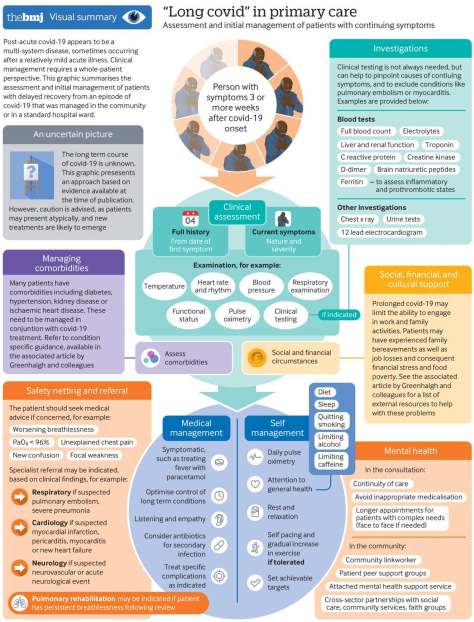
And now we hear that it can DRAG ON. The outstanding infographic, “a multi-systems disease, which is intended for PRIMARY CARE PROVIDERS, has a lot to offer patients, who can do a lot to Care for themselves:
–They can get a THERMOMETER and a PULSE OXIMETER to watch their own temperatures and oxygen saturations
–They can monitor their own COMORBIDITIES, like Diabetes and HYPERTENSION, which are common with severe Covid. In patients who get very ill .
–They can watch their GENERAL HEALTH, including SLEEP and DIET (the exercise part is relegated to DOCTORS recommendations).
You should also RESTRICT Alcohol, Caffeine and it goes without saying CIGARETTE SMOKING. Of course PREVENTION, with DISTANCING, MASKING and being Outside, coupled with SLEEP, DIET and EXERCISE is always best.
Vitamins and minerals, as we all know, are of critical importance to our health. Gone are the days when scurvy(vitamin C) was the scourge of the high seas, and rickets (vitamin D) was common in the children of smoke-filled industrial cities with insufficient sunlight.
We are in a state of such overabundance that many medical authorities feel that vitamin supplementation merely makes our toilets healthier.
Covid 19, with a deficit of prevention and treatment options, has forced a new appreciation of the role of our immune systems in fending off Covid, and future viral plagues that are certain to follow. Optimum Health has never been more important.
A May 4, 2020, British Medical Journal (BMJ) article highlights the role of vitamins C and D, and minerals, especially Zinc, in functioning of our immune systems. Here are several highlights from the article:
Foods that are naturally abundant in vitamin C such as broccoli (60 mg/100 g), blackcurrants (130 mg/100 g), fortified breakfast cereals (up to 134 mg/100 g) and oranges (37–52 mg/100 g)45 should be made accessible to older individuals who are most in need of their nutritional benefits.
In the UK 5.5% of men and 4% of women 65 years and over (around 1 in 20) presently have zinc intakes lower than the lower reference nutrient intake (the level below which deficiency could occur).46 The consumption of foods naturally abundant in zinc such as canned crab (5.7 mg/100 g), canned shrimps (3.7 mg/100 g), canned adzuki beans (≈2.3 mg/100 g) and boiled eggs (1.3 mg/100 g) should be encouraged as a supplementation strategy to reinforce immunity.
Tolerable upper intake levels (ULs) are intake levels which should not be surpassed as toxicity problems could appear.47 For vitamin D a UL of 50 µg/day is advised and for zinc a UL of 25 mg/day is recommended. 47 There is insufficient evidence to establish UL for vitamin C, but available human data suggest that supplemental daily doses of up to about 1 g, in addition to normal dietary intake, are not associated with adverse gastrointestinal effects.47 Not having an adverse effect, however, is not necessarily indicative of a benefit either, and ongoing trials are warranted.
Among those with established respiratory conditions or pneumonia, specific nutrients such as vitamin C, D or zinc could be considered as potential adjuvants to conventional treatment pathways.
Susceptible people, particularly the old, should use every safe measure to stay well.
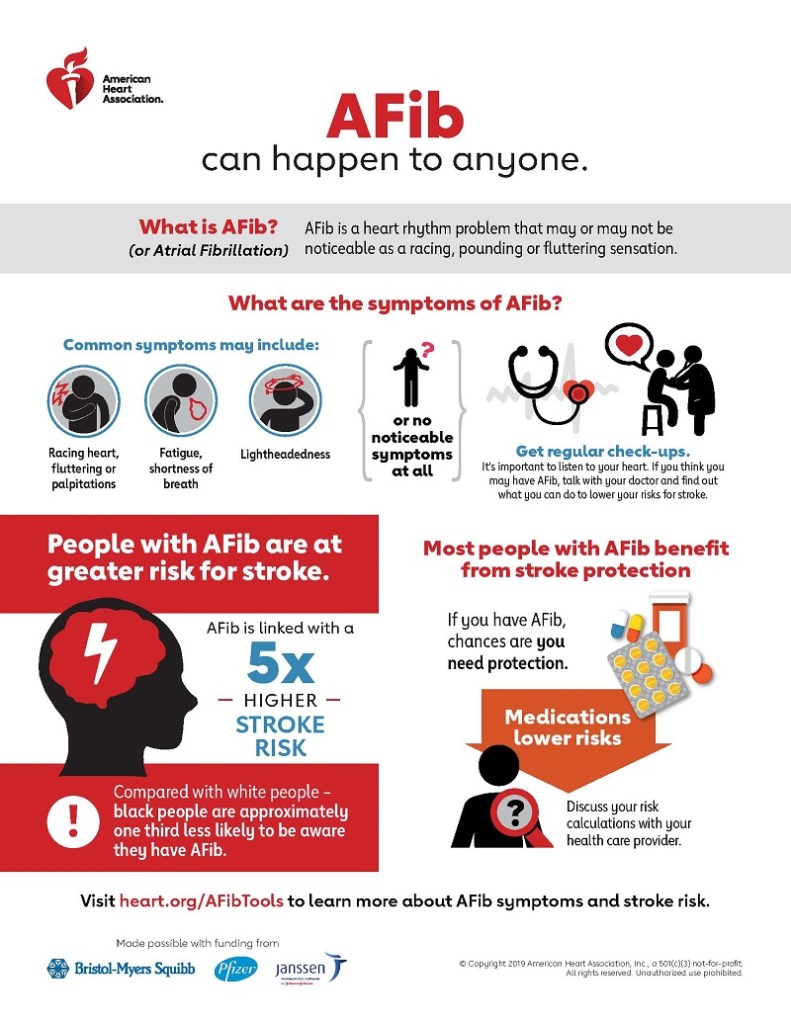
Atrial fibrillation is chaotic and irregular atrial arrhythmia, the prevalence of which increases progressively with age. It causes significant morbidity and death. Many patients are asymptomatic or have symptoms that are less specific for cardiac arrhythmias, such as mild dementia or silent strokes.
Gregory Lip, Price-Evans Chair of Cardiovascular Medicine, University of Liverpool, gives us an overview of the condition.
The BMJ’s new podcast aims to help doctors feel more connected, heard, and supported
“Deep breath in … and out. Again, deep breath in … and out.”
We tune in to patients’ breath sounds, seeking confirmation of a diagnosis—one more supporting piece of evidence to reassure anxious patients or to narrow the differential.
But since the SARS-CoV-2 pandemic arrived, saying “deep breath in” has been replaced by the need to take one ourselves: before looking at the morning news, before venturing out (or logging on) to work each morning, and before ringing the next patient on your list with the ominous note alongside their name: “fever and cough for a week, now feeling breathless.” Although chosen in what seems like a different era, the name for The BMJ’s new podcast for general practitioners—Deep Breath In—seems fitting for our troubled times.
Rebooting general practice
Before anyone in Wuhan fell ill, GPs had already been feeling the strain. In the UK, despite government promises of 5000 new practising GPs by 2020, there were 6.2% fewer full time equivalent GPs in 2019 than in 2015.1 Similarly, physicians in the US have been compensating for an estimated shortfall of some 14 500 primary care doctors since 2017.2 Recent attempts to take the strain off GPs in England by funding allied health professionals have faltered because of onerous new demands on fledgling primary care networks.3 Turning it off and switching it back on again is often the only thing that works when your computer grinds to a halt. Perhaps coronavirus will do the same for primary care.
Primary Care Physicians are a vanishing species [1]. This is unfortunate, since PCPs are the only doctors who attend the whole field of Medicine (have you ever asked an orthopedist about your cough?).
However, some of the slack is being taken up by Nurse Practitioners [2] and Physicians Assistants [3].
If you know a retired Internist or Family Practice Physician, be sure to cultivate a friendly relationship (and give them a hug when the Covid 19 epidemic cools off). They might be inclined to be that greatest of all Medical Resources- the Patient Advocate [4].
—Dr. C.
Empowering Patients Through Education And Telemedicine





 Doctors Without Waiting Rooms