Tag Archives: PODCASTS

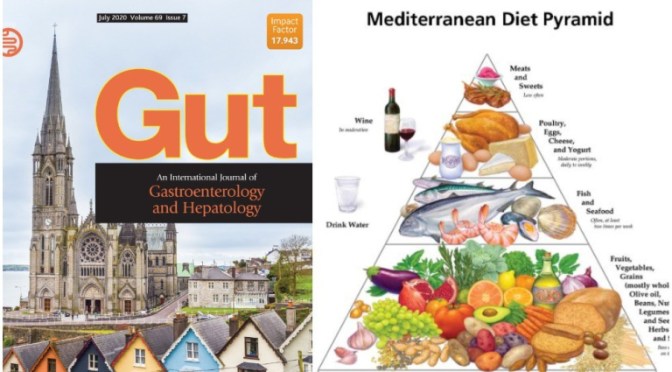
PODCAST: “MEDDIET” ALTERS GUT MICRIOBIOME IN OLDER PEOPLE, IMPROVES FRAILTY, COGNITION, INFLAMMATION

We observed that increased adherence to the MedDiet modulates specific components of the gut microbiota that were associated with a reduction in risk of frailty, improved cognitive function and reduced inflammatory status. 
Dr Philip Smith, Digital and Education Editor of Gut and Consultant Gastroenterologist at the Royal Liverpool Hospital interviews Professor Paul O’Toole; who is Professor of Microbial Genomics, Head of School of Microbiology and Principal Investigator in APC Microbiome Ireland, an SFI funded centre at University College Cork, Ireland, on “Mediterranean diet intervention alters the gut microbiome in older people reducing frailty and improving health status: the NU-AGE 1-year dietary intervention across 5 European countries” published in paper copy in Gut in July 2020.

Read full study

COMMENTARY

Diet is one of the 3 pillars ( or 4, if you don’t consider intellectual stimulation a form of exercise) of health. And there are 3 prime dimensions to diet: Quality, Quantity, and Timing. This excellent study addresses the Quality of the diet. Vegetables, fruits and whole grains are the foundation.

Dietary Fiber is the main difference between the healthful Mediterranean diet and the highly processed diet so common in America.

How can you be sure you are eating enough fiber? Read on.
On almost all cans and boxes, you will find a nutritional statement, by law. Assuming that the contents are “real food”, and preferably “organic”, look for the “fiber” in grams, and the “calories” in 100’s, and mentally divide the grams of fiber by 100s  of calories, and you get a number. Let’s say that your fiber for the day totals “25” gms. and your calories for the day Totals 2500; that is “25” hundred calories. Divide the 25 grams by the 25 hundred calories, and you get “1”. Anything less than 1 is low in fiber.

25 grams of fiber is about the daily recommendation for fiber. 25 hundred calories is a ballpark figure for an average diet.
PORTION SIZE DOESN’T MATTER, since your dividend is a ratio.
The bacteria in your MICROBIOME feed on the fiber, and the higher and more diverse the fiber ( within reason. Hay is high in fiber) the healthier the food.

Blueberries are good for a fruit at 4-5 gms. of fiber per hundred calories. Broccoli is a good vegetable at 10 gms fiber per hundred calories, carrots about 3, and so on.

Sugar is the perfect “bad” food, at no fiber for as many calories as you can pack in. It makes you Want more, and “desensitizes” your taste buds to the natural sweetness of fruit, or even vegetables.

HIGH FIBER foods are MORE FILLING, leading you to eat less.
Civilization and Capitalism pushes too much food and too many calories at us. Overeating , obesity, and many of the modern illnesses is the result.
Generally, fresh fruits and vegetables are preferred, though cooking doesn’t do much harm, other than some vitamin loss that can be replaced.

Whole grain cereals have fiber in addition to other nutrients. Also, the complex carbohydrates in whole grains  are released more slowly than wIth refined cereals. This floods your blood less rapidly with glucose, and elicits a Less precipitous insulin response. This results in a lower, healthier  “glycemic Index”.

Vegetables, fruits Legumes, seeds, nuts and their oils are the mainstay of the Vegan diet, which is healthful If enough protein and essential fats are ingested.

Fish, eggs, milk and cheeses are other components of the Mediterranean diet.

I take many of my daily Vegetable and fruits and  liquefy them in a food blender. Drinking my daily vegetables and fruits is a tasty and convenient way to improve my diet. I Savor individually those items I find most tasty, like nuts, apples, avocado, And fruit in season. This exercises my jaws, which is probably healthy.

YOUR MICROBIOME helps you in many ways that science is just beginning to understand. A healthy Microbiome is a DIVERSE Microbiome. FIBER is the food of the Microbiome, and a diversity in dietary fiber leads to a diverse Microbiome. A diverse, happy Microbiome produces many biological substances, like neurotransmitters, and probably communicates with the brain directly through the gut-brain Axis.

The Podcast on the 1 year Meddiet showed how directly a diet can BENEFIT HEALTH STATUS.
-Dr. C.

PODCAST INTERVIEWS: DIAGNOSIS AND EARLY TREATMENT OF COVID-19

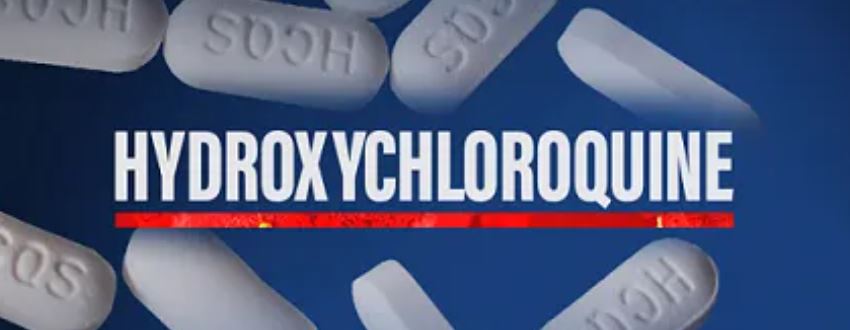
In this audio interview conducted on June 3, 2020, the editors discuss two new studies: one comparing test swabs collected by health care workers with swabs collected by the patients themselves and one assessing hydroxychloroquine treatment in people who had been exposed to Covid-19 but weren’t yet ill.

The continuing spread of SARS-CoV-2 remains a Public Health Emergency of International Concern. What physicians need to know about transmission, diagnosis, and treatment of Covid-19 is the subject of ongoing updates from infectious disease experts at the Journal.

Eric Rubin is the Editor-in-Chief of the Journal. Lindsey Baden is a Deputy Editor of the Journal. Stephen Morrissey, the interviewer, is the Executive Managing Editor of the Journal.

CORONAVIRUS: CONFUSING HYDROXYCHLOROQUINE STUDIES (NATURE PODCAST)

President Trump’s preferred coronavirus treatment is the focus of a new study suggesting it could cause more harm than good, but not everybody agrees. We discuss the fallout as trials around the world are paused and countries diverge over policy advice.

12:12 Are we rushing science?

Coronavirus papers are being published extremely quickly, while normally healthy scientific debate is being blown up in the world’s press. Is there a balancing act between timely research and accurate messaging?

18:49 One good thing

Our hosts pick out things that have made them smile in the last week, including hedgerow brews and a trip into the past using AI.

Recipe: Elderflower ‘Champagne’

Video: Denis Shiryaev restores historic footage with AI

22:30 The latest coronavirus research papers

Noah Baker takes a look through some of the key coronavirus papers of the last few weeks.

News: Coronavirus research updates

medRxiv: Full genome viral sequences inform patterns of SARS-CoV-2 spread into and within Israel

Harvard Library: Reductions in commuting mobility predict geographic differences in SARS-CoV-2 prevalence in New York City

Science: DNA vaccine protection against SARS-CoV-2 in rhesus macaques

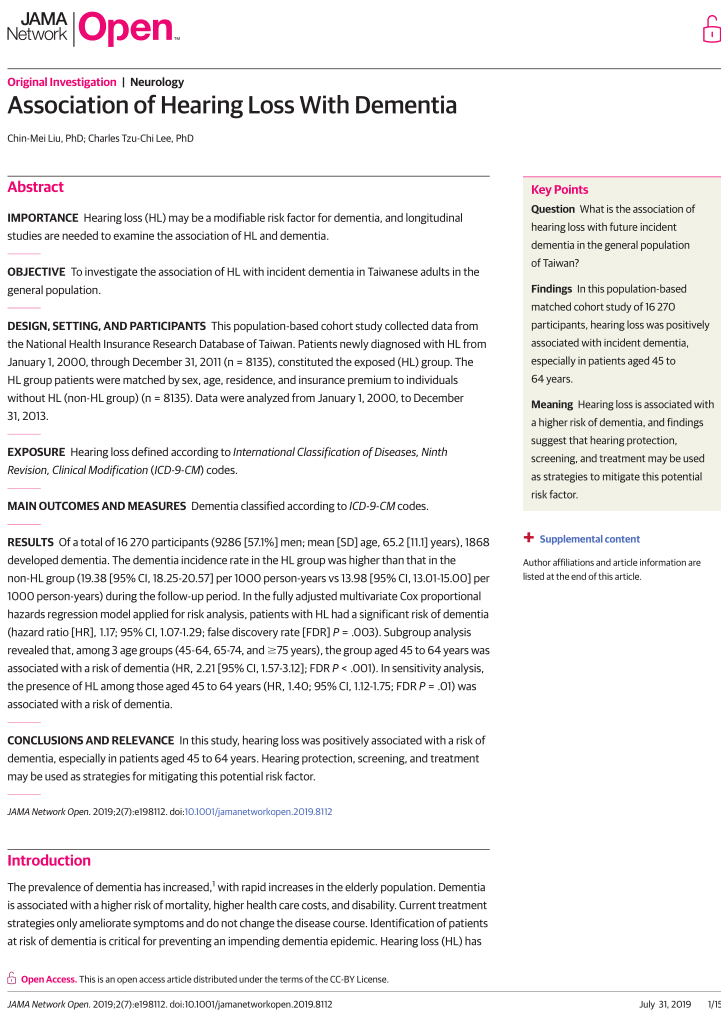
PODCAST: “THE EFFECTS OF HEARING LOSS ON COGNITIVE DECLINE” (JAMA REVIEWS)

Even limited hearing loss might be associated with cognitive decline. If true, early intervention with hearing aids might help people have better cognitive performance. 

Michael Johns III, MD, online editor for JAMA Otolaryngology, speaks with Justin Golub, MD, MS, assistant professor of otolaryngology at Columbia University, whose research has shown that very mild hearing loss can be associated with cognitive disability.

COMMENTARY

Hearing loss and cognitive ability decline together as we age, starting earlier in some people than others.

LIVING A HEALTHY LIFE STYLE-with good SLEEP, DIET, EXERCISE and COGNITIVE STIMULATION -seems to help benefit almost everything, including hearing, while a poor life style, neglecting the 4 Pillars, smoking, and drinking alcohol to excess seems to hasten our aging.

Certain medications, often taken to treat the results of a poor life style, can also harm our hearing.

LOUD SOUNDS (such as AMPLIFIED MUSIC), especially if prolonged, are particularly bad. SOUND POLLUTION contaminates the modern world as much as industries‘ excesses. I would often wear ear plugs to Football games (108 dB on my meter) and even in row 4 of the Symphony.

Once damaged, the delicate HAIR CELLS of our inner ear don’t grow back, although medical science once again is working feverishly to save us from ourselves.

Hearing aids can now be programmed to compensate for our particular pattern of frequency loss.

The premise made in the above article and podcast, that decreased HEARING is accompanied by (and Causes?)decreased COGNITION could be supported by a study demonstrating that Improved hearing restores the cognition. I understand that early results may suggest a cognitive benefit of hearing aids.

But PRESERVING BOTH with healthy living would of course be better- at least in my opinion.

Prevention, unfortunately, is a very hard sell in a world of costly medical treatments, where we are protected from directly confronting those costs by ever-expanding insurance. How about Medical savings accounts?

—Dr. C.

.

Read more

CARDIOLOGY PODCAST: “ATRIAL FIBRILLATION – A COMPREHENSIVE OVERVIEW”

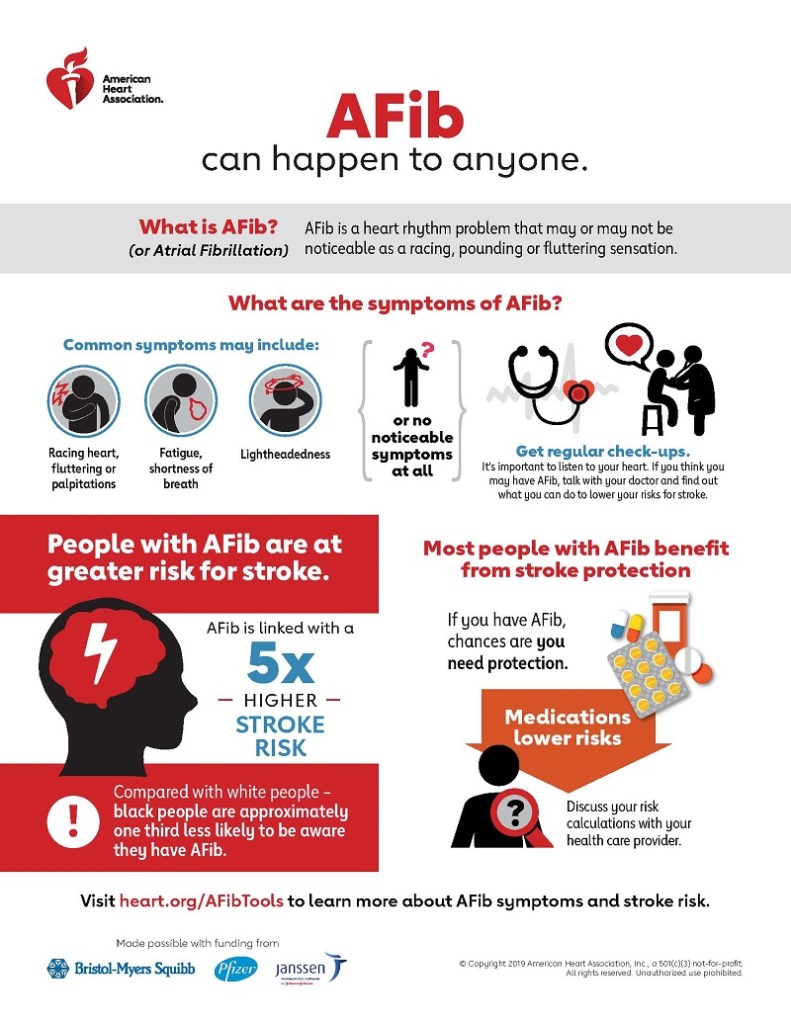
Atrial fibrillation is chaotic and irregular atrial arrhythmia, the prevalence of which increases progressively with age. It causes significant morbidity and death. Many patients are asymptomatic or have symptoms that are less specific for cardiac arrhythmias, such as mild dementia or silent strokes. 

Gregory Lip, Price-Evans Chair of Cardiovascular Medicine, University of Liverpool, gives us an overview of the condition.

Read more on Atrial Fibrillation at BMJ

CORONAVIRUS PODCAST: TRACING APPS, Antiviral remdesivir’S PROMISE

The Coronapod team pick through the latest news, plus we hear from the researchers making lemonade out of lockdown lemons.

In this episode:

01:10 Can contact-tracing apps help?

Governments around the world are banking on smartphone apps to help end the spread of the coronavirus. But how effective might these apps might be? What are the risks? And how should they fit into wider public health strategies?

Editorial: Show evidence that apps for COVID-19 contact-tracing are secure and effective

13:30 Antiviral remdesivir shows promise

Early results from a US trial of the antiviral drug remdesivir suggest it shortens recovery time for patients with COVID-19. We unpick the findings.

News: Hopes rise for coronavirus drug remdesivir

16:52 One good thing

Our hosts pick out things that have made them smile in the last week, including blooming trust in scientists, cooking experiments, and a neighbourhood coming together to clap for healthcare workers.

21:34 Unexpected opportunities

We hear from three researchers making the most of lockdown, studying tiny earthquakes, building balcony-based citizen science projects, or enlisting gamers to fight the coronavirus.

Fold-it, the protein-folding computer game

TELEMEDICINE: “FORWARD TRIAGE” FOR SCREENING PATIENTS DURING COVID-19

 Direct-to-consumer (or on-demand) telemedicine, a 21st-century approach to forward triage that allows patients to be efficiently screened, is both patient-centered and conducive to self-quarantine, and it protects patients, clinicians, and the community from exposure.

Interview with Dr. Judd Hollander on how health systems can use telemedicine services during the Covid-19 pandemic.

It can allow physicians and patients to communicate 24/7, using smartphones or webcam-enabled computers. Respiratory symptoms — which may be early signs of Covid-19 — are among the conditions most commonly evaluated with this approach. 

Health care providers can easily obtain detailed travel and exposure histories. Automated screening algorithms can be built into the intake process, and local epidemiologic information can be used to standardize screening and practice patterns across providers.

Disasters and pandemics pose unique challenges to health care delivery. Though telehealth will not solve them all, it’s well suited for scenarios in which infrastructure remains intact and clinicians are available to see patients. Payment and regulatory structures, state licensing, credentialing across hospitals, and program implementation all take time to work through, but health systems that have already invested in telemedicine are well positioned to ensure that patients with Covid-19 receive the care they need. In this instance, it may be a virtually perfect solution.

Read full article at NEJM

Health & Aging: The Importance Of Exercise (Scientific American)

Health journalist Judy Foreman talks about her new book Exercise Is Medicine: How Physical Activity Boosts Health and Slows Aging

This is Scientific American’s Science Talk, posted on April 24th, 2020. I’m Steve Mirsky. And under our current, often locked-down situation, it’s still really important to try to get some exercise. Judy Foreman is the author of the new book Exercise is Medicine: How Physical Activity Boosts Health and Slows Aging. She’s a former nationally syndicated health columnist for the Boston Globe, LA times, Baltimore Sun and other places, and an author for the Oxford University Press. We spoke by phone.

Website

COMMENTARY

This Podcast is worth listening to in full. It will introduce some of the upcoming themes of DWWR.

Exercise is one of the 4 pillars of health, thriving and longevity, along with Diet, Sleep, and Intellectual Stimulation.  We look forward to highlighting and reveling in these subjects.

Judy Foreman’s thesis “ exercise is medicine” is true in many dimensions, including industries desire to capture the many beneficial biological effects of exercise in a pill; it requires effort to get off your duff, and you need to budget the time to work out.

My preference is WALKING and WATER EXERCISE. I make passing the time PLEASANT by listening to BBC “in our time”, recorded on a water-proof mp-3 player. EXERCISE is both VALUABLE and ENJOYABLE!

—Dr. C.

Coronavirus : The Race To Expand Antibody Testing, Public Health Investment

Benjamin Thompson, Noah Baker, and Amy Maxmen discuss the role of antibody tests in controlling the pandemic, and how public-health spending could curtail an economic crisis. Also on the show, the open hardware community’s efforts to produce medical equipment.

In this episode:

02:08 Betting on antibodies

Antibody tests could play a key role in understanding how the virus has spread through populations, and in ending lockdowns. We discuss concerns over their reliability, how they could be used, and the tantalising possibility of immunity.

News: The researchers taking a gamble with antibody tests for coronavirus

10:25 Economy vs public health, a false dichotomy

Jim Yong Kim, former president of the World Bank, argues that strong investment in public health is crucial to halt the ongoing pandemic and to prevent a global financial crisis. We discuss his work with US governors to massively increase contact tracing, and his thoughts on how researchers can help steer political thinking.

News Q&A: Why the World Bank ex-chief is on a mission to end coronavirus transmission

19:00 One good thing this week

Our hosts talk about staying positive, and pick a few things that have made them smile in the last 7 days, including a tiny addition to the team, a newspaper produced by children in lockdown, and a gardening update.

Six Feet of Separation, the newspaper staffed by kids

22:51 Open hardware

Researchers are stepping up efforts to design and produce ventilators and personal protective equipment for frontline medical staff. We hear how the open hardware movement is aiding these efforts, and the regulations that teams need to consider if their designs are to make it into use.

Technology Feature: Open science takes on the coronavirus pandemic

COMMENTARY

Coronavirus Testing and Tracking (1) are the two pillars of surveillance which will hopefully replace the “shotgun” method of universal distancing that America has tried so far. Quarantining only those who are contagious makes much more social and economic sense than quarantining everybody, and it seemed to work in South Korea (2) and Taiwan (3).

There are problems both with testing-accuracy and availability- and tracking, which is in tension with individuality and freedom.
Still we have no choice but to try, because people and businesses need to socialize and make some money.

Some epidemiologists predict that Covid 19 will smolder on, hopefully not overtaxing our health system, until “herd immunity” gets to 60-70 percent of the population.

As a highly susceptible octogenarian, I plan to keep my distance and become one of the minority protected by herd. And maybe an effective immunization or drug will come along.

—Dr. C.

Podcasts: “The Usefulness of Telehealth and Digital Health During COVID-19 “

In the current times that we live in health care professionals are looking for ways to provide safe, quality care from a distance. Telehealth and Digital health are proving to be the perfect tools during this COVID-19 pandemic. 

PART I

In today’s episode Part I, we are joined with Dr. Amit Sachdev and Dr. Curtis Lowery. Dr. Sachdev is a physician most recently at the Brigham and Women’s Hospital, Harvard Medical School and he is currently working on the COVID response.

Dr. Curtis Lowery is the director of the UAMS Institute for Digital Health and Innovation. He also serves as a professor for the UAMS Department of Obstetrics and Gynecology. This episode is in two parts and it serves as an introduction to telehealth and digital health amidst the COVID-19 pandemic.

PART II

In part 2 of our conversation with Dr. Amit Sachdev and Dr. Curtis Lowery over the usefulness of telehealth and digital health during the COVID-19 pandemic. Dr. Sachdev is a physician most recently at the Brigham and Women’s Hospital, Harvard Medical School and he is currently working on the COVID response. Dr. Curtis Lowery is the director of the UAMS Institute for Digital Health and Innovation. He also serves as a professor for the UAMS Department of Obstetrics and Gynecology. Let’s continue the conversation.

Website