The technology of telemedicine will predictably and steadily get better. Medical assistants, mostly human at present, are commonplace, notably in specialty offices, and machines using improving voice-to-text transcription are getting better.
Wearable devices are proliferating and hopefully coming down in cost, and platform technology is improving though still glitchy.
Patients generally accept Telemedicine. They like the saving of travel time and infection exposure.
Doctors may drag their feet because the increased effort and legal exposure is not compensated by increase in payment. On the contrary, pre-Covid compensation was LESS for a televisit. Continuing Parity would help.
The politicians at the state level should eventually make licenses valid across state borders.
The big wild card is the Legal Profession. Unless they develop restraint( and litigious patients reform), there could be a feeding Frenzy, which would delay implementation of a very good idea.
Eventually telemedicine deserves to be 50% or more of medical practice.
Penn Neurology shares tips to help you complete a successful telemedicine visit. Learn what items you should have readily available for your Neurology appointment, as well as how to position your device, choose your lighting and more.
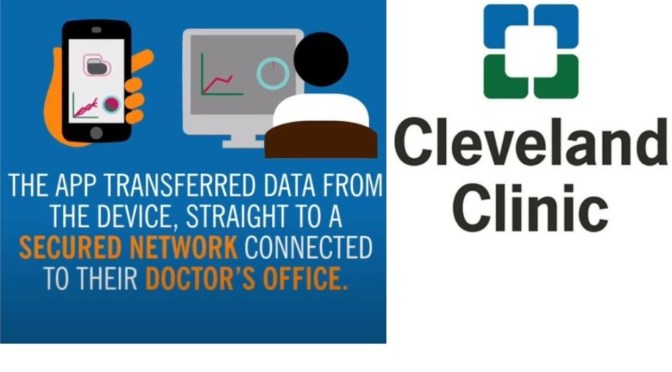
In a first of its kind study, Cleveland Clinic researchers found Bluetooth-enabled pacemakers successfully transferred information to doctors 95% of the time through an app on the patient’s smartphone or tablet. In comparison, traditional bedside consoles were successful 77% of the time.
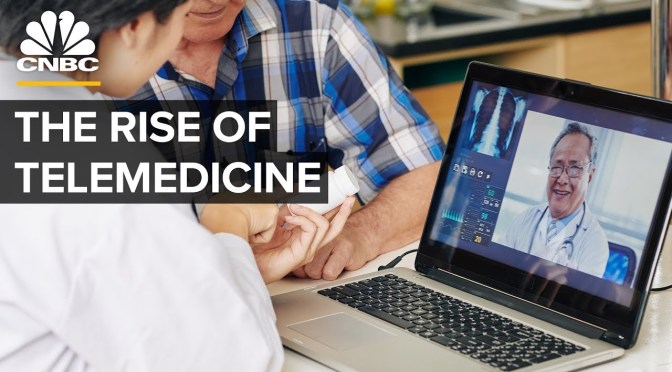
The coronavirus pandemic has overwhelmed hospitals, physicians and the medical community. That’s pushed telemedicine into the hands of providers and patients as the first response for primary care. Telemedicine isn’t new to the medical community, however it hasn’t been embraced due to insurance coverage, mindset and stigma. Here’s how it works and what it means for the future of health care.
COMMENTARY
The safety and convenience of Telemedicine have been amply illustrated by Covid 19. It’s place in the future of Medicine would seem to be assured.
Once the epidemic is over, however, some sticky details, waved away by fiat during the early days, must be addressed.
Will Payment parity be allowed by the Health insurance companies (And Medicare) be continued? Will cross-border Practice still be allowed by the states. Will more Doctors modernize? Will lawyers (and litigious patients) restrain themselves? Stay Tuned!
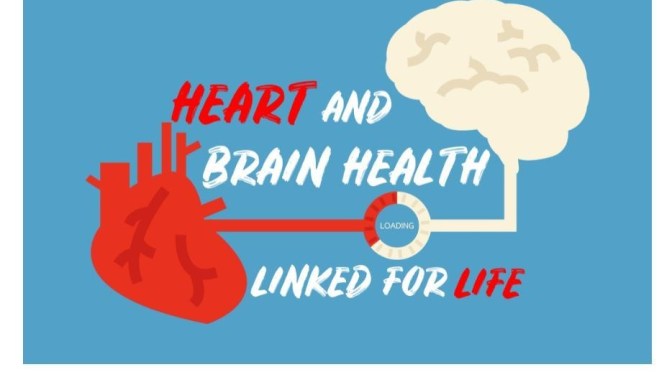
Your heart and your brain are your two most vital organs, and if you enjoy life, they should be a top priority. These amazing structures are tethered to life-giving support by your arteries, just as the new you was tethered by your ubilical cord.
Life is fragile, hanging by a thread, or an artery. over the span of your life, These arteries can become plugged by fatty deposits called plaques. A healthy life style-SLEEP, DIET and EXERCISE– could slow down or prevent this atherosclerosis.
But everybody should know about the symptoms of HEART ATTACK and STROKE (1) and how to respond if the arteries sustaining your heart or brain become blocked.
You should be familiar with the hospitals in your area. How close are they? What are their capabilities? Are they Class 1 for heart attacks and stroke? Do they have a CATH LAB?
SPEED is important. Within minutes of the BLOCKAGE of an ARTERY to your heart or brain, vital cells start to die. The goal is to remove the blockage as soon as possible. CALL 911 as soon as you have heart attack or stroke symptoms. Don’t be afraid of the ER because of Covid, since almost all now use TELEMEDICINE SCREENING to keep infected patients segregated.
Alas, for many people, such PREVENTATIVE MEDICINE requires too much SELF DISCIPLINE AND CONVICTION. America has an epidemic of OBESITY and an avalanche of tasty FAST FOODS provided by a CONSUMER SOCIETY that is ever-attentive to the latest fads and trends.
….with an eye toward the future, the authors offer recommendations for all interested parties to consider moving forward. These recommendations were informed by our research and a stakeholder meeting of industry groups who work with telehealth. These groups included Doctor on Demand, the American Medical Association, and the Center for Connected Health Policy. The paper’s recommendations are as follows:
Data on COVID-19 telehealth administration and programs must be collected and analyzed.
Regulatory flexibility should be built into telehealth to accommodate the range of use cases.
Telehealth services should be utilized for primary care to reduce service redundancies.
States should be empowered to move away from parity models to reduce the cost of telehealth services.
Telehealth services should be available to the medically underserved.
Innovation, privacy, and data security in telehealth services should be the norm.
Telemedicine is an “almost perfect” extension of Medical Care for the Covid epidemic (1). As we ease away from Panic, we will not be abandoning distancing, cleanliness, and other personal measures that keep us well. SARS-CoV-2, or the next Pandemic Virus will be lurking in the background.
Likewise, Medicine will always embrace Telemedicine for its’ convenience, safety, and efficiency, if we can overcome the roadblocks discussed in the above article.
One efficiency in particular, discussed in the previous RPA( from Australia) article stood out; the use of Nurse-triage to direct telephone (or someday audio-visual) Patients to the most appropriate destination; ER, Urgent Care, after-hours clinic, or home care.
The Schmidtt-Thompson protocol ( which guides triage) has been used since 1980, having stood the test of time and lawyers. It is available in electronic form, and when fully automated, it should be made available without cost.
Just imagine all of the unnecessary ER visits And Physician Visits potentially saved!
Telemedicine has indeed added convenience and safety in the Era ( it seems like forever) of Covid.
There are many Telemedicine ideas that will still be used when Covid hopefully takes its’ place in the Influenza immunization vial.
“Now, everybody is on board,” says Dr Teresa Anderson, chief executive of the Sydney Local Health District. “There is not one clinical department across the district that is not providing care virtually.”
hat
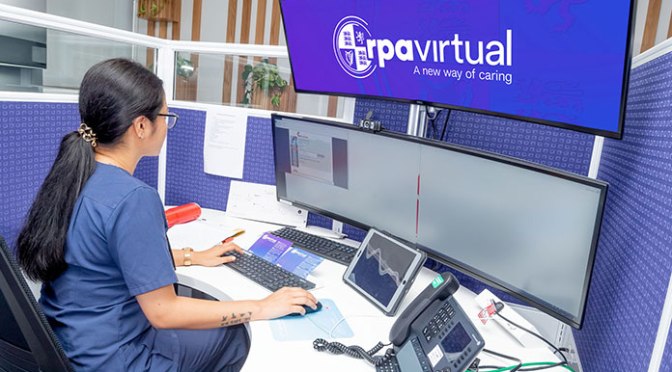
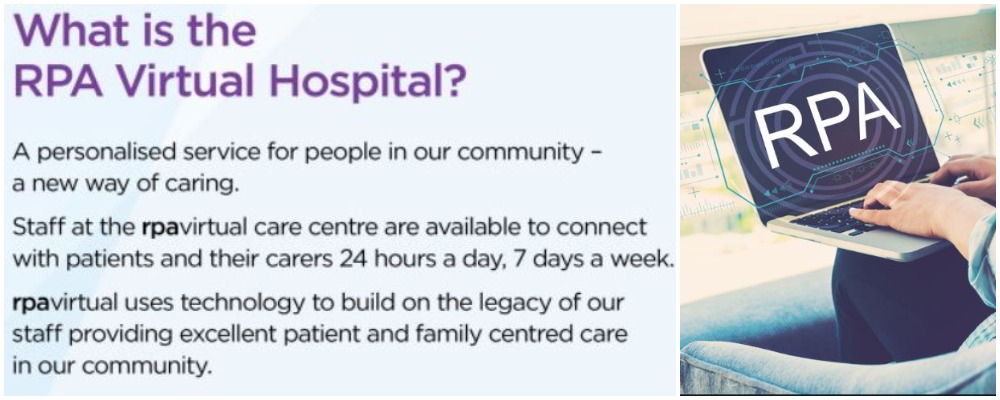
What a difference a pandemic makes. Although RPA Virtual Hospital was well into development when news broke from Wuhan in January, pandemic preparations meant it was scaled up far quicker than had been envisaged.
Anderson says RPA Virtual Hospital opened on 3 February with just six nurses. It now has more than 30 nurses, as well as medical and allied health teams, and 600 registered patients. Operating out of Royal Prince Alfred Hospital campus, it functions in many ways like a regular hospital, with a clinical handover, ward rounds, multidisciplinary team meetings and its own governance structures.
The virtual hospital is part of a wider suite of innovations developed at breakneck speed during the pandemic response, which include providing care in rented hotel and apartment accommodation to Covid-19 patients and others in quarantine, thus freeing up hospital beds.
The Covid epidemic spurred development of an addition to an already good medical care system.
A group of chronically ill patients were invited into the virtual care system. Nurses are used on initial encounter. They direct the enhanced home care, referrals or hospital care as needed. Electronic devices record the care given.
Hotels are used to quarantine suspected Covid patients, with telemonitoring.
As in America, the Covid epidemic has exposed the excesses of unneeded “elective” surgery, most notoriously surgery for back pain. We can learn a lot by studying the health care of other countries.
From a Permanente.org online article (May 11, 2020):
“Our patients are glad we offer telehealth options because they don’t want to come to the medical centers. This allows them to stay home andstay safe,” Dr. Lee says. “Before, telehealth was a choice and convenience, but now it’s one of the ways patients remain healthy with social distancing.”
The majority of telehealth visits are phone appointments, but Dr. Lee says video usage is increasing as more patients become comfortable with the platform.
Telehealth can also include services such as remote patient monitoring, which allows patients to take blood pressure measurements and blood sugar readings at home so that their care teams can monitor ongoing health conditions. In the case of the Kaiser Permanente Mid-Atlantic States region, doctors also use telehealth to do rounds virtually for patients who have suspected or confirmed COVID-19.
Patients at higher risk for complications are given pulse oximeters so their doctor can monitor for signs of severe respiratory infection before other symptoms might indicate a need for additional care, including hospitalization.
COMMENTARY
TELEHEALTH is HERE TO STAY. It came in with the telephone, and has been gaining in recent decades. The distancing and Patient convenience so characteristic of Telehealth made it a natural fit for Covid 19, which has accelerated its’ adoption.
Your CLINICAL HISTORY, led by the Story of your Present Illness, has since time immemorial been the MOST IMPORTANT ELEMENT leading to accurate DIAGNOSIS. During a TELEMEDICINE VISIT, your doctor must make the MOST out of your clinical history. She can’t do a proper Physical Exam, although she can usually see you, and maybe direct a SELF exam. Teledata, such as EKG,B.P., and blood sugar will become increasingly available.
Your Doctor can usually get enough information to order Lab work and Imaging; and prolix ordering can be tempered, since a good HISTORY of the PRESENT ILLNESS, systems review, past and family history can narrow the diagnostic possibilities considerably. The pressure of time and demanding computer Records may lead the overworked Doctor to use Lab Tests to make up for insufficient Medical History.
Integrated medical systems, such as Kaiser, can also easily access your past medical information, one of the advantages of having everything under one roof.
Informed Patients, SELF-EDUCATING themselves from the vast trove of medical information on the internet (and maybe DWWR) can author their own MEDICAL NARRATIVE, or at least make the Doctors job easier.
“Calling my patients at home, with or without video, has become my new normal. After 25 years of being a pediatrician, telemedicine is teaching me new ways to communicate with families.“
“I try to hear the mother above the babbling of her baby. And then to listen to the babbling of the baby. Is it joyful? Are there big breaths between the babbling?“
A federal government waiver, issued early in March, expanded the use of federally funded health insurance — Medicaid, Medicare and the Children’s Health Insurance Program — to pay for telemedicine visits. The goal was to allow more people with symptoms of illness to be heard, and sometimes also seen, by a health care provider without the risk of exposure to coronavirus at a doctor’s office or hospital.
The federal government has been expanding the use of telemedicine for years — but like so many changes in this pandemic, what used to take years to transform, we are now doing within weeks.
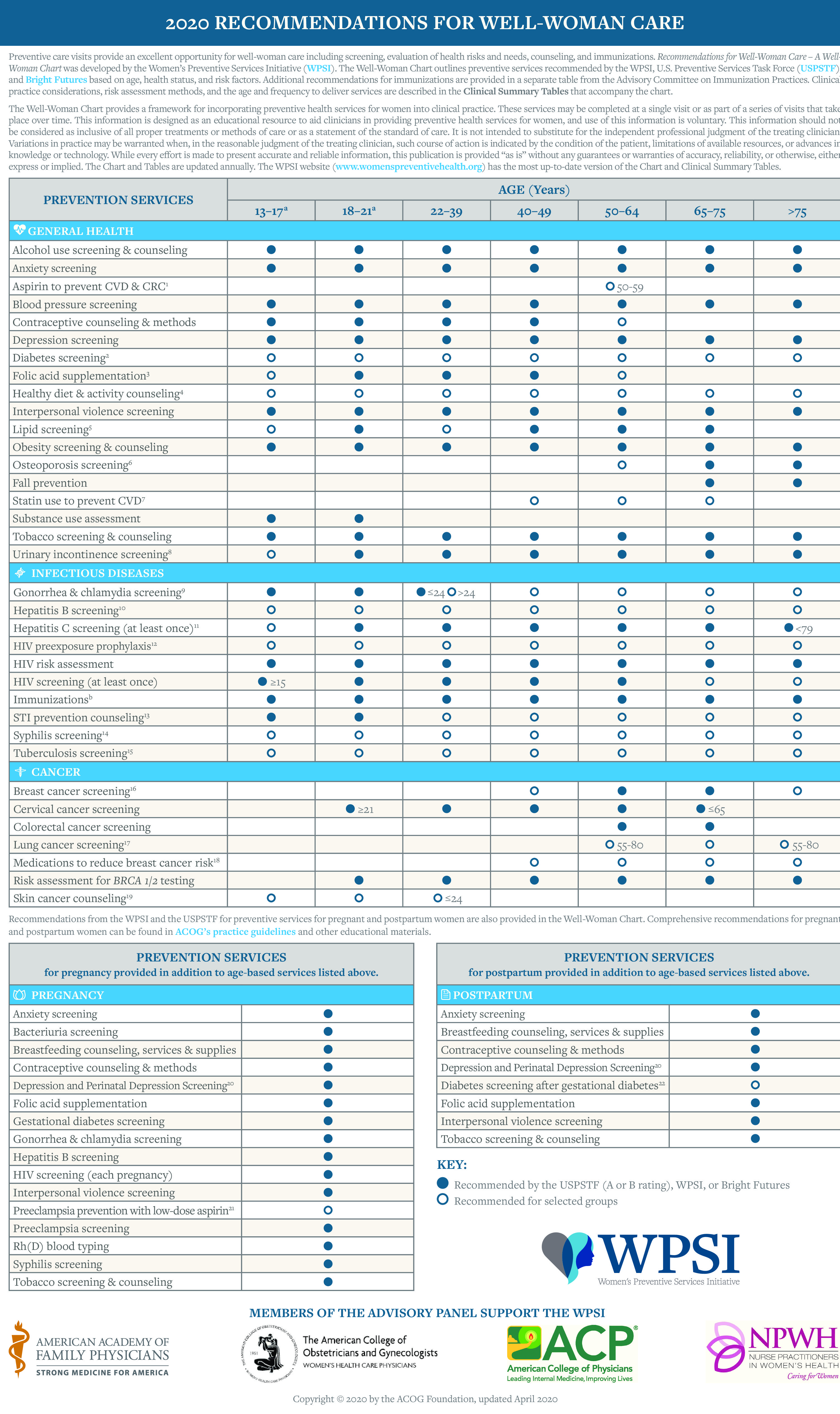
The following list contains preventive services that may be done via telehealth (from ACOG.org):
General Health
Alcohol screening and counseling regarding alcohol use
Anxiety Screening and referral*
Counseling regarding aspirin to prevent CVD and CRC
Blood pressure screening (if patient has appropriate resources available such as a blood pressure cuff)
Contraceptive counseling, discussion of methods, and prescribing contraceptives that do not require an in-person visit such as intrauterine devices or implants*
Depression screening and referral
Fall Prevention counseling
Counseling regarding folic acid supplementation
Healthy diet and activity counseling
Interpersonal and domestic violence screening and discussion of available resources*
Obesity screening (if patient has appropriate resources available such as a scale)
Counseling and possible prescribing of medications to reduce breast cancer risk
Risk assessment for BRCA testing
Skin cancer counseling
Pregnancy and postpartum
Breastfeeding services and supplies*
Postpartum contraceptive counseling, discussion of methods, and prescribing contraceptives that do not require an in-person visit such as intrauterine devices or implants
Depression screening and referral
Counseling regarding folic acid supplementation
Interpersonal and domestic violence screening and discussion of available resources*
Preeclampsia prevention with low-dose aspirin
Preeclampsia screening (if patient has appropriate resources available)
Tobacco screening and cessation counseling
*WPSI recommendation. For more information about each recommendation, please see our WPSI Recommendation page.








 Doctors Without Waiting Rooms