
Category Archives: Technology

TeleHealth: Weill Cornell ‘Center For Virtual Care’ Expands Training Courses

The new eCornell course, which features a curriculum in-line with the Association of American Medical College’s Telehealth Competencies, offers instruction on how to harness the digital health medium to effectively create a therapeutic patient-provider encounter. Students learn essentials including verbal and nonverbal communication strategies to convey empathy and compassion, how to overcome technical challenges, and how to conduct remote patient exams.

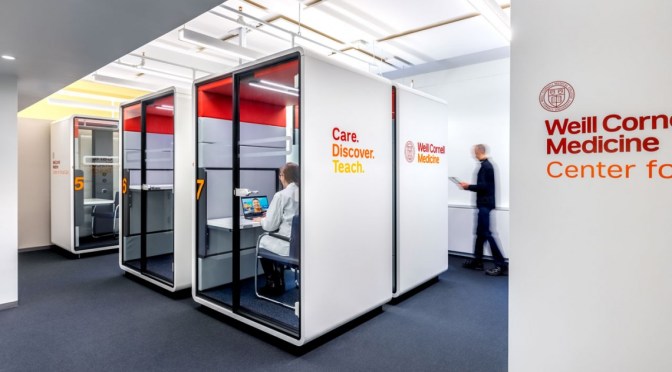
Digital health and the tools for patients to virtually reach their health care providers have quickly become a mainstay of medical care during the COVID-19 pandemic. Weill Cornell Medicine’s Center for Virtual Care is positioned at the leading edge of this health care delivery transformation. Leveraging their years of experience with video visits, the center’s experts train providers how to best use it to give their patients comprehensive, compassionate care.

Read more

DR. C Comments

Telehealth offers significant advantages to both patient and doctor. It should be a welcome and valuable addition to the medical profession in its desire to deliver comprehensive care to patients. However, Telemedicine faces a number of barriers both from the medical side and the patient side, not to mention insurance, lawyers, and government.

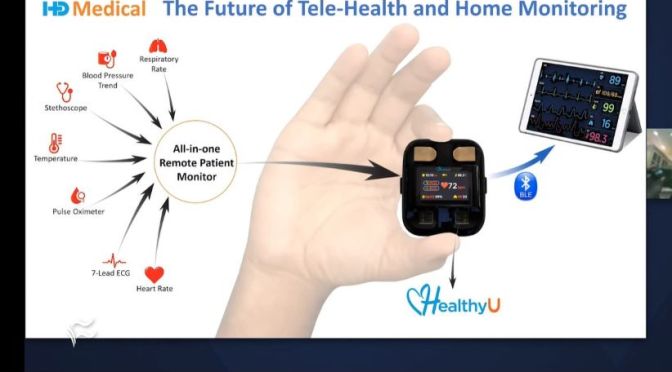
A good video was posted from Cornell, which aims to get doctors to develop a set of behavioral skills which will make telemedicine more personal. Of course, training should be extended to peripheral sensing devices that will enhance the ability of doctors to gain information at a distance, as well as familiarization with a user-friendly electronic system to navigate.

Patients also need a special course in how to become more Competent in the technical aspects of telemedicine,  sensors and other challenges. Since  Telemedicine visits occur at widely spaced intervals, even an intensive training course might find the patient unfamiliar with the system at the time of need.

Recently, I signed up for a zoom consultation At UCLA medical Center. It was very helpful to have a knowledgeable person on the phone directing me through the maze that got me signed up to “my chart”, The electronic system that UCLA uses. Even though I took Notes, when it is actually time to get into the system and  go to the virtual waiting room of my chart, I may well have difficulty.

And that’s just one system. It seems as though doctors offices, different medical systems, and different health plans all have their own unique electronic systems which are enough different to be confusing to the patient.

I can only hope that the newer generations, having grown up using these electronic devices, will have enough facility to easily interface with their doctor electronically. Until the older generation passes on, however,  there will be ongoing challenges.

MEDICINE: BASEBALL GREAT CAL RIPKEN JR.’S ‘ROBOTIC RADICAL PROSTATECTOMY’

Known as the Ironman, Hall of Famer Cal Ripken Jr. was diagnosed with prostate cancer during the COVID-19 pandemic. Partnering with the Brady Urological Institute, Mr. Ripken had a successful robotic radical prostatectomy to remove his tumor and is now deemed cancer free. Watch urologic surgeon Mohamad Allaf and Cal Ripken Jr. discuss his prostate cancer journey at Johns Hopkins and share his powerful message to men across the world.

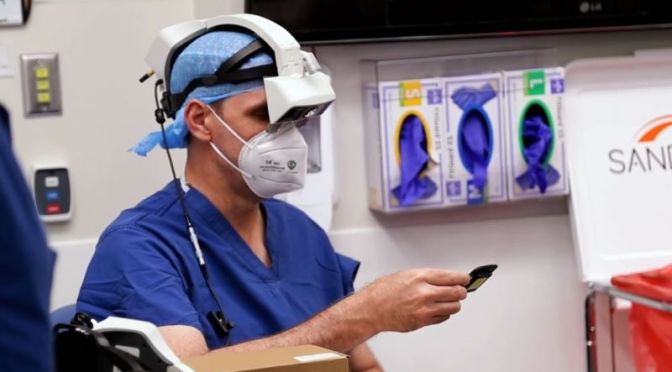
Technology: Augmented Reality Improves Spine Surgery Outcomes (Video)

Kay suffered from debilitating muscle cramping and lower back pain due to spondylolisthesis, a common condition in the lumbar spine. When nonsurgical treatment options failed, she turned to spine neurosurgeon Timothy Witham for help. He used a new augmented reality technology to accurately place spinal instrumentation in her back. Seven months after surgery, Kay has resumed her daily pursuits without pain and is enjoying life.

DIGITAL HEALTH: THE FUTURE OF WEARABLE DEVICES

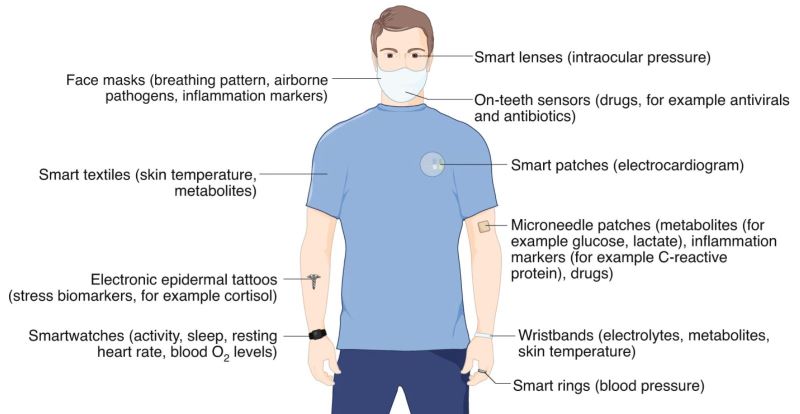
Currently, smartwatches provide information such as heart rate, sleep time and activity patterns. In the future, this could be augmented with new classes of wearable devices that monitor, for example, concentrations of cortisol for tracking stress (using electronic epidermal tattoos), biomarkers of inflammation and levels of blood O2 (microneedle patches), skin temperature (electronic textiles), blood pressure (smart rings), concentration of ions (wristbands), intraocular pressure (smart contact lenses), the presence of airborne pathogens and breathing anomalies (face masks), and the concentration of therapeutic drugs (on-teeth sensors)2,10,12,13,14,15,16. Such emerging low-cost wearable sensing technologies, monitoring both physical parameters and biochemical markers, could be used to identify symptomatic and pre-symptomatic cases in future pandemics. The devices could also be used to remotely monitor the recovery of individuals undergoing treatment or self-isolating at home.

Read more

Analysis: ‘The Explosive Growth Of Telemedical Healthcare In 2020’ (Video)

Join CNET during CES 2021 for talks with three medical luminaries to discuss what we’ve gained — and need to fix — with telehealth over a turbulent pandemic year.

HEALTH: ‘AT-HOME COVID-19 TESTS’ – ON THE WAY (VIDEO)

OraSure Technologies has blazed a trail in at-home diagnostic tests. Now, the Pennsylvania-based biotech company is working to produce a quick, over-the-counter coronavirus test that consumers can take in the privacy of their home with results available in minutes. NPR’s Allison Aubrey reports.

HEALTH: ‘RISKS & BENEFITS OF AI REVOLUTION IN MEDICINE’

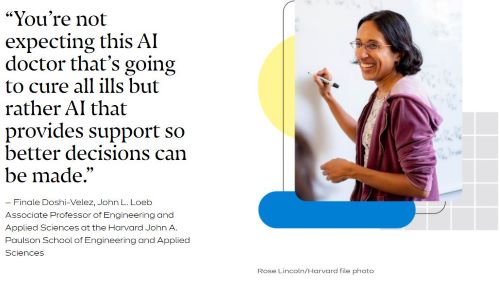
It has taken time — some say far too long — but medicine stands on the brink of an AI revolution. In a recent article in the New England Journal of Medicine, Isaac Kohane, head of Harvard Medical School’s Department of Biomedical Informatics, and his co-authors say that AI will indeed make it possible to bring all medical knowledge to bear in service of any case.

Properly designed AI also has the potential to make our health care system more efficient and less expensive, ease the paperwork burden that has more and more doctors considering new careers, fill the gaping holes in access to quality care in the world’s poorest places, and, among many other things, serve as an unblinking watchdog on the lookout for the medical errors that kill an estimated 200,000 people and cost $1.9 billion annually.

“I’m convinced that the implementation of AI in medicine will be one of the things that change the way care is delivered going forward,” said David Bates, chief of internal medicine at Harvard-affiliated Brigham and Women’s Hospital, professor of medicine at Harvard Medical School and of health policy and management at the Harvard T.H. Chan School of Public Health. “It’s clear that clinicians don’t make as good decisions as they could. If they had support to make better decisions, they could do a better job.”

Read more

MEDICINE: ‘THE FUTURE OF NEUROSURGERY’ (VIDEO)

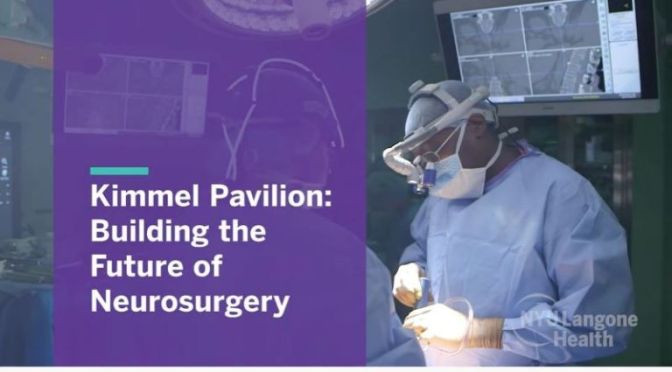
NYU Langone’s Kimmel Pavilion is home to the region’s newest and most technologically sophisticated neurosurgery suite. Designed to optimize patient care, our facilities are just one reason U.S. News & World Report’s “Best Hospitals” ranks NYU Langone among the top 10 hospitals in the country for neurology and neurosurgery.

Learn more about neurosurgery at NYU Langone and meet our renowned surgeons: https://nyulangone.org/locations/neur…