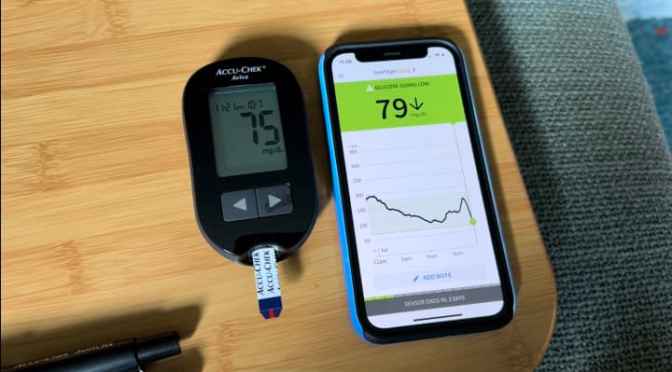
Abbott Laboratories newest continuous glucose monitor is now available at participating retail pharmacies and through durable medical equipment suppliers. The Freestyle Libre 3 was approved by the FDA in June and is a step up from previous Abbott systems.
Abbott Laboratories and Dexcom are the leaders in the CGM market, which hit $5.1 billion in revenue in 2021 and is expected to reach $13.2 billion by 2028, according to Vantage Market Research. Abbott’s CGM systems, called FreeStyle Libre, generated $3.7 billion in revenue last year, with 4 million users globally.
CNBC’s Erin Black, a type 1 diabetic, tested out the Libre 3 for over a month. Here is her review.
“Diverse aging populations, vulnerable to chronic disease, are at the cusp of a promising future. Indeed, growing regenerative options offer opportunities to boost innate healing, and address aging-associated decline. The outlook for an extended well-being strives to achieve health for all,”
Regenerative medicine could slow the clock on degenerative diseases that often ravage the golden years, a Mayo Clinic study finds. Life span has nearly doubled since the 1950s, but health span — the number of disease-free years — has not kept pace. According to a paper published in NPJ Regenerative Medicine., people are generally living longer, but the last decade of life is often racked with chronic, age-related diseases that diminish quality of life. These final years come with a great cost burden to society.
Researchers contend that new solutions for increasing health span lie at the intersection of regenerative medicine research, anti-senescent investigation, clinical care and societal supports. A regenerative approach offers hope of extending the longevity of good health, so a person’s final years can be lived to the fullest.
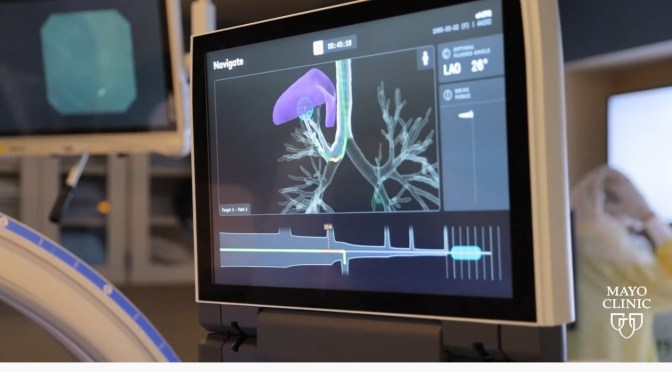
Robotic GPS system for early lung cancer detection.
Lung cancer typically is diagnosed at a later stagethan other malignancies, due to the lack of early warning indications. In 2020 it was China’s most common cancer and the leading cause of cancer-associated mortality. LungHealth MedTech, a medical robotics company in Shanghai, has developed a robotic-assisted bronchoscopy platform that can address some of the current diagnostic challenges and treatment limitations.
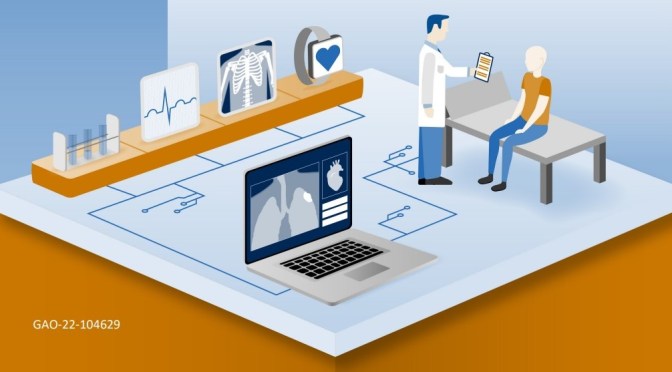
Each year, medical diagnosis errors affect the health of millions of Americans and cost billions of dollars. Machine learning technologies can help identify hidden or complex patterns in diagnostic data to detect diseases earlier and improve treatments.
Several machine learning (ML) technologies are available in the U.S. to assist with the diagnostic process. The resulting benefits include earlier detection of diseases; more consistent analysis of medical data; and increased access to care, particularly for underserved populations. GAO identified a variety of ML-based technologies for five selected diseases
Certain cancers,
Diabetic retinopathy,
Alzheimer’s disease,
Heart disease,
COVID-19
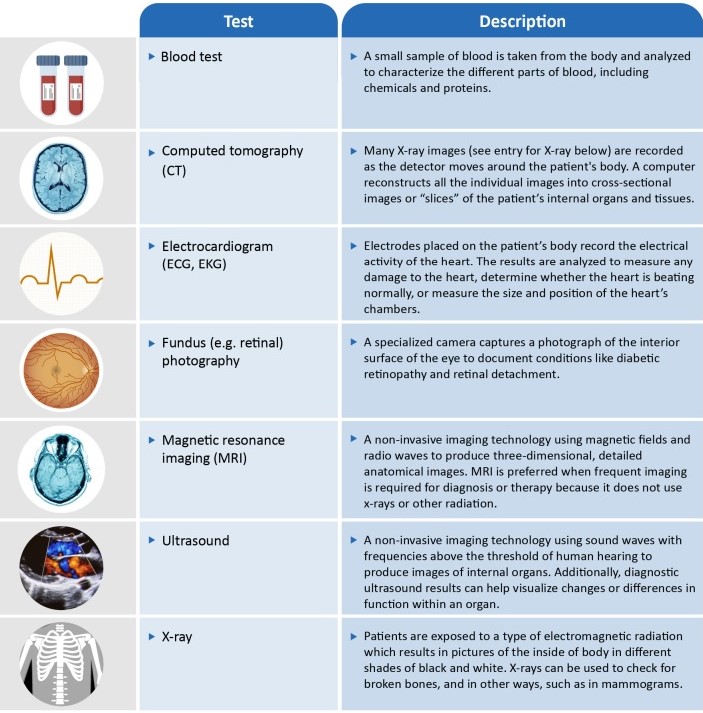
Most technologies relying on data from imaging such as x-rays or magnetic resonance imaging (MRI). However, these ML technologies have generally not been widely adopted.
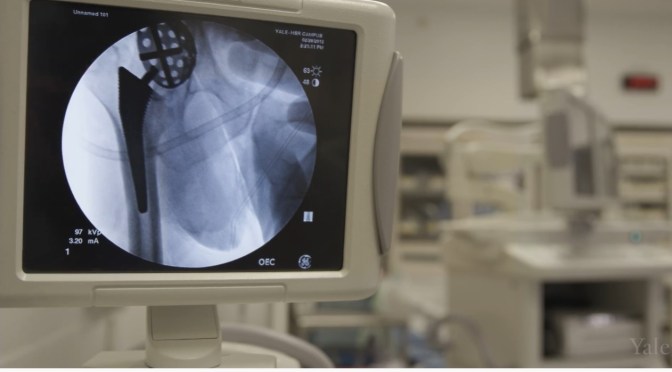
Daniel Wiznia, MD, an orthopaedic surgeon with Yale School of Medicine, is practicing a surgical technique designed to render 10% of hip replacements unnecessary. Regenerative properties from a patient’s own stem cells are responsible for regrowing bone, restoring blood flow, and being able to avoid further interventional surgery.
Osteonecrosis, also known as avascular necrosis, occurs in more than 20,000 Americans each year. As the condition progresses, bone cells known as osteoblasts become unable to repair themselves and sustain the integrity of the bone, and ultimately die. The bone deterioration leads to a decrease in blood flow to the area, further weakening the entire skeletal structure of the upper leg.
If unaddressed, the ball portion of the hip’s ball and socket joint will cave in on itself and collapse, requiring a total hip replacement. The fact that patients often receive this diagnosis during their 30s and 40s presents a particular challenge.
While the lifespan of hip prosthetics has dramatically increased in recent years, a patient who undergoes a total hip arthroplasty, or total hip replacement, at that age will almost certainly require a revision later in life. This redo of the same surgery at an older age comes with an entirely new set of risks and potential complications, making it that much harder to manage down the road.
Telemedicine could soon offer relief local emergency rooms desperately need.
UCM Digital Health offers a digitally integrated, whole person health solution that provides patients with immediate access to care on their terms.
UCM combines a digital front door platform, multi-disciplinary team of providers, and a 24/7 telehealth triage, treatment, and navigation service to provide a range of patient services, including emergent and urgent care, primary and specialty care, behavioral health, and more. Care begins digitally and can seamlessly integrate across other points of care for a simple patient experience.
UCM brings together clinical expertise, advanced technology and compassionate care to offer powerful advantages for insurers, employers, patients and providers.
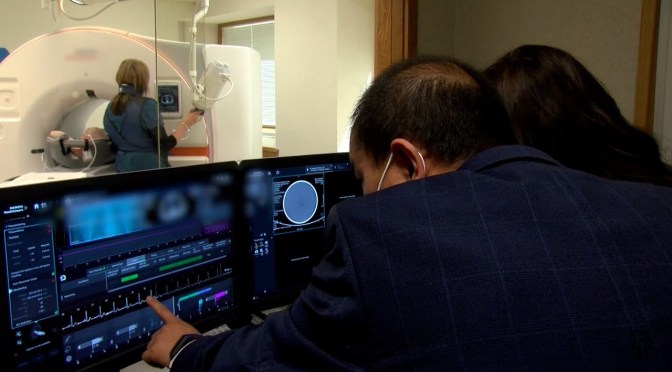
Using artificial intelligence in health care seems like a futuristic concept, but it’s something that’s being used now to complement the knowledge of doctors. Radiology was one of the first areas that saw a lot of AI applications.
Dr. Bradley Erickson, director of Mayo Clinic’s AI Lab, says in the case of radiology, machine learning is used to complete some of the more time-consuming work. Beyond that, the diagnostic capabilities of AI are what attracts a lot of the appeal. While imaging-related AI has seen a lot of advancements, Dr. Bhavik Patel, director of AI at Mayo Clinic Arizona, says the next step is looking at AI applications for preventive health and shifting the mindset from pipeline to platform thinking.
There are a broad area of applications (for AI), starting in radiology, but really spreading into the rest of the clinic, including cardiology and even pathology.
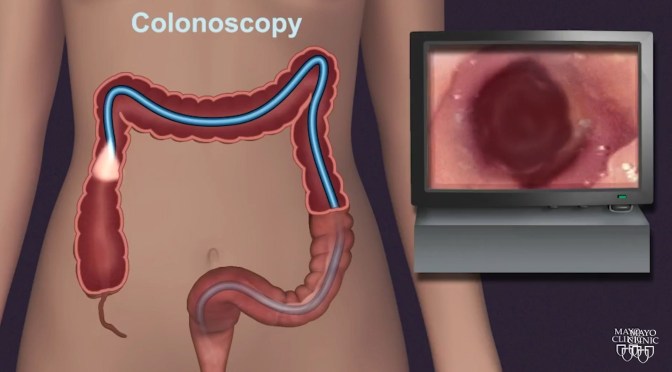
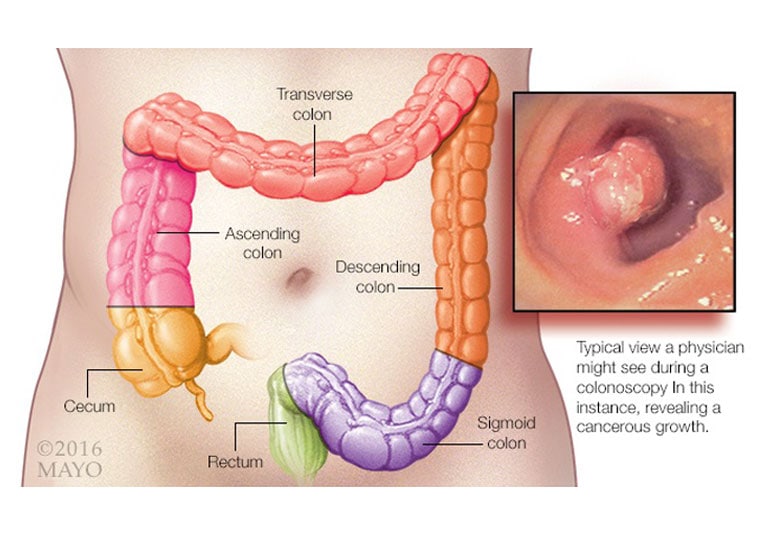
“Colorectal cancer is almost entirely preventable with proper screening,” says senior author Michael B. Wallace, M.D., division chair of Gastroenterology and Hepatology at Sheikh Shakhbout Medical City in Abu Dhabi, United Arab Emirates, and the Fred C. Andersen Professor at Mayo Clinic in Jacksonville, Florida. “The substantial decrease in miss rate using AI reassures health care providers on the decreased risk of perceptual errors.”
The most relevant cause of post-colonoscopy colorectal cancer (CRC) is the miss rate of colorectal neoplasia — the rate at which neoplastic lesions are not detected in a screening or surveillance colonoscopy. Some studies suggest that 52% to 57% of post-colonoscopy CRC cases are due to missed lesions at patients’ colonoscopies. It’s estimated that 25% of neoplastic lesions are missed following screening colonoscopy.
Mayo Clinic Gastroenterology and Hepatology, in collaboration with colleagues from around the world, found that using artificial intelligence (AI) in colorectal cancer screening produced a 50% reduction in the miss rate for colorectal neoplasia. Results of the study were published in the July 2022 edition of Gastroenterology.
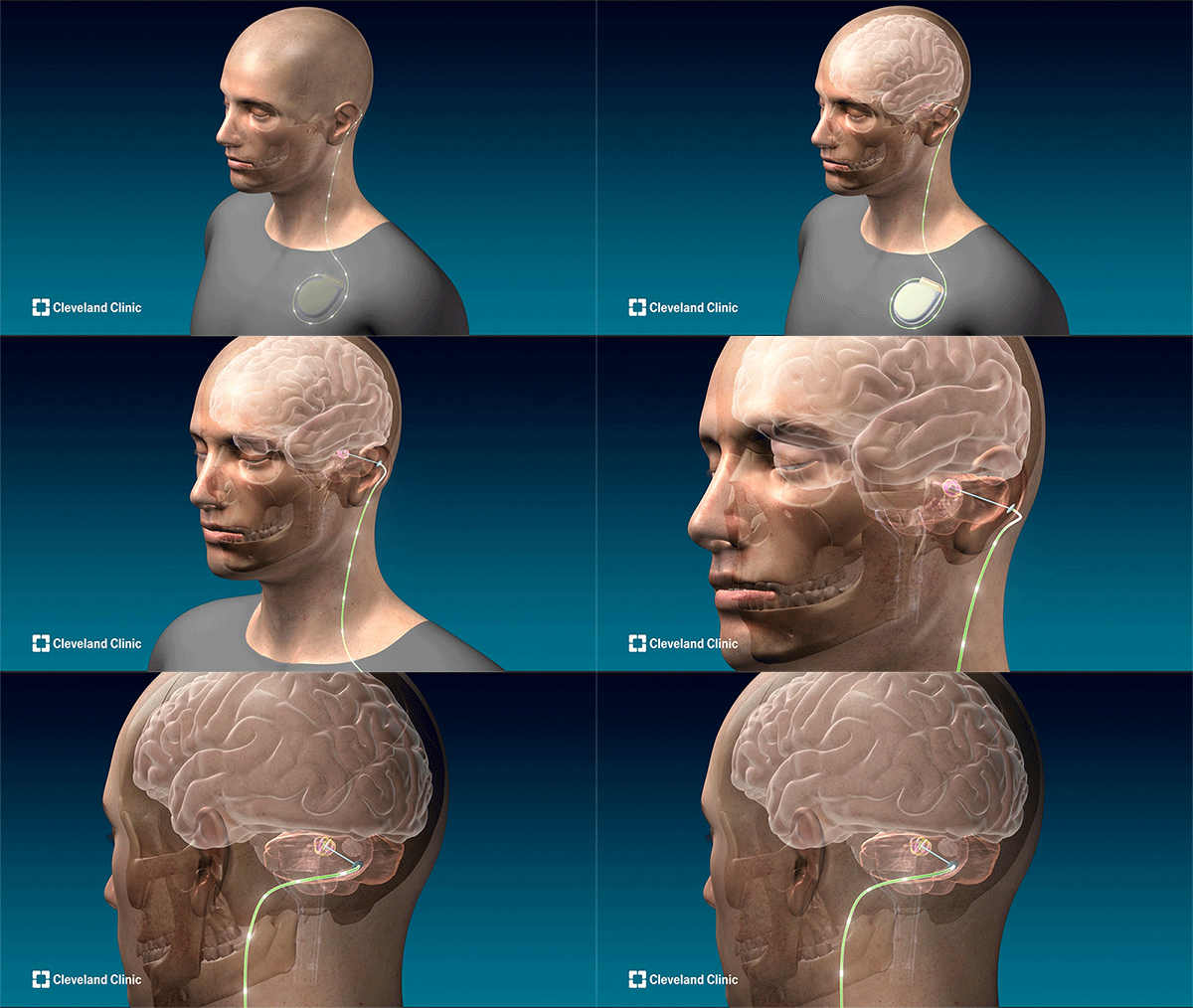
Deep brain stimulation is a surgical procedure that involves implanting electrodes in the brain, which deliver electrical impulses that block or change the abnormal activity that cause symptoms. (Courtesy: Cleveland Clinic)
“He had limited use of his hand. It really wasn’t functioning,” explains Andre Machado, MD, PhD, who is Chairman of the Cleveland Clinic Neurological Institute. “He couldn’t do as much manual work, with both hands, and that was a limitation for his quality of life.”
For the study, Joe first underwent two surgical procedures — one to insert the DBS device under the skin of his chest, just below the collarbone, and the other, to implant the DBS electrode in a part of the cerebellum called the dentate nucleus. Once activated, the device, called an implantable pulse generator, serves as a specially-calibrated pacemaker for the brain, stimulating it to try and enhance motor rehabilitation.
COMMENTARY:
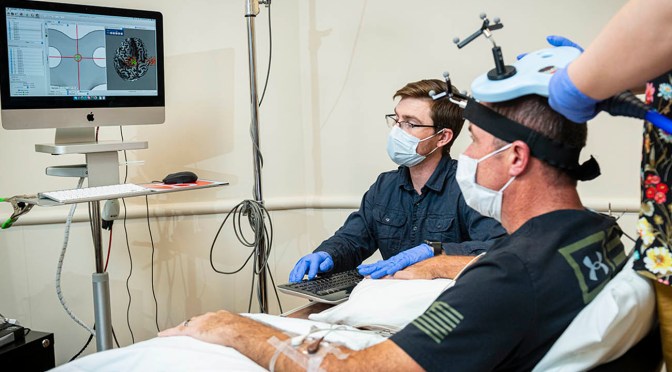
Many times in science, application precedes understanding. Deep brain stimulation, either by electrical or magnetic pulses is a good example.
It is not at all understood how the brain really works, much less how electrical and magnetic stimulation in the brain works. It may stimulate or slow down neural impulses, or interrupt the incoming signals or the outgoing messages. Are there any other possibilities?
At least it does work, Apparently.
One thing for certain is that deep brain stimulation is preferable to previous treatments, which produced small, destructive, irreversible lesions in the brain. At least these stimulations can be stopped if they don’t work.
I enjoyed this posting, since it reignited my interest in the cerebellum. This amazing Organ has more neurons than the rest of the brain combined, represented by innumerable small granule cells. I wasn’t even aware of the dentate nucleus, which is an island of cerebral cortex-like neurons in the white matter of the cerebellum. Apparently the action of the cerebellum is orchestrated through this and a couple of other islands of neurons. All of the coordination, movement, and thought processing accomplished in the cerebellum takes place through these nuclei.
It was also fascinating to learn of a patient who has complete lack of a cerebellum, and suffers only some mild incoordination and speech problems. Apparently, absent the cerebellum, the rest of the brain is largely capable of taking over the function of the missing cerebellum. Once the brain is formed, However, and dependent upon the cerebellum, damage to this organ causes a great deal of coordination, movement, and balance problems.
I’ll put another plug-in for sleep, diet and exercise, as well as being careful with your body. Prevention is far better than treatment.
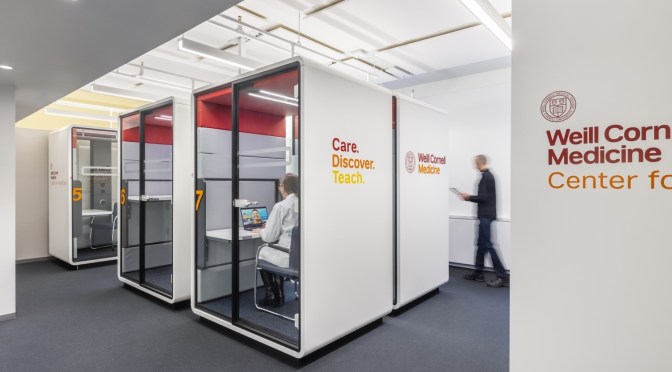
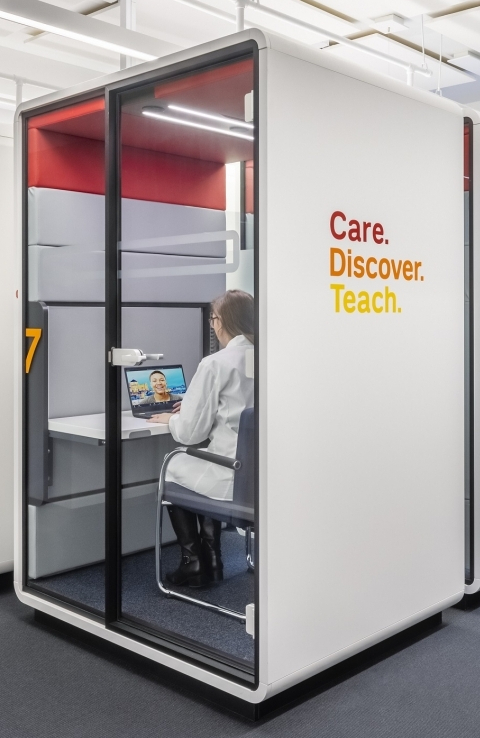
“Telemedicine is here to stay,” said Dr. Rahul Sharma, professor and chair of emergency medicine at Weill Cornell Medicine and co-author of a commentary on the results. “Health care organizations really need to think about the next steps regarding the future of virtual care, such as how we integrate it into our systems, and how to make sure we are meeting the needs of both our clinicians and our patients.”
The survey, conducted in March, polled members of NEJM’s Catalyst Insight Council who are clinicians, clinical leaders and executives in organizations that deliver care. The survey received 984 responses from around the world, 609 from the United States. Dr. Sharma, who is also emergency physician-in-chief at New York-Presbyterian/Weill Cornell Medical Center and executive director of the Center for Virtual Care at Weill Cornell Medicine, helped formulate the questions with his co-author Dr. Judd E. Hollander, senior vice president of health care delivery innovation at Sidney Kimmel Medical College at Thomas Jefferson University in Philadelphia.
Of U.S. respondents, 71 percent reported that telemedicine has improved patient health, while a similar proportion said it provides at least moderate quality specialty or mental health care. For primary care, that share was 81 percent. When responses across all countries are included, the results differ only slightly from those of U.S. respondents.

 Doctors Without Waiting Rooms