Category Archives: Prevention

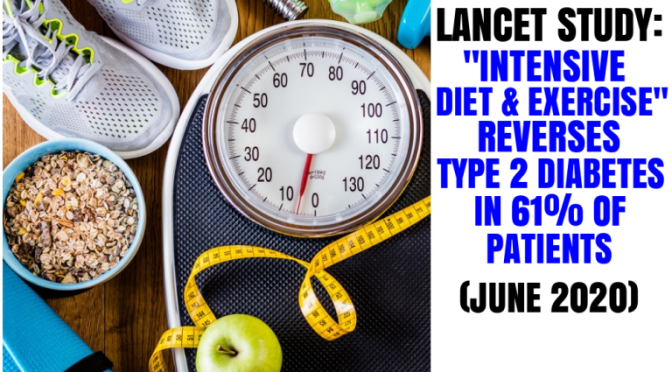
STUDY: “INTENSIVE DIET AND EXERCISE” REVERSES TYPE 2 DIABETES IN 61% OF PATIENTS

From The Lancet Diabetes & Endocrinology (June 2020):

Our findings show that the intensive lifestyle intervention led to significant weight loss at 12 months, and was associated with diabetes remission in over 60% of participants and normoglycaemia in over 30% of participants. The provision of this lifestyle intervention could allow a large proportion of young individuals with early diabetes to achieve improvements in key cardiometabolic outcomes, with potential long-term benefits for health and wellbeing.

The Lancet Diabetes & Endocrinology

Type 2 diabetes is affecting people at an increasingly younger age, particularly in the Middle East and in north Africa. We aimed to assess whether an intensive lifestyle intervention would lead to significant weight loss and improved glycaemia in young individuals with early diabetes..Between July 16, 2017, and Sept 30, 2018, we enrolled and randomly assigned 158 participants (n=79 in each group) to the study. 147 participants (70 in the intervention group and 77 in the control group) were included in the final intention-to-treat analysis population. Between baseline and 12 months, the mean bodyweight of participants in the intervention group reduced by 11·98 kg (95% CI 9·72 to 14·23) compared with 3·98 kg (2·78 to 5·18) in the control group (adjusted mean difference −6·08 kg [95% CI −8·37 to −3·79], p<0·0001). In the intervention group, 21% of participants achieved more than 15% weight loss between baseline and 12 months compared with 1% of participants in the control group (p<0·0001). Diabetes remission occurred in 61% of participants in the intervention group compared with 12% of those in the control group (odds ratio [OR] 12·03 [95% CI 5·17 to 28·03], p<0·0001). 33% of participants in the intervention group had normoglycaemia compared with 4% of participants in the control group (OR 12·07 [3·43 to 42·45], p<0·0001)
Read full study

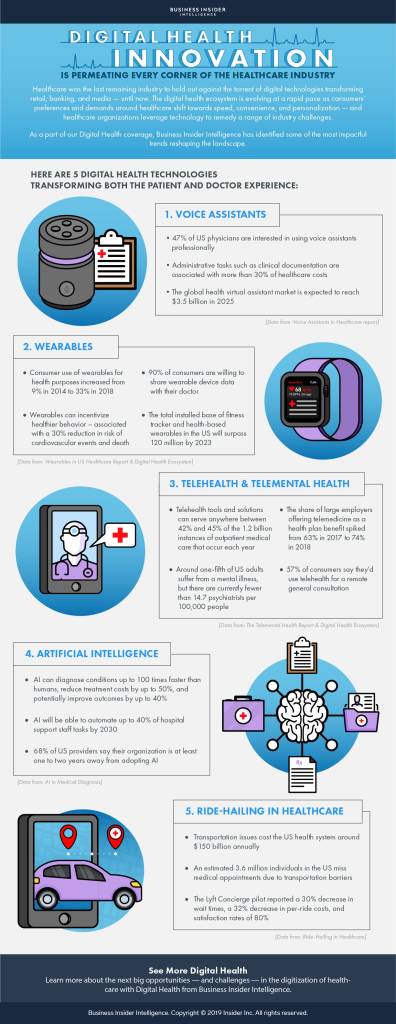
INFOGRAPHICS: “DIGITAL HEALTH TECHNOLOGIES IMPROVING PATIENT CARE”

COMMENTARY

The technology of telemedicine will predictably and steadily get better.
Medical assistants, mostly human at present, are commonplace, notably in specialty offices, and machines using improving voice-to-text transcription are getting better.

Wearable devices are proliferating and hopefully coming down in cost, and platform technology is improving though still glitchy.

Patients generally accept Telemedicine. They like the saving of travel time and infection exposure.

Doctors may drag their feet because the increased effort and legal exposure is not compensated by increase in payment. On the contrary, pre-Covid compensation was LESS for a televisit. Continuing Parity would help.

The politicians at the state level should eventually make licenses valid across state borders.

The big wild card is the Legal Profession. Unless they develop restraint( and litigious patients reform), there could be a feeding Frenzy, which would delay implementation of a very good idea.

Eventually telemedicine deserves to be 50% or more of medical practice.

—Dr. C.

COVID-19: CASE SEVERITY IS DEPENDENT ON VIRAL LOAD

From the New York Times

….in the case of the new coronavirus, people who have no symptoms seem to have viral loads — that is, the amount of virus in their bodies — just as high as those who are seriously ill, according to some studies.

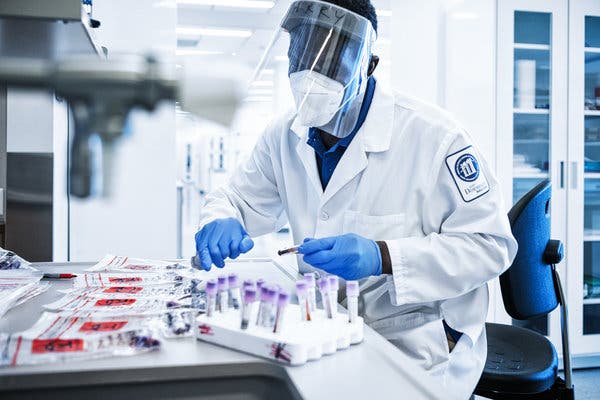
Harry Henri, a research assistant, working with blood samples from coronavirus patients at SUNY Downstate’s BioBank in Brooklyn.Credit…Misha Friedman for The New York Times

When experts recommend wearing masks, staying at least six feet away from others, washing your hands frequently and avoiding crowded spaces, what they’re really saying is: Try to minimize the amount of virus you encounter.

A few viral particles cannot make you sick — the immune system would vanquish the intruders before they could. But how much virus is needed for an infection to take root? What is the minimum effective dose?

And coronavirus patients are most infectious two to three days before symptoms begin, less so after the illness really hits.

Some people are generous transmitters of the coronavirus; others are stingy. So-called super-spreaders seem to be particularly gifted in transmitting it, although it’s unclear whether that’s because of their biology or their behavior.

On the receiving end, the shape of a person’s nostrils and the amount of nose hair and mucus present — as well as the distribution of certain cellular receptors in the airway that the virus needs to latch on to — can all influence how much virus it takes to become infected.

Read full article

COMMENTARY

HEALTH: THE HISTORY OF FACEMASKS AND DISEASE THROUGH THE CENTURIES

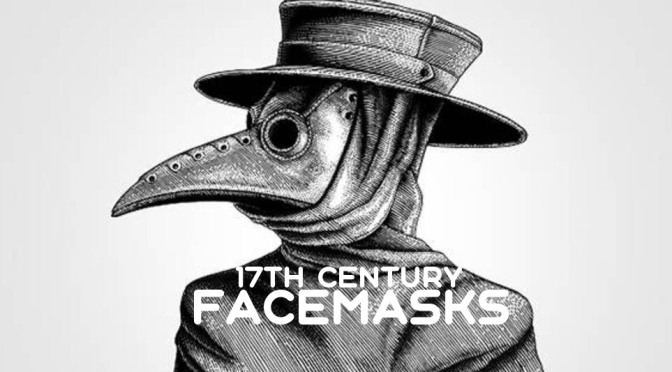
Originating during the Black Death of the Middle Ages, face coverings to protect against the transmission of disease are not just medical requirements; they’re now a fashion statement. Mark Phillips talks with medical historian Mark Honigsbaum (“The Pandemic Century”) about the purpose and style of facemasks.

COMMENTARY

Medicine has always operated in the context of theory, which is easier to generate than fact. The medieval physician with the “bird mask” thought he was protecting himself from “miasma”, which was theorized to be the means by which PLAGUE was spread. In fact, the masks’ main function was to hide his identity from his Patient, whom he could not help. The painting makes him appear to be the Grim Reaper himself.

The story of Guaiac, another illustration medieval medicine, is entwined with Syphillis, the stigmatizing STD of post Columbian Europe. Each country blamed Syphillis on its’ rival- the English called it the French disease, for instance-until they were able to blame it on the “new world”. Since it came from the Americas, so must its’ HERBAL REMEDY, according to theory.

GUAIAIC, the resin from the small tree from the Caribbean, became a popular cure. It might have even lessened suffering from Siphillis, since it was used instead of the highly toxic MERCURY.

Guaiac eventually found a use in Criminology, as a test for blood at the crime scene. When Guaiac is mixed with a suspicious spot and peroxide, it changes color rapidly to a bright blue. Medicine later used Guaiac as a test for hidden (occult) Blood In the stool; a positive, brilliant blue test throws suspicion on intestinal cancer as the culprit.

We come full circle to present day mask usage in the Covid epidemic. Some countries outlaw masks because masks interfere with criminal investigation. This interdict had to be relaxed during The Pandemic. How convenient for the rioters and looters in Minnesota!

—Dr. C.

HEALTH: ARE FACE SHIELDS THE BETTER PROTECTOR?

From a New York Times article (May 24, 2020):

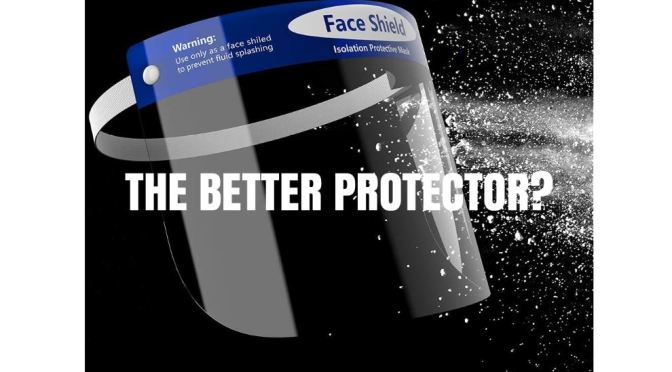
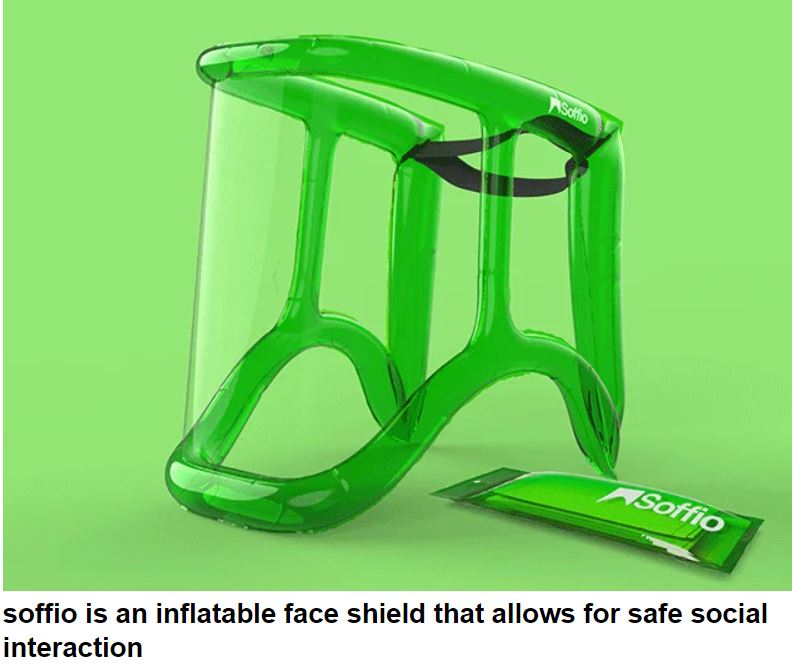
Dr. Perencevich believes that face shields should be the preferred personal protective equipment of everyone for the same reason health care workers use them. They protect the entire face, including the eyes, and prevent people from touching their faces or inadvertently exposing themselves to the coronavirus.

The debate over whether Americans should wear face masks to control coronavirus transmission has been settled. Governments and businesses now require or at least recommend them in many public settings. But as parts of the country reopen, some doctors want you to consider another layer of personal protective equipment in your daily life: clear plastic face shields.

Read more

COMMENTARY

When I take my walk, which currently is my only outing, I wear a face SHIELD for my personal protection against contracting Covid 19 from others.

I gave up on the face MASK because it is uncomfortable, especially when I am breathing heavily while walking rapidly up hills.

There isn’t much research supporting the self-protective use of face shields, but the video accompanying this article was enough for me; notice the aerosol-free area behind the face shield.

While walking, I breathe In deeply through my nose, and exhale through my mouth, using “pursed lips”, which aids in oxygen extraction by holding the alveolae open.

Exhaling through the mouth also clears the air behind the mask for subsequent nasal inhalation.

With nasal inspiration, any SARS CoV-2 aerosol particles would be deposited in the nasal passages, Which are that much farther away from your vulnerable lung.

It isn’t perfect. For one thing, it wouldn’t protect you much if someone coughed at you from the side or behind. I often hold my breath reflexes when I hear someone cough, or when I pass closely (even 6ft.) to someone.

The face shield holds promise for protecting you from viral infection, including the “flu”.

—Dr. C.

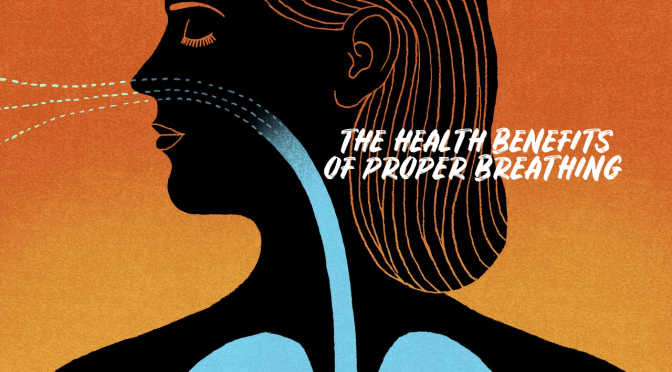
PREVENTION: THE HEALTH AND HEALING BENEFITS OF PROPER BREATHING

From a Wall Street Journal article (May 21, 2020):

Breathing properly can allow us to live longer and healthier lives. Breathing poorly, by contrast, can exacerbate and sometimes cause a laundry list of chronic diseases: asthma, anxiety, attention deficit hyperactivity disorder, hypertension and more. Poor breathing habits can even change the physical structure of our skeletons, depleting essential minerals and weakening our bones.

Most of us misunderstand breathing. We see it as passive, something that we just do. Breathe, live; stop breathing, die. But breathing is not that simple and binary. How we breathe matters, too.

Last year, I wanted to see just how dramatically breathing habits—good and bad ones—could affect my own brain and body. I’d learned that up to 50% of us are chronic mouth breathers, a problem well described by an ancient Tao text: “The breath inhaled through the mouth is called ‘Ni Ch’i, adverse breath,’ which is extremely harmful.”

Scientists have known for decades that inhaling through this pathway saps the body of moisture, irritates the lungs and loosens the soft tissues at the back of the mouth. Mouth breathing has also been linked with neurological disorders, periodontal disease and increased risk of respiratory infection. But nobody knew how quickly this damage came on.

Read full article

COMMENTARY

Breathing is something we don’t think about. It comfortably transcends the merely habitual, and there is a complex of controllers in the brain to Drive breathing should we be unable or forget to breathe voluntarily.
Breathing has it’s own poets and cults, one of which is MINDFULNESS MEDITATION, which uses our BREATHING as the focus of our consciousness, to get us outside ourselves.

With DEEP breathing,  I noticed an INCREASED pO2, as registered on my Pulse Oximeter.

In the 1960’s asthma was not so well controlled as now. The mechanics of breathing were more important, so we taught our Patients how to breathe properly.

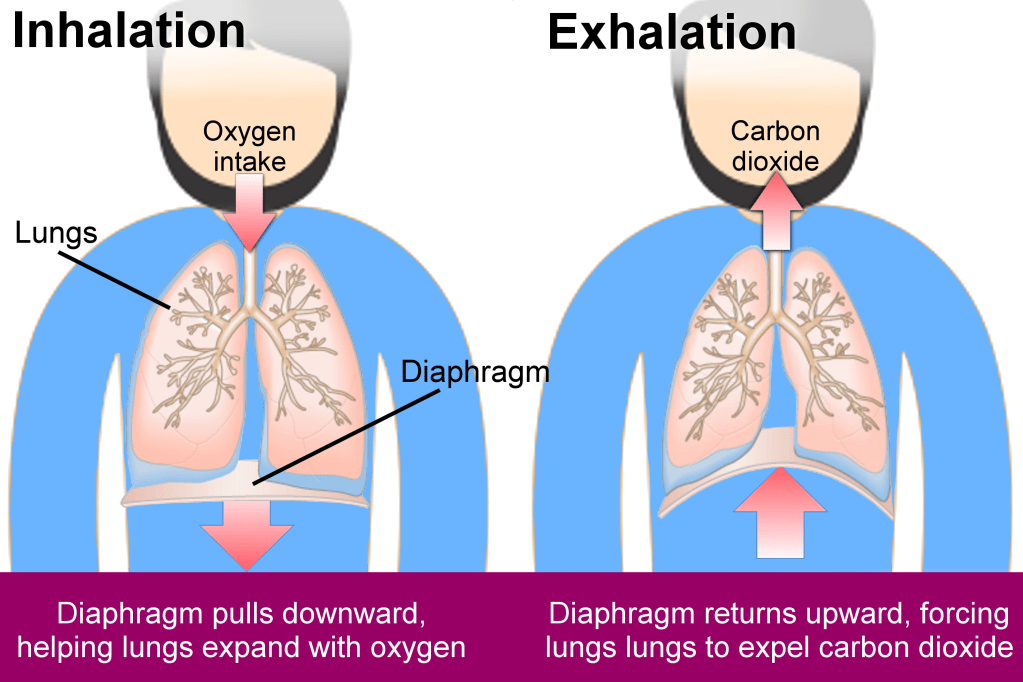
There are 2 sets of muscles we use to EXPAND our lungs, the DIAPHRAGM at the bottom of the chest, and the chest muscles themselves, the INTERCOSTALS. We refer to diaphragmatic breathing as “stomach” breathing, because the stomach bulges out as the descending diaphragm compresses the abdominal contents.

We refer to intercostal breathing as “chest” breathing because the chest expands when the inspiratory intercostals contract.

Diaphragmatic breathing is more efficient, and we encourage our asthmatic patients to Use their more efficient diaphragm to prevent them from tiring as they struggle to get their air out through their narrated airways.

You can squeeze a little extra air out of your lungs by contracting your abdominal muscles.

So to take a DEEP BREATH, see that your stomach rises and your chest expands with the breath IN, and that you squeeze both your abdomen and your chest with the breath out.

Your AIR SACS expand, your lungs are flushed with fresh air, and you blood oxygen, and BRAIN OXYGEN INCREASES with a deep breath in. The “stale air” is cleared by a full breath out.

When you are quietly breathing, letting that vital process take place automatically, notice that a deep breath, or “sigh”, occurs about once every 2 minutes. This is nature’s way to help lung surfactant PREVENT LUNG COLLAPSE and PNEUMONIA.

It is HEALTHFUL to PAY ATTENTION to your BREATHING occasionally! If uninclined to breathe deeply yourself, take a brisk walk up a hill, and let Nature do it for you.

—Dr. C.

OPINION: FACE MASKS AND SHIELDS TO PREVENT COVID

My main exercise for the day is a 45 minute fast walk around my community.

Hat – check. Sunglasses – check, FACE SHIELD – check.

Yes, face shield. The shield has the advantage of allowing me to talk, plus being more comfortable to wear. I clean it with a woolen cloth on one side and cotton on the other, hoping for a condenser electrostatic effect (I’m open to suggestion from engineers).

If I cough, any large particles of mucus would impact the shield, leaving only tiny aerosol particles to escape around the edges into the environment to endanger others.

It is Saturday today, and I pass a man and a woman pushing a baby buggy, and give them wide berth. I don’t consider 6-feet far enough distancing. 12-18 feet would be better, since, at 88-years of age, I am at least 2-3 times more susceptible.

A 12-year old zooms by me on a scooter. His age predicts less viral effluent, and the exposure time is less. I then go by a large collection of 20-year olds, Wide berth again, and, holding my breath, continuing to walk fast.

As I walk, I breathe air in through my nose, and out through my mouth. I feel the warmth (and purity) of the exhaled air, which may push aside and dilute any contaminants coming from the outside.

Another group of young adults! Well, maybe the risk is not as bad as the numbers would indicate. Odds are there would be only one spreader in the group, and the healthy ones would act as particle filters for me.

So far, not a single young person had a mask on. They are probably just thoughtless young people, and not necessarily “objectors” believing that mask-wearing is a sign of submission. As Peggy Noonan said in her column in today’s WSJ:

“…IT’S A SIGN OF RESPECT, RESPONSIBILTY AND ECONOMIC ENCOURAGEMENT”.

Going forward, we must all do our part to reduce the likelihood of another Covid surge. WEARING A MASK PROTECTS OTHERS.

I finally spied 2 masks! They were fitted on 2 ceramic lions flanking a front door. It is true that felines can catch Covid. But ceramic ones?

I thought I was walking fast, but was overtaken from the rear by a long-legged young lady. She passed within 4 feet of me, and of course had no mask on. I only hope she didn’t have Covid, and that my shield worked.

On the subject of the effectiveness of wearing a shield, while walking I tune into the odors along the way. I use the odors as surrogate aerosols, especially a recently fertilized curbside flower bed, I compare walking by the flowers, with and without my face shield, and find that the shield reduces but does not eliminate the odor. For more distant odors, like a barbecue, it does not make a difference.

Perhaps the shield, like the prow of a ship, pushes aside STREAMS of particle-laden air. Like coughing or talking nearby. But if the particles (yes, odors are nanometer particles) are well mixed with the air, there is no effect. Air must be breathed, after all.

There are a couple of other things I practice on my walk. I exercise my EYES by looking into the DISTANCE as much as possible. I try to walk as erect as I can. Gravity, my friend in grounding many big Covid-containing mucus particles, tries to bend me over.

The BOTTOM LINE, until more information is available), is: SPREADERS WEAR MASKS, SUSCEPTIBLES  WEAR SHIELDS. Of course, hand-washing, social-distancing, coughing into your elbow, and staying at home, especially if sick, are all still important admonitions.,

-Dr. C.

For further reading

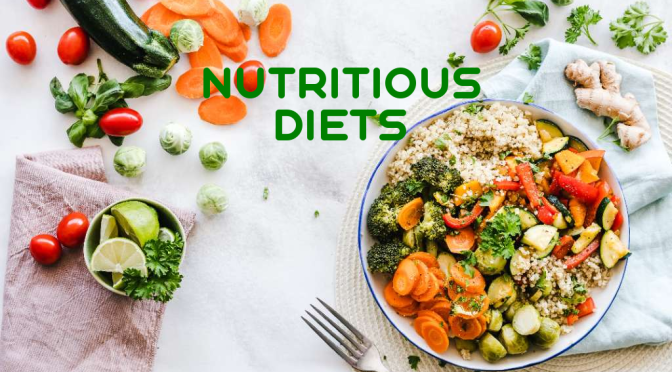
OPINION: THE BENEFITS OF HIGHLY NUTRITIOUS DIETS

Vitamins and minerals, as we all know, are of critical importance to our health. Gone are the days when scurvy(vitamin C) was the scourge of the high seas, and rickets (vitamin D) was common in the children of smoke-filled industrial cities with insufficient sunlight.

We are in a state of such overabundance that many medical authorities feel that vitamin supplementation merely makes our toilets healthier.

Covid 19, with a deficit of prevention and treatment options, has forced a new appreciation of the role of our immune systems in fending off Covid, and future viral plagues that are certain to follow. Optimum Health has never been more important.

A May 4, 2020, British Medical Journal (BMJ) article highlights the role of vitamins C and D, and minerals, especially Zinc, in functioning of our immune systems. Here are several highlights from the article:

  • Foods that are naturally abundant in vitamin C such as broccoli (60 mg/100 g), blackcurrants (130 mg/100 g), fortified breakfast cereals (up to 134 mg/100 g) and oranges (37–52 mg/100 g)45  should be made accessible to older individuals who are most in need of their nutritional benefits.
  • In the UK 5.5% of men and 4% of women 65 years and over (around 1 in 20) presently have zinc intakes lower than the lower reference nutrient intake (the level below which deficiency could occur).46 The consumption of foods naturally abundant in zinc such as canned crab (5.7 mg/100 g), canned shrimps (3.7 mg/100 g), canned adzuki beans (≈2.3 mg/100 g) and boiled eggs (1.3 mg/100 g) should be encouraged as a supplementation strategy to reinforce immunity.
  • Tolerable upper intake levels (ULs) are intake levels which should not be surpassed as toxicity problems could appear.47 For vitamin D a UL of 50 µg/day is advised and for zinc a UL of 25 mg/day is recommended. 47 There is insufficient evidence to establish UL for vitamin C, but available human data suggest that supplemental daily doses of up to about 1 g, in addition to normal dietary intake, are not associated with adverse gastrointestinal effects.47 Not having an adverse effect, however, is not necessarily indicative of a benefit either, and ongoing trials are warranted.
  • Among those with established respiratory conditions or pneumonia, specific nutrients such as vitamin C, D or zinc could be considered as potential adjuvants to conventional treatment pathways.

Susceptible people, particularly the old, should use every safe measure to stay well.

– Dr. C

Read full article

TELEMEDICINE: Obstetrics & Gynecology Services

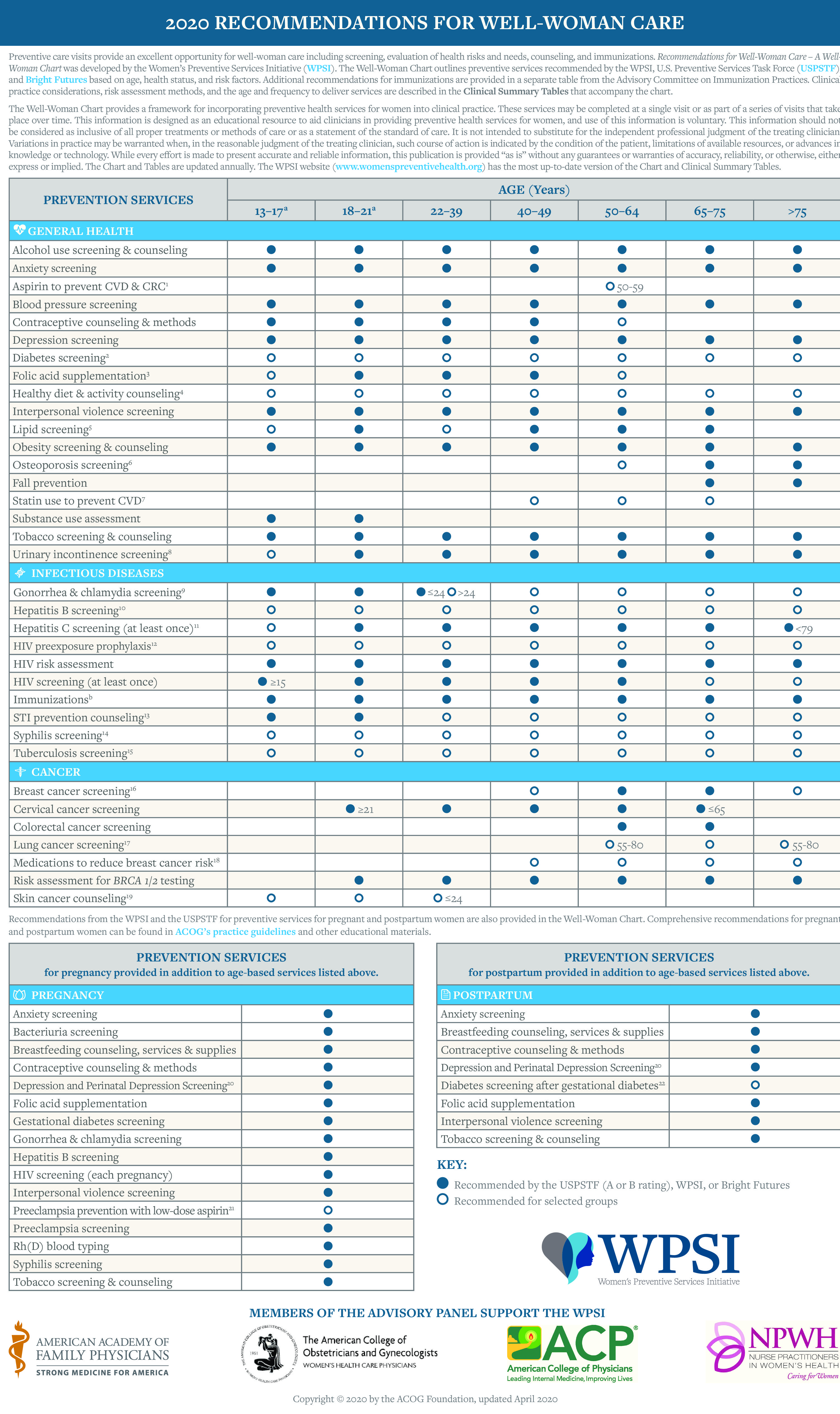
The following list contains preventive services that may be done via telehealth (from ACOG.org):

General Health

  • Alcohol screening and counseling regarding alcohol use
  • Anxiety Screening and referral*
  • Counseling regarding aspirin to prevent CVD and CRC
  • Blood pressure screening (if patient has appropriate resources available such as a blood pressure cuff)
  • Contraceptive counseling, discussion of methods, and prescribing contraceptives that do not require an in-person visit such as intrauterine devices or implants*
  • Depression screening and referral
  • Fall Prevention counseling
  • Counseling regarding folic acid supplementation
  • Healthy diet and activity counseling
  • Interpersonal and domestic violence screening and discussion of available resources*
  • Obesity screening (if patient has appropriate resources available such as a scale)
  • Substance use assessment (drug use)
  • Tobacco screening and cessation counseling
  • Urinary incontinence screening*
     

Infectious disease

  • HIV risk assessment*
  • Sexually Transmitted Infection prevention counseling*

Cancer

  • Counseling and possible prescribing of medications to reduce breast cancer risk 
  • Risk assessment for BRCA testing
  • Skin cancer counseling

Pregnancy and postpartum

  • Breastfeeding services and supplies*
  • Postpartum contraceptive counseling, discussion of methods, and  prescribing contraceptives that do not require an in-person visit such as intrauterine devices or implants
  • Depression screening and referral
  • Counseling regarding folic acid supplementation
  • Interpersonal and domestic violence screening and discussion of available resources*
  • Preeclampsia prevention with low-dose aspirin
  • Preeclampsia screening (if patient has appropriate resources available)
  • Tobacco screening and cessation counseling

*WPSI recommendation. For more information about each recommendation, please see our WPSI Recommendation page.

Download Well-Woman Care Chart

ACOG.org website

Read this May 4, 2020 “Women’sHealth” article for information about what a Telemedicine Visit is like