Category Archives: Medicine

ANALYSIS: MULTIRESISTANT BACTERIA THAT OUTSMART ANTIBIOTICS (VIDEO)

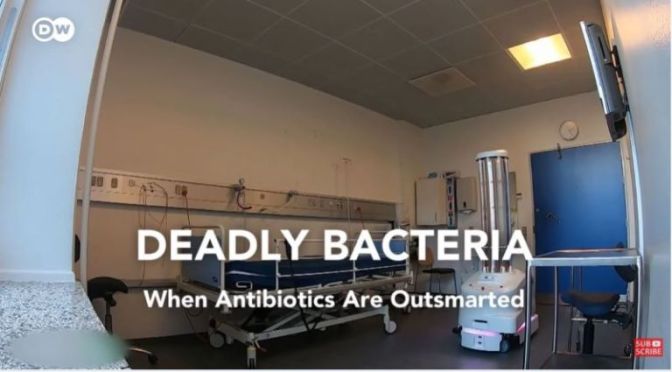
Antimicrobial resistance is one of the greatest medical challenges of our time. Among the causes are industrial livestock farming, poor hygiene in hospitals, and the misuse of antibiotics. This documentary looks at approaches to fighting multiresistant strains of bacteria.

Each year 33,000 people in Europe die after becoming infected with bacteria that are resistant to antibiotics. Hygiene specialist Dr. Ron Hendrix has been working for years to prevent outbreaks of infectious disease in hospitals. Dr. Hendrix says that he and other experts in the Netherlands recognized early on that they’d have to fight the spread of bacteria just as actively as they would the actual infection.

Hendrix has convinced a number of German hospitals to re-open their diagnostic laboratories, as well. In the early 2000s, many of these labs had been shut down as a cost-cutting measure. And farmers in Denmark voluntarily chose to sharply reduce their use of antibiotics, after evidence showed that intensive livestock farming caused multiresistant bacteria to multiply.

Infectious disease specialist Dr. Patrick Soentjens was able to convince Belgium’s health ministry to allow the use of “phages” to treat stubborn antimicrobial resistant pathogens. Phages are special viruses that kill bacteria. Dr. Soentjens is certain that this well-known, but largely forgotten option could save many lives. Belgium has become the first western European country where phages have been officially recognized as a legitimate medical treatment.

HEART DISEASE: TYPES & RISK FACTORS (CLEVELAND CLINIC)

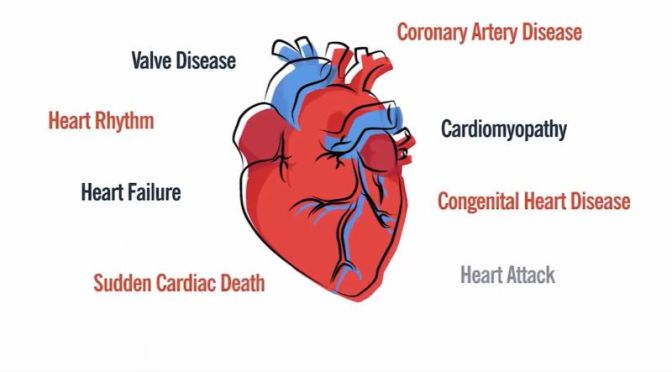
There are lots of things you can do to prevent heart disease! The key is to live a healthy lifestyle and see your doctor for regular checkups.

To learn more about heart disease risk factors, please visit https://cle.clinic/3r3iKQh

DIGITAL HEALTH: THE FUTURE OF WEARABLE DEVICES

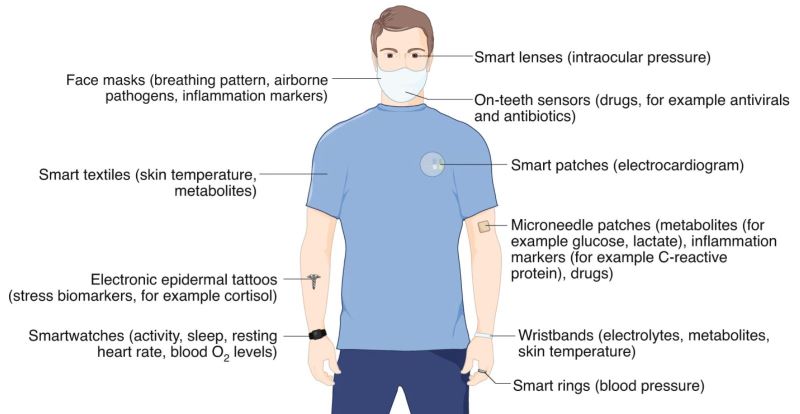
Currently, smartwatches provide information such as heart rate, sleep time and activity patterns. In the future, this could be augmented with new classes of wearable devices that monitor, for example, concentrations of cortisol for tracking stress (using electronic epidermal tattoos), biomarkers of inflammation and levels of blood O2 (microneedle patches), skin temperature (electronic textiles), blood pressure (smart rings), concentration of ions (wristbands), intraocular pressure (smart contact lenses), the presence of airborne pathogens and breathing anomalies (face masks), and the concentration of therapeutic drugs (on-teeth sensors)2,10,12,13,14,15,16. Such emerging low-cost wearable sensing technologies, monitoring both physical parameters and biochemical markers, could be used to identify symptomatic and pre-symptomatic cases in future pandemics. The devices could also be used to remotely monitor the recovery of individuals undergoing treatment or self-isolating at home.

Read more

ANALYSIS: ‘HEALTH CARE REFORM IN THE BIDEN ERA’

President Biden has released a health care plan that proposes reducing the age of eligibility for Medicare to 60 years and introducing a public option. Larry Levitt, MPP, Executive Vice President for Health Policy at the Kaiser Family Foundation, and Karen Joynt Maddox, MD, MPH, Co-Director of the Center for Health Economics and Policy (CHEP) at @Washington University School of Medicine, and Lawrence O. Gostin, JD from the O’Neill Institute for National and Global Health Law at Georgetown University discuss prospects for health care reform under the new administration. Recorded January 21, 2021.

COVID-19 VACCINES: ‘FREQUENTLY ASKED QUESTIONS ANSWERED’

How does each of the available Covid-19 vaccines work?

Once the vaccine is injected, the mRNA is taken up by the macrophages near the injection site and instructs those cells to make the spike protein. The spike protein then appears on the surface of the macrophages, inducing an immune response that mimics the way we fight off infections and protects us from natural infection with SARS-CoV-2. Enzymes in the body then degrade and dispose of the mRNA. No live virus is involved, and no genetic material enters the nucleus of the cells.

Although these are the first mRNA vaccines to be broadly tested and used in clinical practice, scientists have been working on mRNA vaccines for years. And despite this wonderful parody piece. opens in new tab saying that the technology is “obvious,” in fact the breakthrough insight that put the mRNA inside a lipid coating to prevent it from degrading is quite brilliant — and yes, this may be the first time the New England Journal of Medicine has referenced a piece in The Onion. (Last reviewed/updated on 11 Jan 2021)

How should early side effects be managed?

Analgesics and antipyretics such as acetaminophen or ibuprofen are effective in managing post-vaccine side effects including injection-site pain, myalgias, and fever. However, the CDC does not recommend prevaccine administration of these drugs, as they could theoretically blunt vaccine-induced antibody responses.

Because of the small risk of anaphylaxis, sites that administer the vaccines must have on hand strategies to evaluate and treat these potentially life-threatening reactions. The CDC has issued recommendations on how sites should prepare. opens in new tab. (Last reviewed/updated on 11 Jan 2021)

How long will the vaccines work? Are booster doses required?

Since the vaccines have been tested only since the summer of 2020, we do not have information about the durability of protection. Data from the phase 1 trial of the Moderna vaccine suggested that neutralizing antibodies persisted for nearly 4 months. opens in new tab, with titers declining slightly over time. Given the absence of information on how long the vaccines will be protective, there is currently no specific recommendation for booster doses. (Last reviewed/updated on 11 Jan 2021)

Do the vaccines prevent transmission of the virus to others?

Many commentaries on the results of the vaccine clinical trials cite a lack of information on asymptomatic infection as a limitation in our knowledge about the vaccines’ effectiveness. Indeed, this is a theoretical concern, since up to 40% of people who get infected with SARS-CoV-2 have no symptoms but may still transmit the virus to others.

Nonetheless, there are several good reasons to be optimistic about the vaccines’ effect on disease transmission. First, in the Moderna trial. opens in new tab, participants underwent nasopharyngeal swab PCR testing at baseline and testing at week 4, when they returned for their second dose. Among those who were negative at baseline and without symptoms, 39 (0.3%) in the placebo group and 15 (0.1%) in the mRNA-1273 group had nasopharyngeal swabs that were positive for SARS-CoV-2 by RT-PCR. These data suggest that even after one dose, the vaccine has a protective effect in preventing asymptomatic infection.

Second, findings from population-based studies now suggest that people without symptoms are less likely to transmit the virus to others. Third, it would be highly unlikely in biological terms for a vaccine to prevent disease and not also prevent infection. If there is an example of a vaccine in widespread clinical use that has this selective effect — prevents disease but not infection — I can’t think of one!

Until we know more, however, we should continue to emphasize to our patients that vaccination does not allow us to stop other important measures to prevent the spread of Covid-19. We need to continue social distancing, masking, avoiding crowded indoor settings, and regular hand washing. (Last reviewed/updated on 11 Jan 2021)

Read more

COVID-19: ‘HOW MRNA VACCINES WORK’ (VIDEO)

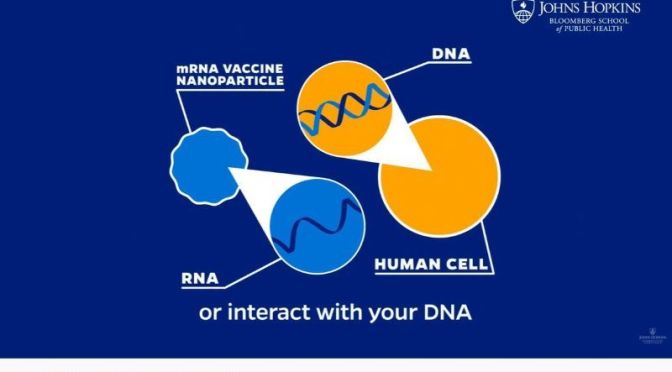
Messenger RNA—or mRNA—vaccines have been in development for decades, and are now approved for use against COVID-19. Here’s how they work and what you should know about them. Visit https://www.jhsph.edu/covid-19​ for even more resources.

COVID-19: WHAT ARE THE NEW VARIANTS & HOW ARE THEY MONITORED (PODCAST)

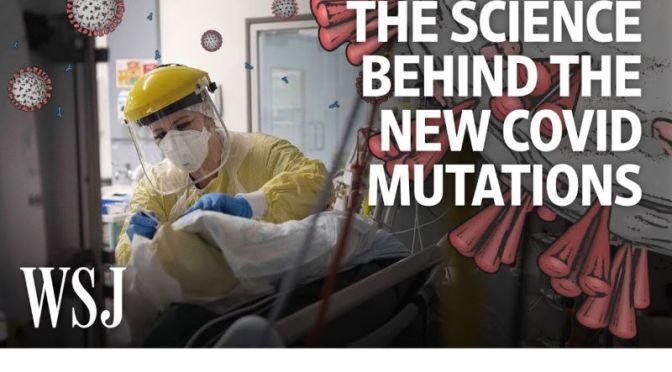
Over the course of the pandemic, scientists have been monitoring emerging genetic changes to Sars-Cov-2. Mutations occur naturally as the virus replicates but if they confer an advantage – like being more transmissible – that variant of the virus may go on to proliferate. 

This was the case with the ‘UK’ or B117 variant, which is about 50% more contagious and is rapidly spreading around the country. So how does genetic surveillance of the virus work? And what do we know about the new variants? Ian Sample speaks to Dr Jeffrey Barrett, the director of the Covid-19 genomics initiative at the Wellcome Sanger Institute, to find out Coronavirus – latest updates See all our coronavirus coverage.