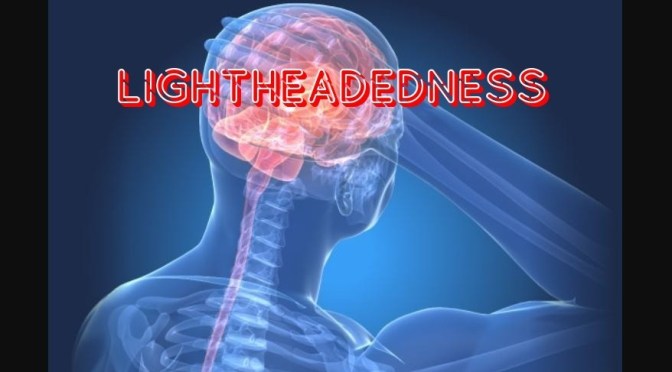
LIGHTHEADEDNESS: ITS SYMPTOMS & CONDITIONS

Dizziness, Fainting, Falls, Orthostatic Hypotension, Heart rate and rhythm, Cardiac output and Perfusion, The Autonomic Nervous system,
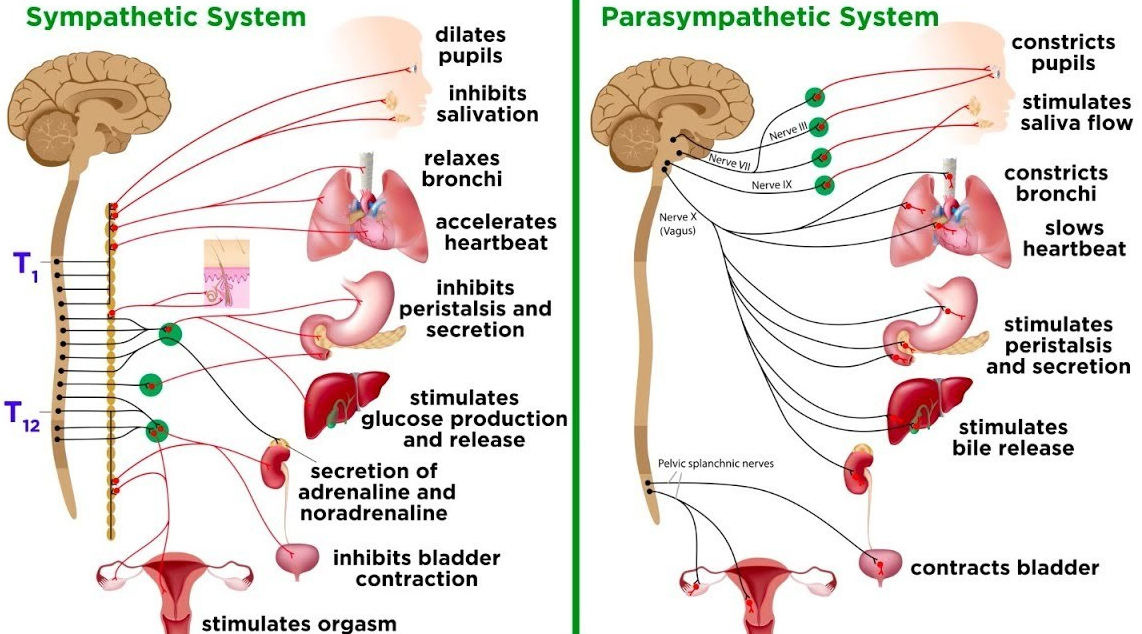
Falls and Injury are all very interconnected. They all tend to accumulate as we age, but the young are not immune to these conditions. In all of these discussions,

I make the ASUMPTION that you have these conditions in an undramatic, infrequent, moderate way, and are not burdened by Risk factors such as diabetes and hypertension. Stroke is always a worry lingering in the background, and will be discussed at the end of the series.
I will begin with DIZZINESS AND FAINTING. The amazing thing is that we are able to walk upright all day without falling. We can surprisingly lie on our backs, suddenly get up and run away seamlessly, or at least we were able to do these things, most of the time. Our bodies almost magically supply our brains and balance mechanisms with the right amount of blood and nourishment ALMOST all of the time.

Everybody gets dizzy if they spin around enough, and even young people can faint if they stand long enough in one place. Dizziness and fainting is usually considered normal if there is a good explanation. It is when they are too sudden, too severe, last too long, or happen too frequently that we seek medical Help.

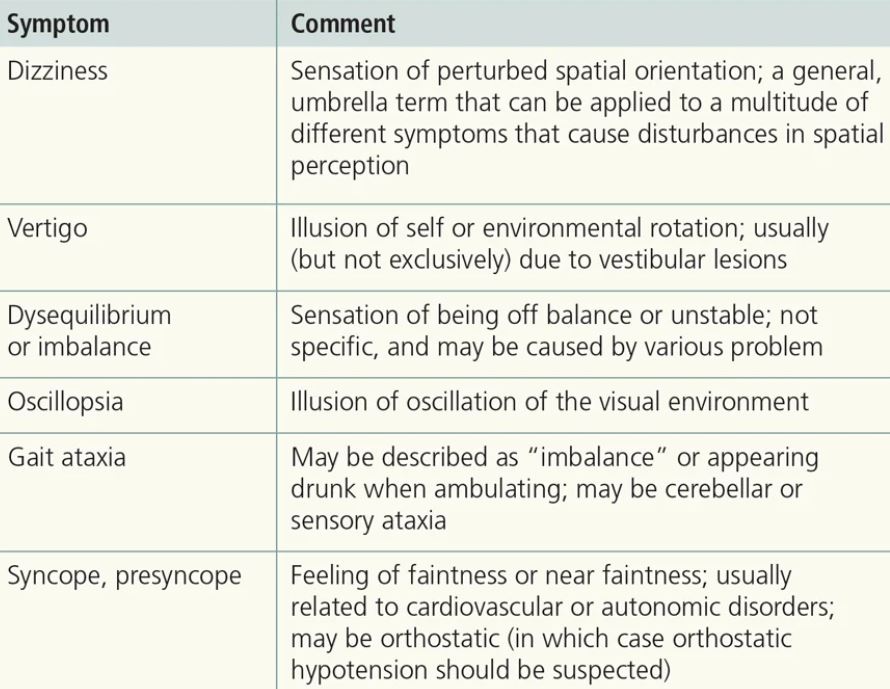
Dizziness can mean “lightheadedness” without the room spinning. This is often more concerning than Vertigo, since it more often is due to a lessening of blood flow to the brain. When we get up suddenly from a sitting or lying position, the blood may pool in our abdomen and legs, with consequent insufficient pumping of blood to the brain.

This happens at 1G to civilians, but it takes about 5Gs for young jet pilots to need their “blackout” suits. Instead of blackout suits, we can use support-hose, or even a constricting pants-suit which includes our lower abdomen.

I have also been using a buzzer-timer which reminds me to walk every 10 minutes, to keep me from staying in my comfortable lazy-boy too long. I try to walk rapidly and breathe deeply, and believe this helps keep my body “toned up” and responsive for when I stand up rapidly.

The other way to adapt would be to “baby” my body, and stand up more slowly. There are always the opposite ways to respond: go easy, or push the body and expect it to adapt. If you are worried, your Family Doctor can help you and suggest a path forward .

Perhaps you are overmedicated, need medication, or some tests would help clarify the situation. Vertigo is where the room seems to be spinning. You might be able to tell whether it is spinning clockwise or counterclockwise.

The most common cause is BPPV, or benign periodic positional vertigo, and you can wait it out. Look it up on the internet for parameters. Persistent Vertigo can also be due to inner ear (labyrinth) problems. which an ENT Doctor can address.

For more details, I have included a couple of good articles. A discussion of Falls is next in this series.

–Dr. C.

Reference #1

Reference #2

DR. C’S MEDICINE CABINET: “FOLIC ACID” SUPPLEMENTS

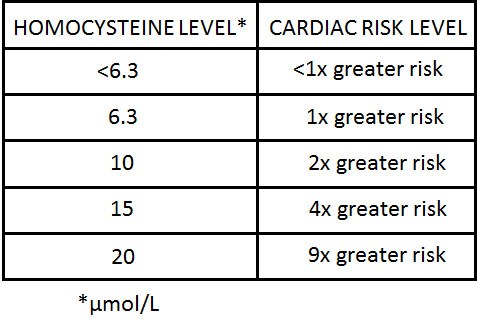
Folic acid has a secure place in my medicine cabinet, and is there for one of the best reasons. In screening for possible causes for heart disease, my doctor ordered a HOMOCYSTEINE LEVEL. The Laboratory value came back elevated.

The treatment given was folic acid. Some background is necessary. Homocysteine is a rather toxic amino acid that can cause heart disease and neurological problems, among other things. If you do not get enough folic acid in your diet with green vegetables, legumes, nuts, eggs and the like (it is hard to be deficient with a good diet), your Homocysteine may become elevated.

You need folic acid to convert Homocysteine to the essential amino acid, Methionine. 10-15% of the population, and up to 30% of older people have elevated Homocysteine levels. Stiffness, slow gait, and heart disease can be related to these elevated levels.

Since I have a good diet, I assume that I have a weak form of an enzyme called Tetrahydrofolate Reductase, which is the rate limiting enzyme in converting Homocysteine to Methionine. A weak enzyme needs more folic acid to do its job. The MDR of Folic acid is 0.4 mg./day. I started supplementing with 1 mg. Daily, without effect on the Homocysteine level. I doubled the dose to 2 mg., and my blood level was still above the upper limits of normal, 15 micromoles/L.. I doubled it again to 4 mg., 2 mg. Twice daily.

Finally my level became normal at 10, This was a decade ago. Recently, I have been doing some research on Alzheimer’s Disease, because a Friend is losing her short term memory. I talked to a neurologist to see if a medical evaluation was mandatory, and found that he has recently BEEN GIVING FOLIC ACID supplements to his AD Patients.

Folic acid deficiency is now being suspected as being a factor in AD! This story is similar to the Vitamin D conundrum. Should I take Vitamin D or not? Am I a “believer” or not. The resolution is easy. You get a Vitamin D blood level.

The lab test will report “normal” if your level is above 20 ng,/ml. I prefer 50, which I achieve with 4000 i.u. Daily supplement. The NFL likes their players to be above 50 to be in best shape. The point is, take a measurement, and then decide.

If you chose to take a Folic acid supplement, I would suggest checking both your Folic acid blood level, and Homocysteine blood level as a reference.

Also, if you take folic (B9) supplements, you should also take extra B12, and B6, since they are involved in the same metabolic pathways. Balance is necessary in metabolism.

–Dr. C

BRAIN HEALTH: “DEMENTIA” – SYMPTOMS AND CONDITIONS

We ARE our brains. Reduce the function of any other organ, and we may be sick, but reduce the function of the brain, and WE have changed.

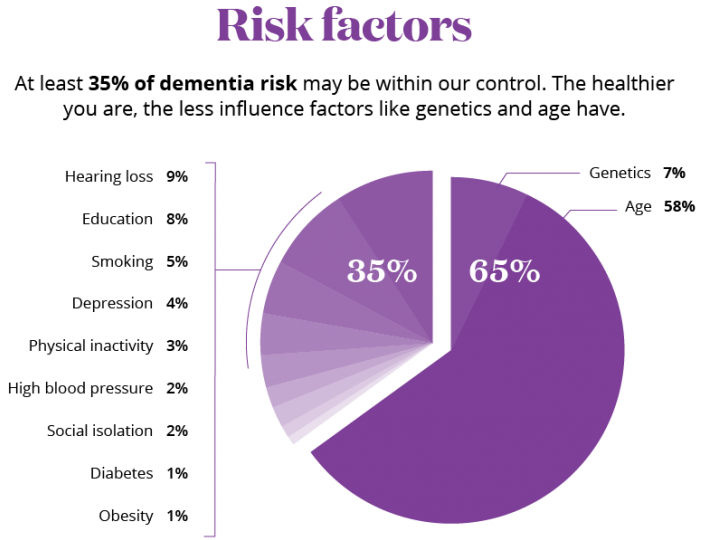
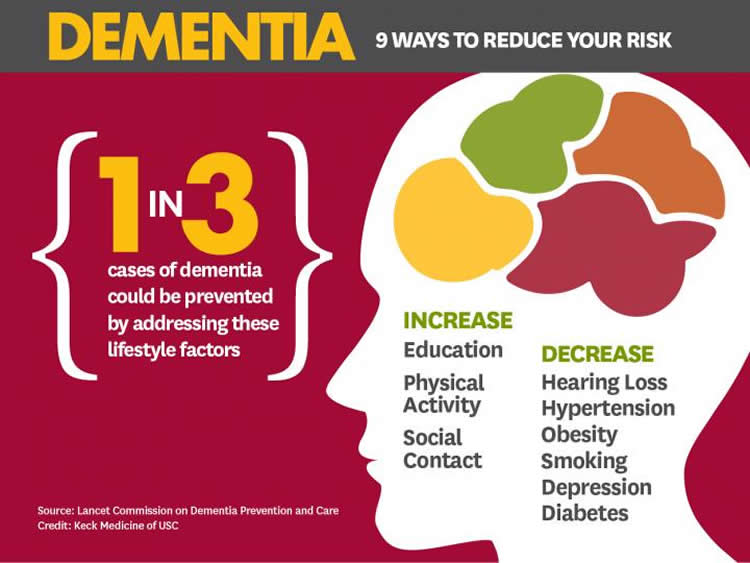
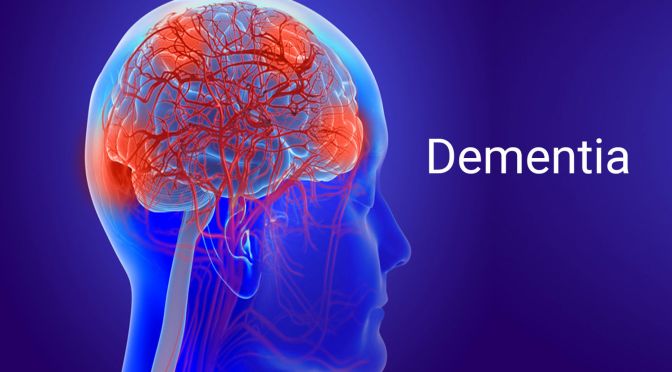
PROGRESSIVE LOSS of brain function is called DEMENTIA. A sudden, temporary (if the cause can be found) is called Delirium. A variety of bad things can cause dementia, such as infections (AIDS), toxins (lead, mercury), chemicals (alcohol), traumatic (CTE from football), diet deficiencies (B12, folic acid), Endocrine deficiencies (thyroid),Psychiatric problems (depression), drugs, and Vascular problems.

The Preceding article on dementia discussed APATHY, as opposed to the somewhat similar DEPRESSION, as a warning sign for SVD, or small blood-vessel disease. SVD is the most common VASCULAR cause of Dementia.

The most common overall cause of Dementia, especially in old age, is ALZHEIMER’S disease (AD). “Senior Moments” are so common as to be a cliche. But this problem is not limited to old age. My 3-year-old Grandson came crying to me that he lost his favorite toy. “Where was it when you last saw it”?, I asked. “It was in my hand” he answered.

He had laid it somewhere, unthinkingly. You can’t remember something unless you ENCODE it. You must be paying attention to, be “mindful” of an action if you are to remember that action.. You will not remember where you put your glasses if you wander around in “default mode”, daydreaming, preoccupied. Everybody occasionally forgets a name, or item which hangs on “the end of my tongue”.

These things, especially “short term memory” do DETERIORATE AS WE GET OLDER. It is common to wonder if we, or a loved one. are getting Alzheimer’s disease, as our mental powers wane.It is often difficult to distinguish the normal forgetfulness of age from DEMENTIA, including Alzheimer’s Disease (AD) It might be a source of REASSURANCE to realize that if you are worried about getting AD YOURSELF, you almost certainly don’t have it; It takes a lot of mental functioning to contemplate that possibility.

Most often, you will be wondering about the possibility in a loved one having AD. There are 2 ideas that I ran across in my reading that might help you do a little evaluation Yourself.

BCGuidelines.ca has a 21 item questionnaire that you can score yourself. 4 points or less is considered normal, so common is forgetfulness. 5-14 points suggests mild cognitive impairment. 15 or more points suggests Dementia, of which AD is the most common type.

The test I really liked was the “Clock Test”. In this test, you draw a large circle. You then ask your loved one to draw a clock, with all the numbers and hands that will indicate 10 minutes after 11. If it is drawn correctly, you can with reasonable certainty EXCLUDE Dementia.

If incorrect, further tests are warranted. I consulted with a Neurologist regarding a friend of mine who has marked memory loss, but is very sweet, is physically capable, takes care of herself personally, doesn’t wander around, has no apparent anxiety, depression or other psychological problems.

I asked if it was reasonable to just watch without any medical intervention. The neurologist said that she should have a blood test, a metabolic panel, TSH (thyroid), LFTs, folic acid and B12 tests, and a CT to rule out NPH (normal pressure hydrocephalus). It is rare to find anything treatable, but a shame to neglect it if present.

If you do see a doctor about a Spouse or Parent with possible dementia, you might request that they discuss the possibilities with you, but ask them not to write the diagnosis of “Alzheimer’s “ in the chart. Private Assisted Living Homes CHARGE A LOT MORE for that Diagnosis– locked facilities, more personnel and the like. BDNF- brain derived neurotrophic factor- can fend off Dementia.

That is the good news. The bad news is that it takes effort and discipline to increase your level od BDNF.; I’m sure medical science is hot on the trail of a pill. But until then, our old friends, Sleep, Diet and Exercise ride to the rescue. Sleep, both N3 and REM stages, increases BDNF. Dietary polyphenols and butyrate increase BDNF. exercise of all kinds will do it.

The BDNF gene codes for the BDNF protein, which promotes the survival, expansion, and differentiation of Neuronal stem cells, and promotes neuronal PLASTICITY, neuronal response to experience. Grit your teeth and develop the HABIT of exposing your Postmodern Body to 3 of the most ICONIC and NATURAL things mandated by Evolution, Treat your Body to the Health-giving Benefits of SLEEP, DIET and EXERCISE!

–Dr. C

DIABETES MANAGEMENT: “SMART INSULIN PUMPS”

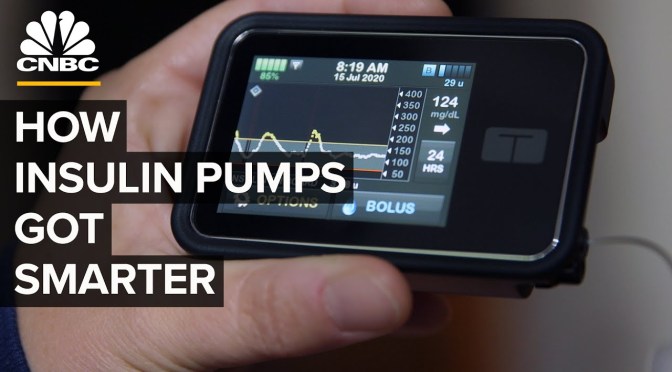
Technology is finally innovating diabetes management. With the advancement in technologies like continuous glucose monitors, traditional insulin pumps are evolving into smarter devices that can automate insulin delivery.

Medtronic and Tandem Diabetes are the only two companies to offer hybrid closed loop systems. A community of diabetics are also hacking pumps to do the same thing. CNBC’s Erin Black just switched from the hacked system to Tandem’s Control-IQ and takes a look at how insulin pumps are getting smarter.

COGNITION & BRAIN STUDIES: APATHY, NOT DEPRESSION, ASSOCIATED WITH DEMENTIA

jnnp-2020-July-91-7-677-F1.medium

We tested the hypothesis that apathy, but not depression, is associated with dementia in patients with SVD. We found that higher baseline apathy, as well as increasing apathy over time, were associated with an increased dementia risk. In contrast, neither baseline depression or change in depression was associated with dementia. The relationship between apathy and dementia remained after controlling for other well-established risk factors including age, education and cognition. Finally, adding apathy to models predicting dementia improved model fit. These results suggest that apathy may be a prodromal symptom of dementia in patients with SVD.

Cerebral small vessel disease (SVD) is the leading vascular cause of dementia and plays a major role in cognitive decline and mortality.1 2 SVD affects the small vessels of the brain, leading to damage in the subcortical grey and white matter.1 The resulting clinical presentation includes cognitive and neuropsychiatric symptoms.1

Apathy is a reduction in goal-directed behaviour, which is a common neuropsychiatric symptom in SVD.3 Importantly, apathy is dissociable from depression,3 4 another symptom in SVD for which low mood is a predominant manifestation.5 Although there is some symptomatic overlap between the two,6 research using diffusion imaging reported that apathy, but not depression, was associated with white matter network damage in SVD.3 Many of the white matter pathways underlying apathy overlap with those related to cognitive impairment, and accordingly apathy, rather than depression, has been associated with cognitive deficits in SVD.7 These results suggest that apathy and cognitive impairment are symptomatic of prodromal dementia in SVD.

Read full study

TELEMEDICINE: “HEAL PASS” – PHYSICIAN “HOUSE CALLS” FOR FIXED MONTHLY FEE

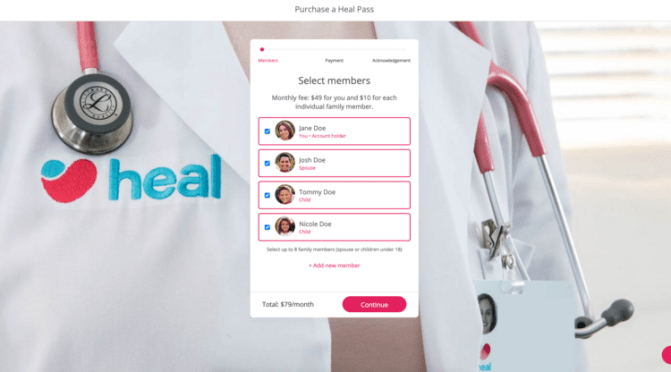
By providing house calls and telemedicine from physicians at a fixed monthly fee with no copays, no deductibles, and no insurance required, Heal Pass is making affordable healthcare possible for the estimated 27 million Americans who recently lost their health insurance along with their jobs because of COVID-19.

  • Heal patients can register now for the new service starting at $49 per month.
  • Adults can add members of their household to their Heal Pass account for an additional $10 per person each month and may register up to six people to the account.
  • Patients spend an average of $800 out of pocket each year, in addition to $2,000 for an emergency room visit.
  • With Heal Pass, a family of four would receive up to 36 total appointments at an average cost of less than $27.
  • Individual patients can save up to $1,100 per year and the average family can save up to $2,200 per year.

Uninsured individuals and their families are fearful of getting sick and accumulating high medical bills during this time of economic uncertainty.

Heal Pass is not health insurance, but it is health assurance, giving the uninsured the comfort of knowing they can get the care they need at a fixed, low fee with no surprise bills or out of pocket costs.

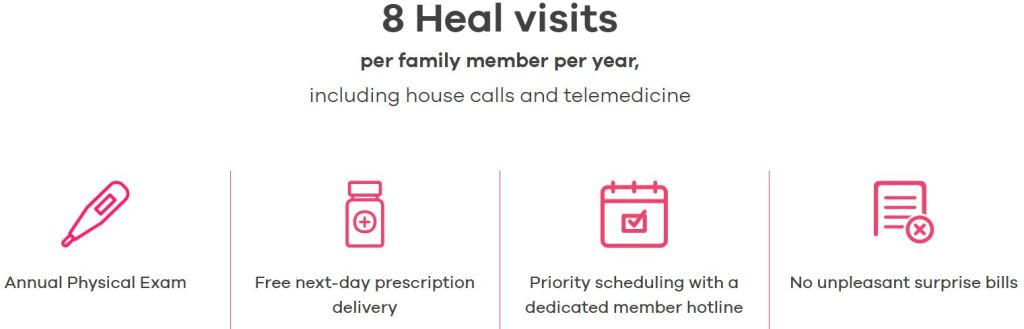
The new program allows up to eight house calls or telemedicine appointments per member each year in addition to an annual physical, helping with patients’ most common needs, including primary care, preventive care, non-emergency urgent care and chronic disease management.

It also includes free next day delivery of medications prescribed by a Heal doctor. Heal doctors are highly qualified and deliver house calls and care in a way that keeps patients safe from COVID-19 exposure as the country sees a pronounced second spike with 58,618 cases per day on average over the last seven days.

Read more

COMMENTARY

Telemedicine and Covid 19 are fermenting together and creating some new ideas for medical care.

Safety is a concern, and what could be better than your own home, using telemedicine, or a futuristic telemedicine booth located at convenient locations for the busy traveler?

Convenience is another attraction, with a PREPAID aliquot of healthcare; this idea was featured by Forward Health, reviewed a couple of weeks ago, which offered a package of remote monitors and 24/7 access for $149 per month.

Now, Heal pass offers 24/7 access they call “house calls” for $49. a month, with a blizzard of statistics on what you will save. We will see.

You usually get what you pay for.

The Onmed station sounds doable, and has the advantage of self-contained units that may be available to you at the right place and time. You could conceivably even wind up with a prescription as you exit the booth.

—Dr. C.

INNOVATIONS: “ONMED STATION” – SELF-CONTAINED, HI-TECH TELEMEDICAL UNIT

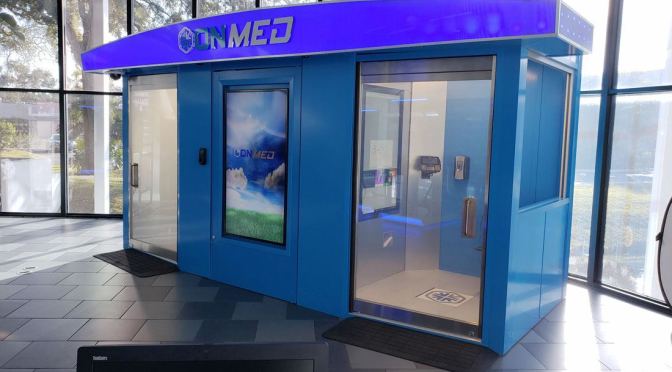
The OnMed® station is the only self-contained medical unit in the world currently using patented technologies to directly connect patients with doctors, nurse practitioners, and pharmacists for both consultative needs and on-site prescriptions.

The OnMed station utilizes advanced technology, including thermal imaging and facial recognition, to provide patients with a safe, private, and secure consultation with a licensed clinician. An ultra-high definition camera ensures the patient and clinician experience a real-time eye to eye connection. These same high-definition cameras also make it possible for the clinician to look down a patient’s throat or even examine a tiny skin lesion in detail.

If necessary, not only can the clinician provide a script, but the station itself can safely dispense hundreds of common prescription medications with the approval of a clinician or pharmacist through a secure, robotically automated vault.

Website