Tag Archives: Reviews

Reviews: The Importance Of The Circadian Rhythm

Our bodies have evolved in a binary environment that cycles between day and night, which impose different demands for the optimal functioning of our bodies.
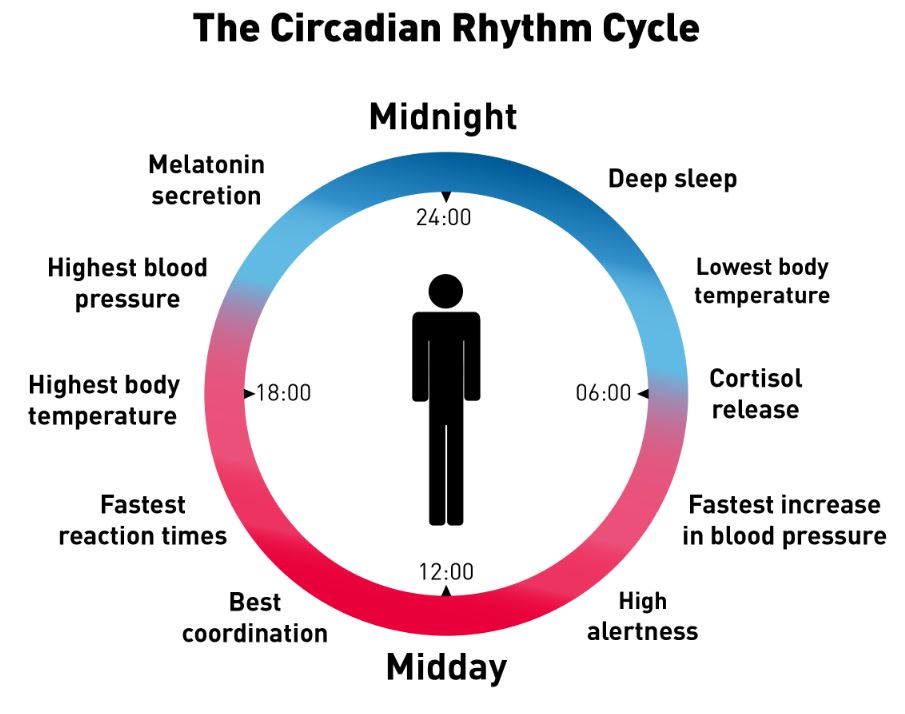
In the daytime, we typically explore, fight and eat. In the night time we rest and digest.

We have an unconscious, or autonomic, nervous system, that helps us adjust, the sympathetic nervous system revving us up for the daytime, and the parasympathetic, including the vagus nerve, slowing us down at night time. Sleep has apparently evolved to repair, cleanse and grow our bodies at night, in a process called anabolism. In the daytime, we have wear and tear, and use more energy to survive in a metabolic process called catabolism.

Hormones and Neurotransmitters help time and facilitate these cycling processes.

Light In the morning, operating through the central “zeitgeber”  in the supachiasmatic nucleus, synchronizes the circadian rhythm present in each of our cells, and drives down melatonin. Cortisol rises to help with stress, adenosine rises because of muscular and neural activity, the sympathetic nervous system is more active to help with alertness and raise the blood pressure, pulse rate, and body temperature.

As the light decreases at night, the melatonin Increases to facilitate sleep. Cortisol decreases, allowing the immune system to become more active, with immune lymphocytes going into the lymph nodes to start  dealing with any infection that has been encountered during the day. The daytime diet is being digested, replenishing the ATP and glycogen energy stores in muscle, brain and other tissues. Growth hormone signals cells to divide, and helps children grow.

Medical science makes use of this information in a field called chronotherapy. Cancer treatment with radiation and radiomimetic drugs are best done at night, when the cells divide.  Asthma medications are often given at night, because asthma is more common with a decrease in cortisol. GERD medications, such as proton pump inhibitors, are best given at night, because gastric acid builds up then, and lying flat encourages any acidic food to reflux into the esophagus.

As I have always mentioned, sleep, diet, and exercise are important for best health.

A sleep hygiene routine, going to bed by 10 PM and getting 7 to 8 hours of sleep is critical to give the body time to repair itself. Getting enough exercise will increase adenosine and facilitate a good nights sleep, along with countless other beneficial effects. Avoiding blue light from television and computer screens in the evening will help melatonin increase for good nights sleep. Avoiding food for three or four hours before bedtime will allow time to get the food out of the stomach and reduce gastroesophageal reflux.

TRE, or time restricted eating, is a form of fasting, which correlates with longevity.

Help the body synchronize its circadian clocks by well-timed, regular habits, and you will have a far better chance to be healthy. You are on dangerous grounds if you foul up the circadian rhythm by staying awake until the wee hours, eating an unhealthy diet and snacking all the time on lots of carbohydrates with little fiber, and sit around without exercising. Obesity, metabolic syndrome, diabetes, and gastrointestinal illnesses, as well as cancer can result.

Night shift work, for example, disturbs our biological clock, and has recently been labeled as carcinogenic.

—Dr. C.
Reviews: Robotic Knee Replacement Surgery

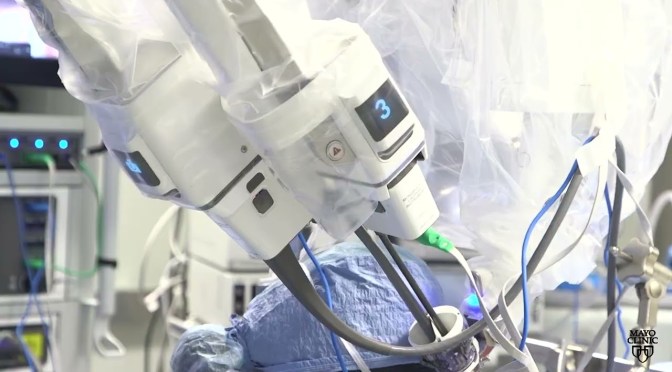
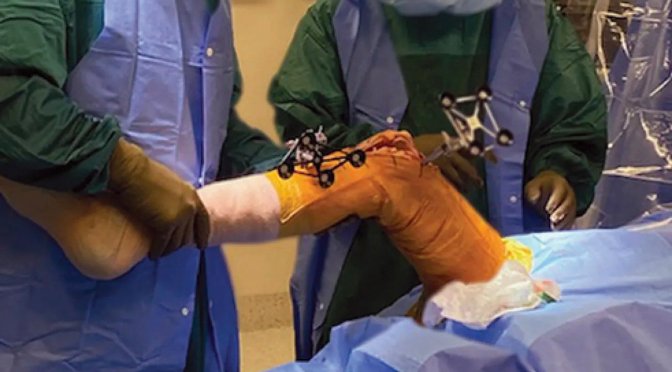
Penn Medicine Videos (July 14, 2023) – Penn Orthopaedics offers multiple options for joint replacement surgery, including the latest robotic knee and hip replacement technologies.

In this video, Dr. Travers, Director of the Penn Orthopaedics Robotics and Navigation Program, discusses what robotic joint replacement surgery is and how it differs from traditional joint replacement surgery, as well as the benefits of this procedure.

We also hear from three patients who recount their personal experiences before and after robotic knee replacement surgery.

Fungal Infections: The Spread Of Candida Auris

Candida auris is a type of fungus, a yeast in this case, that is increasing in frequency and spreading geographically, apparently due to warmer temperatures. This organism is fairly common in hospitals, where it often is on the skin. It is lethal if it gets into the body, and often difficult to treat. Las Vegas, Nevada, in particular is having almost an epidemic of these infections, with more than 500 infections and 100 deaths since the fall of 2021.

An alarming number of cases are misdiagnosed when patients first come to the emergency room; fungal infection is certainly not the first thing a doctor thinks of when she sees a patient with a febrile illness. On the flipside of that, any delay in diagnosis, particularly with a bloodstream infection, can be lethal. There are a few good laboratory tests for the diagnosis of fungal infection, and many of these take highly trained technicians with a microscope.

Fungi are opportunistic infections, which means a healthy person is unlikely to be seriously affected. With cancer treatments and organ transplants, increasing numbers of people are on immunosuppressive drugs which means they are more susceptible. Hospitals deal with this very sick people, and frequently use central catheters inserted into patients veins, and opportunistic fungi, like candida auris, get a free ride into the body. With fever, most doctors, think first of bacterial infections, and give antibiotics; these antibiotics can actually worsen fungal infection, since they remove bacterial competitors.

Many medical schools do not teach their students about fungal infections, and in 4 years of medical school, doctors in training are lucky to get two or three hours on this subject. Fungal infections are thought to be rare.

In these days of high-tech, corporate medicine, it is good for a patient to be her own advocate. Don’t be afraid to ask the doctor if she has thought of fungal infection as possible cause if you are not improving with your treatment, particularly if you’re in the hospital.

—Dr. C.

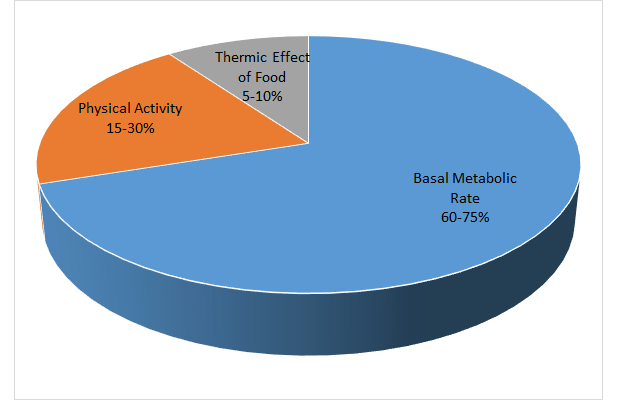
Basal Metabolic Rate (BMR)

Cleveland Clinic (June 9, 2023) – The truth is that your body NEVER STOPS burning calories. That calorie blaze might resemble a five-alarm fire at certain times of the day, like when you’re exercising, but the flame is always lit.

Over the course of a day, your body’s natural calorie burn without any activity can range from 1,300 to more than 2,000, depending on your age and sex. (More on that in a bit.)

So, how and why do you burn calories reading, sleeping or logging long hours as a couch potato? Let’s do the math with endocrinologist and weight management specialist Marcio Griebeler, MD.

Why your body burns calories

With so much talk about “calorie burn” focused on weight loss, the true reason behind your body’s calorie needs often gets overlooked. It’s not about the numbers on the scale. It’s about survival.

“To live, you have to burn calories,” says Dr. Griebeler. “Your body burns calories to pump your heart, to breath, to think … to do everything.”

That constant burn to keep your body going is known as your metabolism. To get a little more specific, your basal metabolic rate (BMR) refers to the minimum number of calories your body needs to function.

So, as you’re doing nothing, your body is still busy and burning calories to keep all systems operational.

Calculating your metabolic rate

While we all have a BMR, we don’t all share the same BMR. It’s not some standard formula like the Pythagorean Theorem. (That’s A² + B² = C², in case you’re rusty on your middle school math lessons.)

BMR, also known as your resting metabolic rate, varies widely based on factors such as:

  • Age.
  • Height.
  • Weight.
  • Sex.
  • Muscle-to-fat ratio.
  • Genetics.

READ MORE

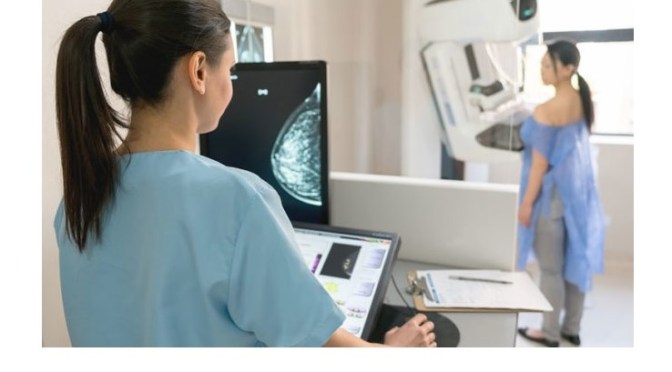
Women’s Health Review: Mammogram Guidelines

Mount Sinai Health System (May 31, 2023) – When and how often to have a screening mammogram is a choice you must make. Different expert groups do not fully agree on the best timing for this test.

Before having a mammogram, talk to your provider about the pros and cons of having the test. Ask about:

  • Your risk for breast cancer
  • Whether screening decreases your chance of dying from breast cancer
  • Whether there is any harm from breast cancer screening, such as side effects from testing or overtreatment of cancer when it’s discovered

Mammography is performed to screen women to detect early breast cancer when it is more likely to be cured. Mammography is generally recommended for:

  • Women starting at age 40, repeated every 1 to 2 years. (This is not recommended by all expert organizations.)
  • All women starting at age 50, repeated every 1 to 2 years.
  • Women with a mother or sister who had breast cancer at a younger age should consider yearly mammograms. They should begin earlier than the age at which their youngest family member was diagnosed.

Mammography is also used to:

  • Follow a woman who has had an abnormal mammogram.
  • Evaluate a woman who has symptoms of a breast disease. These symptoms may include a lump, nipple discharge, breast pain, dimpling of the skin on the breast, changes of the nipple, or other findings.

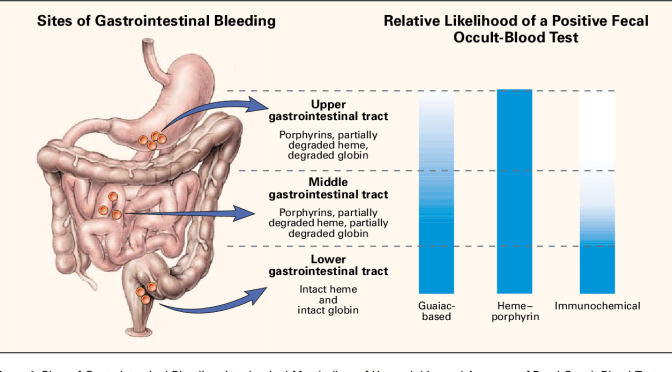
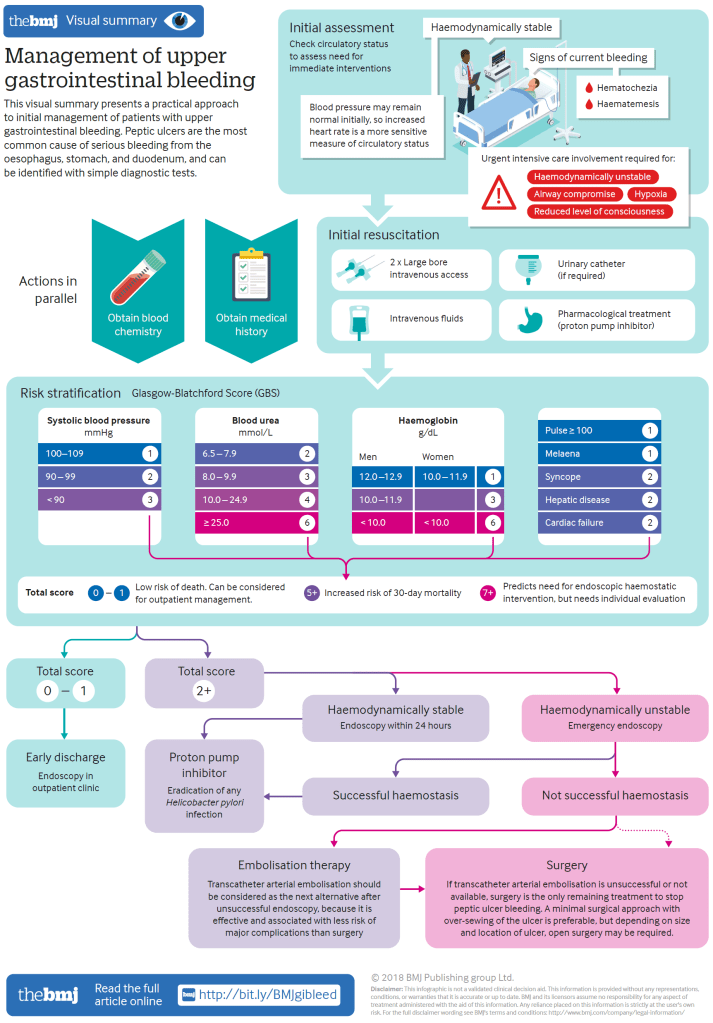
Review: Gastrointestinal Bleeding Management

Upper gastrointestinal bleeding (UGIB) refers to gastrointestinal blood loss whose origin is proximal to the ligament of Treitz at the duodenojejunal junction. Acute UGIB can manifest in a variety of ways, with or without hemodynamic compromise, including hematemesis, coffee-ground emesis, the return of bright red blood through a nasogastric tube, melena, and, rarely, hematochezia (bright red blood per rectum). Hematochezia is typically only seen with an extremely brisk UGIB; significant hemodynamic compromise is common in these patients.[1][2]

Causes are multiple, but in developed countries bleeding is usually secondary to peptic ulcer disease (PUD), erosions, esophagitis, or varices.

UGIB results in more than 250,000 hospital admissions annually in the US, with a mortality of up to 11%.[3][4] Ordinarily, mortality is secondary to hypovolemic shock. Rapid evaluation, hemodynamic resuscitation, and appropriate pharmacologic and endoscopic interventions are the cornerstones of therapy.

Medical Update: A Review Of Tuberculosis In 2023

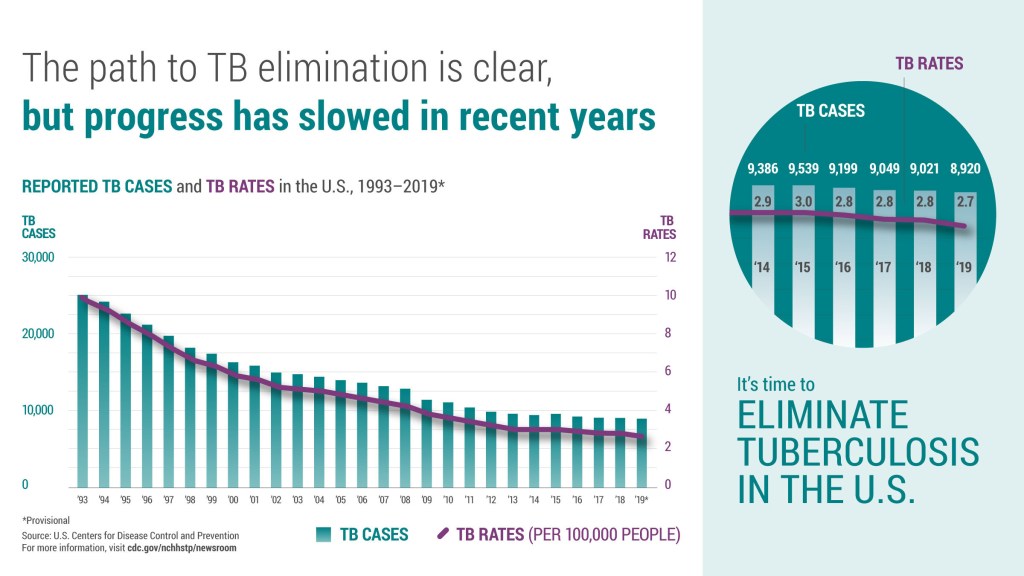
TB has been a gradually diminishing presence in the United States for decades, and currently there are only 2.4 cases per hundred thousand people in our country.

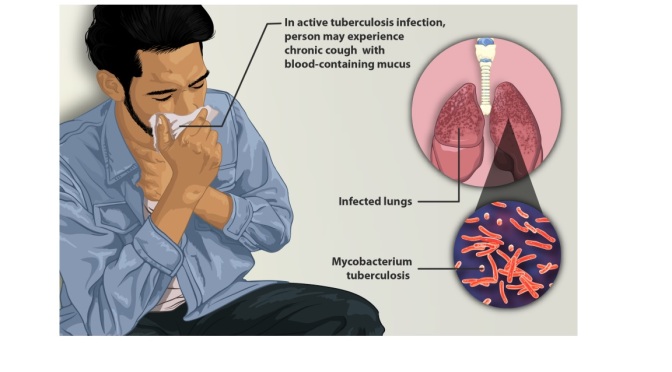
When I was in medical school, TB was still a big problem, and we learned about the fever, night sweats, weight loss and coughing up blood from active tuberculosis. With any of these symptoms, you should, of course, check with a physician.

These severe infections still happen but, currently, tuberculosis occurs primarily in immigrants from other countries, homeless people, prison inmates, people with Immune deficiency, such as cancel therapy and HIV infection.

TB is also  more common in Asians, Native Americans and Eskimos, and Hispanics.

The Ordinary middle class American citizen these days is unlikely to catch tuberculosis, unless they are exposed to somebody that has an active, open case, more likely in people described above.

On first contact, the Tubercle bacillus is almost always controlled by the immune system. Most of these primary cases are without symptoms, and after a few weeks could be picked up by an immune blood test, called the T-spot.TB, or the skin tuberculin test. The chest x-ray can also show a spot on the lung with primary tuberculosis. it is with reactivation that the severe symptoms of secondary TB, described above, can occur.

My own inclination would be to get tested with exposure to any of the groups mentioned above, especially if they have a cough.

Incidentally, there was a dip in tuberculosis incidence during the contagion versus COVID-19 pandemic, showing one more advantage in avoiding big, inside groups.

Catching tuberculosis at the earliest possible moment still continues to be important, especially since long drawn out disease in individuals who have defective immune systems has led to the development of drug resistant organisms.

—Dr. C.

Technology: New Head & Neck Cancer Treatments

Mayo Clinic (May 11, 2023) – In the U.S., HPV is linked to about 70% of throat and mouth cancers. And more than 70% of those cancers are diagnosed in men, according to the Centers for Disease Control and Prevention.

Treatment for throat and mouth cancers, also referred to as oropharyngeal or head and neck cancers, will depend on location and stage of the cancer as well as other factors. Dr. Phillip Pirgousis, a Mayo Clinic head and neck surgeon, says patients have safer, less invasive surgical treatments available to them thanks to ongoing innovation.

Heart Disease: A Surgeon’s View Of Aorta Surgery

Cleveland Clinic (MAY 9, 2023): Have you ever wondered what your surgeon thinks about when they are deciding if you need an operation?

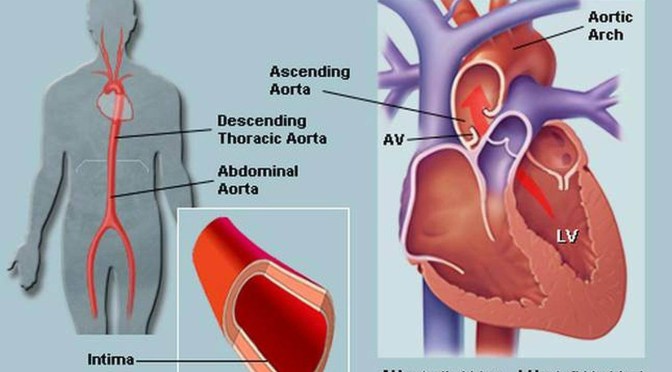
Dr. Lars Svensson and Dr. Marijan Koprivanac discuss all things aorta, such as your past medical history, current health, and how your surgeon looks to the future to provide the best options for you.

READ MORE

HEALTH: HOW THE PANDEMIC RESHAPED AMERICAN LIFE

Wall Street Journal (May 5, 2023) – The alarms sounded in March 2020, and Americans cloistered at home, sheltering from a pandemic killing at times thousands a day. Many people free to work remotely left their big-city lives for suburbs and rural communities. Americans everywhere have settled into more homebound routines for meals and entertainment. Yet even with the deadly crisis fading, the U.S. has yet to recapture the level of happiness enjoyed before the virus SARS-CoV-2 transformed our world.

READ MORE AT WSJ