
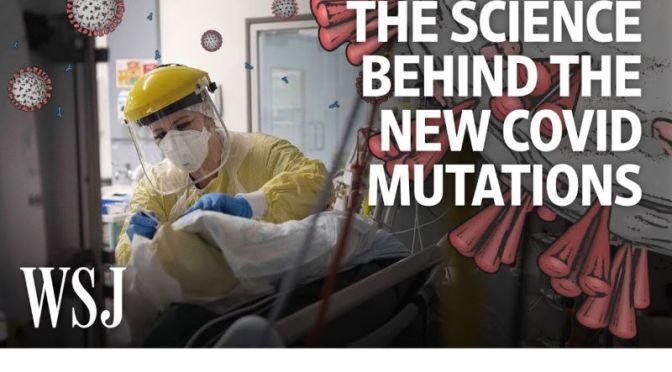
As new coronavirus variants sweep across the world, scientists are racing to understand how dangerous they could be. WSJ explains. Illustration: Alex Kuzoian/WSJ
Tag Archives: Research
MEDICINE: NEW ‘SMART CELL’ THERAPIES TO TREAT CANCER
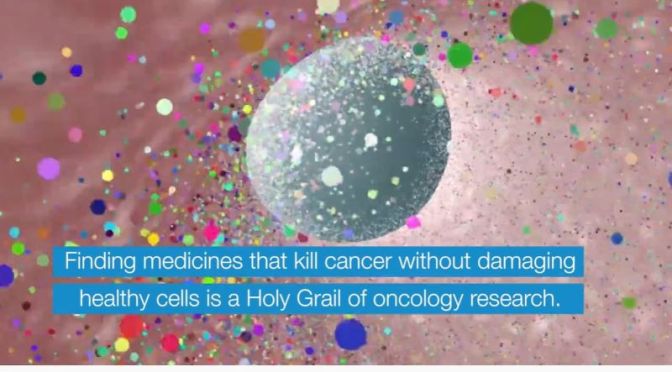
Finding medicines that can kill cancer cells while leaving normal tissue unscathed is a Holy Grail of oncology research. In two new papers, scientists at UC San Francisco and Princeton University present complementary strategies to crack this problem with “smart” cell therapies—living medicines that remain inert unless triggered by combinations of proteins that only ever appear together in cancer cells.
Biological aspects of this general approach have been explored for several years in the laboratory of Wendell Lim, PhD, and colleagues in the UCSF Cell Design Initiative and National Cancer Institute– sponsored Center for Synthetic Immunology. But the new work adds a powerful new dimension to this work by combining cutting-edge therapeutic cell engineering with advanced computational methods.
For one paper, published September 23, 2020 in Cell Systems, members of Lim’s lab joined forces with the research group of computer scientist Olga G. Troyanskaya, PhD, of Princeton’s Lewis-Sigler Institute for Integrative Genomics and the Simons Foundation’s Flatiron Institute. Using a machine learning approach, the team analyzed massive databases of thousands of proteins found in both cancer and normal cells. They then combed through millions of possible protein combinations to assemble a catalog of combinations that could be used to precisely target only cancer cells while leaving normal ones alone.
In another paper, published in Science on November 27, 2020, Lim and colleagues then showed how this computationally derived protein data could be put to use to drive the design of effective and highly selective cell therapies for cancer. “Currently, most cancer treatments, including CAR T cells, are told ‘block this,’ or ‘kill this,’” said Lim, also professor and chair of cellular and molecular pharmacology and a member of the UCSF Helen Diller Family Comprehensive Cancer Center.
“We want to increase the nuance and sophistication of the decisions that a therapeutic cell makes.” Over the past decade, chimeric antigen receptor (CAR) T cells have been in the spotlight as a powerful way to treat cancer.
In CAR T cell therapy, immune system cells are taken from a patient’s blood, and manipulated in the laboratory to express a specific receptor that will recognize a very particular marker, or antigen, on cancer cells. While scientists have shown that CAR T cells can be quite effective, and sometimes curative, in blood cancers such as leukemia and lymphoma, so far the method hasn’t worked well in solid tumors, such as cancers of the breast, lung, or liver.
Cells in these solid cancers often share antigens with normal cells found in other tissues, which poses the risk that CAR T cells could have off-target effects by targeting healthy organs. Also, solid tumors also often create suppressive microenvironments that limit the efficacy of CAR T cells. For Lim, cells are akin to molecular computers that can sense their environment and then integrate that information to make decisions. Since solid tumors are more complex than blood cancers, “you have to make a more complex product” to fight them, he said.
STANFORD: RESEARCHERS FIND WAY TO “REGROW” NEW CARTILAGE IN JOINTS

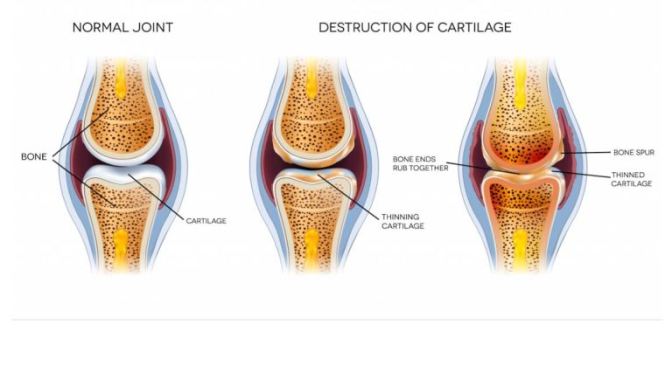
The Stanford researchers figured out how to regrow articular cartilage by first causing slight injury to the joint tissue, then using chemical signals to steer the growth of skeletal stem cells as the injuries heal. The work was published Aug. 17 in the journal Nature Medicine.

“Cartilage has practically zero regenerative potential in adulthood, so once it’s injured or gone, what we can do for patients has been very limited,” said assistant professor of surgery Charles K.F. Chan, PhD. “It’s extremely gratifying to find a way to help the body regrow this important tissue.”
STANFORD MEDICINE (Aug 17, 2020): Researchers at the Stanford University School of Medicine have discovered a way to regenerate, in mice and human tissue, the cushion of cartilage found in joints.
Loss of this slippery and shock-absorbing tissue layer, called articular cartilage, is responsible for many cases of joint pain and arthritis, which afflicts more than 55 million Americans. Nearly 1 in 4 adult Americans suffer from arthritis, and far more are burdened by joint pain and inflammation generally.
COMMENTARY
Stanford has come up with a Promising new approach to the surgical treatment of osteoarthritis. Unfortunately for the suffering public, this approach is still in the rodent experimental stage.
The pain of osteoarthritis is caused by the LOSS of the CARTILAGE which insulates the bone of the joints. The wonderful cartilage coating prevents the pain which would result from the rubbing of bone on bone. The best solution in osteoarthritis would be to replace the cartilage, and I have no doubt that this will be possible some day.
STEM CELLS is the theoretical method most commonly imagined when it comes to replacing lost tissue.. Brain cells, cardiac muscle cells, and pancreatic islet cells are some of the research areas. The development of stem cells from the cells of the Patient herself (iSCs) obviates the need for immunosuppression, which plagues allographs ( stem cells or organs from other humans).
Recently, in situ transformation of neighboring cells has been described, which sidesteps the need to introduce any cells. For instance the transformation of astrocytes (a type of brain cell) into neuronal stem cells of the dopamine lineage would be a great boon to Parkinson’s disease.
The Stanford method somewhat resembles this last-mentioned technique. An injury is created where the cartilage is desired. Like any injury, bleeding, clotting, and cell infiltration follows, destined to form a scar. However, the researchers added BMP-2, which in this milieu causes the pro-fibroblasts to head toward the bone (osteoblast) lineage. Since cartilage forms first in a tissue destined to be bone, they then added a VEGF antagonist, which interrupts the transformation in the desired cartilage stage. Both BMP-2 and anti-VEGF have already been approved for use, facilitating the development of this attractive therapy.
The researchers have even identified an excellent potential Patient Population: Osteoarthritis patients scheduled for surgical removal of the first metacarpal articulation with the wrist. They could do their procedure on this area, and if there is no benefit, They could just go ahead with the original plan of removal. The thumb happens to be one of my most painful arthritic areas.
I will most interestedly follow their research.
–Dr. C.

COVID-19: “SUPERSPREADING EVENTS” – HOW THEY LEAD TO 80% OF INFECTED PEOPLE
From Scientific American (June 23, 2020):

In fact, research on actual cases, as well as models of the pandemic, indicate that between 10 and 20 percent of infected people are responsible for 80 percent of the coronavirus’s spread.
Researchers have identified several factors that make it easier for superspreading to happen. Some of them are environmental.
- Poorly ventilated indoor areas seem especially conducive to the virus’s spread – A preliminary analysis of 110 COVID-19 cases in Japan found that the odds of transmitting the pathogen in a closed environment was more than 18 times greater than in an open-air space.
- Places where large numbers of people congregate – As a group’s size increases, so does the risk of transmitting the virus to a wider cluster. A large group size also increases the chance that someone present will be infectious.
- The longer a group stays in contact, the greater the likelihood that the virus will spread among them – The benchmark used for risk assessment in her contact-tracing work is 10 minutes of contact with an infectious person, though the CDC uses 15 minutes as a guideline.
- Some activities seem to make it easier to spread respiratory gunk – Speech emits more particles than normal breathing. And emissions also increase as people speak louder. Singing emits even more particles, which may partially explain the superspreader event at the Washington State choir practice. Breathing hard during exercise might also help the spread of COVID-19.
 Doctors Without Waiting Rooms