


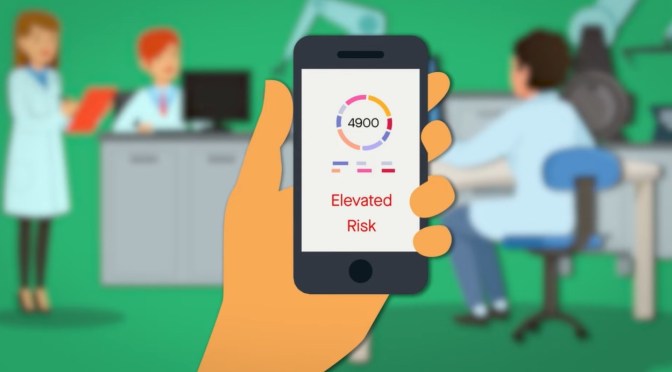
Patients can now collect thousands of data points about themselves and share that information with their healthcare providers. At the Scripps Research Translational Institute, researchers are taking advantage of new technology to study disease in novel ways.
Their projects include a platform for early detection of disease outbreaks, a sleep quality study, and even a way to predict and individual’s risk of certain disease based on their genetics. In this video, hear directly from the team about this exciting new frontier.
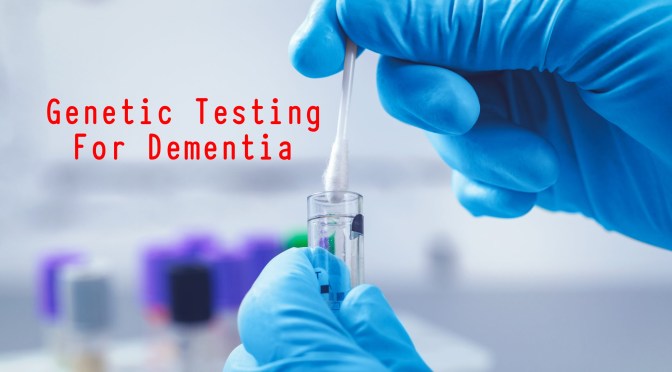
Video timeline: 0:00 Start 0:01 #1.What is the difference between dementia risk genes and rare familial genes? 1:05 #2.Which genes are tested for? 1:45 #3.What happens in families with directly inherit dementia? 3:20 #4.What are the common misconceptions? 4:14 #5.Do I need to know which gene runs in my family? 9:50 #6.How do I get a genetic test for dementia? 11:09 #7.What if my doctor won’t refer me for the test? 11:56 #8.Will getting my results affect my life insurance or mortgage?
Having a test to look for a faulty gene that causes dementia is only appropriate for a very small number of people. This is because only around one in 100 cases of dementia are directly inherited. In these cases, there is an obvious pattern of a parent passing it on to their child (or children) throughout every generation of a family, often developing symptoms in their 40s and 50s.
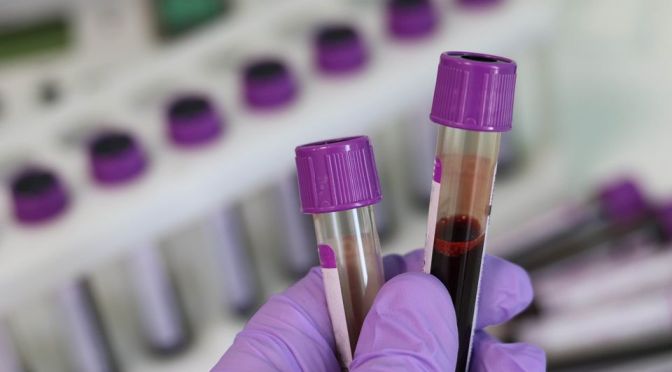
“Even more importantly, we’ve shown you can collect the blood drop at home and mail it into the lab,” said Michael Snyder, PhD, director of the Center for Genomics and Personalized Medicine and senior author on the research, which was published in Nature Biomedical Engineering on Jan. 19.

Stanford Medicine (January 19, 2023) – Researchers at Stanford Medicine have shown they can measure thousands of molecules — some of which are signals of health — from a single drop of blood.
Unlike finger-prick testing for diabetes, which measures a single type of molecule (glucose), multi-omics microsampling gives data about thousands of different molecules at once.

The new approach combines a microsampling device — a tool used to self-administer a finger prick — with “multi-omics” technologies, which simultaneously analyze a vast array of proteins, fats, by-products of metabolism and inflammatory markers.

It also shows that restoring the integrity of the epigenome reverses age-related symptoms.
Learn more at https://hms.harvard.edu/news/loss-epi…
Take an animated look inside the neuron, and learn how scientists are addressing brain disease. With approximately 86 billion neurons in the brain, humans contain the most complex communications network imaginable. To address diseases of brain development and degeneration, neuroscientists are investigating how and why this network breaks down, and what can be done to repair it.
One area of study is dendrites, which are the tree-like structures of neurons, that receive electrical impulses. Researchers are carefully mapping out brain circuits and uncovering how connectivity changes can result in defects of the visual system or behavioral problems. The core section of the neuron is the cell body. Genetic engineering tools are revealing how mutations impact brain development and contribute to autism spectrum disorder or rare, inherited forms of neurological disease.
The transmission of nerve impulses occurs along the axon, which is insulated, much like an electrical wire, by a fatty layer called the myelin sheath. Scientists have invented a medicine to stop the immune system from mistakenly attacking this layer, which occurs during multiple sclerosis. Other molecules currently in development instruct the body to regenerate the sheath and repair damage. The axon also transports valuable cellular cargo, such as neurotransmitters, along tracks from one end of the neuron to the other.
Researchers are testing drug candidates for their ability to remove molecular traffic jams when this transport system fails, as often occurs in Parkinson’s and Alzheimer’s disease. The axon terminals make connections called synapses with other cells, using neurotransmitters as signals. Some scientists are evaluating how finely tuning the receptors for these chemicals could ease depression and anxiety.
Others are finding ways to promote the regrowth of lost synapses, which could halt neurodegeneration. From genetics to behavior, neuroscience is accelerating new interventions for the most challenging disorders of the nervous system.
Learn more: https://www.scripps.edu/
Even mild COVID-19 is at least correlated with a startlingly wide spectrum of seemingly every illness. We need a much better taxonomy to address people’s suffering.

From The Atlantic, October 5, 2022:
The cases of long covid that turn up in news reports, the medical literature, and in the offices of doctors like me fall into a few rough (and sometimes overlapping) categories. The first seems most readily explainable: the combination of organ damage, often profound physical debilitation, and poor mental health inflicted by severe pneumonia and resultant critical illness.
This serious long-term COVID-19 complication gets relatively little media attention despite its severity. The coronavirus can cause acute respiratory distress syndrome, the gravest form of pneumonia, which can in turn provoke a spiral of inflammation and injury that can end up taking down virtually every organ. I have seen many such complications in the ICU: failing hearts, collapsed lungs, failed kidneys, brain hemorrhages, limbs cut off from blood flow, and more. More than 7 million COVID-19 hospitalizations occurred in the United States before the Omicron wave, suggesting that millions could be left with damaged lungs or complications of critical illness. Whether these patients’ needs for care and rehabilitation are being adequately (and equitably) met is unclear: Ensuring that they are is an urgent priority.
Inflammation is the body’s first line of defense, occurring as droves of immune cells rush to the site of injury or acute illness to make repairs and stem further damage.
When successful, inflammation helps the body survive and heal after trauma. However, when recovery following an inflammatory response goes awry, it signals that damage is still occurring — and the inflammation itself can cause further injury, leading to more-severe illness or even death.
But what differentiates a good inflammatory recovery from a bad one?
A new study, led by researchers at Harvard Medical School and Massachusetts General Hospital, published Aug. 22 in Nature Communications, yields critical clues.
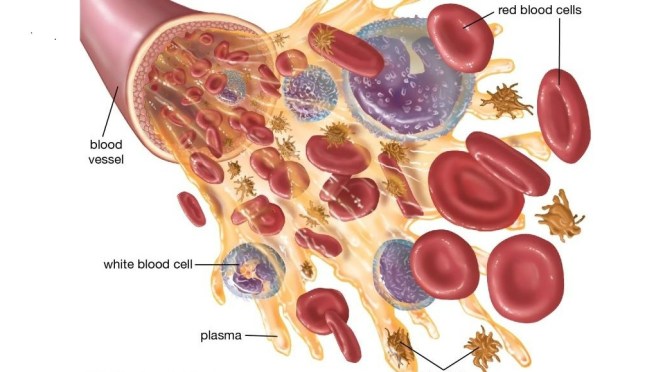
The scientists identified universal features of the inflammatory responses of patients who successfully recovered after surgery or acute illnesses such as COVID-19, heart attack, and sepsis. These features, they discovered, include precise paths that white blood cell and platelet counts follow as they return to normal.
Vaccines are one of the greatest scientific discoveries in human history. They eradicated a disease, smallpox, that killed 300 million people in the 20th Century. They save countless lives every year, protecting against diseases caused by viruses like polio, measles and yellow fever. But some viruses are particularly difficult to target with vaccines.
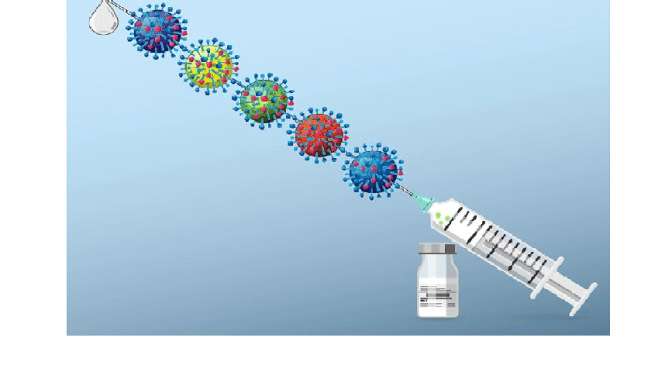
We need a flu shot every year because the virus mutates so much previous vaccines may no longer be effective. Scientists are closer than ever before to developing what are known as universal vaccines. These vaccines would protect against many variants of a given virus, and potentially against entire virus families. Viruses are constantly mutating, but only some of those mutations are important.
For example, a change in the shape or chemical properties of the spike protein a virus uses to infect a cell could make the virus more transmissible. It could also mean antibodies developed from previous infection or vaccination wouldn’t be able protect against the current virus. But, there are some sites on viruses that don’t mutate as much, or at all. These sites are often vital to the virus’ survival. Scientists are using powerful technologies to identify antibodies that target these sites.
They’re called broadly neutralizing antibodies and are capable of protecting against multiple viral variants. Now, researchers are working to design shots that get our bodies to produce broadly neutralizing antibodies. Meaning someday soon, vaccines for HIV, flu and coronavirus might be enough to effectively ward off these viruses for the better part of a lifetime.
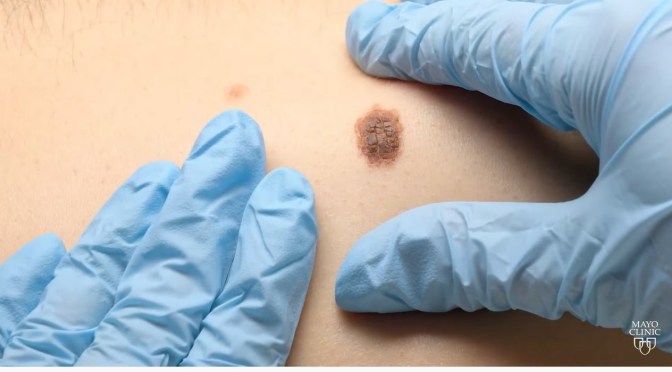
Researchers say men are more likely to die from melanoma than women. And by the time a man is 50, the likelihood of developing melanoma increases every year, compared with women.
“The main risk factors for melanoma are sun exposure, amount of sun exposure, high-level sun exposure — meaning sunburns — but also light skin color,” says Aleksandar Sekulic, M.D., a Mayo Clinic dermatologist.
The most common places for melanoma to occur are body parts exposed to the sun, including the face, back, arms and legs. The first signs are often a change to an existing mole or an unusual-looking growth on the skin.
“The big problem with melanoma is not only that it starts in the skin, but that it can spread. And it can be deadly,” says Dr. Sekulic.
Avoid prolonged exposure to the sun, especially in the middle of the day to prevent sunburns. Wear protective gear outside, such as a broad-brimmed hat, tightly woven clothing that covers your arms and legs, and sunglasses to protect your eyes. And use sunscreen generously with a sun protection factor of 30 or higher on exposed areas of skin. Reapply at least every two hours. And if you’re swimming or sweating, use water- and sweat-resistant sunscreen.
 Doctors Without Waiting Rooms