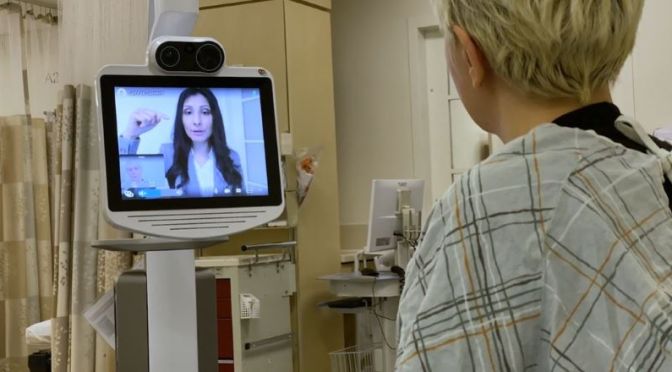
From tele-consults in the ED to on-site fundus imaging at Primary Care offices, New York Eye and Ear Infirmary of Mount Sinai (NYEE) is adapting to the rapidly changing healthcare environment with innovative new applications and technologies and making them a permanent part of our patient service. These approaches are not only valuable social distancing tools, to reduce coronavirus exposure of physicians, staff, and patients, but they also allow greater access to care and quicker and more effective triage of patients.
For more information about NYEE, visit www.nyee.edu
COVID 19 is a nasty disease, in case you hadn’t noticed. It is SNEAKY: you can catch it from a person who has no symptoms.
It is UNPREDICTABLE: you may develop no symptoms or Die from it. It can affect any part of your body, including HEART and BRAIN.
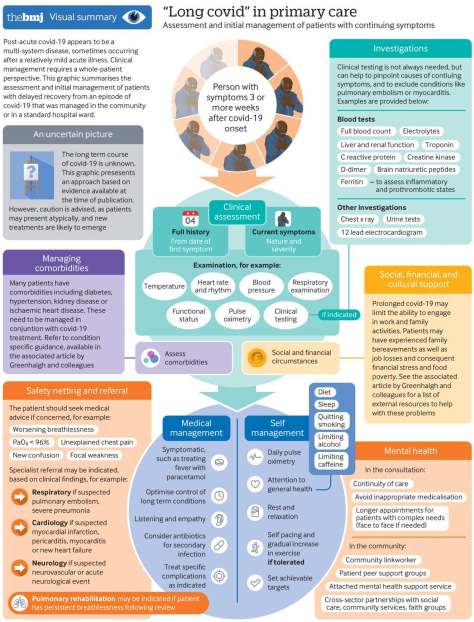
And now we hear that it can DRAG ON. The outstanding infographic, “a multi-systems disease, which is intended for PRIMARY CARE PROVIDERS, has a lot to offer patients, who can do a lot to Care for themselves:
–They can get a THERMOMETER and a PULSE OXIMETER to watch their own temperatures and oxygen saturations
–They can monitor their own COMORBIDITIES, like Diabetes and HYPERTENSION, which are common with severe Covid. In patients who get very ill .
–They can watch their GENERAL HEALTH, including SLEEP and DIET (the exercise part is relegated to DOCTORS recommendations).
You should also RESTRICT Alcohol, Caffeine and it goes without saying CIGARETTE SMOKING. Of course PREVENTION, with DISTANCING, MASKING and being Outside, coupled with SLEEP, DIET and EXERCISE is always best.
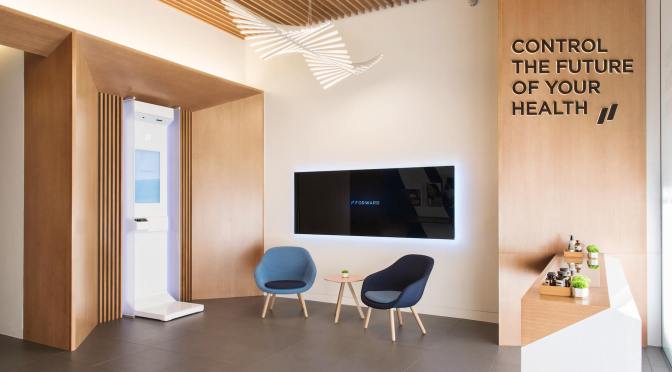
Forward Healthcare differs from a conventional primary care clinic in several, generally good ways.
Most importantly, they stress PREVENTATIVE care. Blood tests that monitor diabetes, metabolic syndrome, and anemia are done regularly, since they have a laboratory on premises. They have their own EMR (electronic medical record) platform, and their own telemedicine platform, which are downloaded on the initial visit.
They give out a “sensor kit” consisting of temperature monitor, Pulse-oximetry, and a BP monitor, which wirelessly sends information to medical records.
Telemedicine is available through their own Downloaded platform. Although I get the impression that Telehealth isn’t as central as I would have expected in a technology oriented operation, it is increasingly important.
The monthly membership fee of $149 pays for the above and unlimited Doctor Availability 24/7 without copay.
Concierge Medicine has the monthly/yearly fee and unlimited access, but has a copay. Both will utilize your insurance, and neither treats patients in the hospital or provides referral care.
Government Health care is coming, and with it longer waiting times, shorter Doctor interaction times, and probably less time for Preventative Health Care.
Systems like Forward Health and Concierge Medicine will be the upper tier of a 2-tier system.
Proactive attention to Health in my opinion is essential in the future if we are to have a healthy nation, and not “bankrupt the system”. Telehealth is growing in importance, and offers help in making medical expertise more convenient, widely available and for less cost.
I am happy to see progressive Systems like Forward Health offer a preventative option to the present, broken, reverse-incentivized, fee-for-service System.
….with an eye toward the future, the authors offer recommendations for all interested parties to consider moving forward. These recommendations were informed by our research and a stakeholder meeting of industry groups who work with telehealth. These groups included Doctor on Demand, the American Medical Association, and the Center for Connected Health Policy. The paper’s recommendations are as follows:
Data on COVID-19 telehealth administration and programs must be collected and analyzed.
Regulatory flexibility should be built into telehealth to accommodate the range of use cases.
Telehealth services should be utilized for primary care to reduce service redundancies.
States should be empowered to move away from parity models to reduce the cost of telehealth services.
Telehealth services should be available to the medically underserved.
Innovation, privacy, and data security in telehealth services should be the norm.
Telemedicine is an “almost perfect” extension of Medical Care for the Covid epidemic (1). As we ease away from Panic, we will not be abandoning distancing, cleanliness, and other personal measures that keep us well. SARS-CoV-2, or the next Pandemic Virus will be lurking in the background.
Likewise, Medicine will always embrace Telemedicine for its’ convenience, safety, and efficiency, if we can overcome the roadblocks discussed in the above article.
One efficiency in particular, discussed in the previous RPA( from Australia) article stood out; the use of Nurse-triage to direct telephone (or someday audio-visual) Patients to the most appropriate destination; ER, Urgent Care, after-hours clinic, or home care.
The Schmidtt-Thompson protocol ( which guides triage) has been used since 1980, having stood the test of time and lawyers. It is available in electronic form, and when fully automated, it should be made available without cost.
Just imagine all of the unnecessary ER visits And Physician Visits potentially saved!
Telemedicine has indeed added convenience and safety in the Era ( it seems like forever) of Covid.
There are many Telemedicine ideas that will still be used when Covid hopefully takes its’ place in the Influenza immunization vial.
—Dr. C.
Empowering Patients Through Education And Telemedicine




 Doctors Without Waiting Rooms