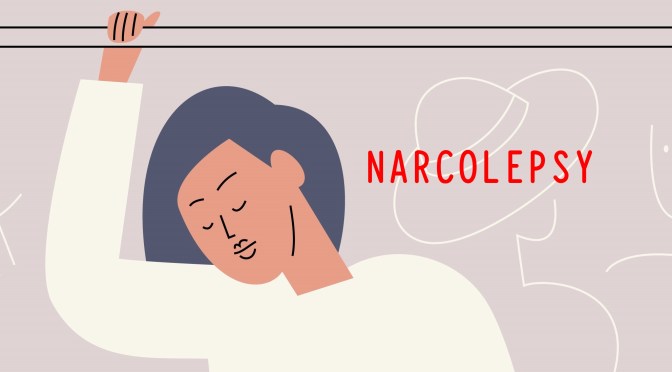
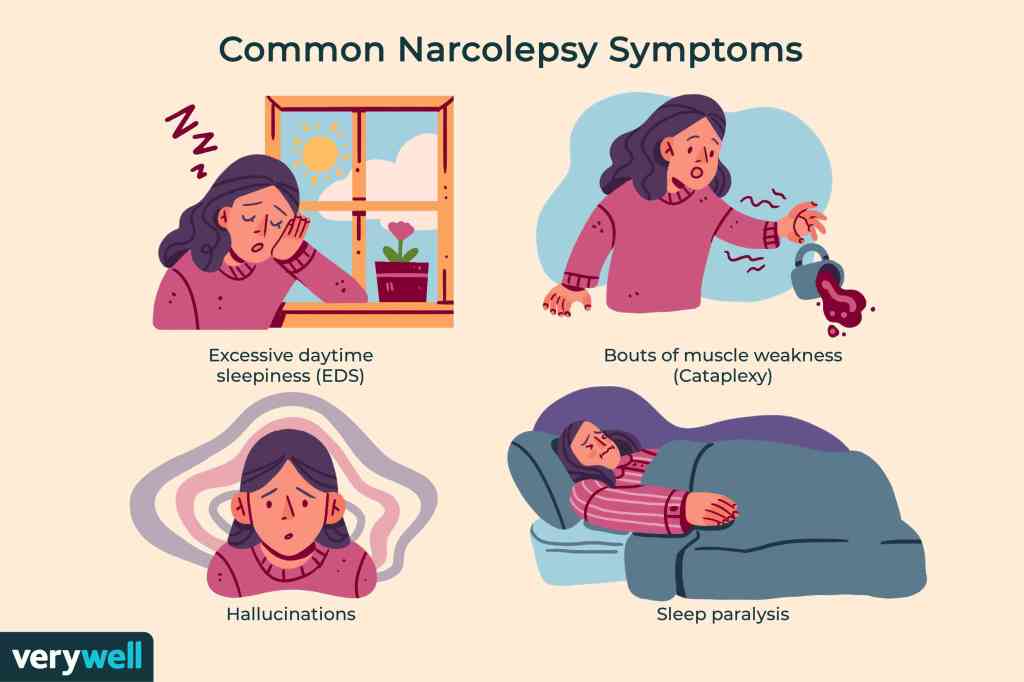
Narcolepsy is a sleep disorder with daytime drowsiness, sudden episodes of falling asleep, sometimes sudden loss of muscle control, and occasionally hallucinations.
If this sounds like the bad, overbearing, uncontrolled brother of REM sleep, that is because it is. The features of REM sleep are there; sleepiness, muscle paralysis(cataplexy) and Hallucinations(dreams). This combination of symptoms can often disrupt jobs, and can be dangerous, leading to accidents.
The cause of narcolepsy is unknown, but there is an association with decreased blood levels of the neurochemical hypocretin. The disease starts in youth, and sometimes occurs and families. The patients are often overweight, and can have sleep apnea in addition.
The Diagnosis is usually made in specialist sleep centers, which find an unusually rapid entrance into sleep, beginning in the REM stage. Normally REM sleep occurs later in the 90-minute sleep cycle.
There are a lot of different stimulants and some sleep-restoring and paralysis-reducing medications used to treat narcolepsy. This and other information may be found on the accompanying Mayo clinic article.
Medicare Advantage is an all-in-one managed care plan, typically an HMO or PPO. Advantage plans provide the benefits of Part A and B, and most also include Part D, or prescription drug coverage. Some offer extra benefits not available through Original Medicare, such as fitness classes or vision and dental care.
If you opt for Medicare Advantage, you typically continue to pay your Part B premium as usual, but you will pay little or no additional premiums for your coverage. You generally have copays or coinsurance, but once you reach your out-of-pocket limit, the plan will pay 100 percent of your medical costs covered under Medicare for the rest of the year. The out-of-pocket limit does not apply to prescription drugs or extra benefits.
To keep premiums low, Advantage plans generally require you to get your care from a network of doctors, hospitals, and other providers, and you typically need pre-authorization for specialized care.
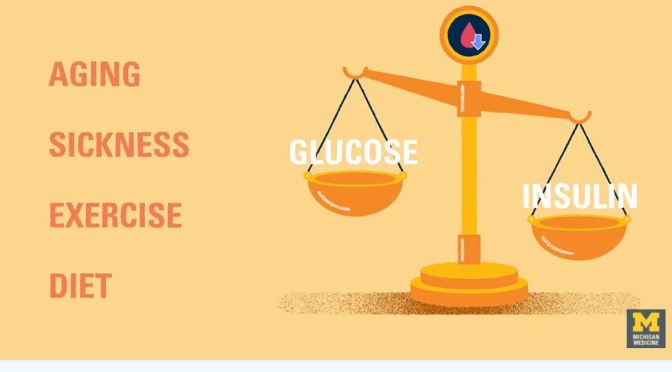
In this video, you’ll learn the basics of how to treat a high blood glucose result with a Correction Dose of insulin, how to calculate the Correction Dose, and when not to give a Correction Dose.
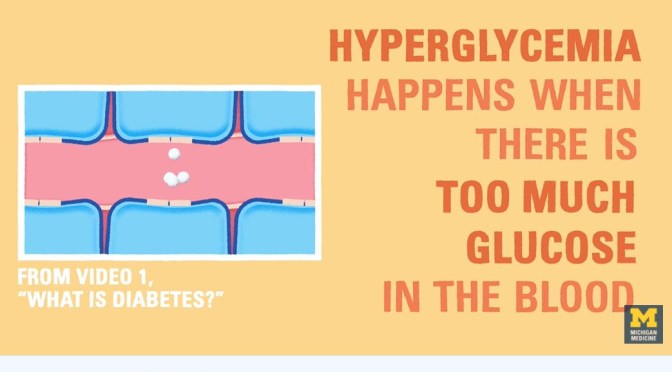
In this video, you’ll learn about what causes hyperglycemia, what symptoms to look for, and how it affects the health of people living with type 1 diabetes.
COMMENTARY:
Hyperglycemia refers to an excess of glucose in the blood stream. The fact that we do not all have hyperglycemia is a tribute to the fine-tuned regulation, or homeostasis, of the normal body,
Glucose is our main source of energy especially for the brain. When we eat, our intestinal tract breaks down the complex starches and sugars we eat into glucose, which is absorbed into the bloodstream. This triggers the pancreatic beta cells to produce insulin, which allows glucose to get through the cell membrane and into our cells.
Hyperglycemia results mainly when pancreas produces insufficient insulin, or our cells exhibit insulin resistance. This can occur in diabetes, other diseases affecting the pancreas or stressful conditions which decreases insulin sensitivity.
Excess of glucose in the blood stream washes out water and salts with excessive urination, causing thirst, and drying out of the cells; the distorted vision of hyperglycemia is one such symptom thot results.
In the most common types of hyperglycemia, the cells are starved of glucose, and need to breakdown fats for energy. This produces a ketosis, or acidosis of the bloodstream, increasing the dehydration.
My wife suffered from diabetes, and had her only severe episode in Canada. She started vomiting before we discovered the high blood sugar, and couldn’t drink enough fluids by mouth. She was hospitalized in Canada and received excellent treatment with intravenous fluid and insulin.
Over the years, chronic excess of sugar attached to the protein of her cells, as manifested by excessive hemoglobin A-1 C, or glycohemoglobin, in her bloodstream. She passed away a decade ago.
A healthy lifestyle, with good sleep, diet and exercise is essential Sugar should be considered a poison.
Regular vegetables fruits and cereal grains help avoid the excess sugar of fast foods. Exercise helps to utilize extra sugar and mitigate stress.
Please refer to the article on hyperglycemia by the Mayo clinic for a more complete discussion.
Researchers are actively investigating myriad aspects of the aging process. In the new issue of Harvard Medicine magazine, read what they are learning about this phenomenon of life. https://t.co/5IBV94pBCmpic.twitter.com/4vfqMhU6OG
Molnupiravir (MK-4482, EIDD-2801) is an investigational oral antiviral medicine that significantly reduced the risk of hospitalization or death at a planned interim analysis of the Phase 3 MOVe-OUT trial in at risk, non-hospitalized adult patients with mild-to-moderate COVID-19. At the interim analysis, molnupiravir reduced the risk of hospitalization or death by approximately 50%; 7.3% of patients who received molnupiravir were either hospitalized or died through Day 29 following randomization (28/385), compared with 14.1% of placebo-treated patients (53/377); p=0.0012. Through Day 29, no deaths were reported in patients who received molnupiravir, as compared to 8 deaths in patients who received placebo.
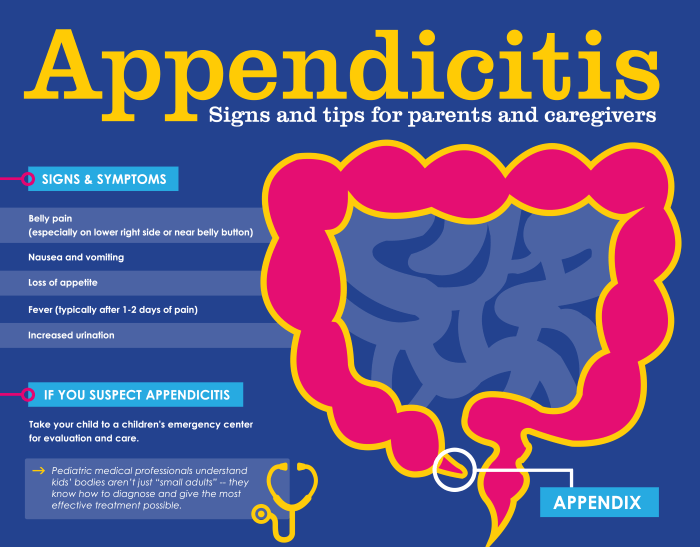
The appendix is a finger like projections at the origin of the colon in the right lower part of your abdomen. It may become inflamed, especially if there is a blockage. Appendicitis is best considered a medical emergency, since it may rupture and infect the entire abdominal cavity.
When I was a practicing pediatrician, appendicitis was one of the two conditions I refused to allow myself to overlook; the other one was meningitis, which is now mostly prevented by immunization.
Pain in the abdomen is almost invariably present as the main symptom of appendicitis. This pain often begins around the belly button and then migrates to the right lower part of the abdomen. The patient should try to notice whether jarring the abdomen by walking makes the pain worse; if so, this finding would favor an inflammatory condition like appendicitis.
A similar condition, diverticulitis, may cause similar symptoms in the left lower part of the abdomen, and other conditions may cause confusion. The doctor checks to see if it is more painful in the right lower belly area, and she may pull her hand away suddenly. If the pain intensifies, there may be inflammation around the appendix. Sometimes a vaginal examination or rectal examination will be needed to help with the diagnosis; the appendix is close to these areas.
Other symptoms and signs may be a low-grade fever, vomiting, add an elevated white blood cell count. In the modern medical era, ultrasound, CT scans, and MRIs are sometimes used to visualize the appendix to evaluate its size and possible inflammation.
Treatment used to consist only of surgery, but with imaging techniques available to prevent disaster, the condition can be treated with antibiotics. 30 to 50% of those so treated will still eventually require surgery. Removal of the appendix is now sometimes performed through a fiberoptic scope, leading to more rapid recovery.
A dilemma is present for individuals who go to the south pole to live for several months, and where weather may prevent them from getting proper medical help. Such people may have their appendix removed as a preventative. Of course they also can take antibiotics if appendicitis develops, but it’s really scary to use medical treatment only, without the aid of modern imaging techniques.
Please consult the following Mayo clinic article for more information.




 Doctors Without Waiting Rooms