Tag Archives: Men’s Health

COVID-19 VACCINES: ‘FREQUENTLY ASKED QUESTIONS ANSWERED’

How does each of the available Covid-19 vaccines work?

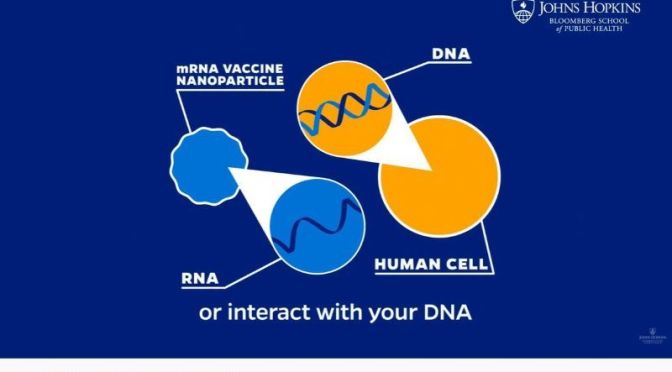
Once the vaccine is injected, the mRNA is taken up by the macrophages near the injection site and instructs those cells to make the spike protein. The spike protein then appears on the surface of the macrophages, inducing an immune response that mimics the way we fight off infections and protects us from natural infection with SARS-CoV-2. Enzymes in the body then degrade and dispose of the mRNA. No live virus is involved, and no genetic material enters the nucleus of the cells.

Although these are the first mRNA vaccines to be broadly tested and used in clinical practice, scientists have been working on mRNA vaccines for years. And despite this wonderful parody piece. opens in new tab saying that the technology is “obvious,” in fact the breakthrough insight that put the mRNA inside a lipid coating to prevent it from degrading is quite brilliant — and yes, this may be the first time the New England Journal of Medicine has referenced a piece in The Onion. (Last reviewed/updated on 11 Jan 2021)

How should early side effects be managed?

Analgesics and antipyretics such as acetaminophen or ibuprofen are effective in managing post-vaccine side effects including injection-site pain, myalgias, and fever. However, the CDC does not recommend prevaccine administration of these drugs, as they could theoretically blunt vaccine-induced antibody responses.

Because of the small risk of anaphylaxis, sites that administer the vaccines must have on hand strategies to evaluate and treat these potentially life-threatening reactions. The CDC has issued recommendations on how sites should prepare. opens in new tab. (Last reviewed/updated on 11 Jan 2021)

How long will the vaccines work? Are booster doses required?

Since the vaccines have been tested only since the summer of 2020, we do not have information about the durability of protection. Data from the phase 1 trial of the Moderna vaccine suggested that neutralizing antibodies persisted for nearly 4 months. opens in new tab, with titers declining slightly over time. Given the absence of information on how long the vaccines will be protective, there is currently no specific recommendation for booster doses. (Last reviewed/updated on 11 Jan 2021)

Do the vaccines prevent transmission of the virus to others?

Many commentaries on the results of the vaccine clinical trials cite a lack of information on asymptomatic infection as a limitation in our knowledge about the vaccines’ effectiveness. Indeed, this is a theoretical concern, since up to 40% of people who get infected with SARS-CoV-2 have no symptoms but may still transmit the virus to others.

Nonetheless, there are several good reasons to be optimistic about the vaccines’ effect on disease transmission. First, in the Moderna trial. opens in new tab, participants underwent nasopharyngeal swab PCR testing at baseline and testing at week 4, when they returned for their second dose. Among those who were negative at baseline and without symptoms, 39 (0.3%) in the placebo group and 15 (0.1%) in the mRNA-1273 group had nasopharyngeal swabs that were positive for SARS-CoV-2 by RT-PCR. These data suggest that even after one dose, the vaccine has a protective effect in preventing asymptomatic infection.

Second, findings from population-based studies now suggest that people without symptoms are less likely to transmit the virus to others. Third, it would be highly unlikely in biological terms for a vaccine to prevent disease and not also prevent infection. If there is an example of a vaccine in widespread clinical use that has this selective effect — prevents disease but not infection — I can’t think of one!

Until we know more, however, we should continue to emphasize to our patients that vaccination does not allow us to stop other important measures to prevent the spread of Covid-19. We need to continue social distancing, masking, avoiding crowded indoor settings, and regular hand washing. (Last reviewed/updated on 11 Jan 2021)
Read more

Analysis: ‘The Explosive Growth Of Telemedical Healthcare In 2020’ (Video)

Join CNET during CES 2021 for talks with three medical luminaries to discuss what we’ve gained — and need to fix — with telehealth over a turbulent pandemic year.

COVID-19: ‘HOW MRNA VACCINES WORK’ (VIDEO)

Messenger RNA—or mRNA—vaccines have been in development for decades, and are now approved for use against COVID-19. Here’s how they work and what you should know about them. Visit https://www.jhsph.edu/covid-19​ for even more resources.

GLOBAL HEALTH: ‘A LOOK AT CHALLENGES IN 2021’ (VIDEO)

From the race to roll-out coronavirus vaccinations around the world, to other concerns such as mental health and measles, BBC Health Reporter Smitha Mundasad looks at the health challenges facing the world in the next year.

ANALYSIS: ‘IS WALMART THE FUTURE OF HEALTH CARE?’

Walmart, America’s largest grocer, launched a primary care clinic called Walmart Health, in September 2019. Analysts say the big box retailer faces several hurdles in its quest to scale up nationally with a roster of highly paid doctors and dentists. But with more than 35 million people uninsured as of 2019, and millions more with high deductible health plans, could Walmart Health’s low price point be the future of healthcare in America?

THE DOCTORS 101 CHRONIC SYMPTOMS & CONDITIONS #33: The Common Cold’

The common cold is one of the most frequent of human diseases, and causes billions of dollars in lost work yearly. I haven’t heard of many cases of colds or flu recently, in the Era of Covid.

Distancing, mask wearing, and hand washing prevents colds too. The common cold spreads by AEROSOL transmission, and autoinnoculation into the nose from contaminated surfaces, just like Covid.

By far the most common cause of the Common Cold is the RHINOVIRUS, of which there are 100 serotypes. Coronaviruses, Influenza, Parainfluenza, RSV and enteroviruses also produce cold-like symptoms. The large number of viruses causing the Common cold makes developing an effective vaccine difficult.

Adults eventually encounter most of the serotypes prevalent in their community, and don’t catch many colds. However, when adults travel, they experience a new, unfamiliar group of viruses endemic to their destination. How often do we take a trip and come back with a Cold, or worse. We lack immunity to the microorganisms we have not yet encountered, just like children.

When I was in pediatric allergy practice, I feared nothing so much as the cold temperatures in October. The kids would come back to school, and start getting colds, averaging 7-8 per year. It is commonly thought by researchers that cold symptoms are not produced so much by viral damage to the respiratory membranes, as by the body’s immune response to those viruses.

My experience confirms that opinion. A cold was a worry for my patients. Rhinovirus infection often triggered a severe ashmatic response, sometimes sending the children to the ER if not the Hospital ICU.

It was the allergic reaction to the virus that caused the severe wheezing. After the epidemic of Covid subsides, and becomes endemic, don’t give up all of your newly-acquired habits. Hand-washing, distancing, and even masks prevent other respiratory disease transmission too.

–Dr. C.

HEALTH: ‘WHY THERE IS NO CURE FOR COMMON COLDS’

The common cold is the most common human disease in the world. So, why haven’t we found a cure yet?!

Called human rhinoviruses, these respiratory viruses measure between 15 to 30 nanometers in diameter, making them some of the smallest types of viruses out there. And it’s partly thanks to the viruses’ genetic makeup that they’re so good at replicating.

Human rhinoviruses travel like most other respiratory viruses via nasal secretions, which can be released through sneezing, or through contact with fomites, which are surfaces like a keyboard or a doorknob that can help spread the virus from one person to another. From there, all it takes is for a hand to touch one of the body’s mucous membranes like the eyes, nose, or mouth and bam — the virus has gained entry.

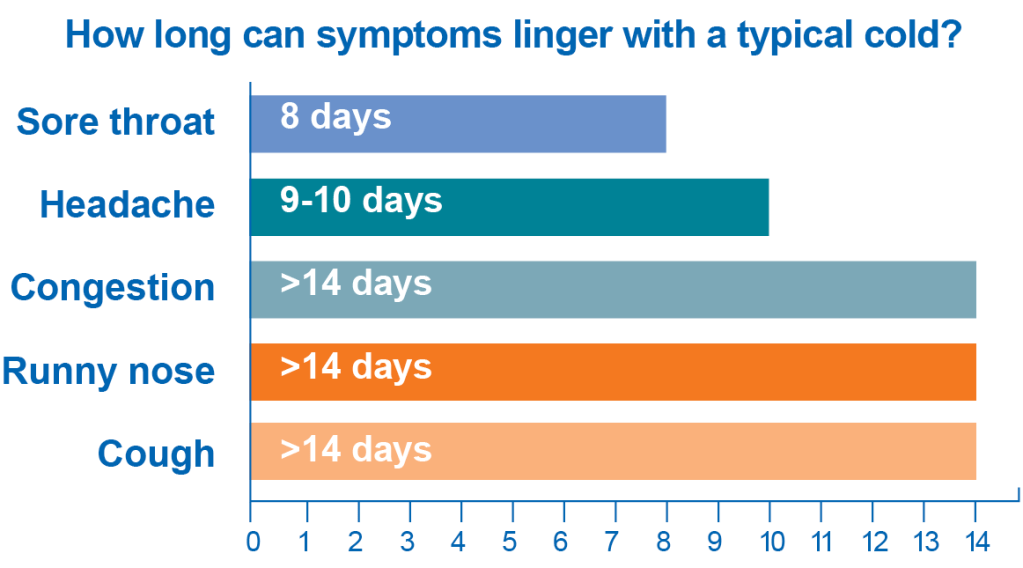
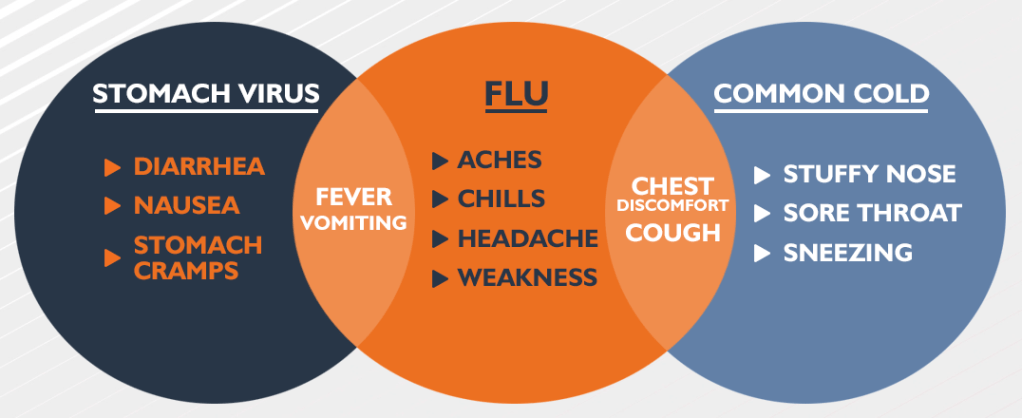
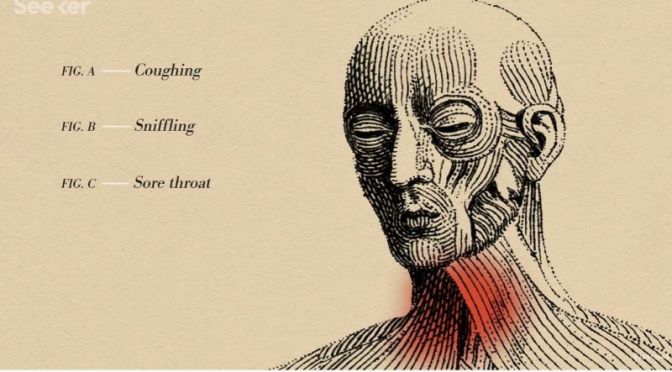
Soon after infection, coughing, sneezing, headaches, a mild fever and body aches can soon follow. And these symptoms may easily be confused with those of the flu. But unlike the flu, where symptoms start quite suddenly, it can take a couple of days for cold symptoms to fully develop. And they usually last anywhere from 7 to 14 days.

COVID-19 PODCAST: LATEST ON VACCINE ROLLOUT, NEW MUTATION & FDA APPROVALS

Stephen Hahn, U.S. Food and Drug Administration Commissioner, Sigal Atzmon, founder and chief executive officer of Medix Global, and Roche CEO Severin Schwan, on the pandemic, Covid-19 vaccines and the new mutation.