





Patients can now collect thousands of data points about themselves and share that information with their healthcare providers. At the Scripps Research Translational Institute, researchers are taking advantage of new technology to study disease in novel ways.
Their projects include a platform for early detection of disease outbreaks, a sleep quality study, and even a way to predict and individual’s risk of certain disease based on their genetics. In this video, hear directly from the team about this exciting new frontier.
Your “normal” body temperature changes throughout your life. It often rises from childhood into adulthood before dipping during the later years of life.

The typical body temperature range for children between birth and 10 years old goes from 95.9 F (35.5 C) to 99.5 F (37.5 C). This would be a temperature measured through an oral reading.
The typical body temperature range for people ages 11 to 65 is 97.6 F (36.4 C) to 99.6 F (37.6 C).
The typical body temperature range for people older than 65 is 96.4 F (35.8 C) to 98.5 F (36.9 C).
A temperature that’s higher than 100.4 F (or 38 C) is considered a fever, and it’s usually something you should bring to your doctor’s attention — especially if it lingers for more than two days, Dr. Ford says.
Oftentimes, a fever is your body’s reaction to an infection or virus (like influenza). A fever itself doesn’t require any specific treatment, other than trying to bring the temperature down for your comfort.
Persistent low-grade or high-grade fevers could signal that something else is going on in your body. A number of medical conditions, including hyperthyroidism and other endocrine disorders, can raise your body’s core temperature.
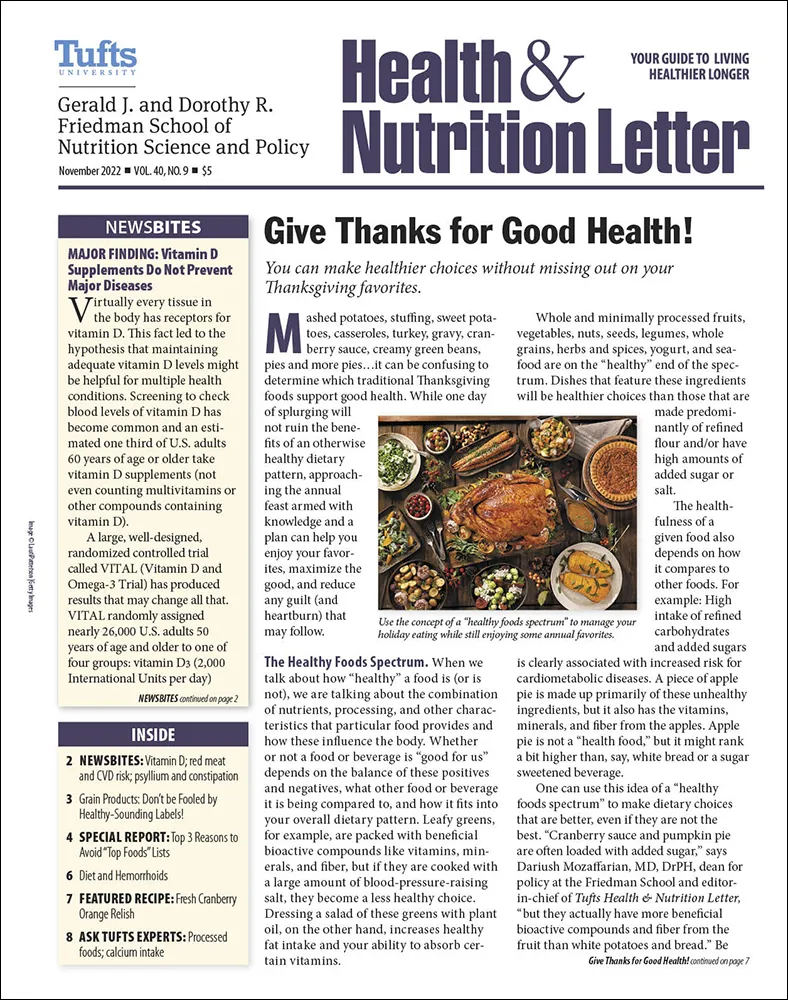
Inside the Tufts Health & Nutrition Letter – November 2022:
Consuming just a half-tablespoon or more of olive oil a day is linked to a lower risk of dying from heart disease and other chronic health conditions, new research suggests.

The study included more than 92,000 women and men from the Nurses’ Health Study and the Health Professionals Follow-up Study, who filled out diet questionnaires every four years for 28 years. Olive oil intake was calculated from how much they reported using in salad dressings, on bread and other food, and in baking or frying.
Compared with participants who rarely or never consumed olive oil, those who consumed the most (about a half-tablespoon or more daily) had a 19% lower risk of dying from heart disease during the study. Researchers also noted lower death rates over all among people who substituted olive oil for a similar amount of margarine, butter, mayonnaise, or dairy fat. The findings, published Jan.18, 2022, in the Journal of the American College of Cardiology, lend further support for choosing olive oil — a key component of the heart-friendly Mediterranean diet.
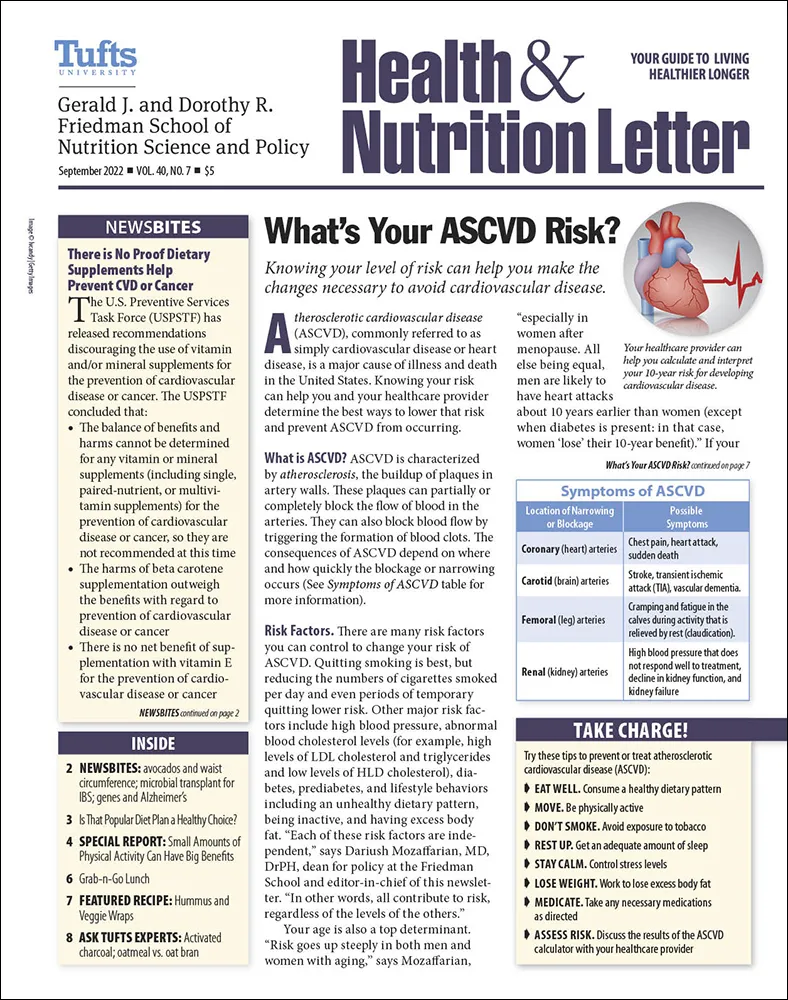
Some attention and planning may be necessary to ensure popular diet plans provide enough of all the nutrients you need.
SPECIAL REPORT: Small Amounts of Physical Activity Can Have Big Benefits
Grab-n-Go Lunch
FEATURED RECIPE: Hummus and Veggie Wraps
ASK TUFTS EXPERTS: Activated charcoal; oatmeal vs. oat bran
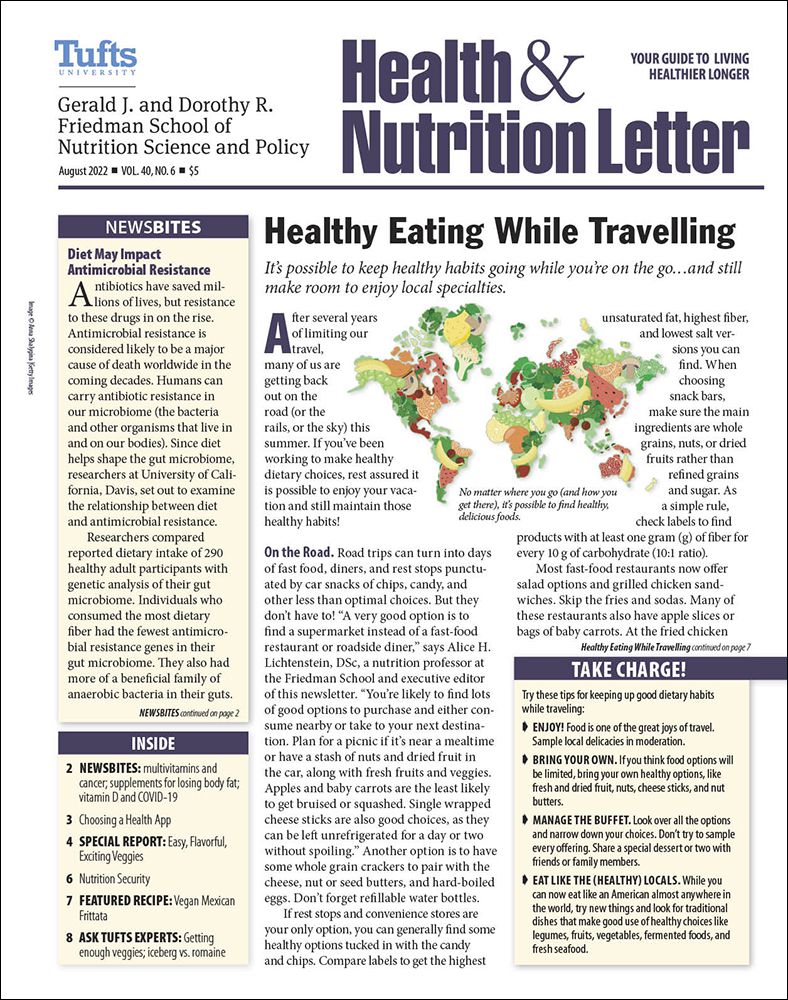
The research is clear: eating more whole or minimally processed plants is better for our health. Knowing how to easily make foods like vegetables taste great can help you consume more of these health-promoting options in place of less healthful choices. Building Flavor. Most U.S. adults don’t meet the recommended intake of vegetables. When
The burgeoning field of “nutrigenomics” claims that the food we eat can alter our genetics. Dietitians, scientists and lifestyle companies have all hopped on the bandwagon.
Nutrigenomics (also known as nutritional genomics) is broadly defined as the relationship between nutrients, diet, and gene expression. The launch of the Human Genome Project in the 1990s and the subsequent mapping of human DNA sequencing ushered in the ‘era of big science’, jump-starting the field of nutrigenomics that we know today.





 Doctors Without Waiting Rooms