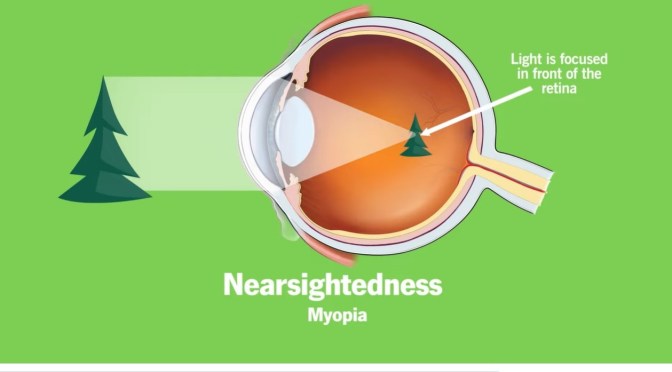
Cleveland Clinic – Nearly 1 out of 3 people have a vision disorder called myopia, or nearsightedness, which makes it difficult to view things in the distance. How does it happen? And is there a cure?
Chapters: 0:00 Intro 0:32 What causes nearsightedness? 1:01 Why can’t you see far? 1:20 When does nearsightedness usually begin? 1:42 What are symptoms of nearsightedness? 1:59 Can nearsightedness be corrected? 2:23 Is there a cure for nearsightedness?
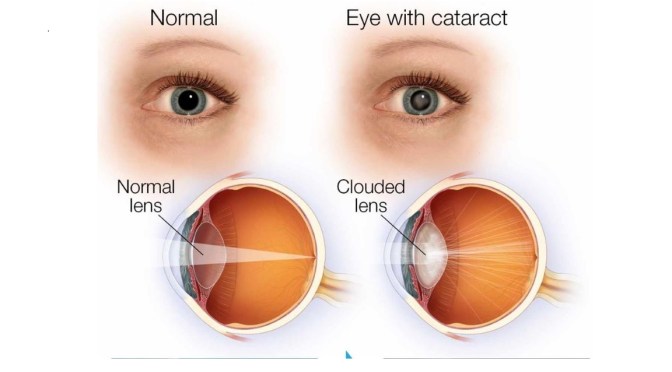
Cataracts in the eye lens are a later-in-life reality that leads to vision problems for many people. This video shares describes what cataracts are, how they form, and warning signs to help you detect them early.
Chapters: 0:00 Intro 0:10 What are cataracts? 0:43 What are the warning signs of cataracts? 2:44 How are cataracts diagnosed? 3:04 Talk to your eye doctor
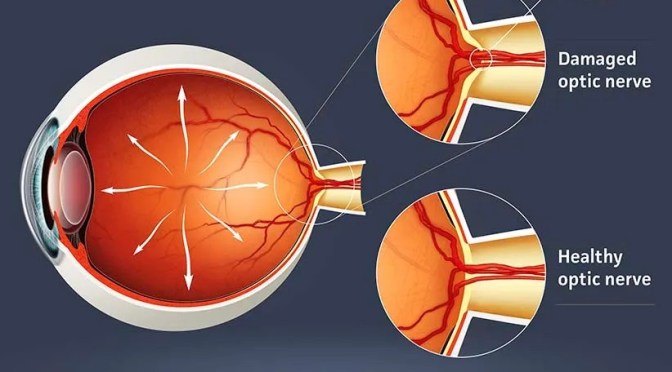
Often described as the silent thief of sight, glaucoma is the most common cause of irreversible blindness in the world. High pressure in the eye damages the optic nerve, first stealing peripheral vision (what you see at the corners of your eyes) and later harming central vision (what you see when looking straight ahead). Usually, people notice no symptoms until vision loss occurs.
Lowering high eye pressure is the only known treatment to prevent or interrupt glaucoma. But does everyone with higher-than-normal eye pressure need to be treated? A major long-term study provides some clues, though not yet a complete answer.
Does everyone with high eye pressure develop glaucoma?
In the US, glaucoma affects an estimated three million people, half of whom do not know that they have it. An ophthalmologist can perform a comprehensive eye exam to determine if someone has glaucoma, or is at risk for developing it in the future due to high eye pressure (ocular hypertension). Research from the long-running Ocular Hypertension Treatment Study (OHTS) shows that some people with high eye pressure may never develop glaucoma, while others will.
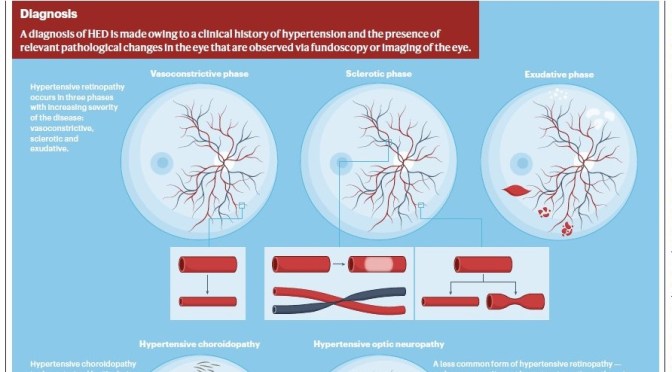
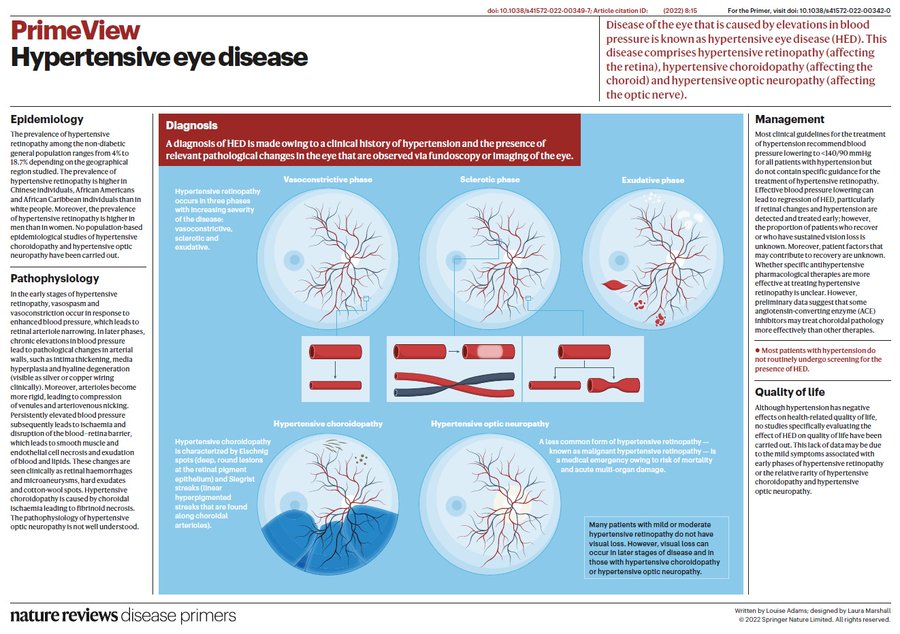
Hypertensive eye disease is diagnosed on the basis of a clinical history of #Hypertension and the presence of relevant pathological changes in the eye that are observed via fundoscopy or imaging. https://go.nature.com/3t0PahO
Commentary:
Control of hypertension is one of the triumphs of modern medicine, and there are many effective medications. One of the main problems that I hear about has to do with taking too much of the medication, and having dizziness, especially on standing, which could cause a fall and injuries.
Abnormalities of the eye with hypertension are common. the doctor can look directly at the bare blood vessels as they course along the back of the eye. A hypertensive artery passing over a vein in the eye compresses it, producing a “nick” that doctors look for. other findings are shown in the info graphic.
These findings help doctors make a diagnosis, but only the rare complications of hypertensive optic atrophy and Choroidopathy actually endanger the vision.
The main organ that seems to suffer the most from hypertension is the heart, which has to work against a heavy load to pump the blood effectively at high pressure. This thickens the walls of the heart, especially the left side, making it less effective. Enlargement of the heart, heart attacks, and heart failure are not uncommon.
The brain is at risk with hypertensive arterial disease, and strokes can be a problem.
Kidney failure is also a real worry.
When you see your doctor for a blood pressure reading, make sure to take off coats and long sleeves. so that the bare arm can be tested. The left arm In right-handed people is preferable, because it has less musculature to shield the artery from compression by the blood pressure cuff.
Be sure you take your medication, if prescribed. The main emergency room visits occasioned by high blood pressure, such as 180/110, is when the patient skips the medication.
— Nature Reviews Disease Primers (@DiseasePrimers) July 6, 2022
An eye disease that causes vision loss.
Macular degeneration causes loss in the center of the field of vision. In dry macular degeneration, the center of the retina deteriorates. With wet macular degeneration, leaky blood vessels grow under the retina.
Blurred vision is a key symptom.
A special combination of vitamins and minerals (AREDS formula) may reduce disease progression. Surgery may also be an option.
While not as routine as cataract surgery, corneal transplants are becoming more common. A number of things can go wrong with the cornea, especially as people get older, and a transplant can restore vision. https://t.co/bv0gr341M6#HarvardHealth
At one time, replacement parts for the eyes must have seemed unimaginable. Nowadays, if the inner lens of the eye becomes clouded by a cataract, a routine surgery to swap it out with a new artificial lens restores vision.
But what happens if the outer lens of the eye (the cornea) becomes damaged or diseased? You can have that replaced, too. “It’s not as common as cataract surgery, but many people get corneal diseases after age 50 and may need a corneal transplant,” says Dr. Nandini Venkateswaran, a corneal and cataract surgeon at Harvard-affiliated Massachusetts Eye and Ear.
More than 49,000 corneal transplants occurred in 2021 in the US, according to the Eye Bank Association of America.
What is the cornea?
The cornea is a dome of clear tissue at the front of each eye, covering the iris and pupil, that acts as a windshield that protects the delicate eye apparatus behind it, and focuses light onto the retina, which sends signals that the brain turns into images (your vision).
You need this combo of windshield and camera lens to focus and see clearly. But many things can go wrong within the five layers of tissue that make up the cornea. That can make it hard to see and rob you of the ability to read, drive, work, and get through other activities in your day.
How does damage to the cornea occur?
It may stem from a number of causes:
Injuries, such as a fall. “Falls are a big reason for people to come in with acute eye trauma. The cornea can be damaged easily if something pokes it,” Dr. Venkateswaran says.
Previous eye surgeries. “Especially for adults who’ve had several eye surgeries — such as cataract and glaucoma surgeries — the inner layers of the cornea can become damaged and weakened with age,” she adds.
Illness. Problems like severe corneal infections, or genetic conditions such as Fuchs’ endothelial dystrophy, can cause vision loss.
What are the options for treating corneal damage?
Cornea treatment depends on the type of problem you have and the extent of the damage. “It’s a stepwise approach. Sometimes wearing a specialty contact lens or using medications can decrease swelling or scarring in the cornea,” Dr. Venkateswaran says.
England’s health service handles 10m clinic appointments for eyes every year. Artificial intelligence could help speed up and improve diagnoses for patients. Film supported by @Maersk.
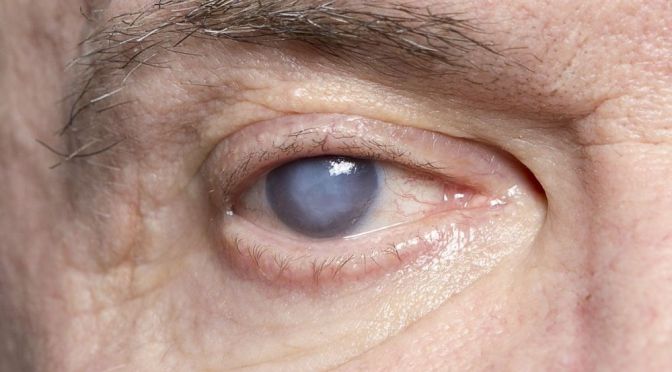
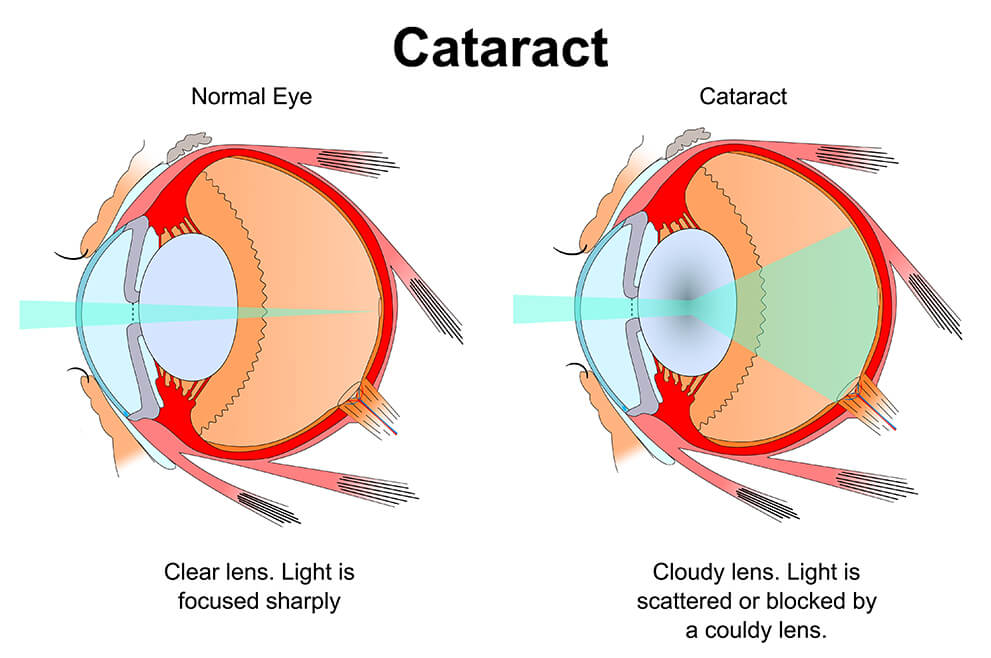
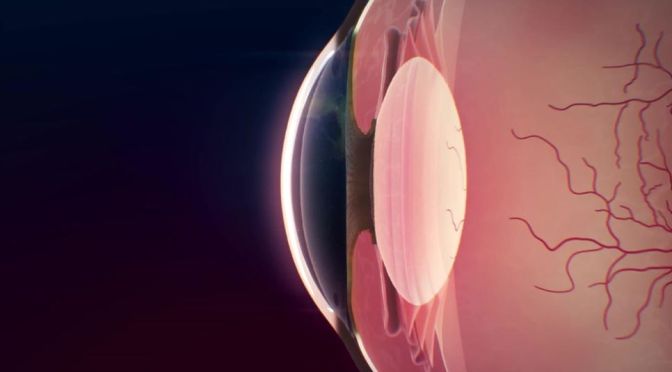
Cataracts involve the lens of the eye which is located just back of the cornea.
The lens is composed of evenly aligned collagen fibers which are progressively damaged by ultraviolet light as we age. Cataracts cause clouding of the lens and reduce visual acuity, as well as causing a stiffening and rigidity of the lens which keeps it from changing shape for close-up activities like reading.
If you live long enough, cataracts are almost inevitable and the main decision is when to get them corrected. With intraocular lenses, the operation has few downsides.
The halo around oncoming headlights disturbed my night driving, and was a major reason for me to get my cataracts removed.
I used to require glasses all the time, and took them off to read. Now I wear no glasses, and even reading is possible without glasses, since one of my eyes has a -1.5 diopter cylindrical astigmatism. You can ask for one Intraocular lens to be slightly nearsighted, if you wish to avoid needing reading glasses.
I prefer to use my corrective glasses to read, however.
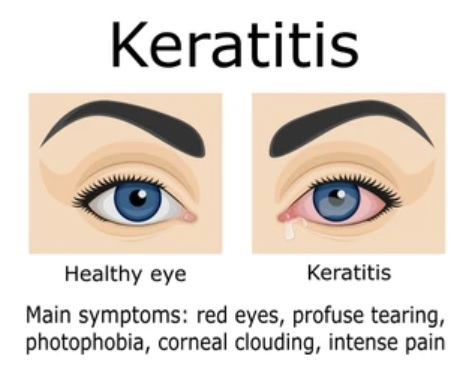
Herpetic Keratitis is a viral infection of the transparent, frontmost part of the eye, the cornea.
Herpes 1 or 2 when rubbed into the eye from a cold sore, or contacted from somebody else with herpes, will often affect the cornea. The use of corticosteroid eyedrops or ointment will allow the disease to spread faster.
The symptoms are pain and redness of the eye and are a medical emergency, needing prompt treatment by your doctor to prevent scarring and blindness.
Antiviral eyedrops, such as valacyclovir, are used to treat ophthalmic herpes.
A related condition is ophthalmic zoster, caused by the varicella zoster virus. The VZ virus will produce chickenpox in unimmunized people, go into dormancy in the nervous system, and then resurface, if immunity wanes, as shingles. If the shingles occurs in the ophthalmic division of the trigeminal nerve, affecting the skin near the eye, the cornea will often be involved. Ophthalmic zoster is also treated by antiviral eyedrops.
The varicella zoster virus is closely related to the herpes simplex virus, and is a member of the same nasty family of viruses.
This eye condition usually won’t threaten your vision or require treatment. But it can sometimes signal a more serious, sight-threatening problem. So it’s best to be checked by an ophthalmologist (a specialist who treats eyes) right away.
How can you tell that your vitreous may have detached? By a sudden increase in floaters — those small, typically harmless shapes that drift across your field of vision as you move your eyes.
“Vitreous detachments are pretty common,” says professor of ophthalmology at Cleveland Clinic Lerner College of Medicine Rishi P. Singh, MD. “When you see these new floaters, it’s best to have them evaluated and, specifically, to have a dilated eye examination performed by an ophthalmologist.”
Empowering Patients Through Education And Telemedicine



 Doctors Without Waiting Rooms