
Tag Archives: Diet & Nutritition
Diet News: Tufts Health & Nutrition Letter (Mar ’22)
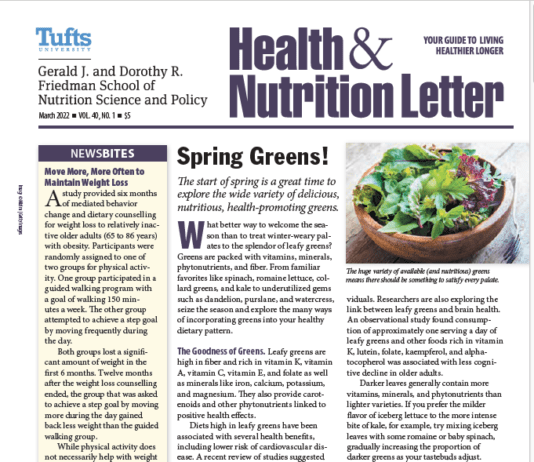
| This month, read about: |
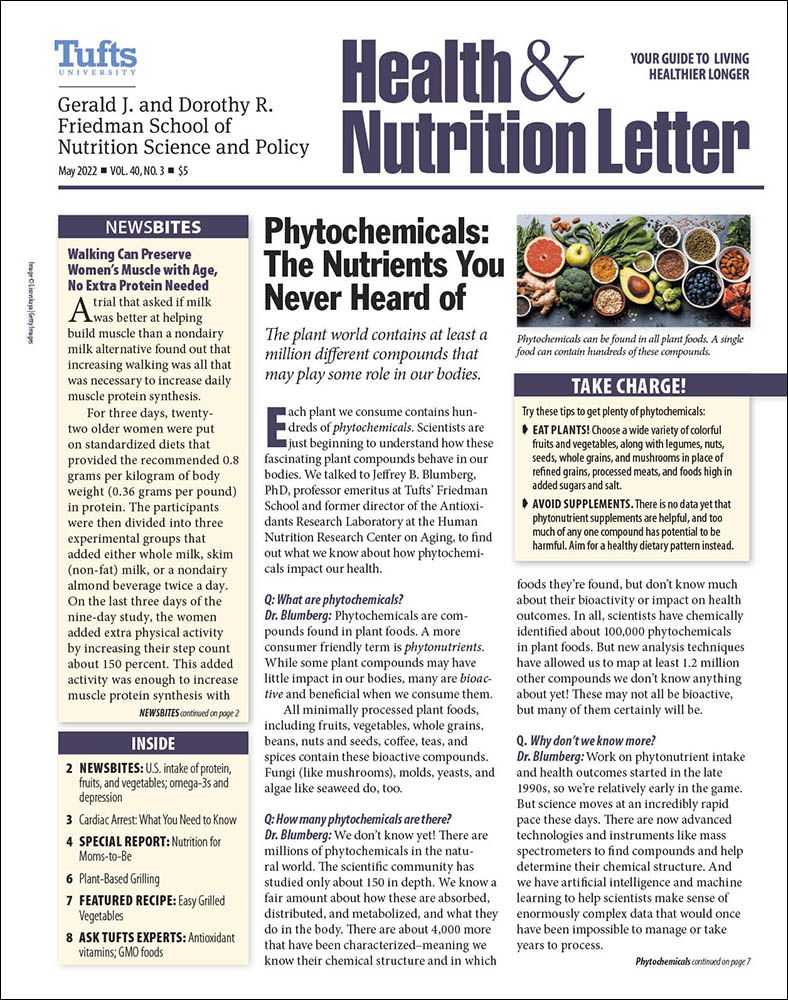
| Spring Greens!NEWSBITES: Vitamin B12 and depression; vegetables for bone healthChrononutritionYour Amazing Digestive SystemDiet and Your ThyroidAsk Tufts Experts: Nutrition Label Nutrients … Diet and Diverticulitis |
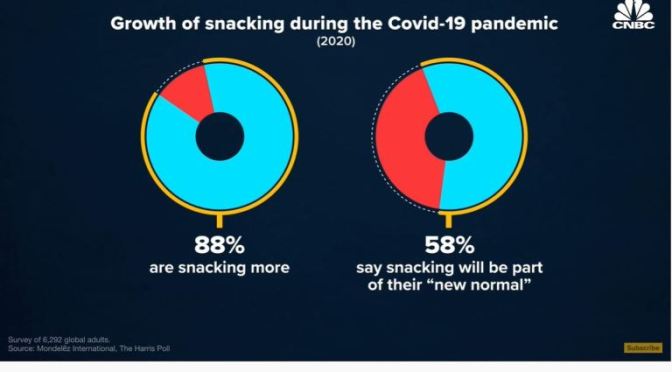
AMERICAN DIET: THE COVID SURGE IN SNACKING (VIDEO)
With Americans stuck at home, snack food has become a valuable commodity for the pandemic stressed consumer. North American sales of savory snacks like chips, popcorn, and pretzels climbed to $56.9 billion in 2020. In stressful times, people turn to snacking for comfort and Covid-19 has transformed kitchens across the U.S. into giant vending machines. So, has Covid-19 put an end to the shift to healthier snacks?
DR. C’S COMMENTS:
Snacking with its concomitant weight gain has increased with Covid. Of course Snacking didn’t originate with Covid, and it has long been common in Overweight people. Snacks are engineered to taste terrific, which means containing a lot of fat, sugar, and salt, easily be over done. Good nutrition is an afterthought to snack companies.
The Small volume of snacks, eaten frequently, Does not cause the satiation that comes with regular meals.
In my opinion, one of the major mechanisms by which TIME RESTRICTED EATING causes weight loss is by its prohibition of snacks. In the narrow window of time that you’re allowed to eat, you are hungry and eat regular food which tends to be of higher quality. Your stomach is full. You feel full and are not tempted to snack. Sugary drinks and snacks are bad for health.
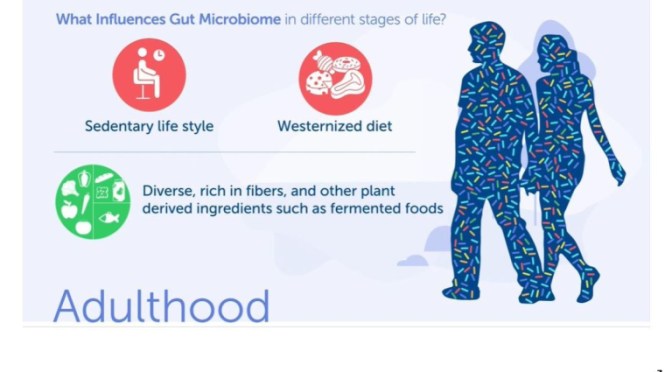
HEALTH: ‘WHAT INFLUENCES GUT MICROBIOME’ (VIDEO)
The microbiota is a dynamic community that evolves through the lifetime of an individual, being influenced by multiple factors. Nutrition is essential in the process of establishing a healthy gut microbiome, with a key role of breastfeeding in early months, and important role of diverse diet to stimulate maturation of diverse gut microbiome.
Prebiotics, probiotics and synbiotics are key tools to boost the development of an age-appropriate microbiota and its related benefits, like healthy immune development and a basis for a resilient microbiota throughout life.
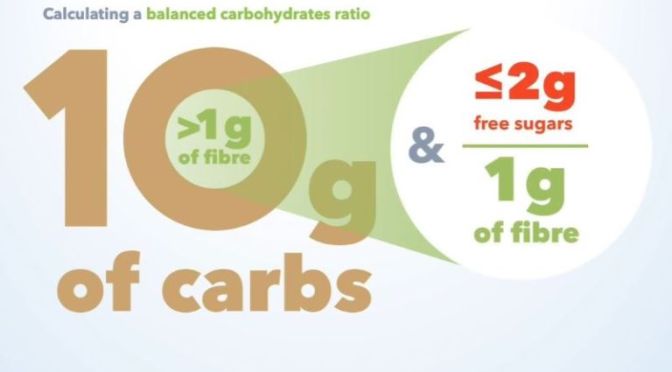
HEALTHY DIETS: BALANCED CARBOHYDRATE RATIO – LOW FREE SUGARS + HIGH FIBER
Are all carbohydrates equally important to you? Considering carbohydrate quantity but also quality has a crucial importance for a healthy and balanced nutrition. Balanced Carbohydrate Ratio has been developed and scientifically proven in order to identify products and diets with the most optimal carbohydrate content.
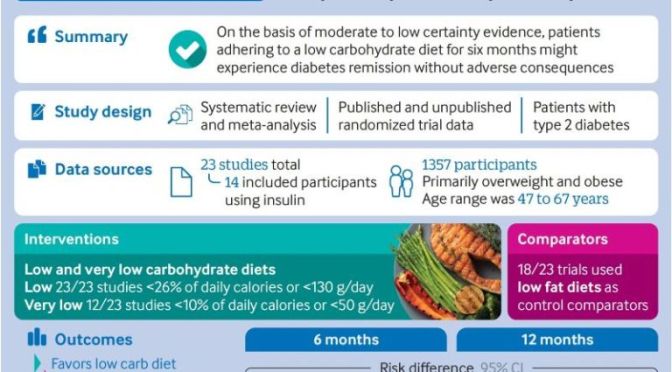
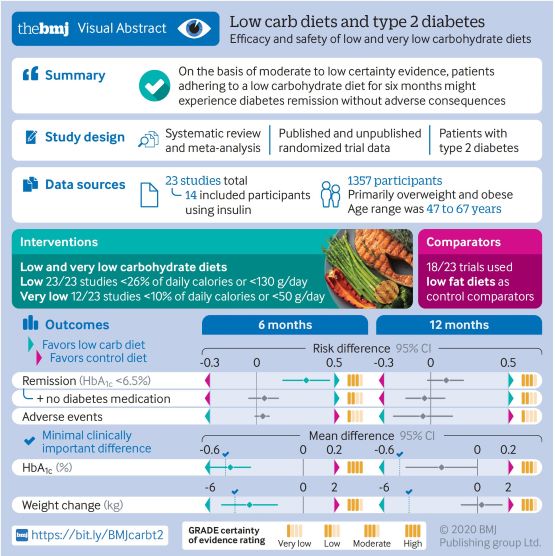
HEALTH STUDY: ‘LOW CARB DIETS’ – TYPE 2 DIABETES REMISSION IN 6 MONTHS
HEALTH: ‘TOP FIVE DIETS’ RANKED – “KEEP IT SIMPLE”

Every year, as millions of people around the world forge new resolutions to eat healthier and lose weight, US News & World Report releases a conveniently timed ranking of the best diets. A panel of experts in obesity, nutrition, diabetes, heart disease, and food psychology rigorously rate each of 39 diets on seven criteria:
- Likelihood of losing significant weight in the first 12 months
- Likelihood of losing significant weight over two years or more
- Effectiveness for preventing diabetes (or as a maintenance diet)
- Effectiveness for preventing heart disease (or for reducing risk for heart patients)
- How easy it is to follow
- Nutritional completeness
- Health risks (like malnourishment, too-rapid weight loss, or specific nutrient deficiencies)
1. Mediterranean diet
Emphasis on fruits, veggies, whole grains, olive oil, beans, nuts, legumes, fish and other seafood. Eggs, cheese, and yogurt can be eaten in moderation. Keep red meats and sugar as treats.
2. DASH (dietary approaches to stop hypertension) diet — TIE
Eat lots of fruits, veggies, lean protein, whole grains, and low-fat dairy. Avoid saturated fats and sugar.
2. Flexitarian diet — TIE
Be a vegetarian most of the time. Swap in beans, peas, or eggs for meats, and consume plenty of fruits, veggies, and whole grains. You can look up more details because there’s actually a full meal plan involving breakfast, lunch, dinner, and two snacks to add up to a total 1500 calories per day. But feel free to also just swap in flexitarian meals ad hoc.
4. Weight Watchers
The first actual paid program on the list, WW uses a points system to guide dieters towards foods lower in sugar, saturated fat, and overall calories while consuming slightly more protein. There are a variety of paid WW plans, with the lowest being about $20 per month.
5. Mayo Clinic diet — TIE
A two-part system, with part one (‘Lose it!’) involving adding a healthy breakfast (i.e. fruits, veggies, whole grains, healthy fats) plus 30 minutes of exercise per day. You’re not allowed to eat while watching TV or consume sugar except what’s naturally found in fruit. Meat is only allowed in limited quantities, as is full-fat dairy. The second phase (‘Live it!’) is basically the first phase but with more flexibility. You aren’t realistically going to cut out sugar forever, and the Mayo Clinic diet acknowledges that. So the long term plan involves lots of whole grains, fruits, veggies, and healthy fats. Less saturated fats and sugar.
METABOLOMICS: NEW DIET STUDIES ARE IMPROVED WITH CELL METABOLISM DATA – “BLOOD & URINE DON’T LIE”

THE DOCTORS 101 CHRONIC SYMPTOMS & CONDITIONS #15: VISCERAL (BELLY) FAT
ABDOMINAL (VISCERAL) FAT KILLS. The following post tells you how, and suggests what you might do to prevent this scourge, which is gradually becoming an epidemic in America.
OBESITY is an energy imbalance problem. MORE CALORIES ARE CONSUMED THAN ARE NEEDED AND CAN BE UTILIZED. A Good quality Diet, with lots of natural (rather than processed) foods, especially vegetables and fruits, have lots of FIBER that takes up space and makes you feel full.
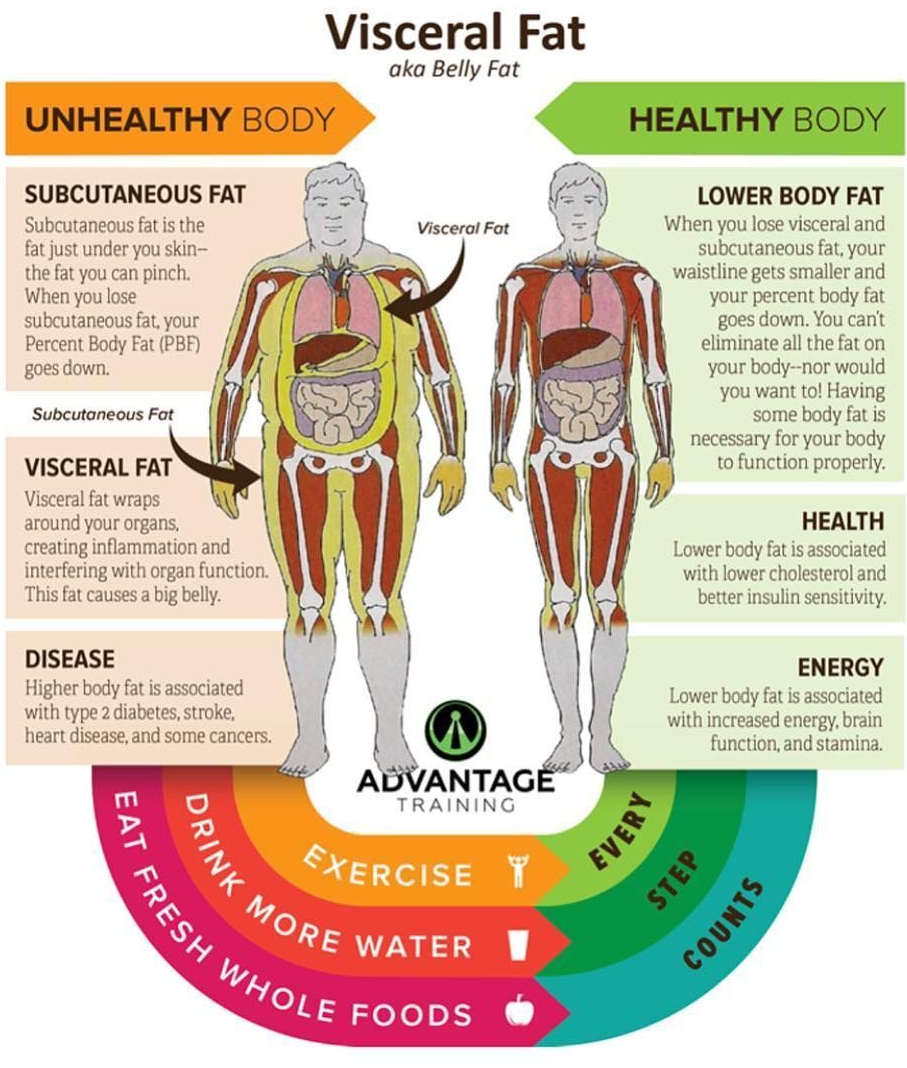
Fiber also feeds the MICROBIOME. If the foods are DIVERSE, the microbiome will also be diverse and help utilize the calories you eat. A healthy Microbiome also contributes to your health by manufacturing neurotransmitters, vitamins, and other factors that are just starting to be appreciated. Diet QUALITY, as well as quantity, is important.
EXERCISE is critical for more than utilizing calories. It increases ADIPONECTIN which guides fat to fat stores where they belong, rather than to the liver, and IRISIN which favors the production of BROWN FAT, thus utilizing energy. The opposite of exercise, the SEDENTARY LIFESTYLE, is now considered a disease system in itself.
Lack of SLEEP favors obesity in a number of ways; at the very least, you can’t eat while asleep. Abdominal fat contains INFLAMMATORY cells which go directly to the Liver via the hepatic portal system to cause metabolic disruption. Insulin sensitivity falls, blood sugar, LDL and triglycerides rise. DIABETES and the METABOLIC SYNDROME result.
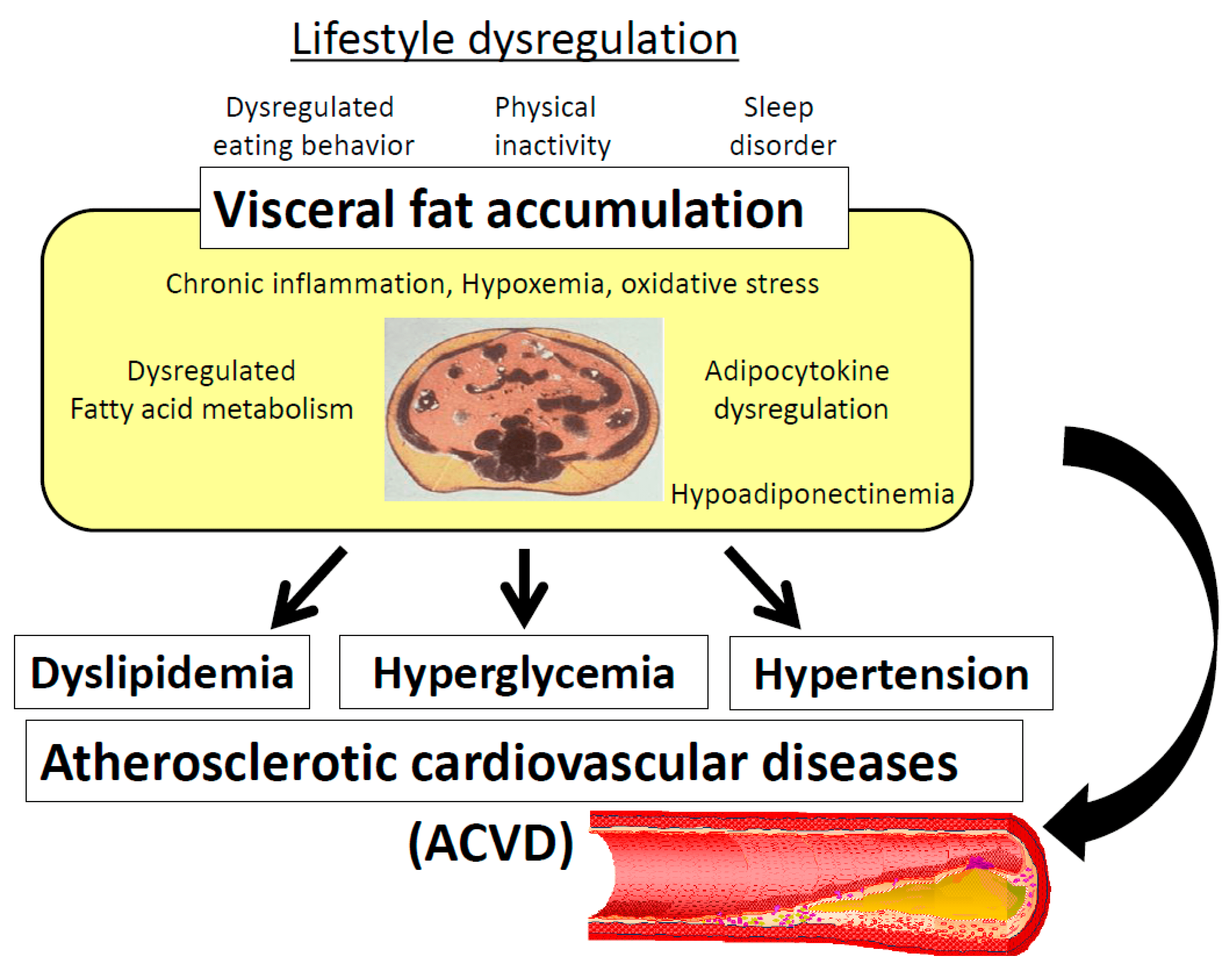
The excessive weight also causes back, hip and knee problems which contribute to the 10% increase in overall medical costs due to Obesity.
We have no photographs, abdominal, navel-level girth measurements, CTs, BMIs or death certificates to prove it, but it is highly unlikely that Paleolithic Humans suffered from excessive abdominal fat. They had no refrigerators, deliciously packaged snacks, sugary, fructose-containing soft drinks and candy, nor did they have cave-lighting to extend their daylight eating hours and disrupt their diurnal rhythm.
They had to walk or run long distances to obtain their meagre food supplies, which tired them out so that they most likely had a good night’s sleep. SLEEP, DIET and EXERCISE are built into our Metabolism by Darwinian Evolution. Paleolithic humans didn’t live long lives and succumb to cancer and heart disease.
They died most often by violence, which made Blood clotting a survival benefit, rather than the Risk factor for stroke and heart attacks that coagulation is to us now. It is not all our fault that OBESITY is steadily increasing over the last few decades.
CAPITALISM is driven to provide us with ever increasingly available and tasty food. Both consumers and purveyors scream when even the most logical political check on OVEREATING is legislated: Taxing of sugary, fructose-containing, nutritionless soft drinks was tried in Philadelphia to a chorus of complaints. To my knowledge the tax has survived, reduced sugary drink consumption, and was helpful in reducing the weight of Philadelphia residents. Not many cities were brave enough to follow suit.
GENETIC Influences can also conspire against weight control. The FTO gene, while relatively infrequent does have an influence, as shown in twin studies. And there seems to be a SET POINT in weight that makes it difficult to take off the pounds and keep them off. 2 years after almost all diets, the weight has returned. Eating HABITS, once established are hard to change.
BARIATRIC SURGERY has been shown to help Obesity, as well as Metabolic syndrome and Diabetes .I hope it will survive the test of time. Weight gain is easier to PREVENT than it is to treat. Somehow, society must get to the children, and keep them from gaining weight in the first place. Even children are now becoming obese.
INTERMITTENT FASTING can help contain Obesity. My own version is TIME-RESTRICTED EATING. I limit my eating to 6 hours a day, from Noon (usually 1PM) until 6PM. This has resulted in a modest weight loss from 142 pounds to 137 pounds. My son lost some 30 pounds in a 30 day, 1000 calorie “crash” diet to fend off advised Back Surgery. He exercised a lot of SELF CONTROL both to lose the weight, and to keep it off.
Unfortunately, Self Control is in short supply in our present SOCIETY OF EXCESS. Good luck in your quest, if you choose to embark on weight reduction. And good luck with your health if you don’t. I recommend “the secret life of fat” by Sylvia Tara in either case. Also, search for intermittent fasting in DWWR.
–Dr. C.
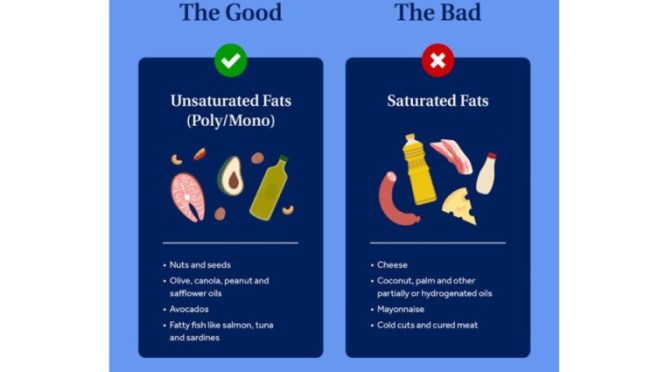
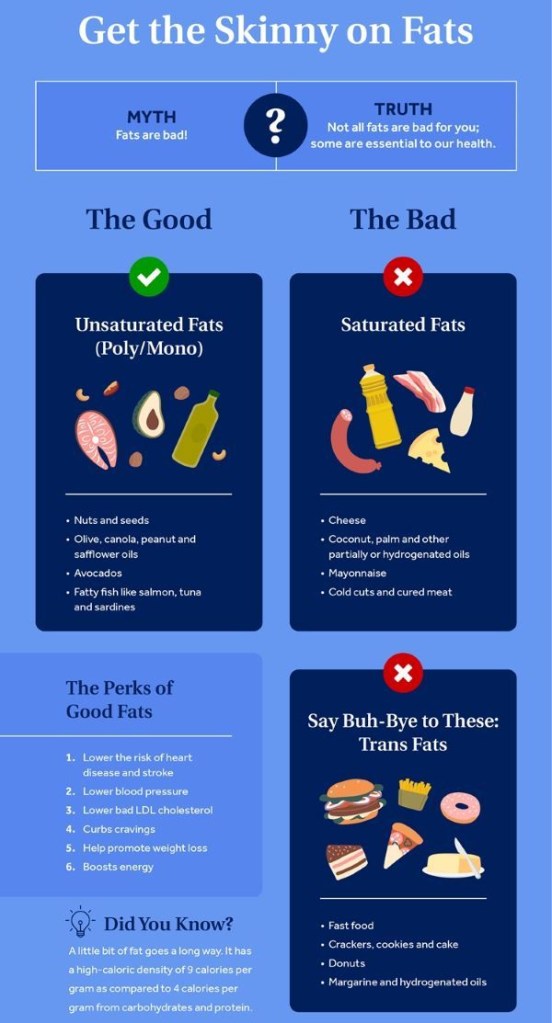
NUTRITION INFOGRAPHIC: “GOOD AND BAD FATS”

COMMENTARY:
Water, the miracle molecule, proteins and fats are the very essence of life. Water does not dissolve fat, allowing for the cell membranes, and the compartmentalization of metabolic activity that allows life to happen.
FAT IS ESSENTIAL TO LIFE. Alas, all fats are not equally beneficial to nutrition, as the article stresses. Trans-fats, partially hydrogenated fatty acids produced mainly by industry, are the worst, acting to stimulate cholesterol synthesis, produce inflammation and damage the endoplasmic reticulum.
Their use has been banned in most countries. Saturated fat has been widely condemned, is not as good as the mono- and polyunsaturated fats, but not as bad as trans-fats. Some of life’s most delicious foods, such as cheeses, contain saturated fats, but it is best to keep down their consumption.
Remember that the first bite of something savory tastes the best; prevent habit from shoveling it down. Unsaturated fats are found in oily fish, which should be part of your diet.
Vegetables such as nuts, seeds, olives, and avocados are sources of “good fat” and should comprise 10-15% of your calories. Fats, compared to carbohydrates, contribute almost twice as many calories to your diet on a weight basis, and it’s easy to get carried away.
Total calories must be kept under control. STAY HEALTHY!
 Doctors Without Waiting Rooms