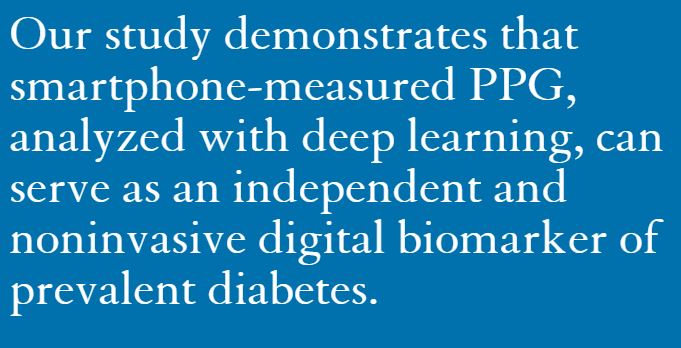
Overall, the algorithm correctly identified the presence of diabetes in up to 81 percent of patients in two separate datasets. When the algorithm was tested in an additional dataset of patients enrolled from in-person clinics, it correctly identified 82 percent of patients with diabetes.
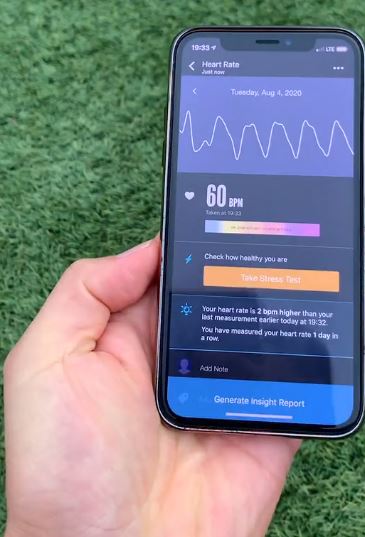
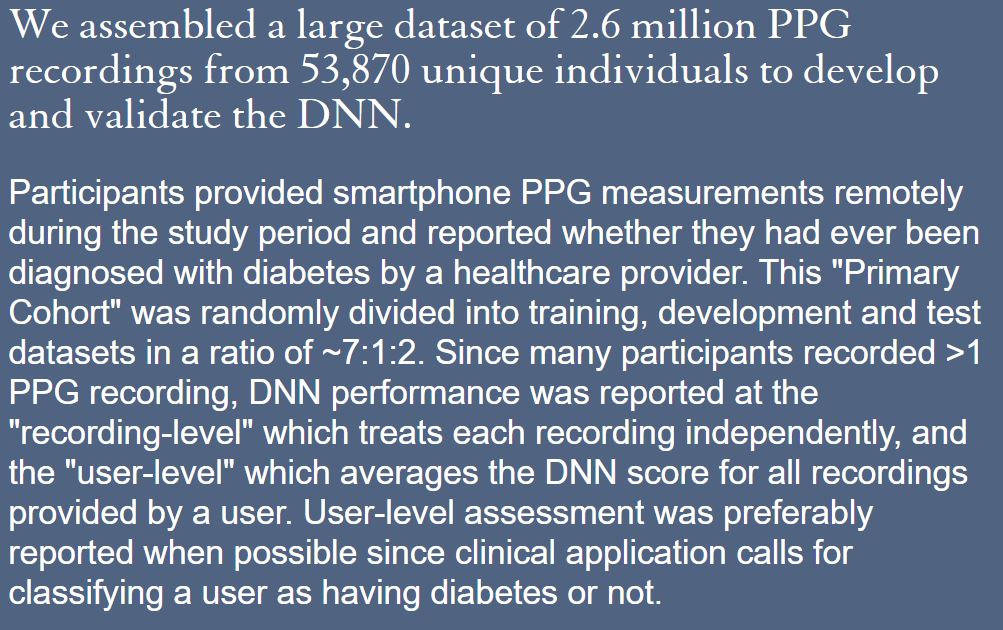
In the Nature Medicine study, UCSF researchers obtained nearly 3 million PPG recordings from 53,870 patients in the Health eHeart Study who used the Azumio Instant Heart Rate app on the iPhone and reported having been diagnosed with diabetes by a health care provider. This data was used to both develop and validate a deep-learning algorithm to detect the presence of diabetes using smartphone-measured PPG signals.
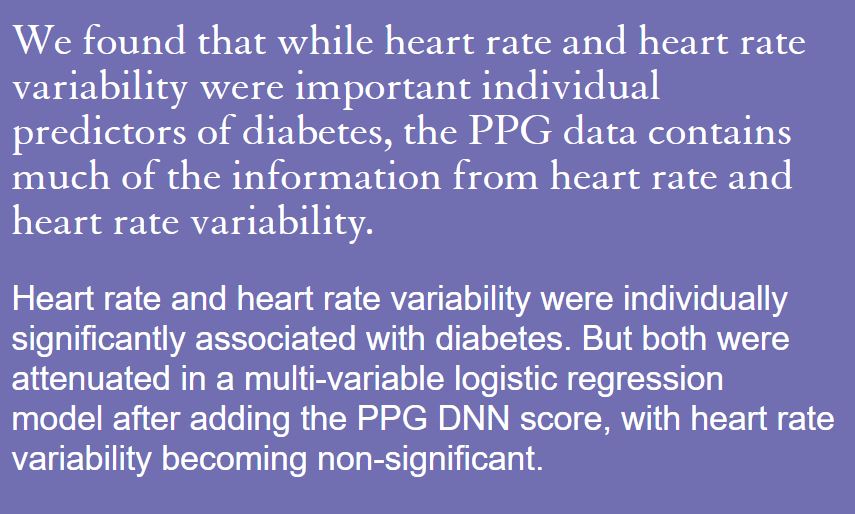
Among the patients that the algorithm predicted did not have diabetes, 92 to 97 percent indeed did not have the disease across the validation datasets. When this PPG-derived prediction was combined with other easily obtainable patient information, such as age, gender, body mass index and race/ethnicity, predictive performance improved further.
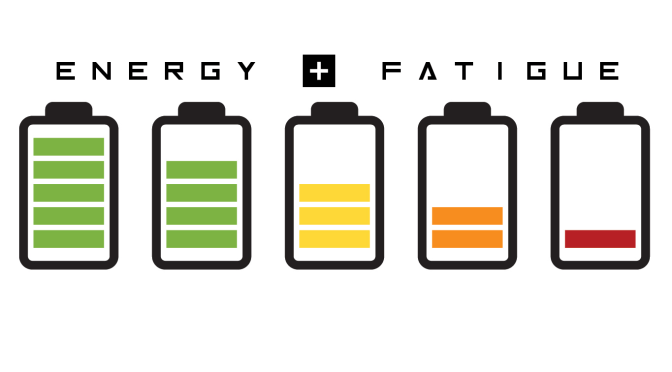
Sometimes I wake up in the morning with a feeling of RELAXED ENERGY. My mind is clear, I have no fatigue, and believe once more that the world is wonderful, and it’s great to be alive.
I St-re-tch, exercise my hands (I have Osteoarthritis, and they are stiff), take out my Nite guard ( I grind my teeth at night and would otherwise wear them away), take my beta blocker eye drops ( to lower my intraocular pressure) and wash down my Eliquis ( an anticoagulant to prevent stroke from my Atrial Fibrillation) with 16 oz. of water, while thinking about all of the delights awaiting me.
Yes, my body was in better shape 60 years ago; but I had much more responsibility then, and much less discretionary time. All things considered, I like to believe that I am happier now.
The KEY is to stay in GOOD HEALTH. GOOD SLEEP is critical, but it cannot be had by willpower alone. As I have discussed previously, you need a bedtime routine, good SLEEP HYGIENE.
You also need a…….. GOOD DIET. with lots of fruits, vegetables and whole grains. Fatty, spicy foods will stay in your stomach and bother you at night, particularly if you eat Late. I like to finish eating by 5 PM. Late dinner is also likely to produce GERD, and maybe Sleep Apnea.
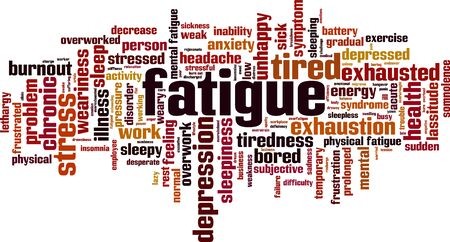
GOOD EXERCISE is also critical. If you are not tired at the end of the day, it is hard to get good sleep. I always seem to sleep better on the day when I walk the hills for an hour, which is 3 days a week. Try not to exercise within 2 hours of bedtime. Assuming that you have a good base of SLEEP, DIET and EXERCISE, there are other mechanisms that can foul things up. INFLAMMATORY conditions often cause fatigue.
The most common inflammatory diseases are OBESITY, METABOLIC SYNDROME and DIABETES. OBESITY is the defining disease of our EXCESSIVE SOCIETY, where there is too much of everything, and excessive consumption is relentlessly advertised everywhere.
External correction is probably a pipe dream, since there is no will even to Tax Sugar-containing Beverages, the “low hanging fruit” of dietary excess. Internal correction is all that is left, and that takes WILL POWER, also in short supply.
INFECTIOUS DISEASES are a subset of inflammatory conditions. COVID 19 is the poster child of infection, and FATIGUE is one of the hallmarks of the disease. Interleukins, like TNF-alpha, IL-1, andIL-6 are some of the defense factors which cause the fatigue. AUTOIMMUNE Diseases like Rheumatoid Arthritis and Lupus are also associated with fatigue-producing interleukins.
Fatigue even has its own flagship disease, CHRONIC FATIGUE SYNDROME. Chronic viral disease has been suspected as the cause of this condition, and inflammatory cytokines may be elevated. This condition, and the similar GULF WAR SYNDROME are still poorly understood. Several CFS patients were sent to me when I was in practice, and I had some success in getting them to exercise regularly, which seemed to help. CANCER is another category of diseases where Fatigue is prominent.
Inflammation plays a role in these diseases, which also drain energy substrates from the Patients body; Cancer cells have a high metabolic requirement. MEDICATIONS, Cancer meds especially, but a variety of other Drugs are associated with FATIGUE. I went through MY MEDICATION LIST. Lo and behold, 3 of them are associated with fatigue.
Finasteride is a relic of my prostate operation, recommended to keep it from growing back. It causes fatigue, probably because of its ANTITESTOSTERONE effect. At least I can still pee, and am not bald. I take METFORMIN because of its fame in prolonging life. Its mechanism is that of interacting with the Sirtuin system, and increasing the inefficiency of mitochondria. Isn’t this surprising?
Like many other things in physiology, you place a stress on the body, and the body responds by improving its performance. If you are fatigued, you exercise. Respecting the body works with drugs as well. If you are drinking a ton of coffee and stop it, after a few weeks you will feel less fatigued.
And when you ARE FATIGUED, you drink a LITTLE coffee, and it wakes you right up. Caffeine works by displacing ADENOSINE, which causes Fatigue as it increases through the morning, peaking at SIESTA (or tea) time,at about 2 PM. OMEPRAZOLE, which I take to prevent HEARTBURN, also is related to fatigue especially if it blocks MAGNESIUM for long enough. DEPRESSION overlaps with fatigue, as does SLEEPINESS, to increase the complexity of the situation.
Many chronic LUNG, KIDNEY and LIVER diseases are associated with fatigue as a secondary concern. STAY HEALTHY!
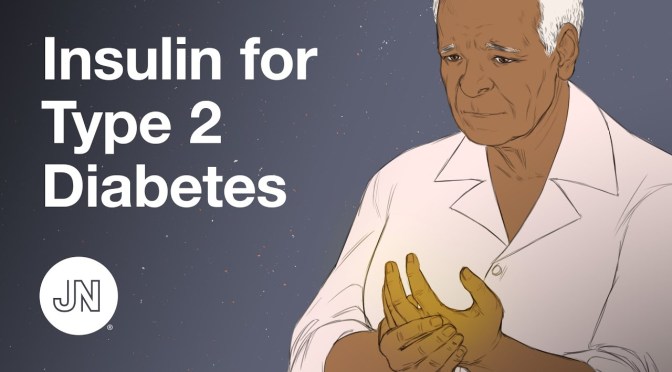
JAMA NETWORK (AUG 5, 2020): 2020 American Diabetes Association (ADA) guidelines recommend that after a trial of metformin, doctors add additional drugs based on the presence of cardiovascular and kidney-related comorbidities, risk of weight gain and hypoglycemia, and cost. In this video, Irl B. Hirsch, MD, of the University of Washington in Seattle, explains the rationale for starting insulin next for patients with persistent HbA1c elevation above 9-9.5% despite lifestyle changes and metformin.
“We are learning that tactics to avoid dementia begin early and continue throughout life, so it’s never too early or too late to take action,” says commission member and AAIC presenter Lon Schneider, MD, co-director of the USC Alzheimer Disease Research Center‘s clinical core and professor of psychiatry and the behavioral sciences and neurology at the Keck School of Medicine of USC.
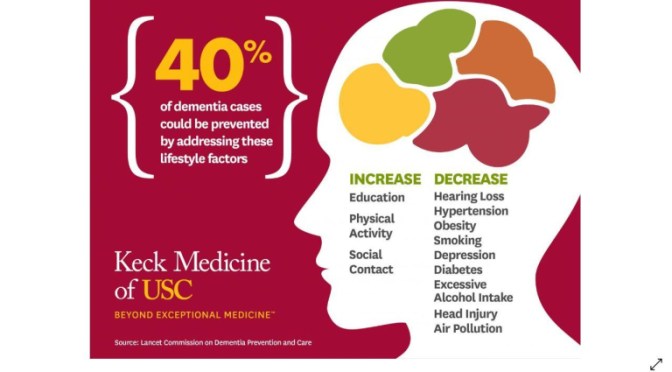
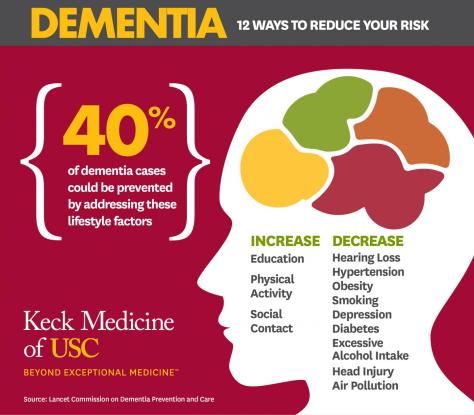
LOS ANGELES — Modifying 12 risk factors over a lifetime could delay or prevent 40% of dementia cases, according to an updated report by the Lancet Commission on dementia prevention, intervention and care presented at the Alzheimer’s Association International Conference (AAIC 2020).
Twenty-eight world-leading dementia experts added three new risk factors in the new report — excessive alcohol intake and head injury in mid-life and air pollution in later life. These are in addition to nine factors previously identified by the commission in 2017: less education early in life; mid-life hearing loss, hypertension and obesity; and smoking, depression, social isolation, physical inactivity and diabetes later in life (65 and up).
Schneider and commission members recommend that policymakers and individuals adopt the following interventions:
Aim to maintain systolic blood pressure of 130 mm Hg or less from the age of 40.
Encourage use of hearing aids for hearing loss and reduce hearing loss by protecting ears from high noise levels.
Reduce exposure to air pollution and second-hand tobacco smoke.
Prevent head injury (particularly by targeting high-risk occupations).
Limit alcohol intake to no more than 21 units per week (one unit of alcohol equals 10 ml or 8 g pure alcohol).
Stop smoking and support others to stop smoking.
Provide all children with primary and secondary education.
Lead an active life into mid-life and possibly later life.
Reduce obesity and the linked condition of diabetes.
Technology is finally innovating diabetes management. With the advancement in technologies like continuous glucose monitors, traditional insulin pumps are evolving into smarter devices that can automate insulin delivery.
Medtronic and Tandem Diabetes are the only two companies to offer hybrid closed loop systems. A community of diabetics are also hacking pumps to do the same thing. CNBC’s Erin Black just switched from the hacked system to Tandem’s Control-IQ and takes a look at how insulin pumps are getting smarter.
Forward Healthcare differs from a conventional primary care clinic in several, generally good ways.
Most importantly, they stress PREVENTATIVE care. Blood tests that monitor diabetes, metabolic syndrome, and anemia are done regularly, since they have a laboratory on premises. They have their own EMR (electronic medical record) platform, and their own telemedicine platform, which are downloaded on the initial visit.
They give out a “sensor kit” consisting of temperature monitor, Pulse-oximetry, and a BP monitor, which wirelessly sends information to medical records.
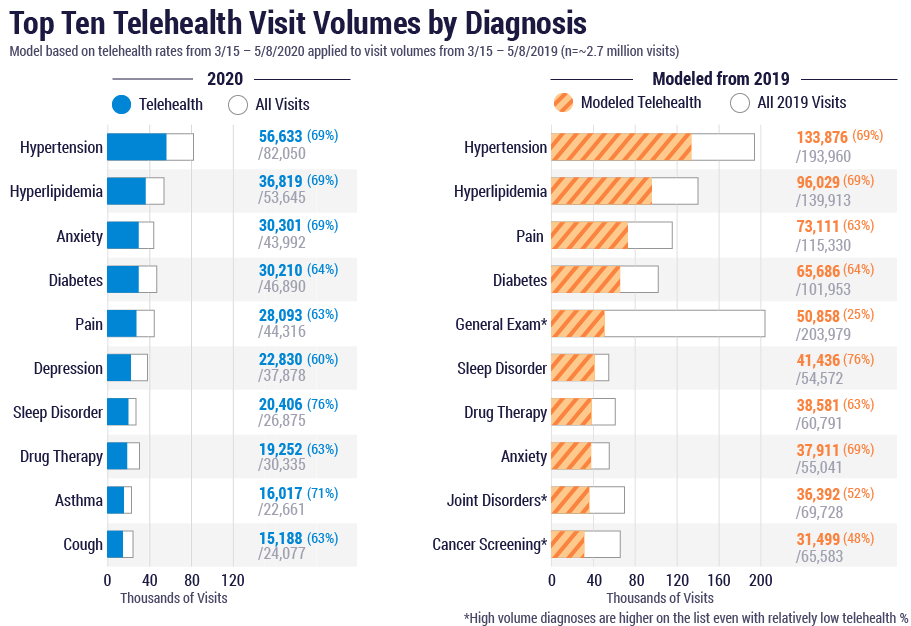
Telemedicine is available through their own Downloaded platform. Although I get the impression that Telehealth isn’t as central as I would have expected in a technology oriented operation, it is increasingly important.
The monthly membership fee of $149 pays for the above and unlimited Doctor Availability 24/7 without copay.
Concierge Medicine has the monthly/yearly fee and unlimited access, but has a copay. Both will utilize your insurance, and neither treats patients in the hospital or provides referral care.
Government Health care is coming, and with it longer waiting times, shorter Doctor interaction times, and probably less time for Preventative Health Care.
Systems like Forward Health and Concierge Medicine will be the upper tier of a 2-tier system.
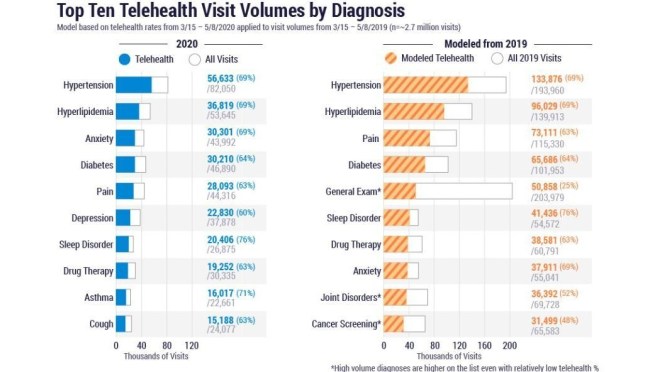
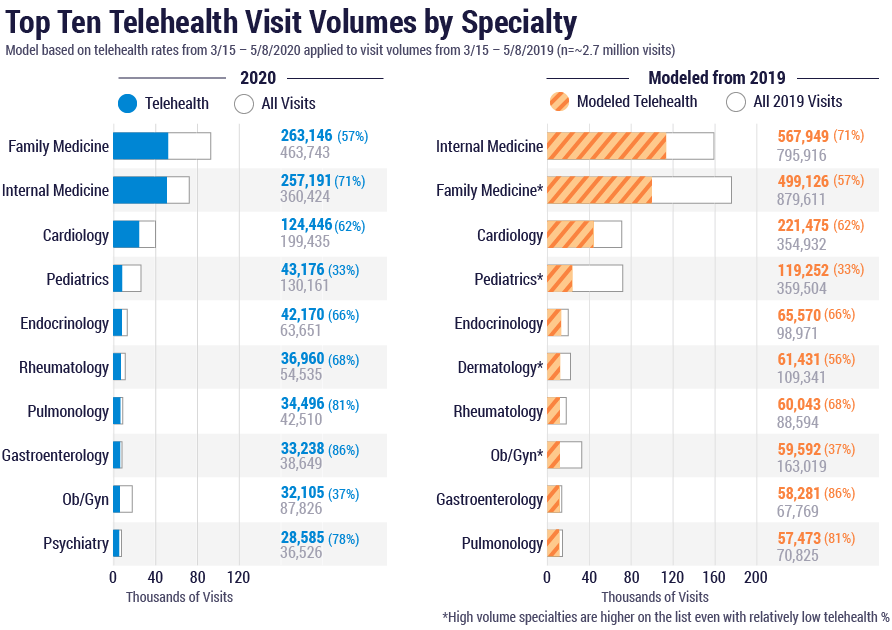
Proactive attention to Health in my opinion is essential in the future if we are to have a healthy nation, and not “bankrupt the system”. Telehealth is growing in importance, and offers help in making medical expertise more convenient, widely available and for less cost.
I am happy to see progressive Systems like Forward Health offer a preventative option to the present, broken, reverse-incentivized, fee-for-service System.
“On a high-sugar diet, we find that the fruit flies’ dopaminergic neurons are less active, because the high sugar intake decreases the intensity of the sweetness signal that comes from the mouth,” Dus said. “Animals use this feedback from dopamine to make predictions about how rewarding or filling a food will be. In the high-sugar diet flies, this process is broken—they get less dopamine neuron activation and so end up eating more than they need, which over time makes them gain weight.”
It is well known that consuming food and drink high in sugar is not great for us, but scientists are continuing to unravel the intricacies of how the sweet stuff drives negative health outcomes. The latest finding comes from researchers at the University of Michigan, who through studies in fruit flies have found that excess amounts of sugar can shut down crucial neural circuits linked to regulating satiety, possibly leading to overeating in humans.
A novel illustration of sugars’ lethality was the Georgia sugar refinery explosion in 2008, which killed 14 people. Finely ground sugar is flammable.
Sugar appeared early in civilization, but it was expensive, sparing all but the wealthy of its’ depredations, mainly tooth decay. Only with the post WWII expansion of wealth was it consumed excessively to produce the diseases of overeating. The developed world now consumes over 70 pounds of sugar per person, amounting to over 250 CALORIES PER DAY!
This article shows how SUGAR acts like a DRUG In its INTERFERENCE with the DOPAMINERGIC Reward system. The neurons send less signal, so you need MORE SUGAR to satisfy.
The metabolic systems through which overeating and sugar causes the OBESITY, DIABETES, VASCULAR DISEASE and Early DEMENTIA are convoluted.The best detailed explication is in the NEJM article in intermittent fasting, a healthful practice that is the polar opposite of overeating.
Two very important metabolic mechanisms are discussed, the mTOR system and the Sirtuin system. These systems are important for NUTRIENT SENSING and repair, and conserved in all animals. They worked just fine in our early ancestors.
It seems that primitive man was not blessed (or is it cursed) with easy overabundance or food, and actually spent hours or days in Hunger. When times were good, his body put on muscle, and stored fat against the hard times to come. This is called ANABOLISM. When times were bad, his body went into repair mode, and used the fat for energy. This is called CATABOLISM.
Anabolism has evolved expressly for Young Animals, where extra food is welcome for Growth. After the growing and Reproductive years, our Bodies’ evolutionary “warrant” expires, since the genes it carries have already been spread. Our older bodies are left to deal with machinery more suited to an earlier vibrancy. Our metabolism didn’t evolve to deal with the calories we shove into our aging Bodies. Many mechanisms beneficial in the young prove harmful later on. This divergence has been called “ antagonistic pleiotropy”.
Whatever the explanation, the observation remains: if adults eat more than they can use, they gain weight. With insufficient exercise, this weight is fat. With excessive fat, the joints, blood vessels, liver, heart and brain suffer, and lifespan is shortened.
RETHINK YOUR LIFESTYLE AS SOON AS POSSIBLE. AVOIDING SUGAR, and ALL THINGS CONTAINING SUGAR is as good a place as any to start. You will be rewarded by being able to fully taste and enjoy the natural sweetness of many REAL FOODS, and afforded a longer life to partake in this pleasure.
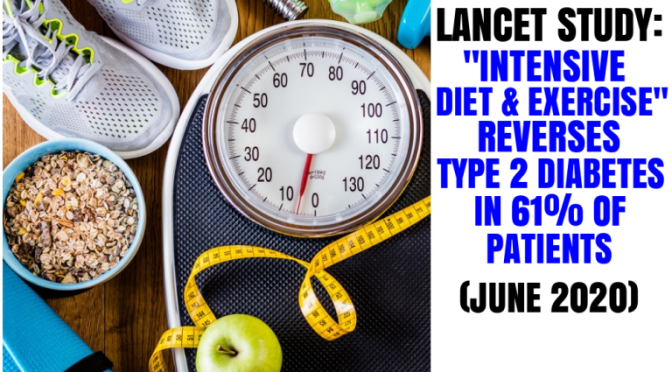
From The Lancet Diabetes & Endocrinology (June 2020):
Our findings show that the intensive lifestyle intervention led to significant weight loss at 12 months, and was associated with diabetes remission in over 60% of participants and normoglycaemia in over 30% of participants. The provision of this lifestyle intervention could allow a large proportion of young individuals with early diabetes to achieve improvements in key cardiometabolic outcomes, with potential long-term benefits for health and wellbeing.
Type 2 diabetes is affecting people at an increasingly younger age, particularly in the Middle East and in north Africa. We aimed to assess whether an intensive lifestyle intervention would lead to significant weight loss and improved glycaemia in young individuals with early diabetes..Between July 16, 2017, and Sept 30, 2018, we enrolled and randomly assigned 158 participants (n=79 in each group) to the study. 147 participants (70 in the intervention group and 77 in the control group) were included in the final intention-to-treat analysis population. Between baseline and 12 months, the mean bodyweight of participants in the intervention group reduced by 11·98 kg (95% CI 9·72 to 14·23) compared with 3·98 kg (2·78 to 5·18) in the control group (adjusted mean difference −6·08 kg [95% CI −8·37 to −3·79], p<0·0001). In the intervention group, 21% of participants achieved more than 15% weight loss between baseline and 12 months compared with 1% of participants in the control group (p<0·0001). Diabetes remission occurred in 61% of participants in the intervention group compared with 12% of those in the control group (odds ratio [OR] 12·03 [95% CI 5·17 to 28·03], p<0·0001). 33% of participants in the intervention group had normoglycaemia compared with 4% of participants in the control group (OR 12·07 [3·43 to 42·45], p<0·0001)
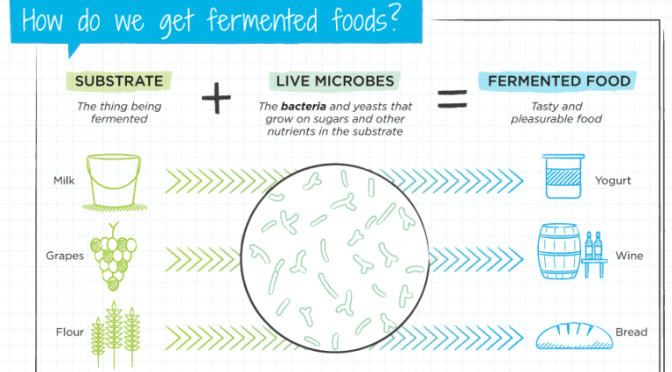
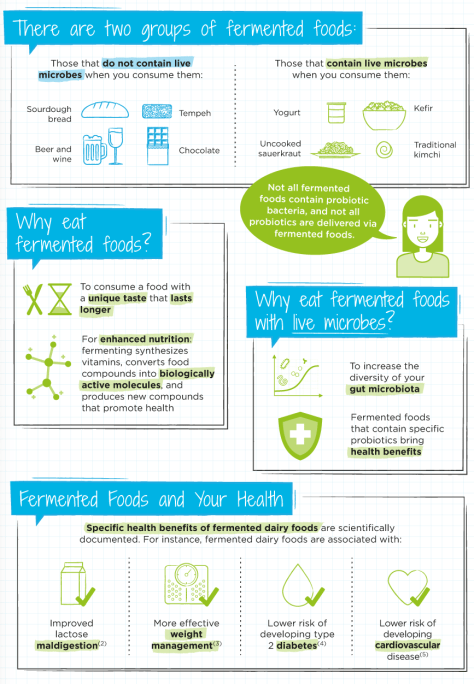
This article gave an interesting classification of fermented foods, pointing out that with some, like bread and wine, we eat the products of fermentation without the living organisms, while with others like kefir and yogurt, we eat the viable critters also.
Lactobacilli are called probiotics, and are supposed to have health benefits. It is not proven that they do, but at least the lactobacilli use up some of the sugar we would otherwise be eating, and taste good.
The problem with the claim that they diversify and benefit our microbiome, and crowd out the bad germs, is that they do not generally attach to our intestinal walls, and go right through with the rest of our food. They don’t stick around long enough to do any good.
My late wife had a bad infection with a bad actor called Clostridium difficile, which caused her to have a severe, bloody enterocolitis. After the second hospitalization with this affliction, an Infectious disease doctor suggested “culturelle”, which contained a patented Lactobacillus rhamnosus GG, which WAS supposedly proven to attach for a while. My wife took this, and never had another attack.
I still take this daily, “on faith”. Gullible me. Fecal transplants are now used effectively for C. Dif. enterocolitis. Avoiding unnecessary antibiotics, which wipe out your normal microbiome, your “good guy competition”, is An even better idea, but seems risky.
BOTTOM LINE: Kefir and yogurt are calorie depleted, and taste good. What is not to like?
–Dr. C
Empowering Patients Through Education And Telemedicine











 Doctors Without Waiting Rooms