Dr. C’s Journal: Care Of Hand Osteoarthritis

I started having hand pain about 20 years ago, and booked a visit with the rheumatologist in my medical building. He looked at my hands and immediately knew that I had osteoarthritis.
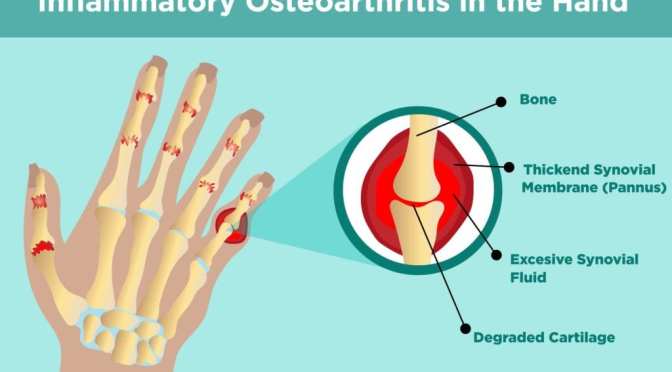
The thumb musculature (the thenar eminence) was angled with respect to the plane of the rest of my hand and wasn’t flat like normal. Some of my joints were slightly swollen and even warm to the touch, and many of my fingers were beginning to get crooked.

He ordered a rheumatoid panel, uric acid and inflammatory markers. The normal results confirmed his diagnosis of osteoarthritis.

The middle and index fingers have taken a lot of trauma over the years. They are also the crookedest, for the same reason. With the thinning of my skin or you can see the outline of my tendons  on the palm of my hand, and some are a little bit bumpy and irregular. I am unable to make a tight fist anymore, although my fingers will flex to some degree.

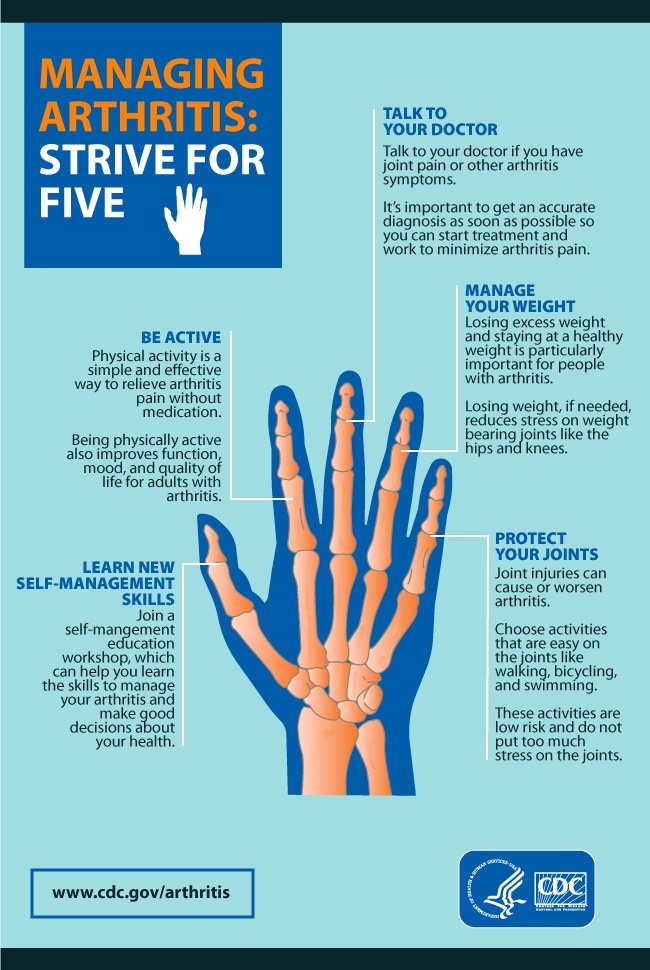
I practice exercises on my wrist, hands and fingers, such as rotating my wrist and thumb in a circular fashion, touching my thumb to the tips of my fingers in sequence, squeezing a rubber ball, and flattening out my hand against the back of my head. Recently, I have noticed a little resistance when I try to straighten out my ring fingers after flexing them, and worried about developing trigger finger. On further reading I found that trigger finger is not more common in people who have osteoarthritis.

I do a lot of swimming, and am worried that the irritative force of the water regularly acting up on my hand might be making the hand pain worse. But my hands seem to be a little bit better with the hand exercises. There seems to be less pain, although maybe I have the same amount of pain but tolerate it better since I’m doing something about it. One never knows about a preventative program, since you’re an experiment of one. You have to have faith that what you are doing is beneficial, and in harmony with medical studies. Perhaps my anti-inflammatory diet and turmeric, as well as my good sleep and aerobic exercise is also helping.

—Dr. C.
Emergency Care: Flying Intervention Team Use In Acute Ischemic Stroke

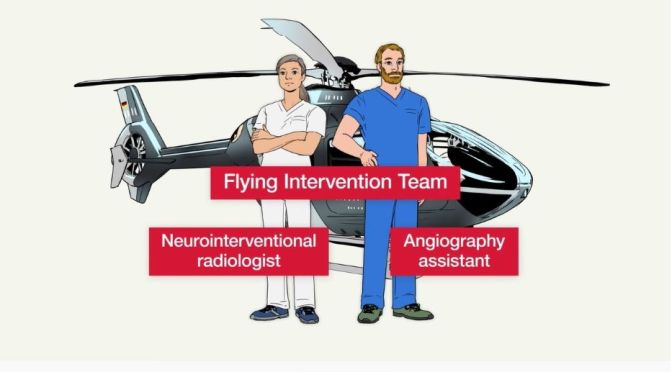
In a nonrandomized controlled intervention study published in JAMA, researchers in Germany assessed whether deployment of a flying interventional team, consisting of a neurointerventional radiologist and an angiography assistant, was associated with a shorter time to endovascular thrombectomy for patients in rural or intermediate population areas in Southeast Bavaria.

This video explains the study design. Click https://ja.ma/FIT for full details.

COMMENTARY:

Stroke prevention by a healthy lifestyle, including a good diet, regular exercise, and sleep is of course preferable to treatment.

However, stroke still claims more than 100,000 lives per year in the United States, and is a major factor in disability.

Recognition of a stroke is the first crucial step, and has been discussed in DWWR previously; FAST is the Menmonic and guiding principle. Ask the patient to smile, and it may be assymmetric, with one side drooping. Ask the patient to raise both arms, and one may drift down. Ask the patient to repeat a simple sentence, and he may be unable to do so. And above all be speedy, since time is of the essence, and treatment must take place within a very few hours.

Modern medical centers in large cities frequently have a team dedicated to treating stroke. The patient goes for a CT or MRI while  the Catheter team assembles. An intravenous clot dissolver, tPA, is often used, or possibly a catheter is inserted into an artery and guided to the  proper location. Sometimes the clot is mechanically removed as in the accompanying video.

The helicopter stroke response team featured in the posting is one aspect of the speed that is so essential; any delay will result in death, sometimes permanently, of brain cells.

Acute Heart attack treatment is basically similar to stroke, and was the pioneering venture into the interventional radiology described above. Also, the heart may be the source of the clots that lodge in the brain, especially from atrial fibrillation.

Please enjoy the following video which shows how mechanical clot removal is achieved.

—Dr. C.

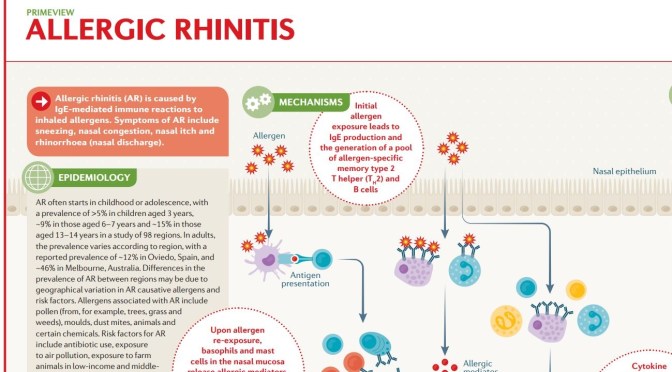
Chronic Conditions: Allergic Rhinitis (Nature)

Allergic #rhinitis is caused by IgE-mediated reactions to inhaled allergens and is one of the most common chronic conditions globally; it often co-occurs with #asthma and conjunctivitis.

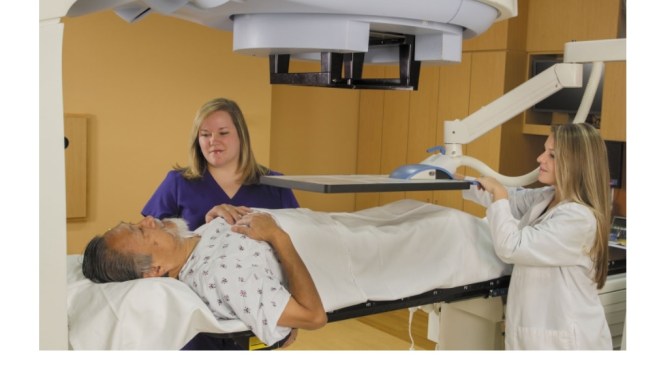
Prostate Cancer: Benefits Of Radiation Treatment

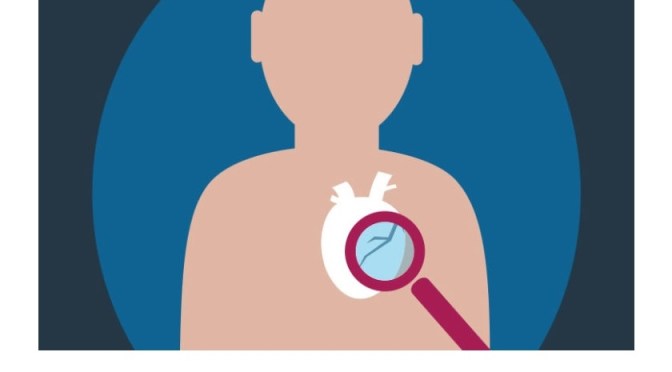
Heart Health: Sudden Cardiac Arrest Risks

You may think the most common single cause of death in the United States is heart attack. Or cancer. Or stroke.

But it’s actually sudden cardiac arrest (SCA). SCA is a problem with your heart’s electrical system (usually called ventricular tachycardia or ventricular fibrillation).

Most SCA victims survive if they get help very quickly. But SCA is fatal 95% of the time.

Studies: Covid Increases Type 2 Diabetes Risk By 40%

The true disability cost of the COVID-19 pandemic is still unknown, but more and more studies are adding to the list of potential fallout from even mild COVID 19 infection. 

In this episode of Coronapod we discuss a massive association study which links COVID-19 cases with an increase in the risk of developing type 2 diabetes. We delve into the numbers to ask how big the risk might be? Whether any casual relationship can be drawn from this association? And what might be in store from future research into COVID and chronic disease?

News: Diabetes risk rises after COVID, massive study finds

Infographic: What Are Bone Stress Injuries?

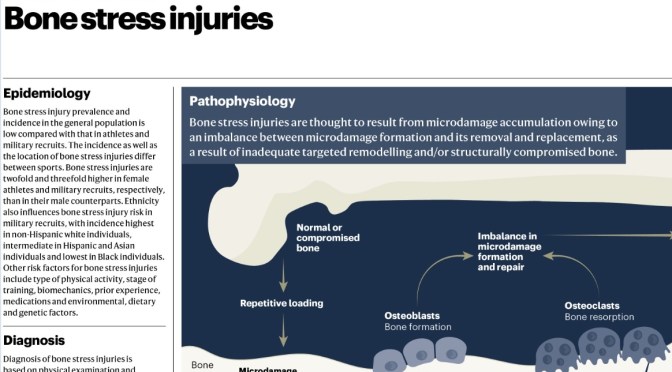
A bone stress injury (BSI) means that the bones cannot tolerate repeated mechanical loads, resulting in structural fatigue and local bone pain. A delay in BSI diagnosis can lead to more serious injuries, such as stress fractures that require longer treatment periods.

Cleveland Clinic: Primary Malignant Brain Tumors

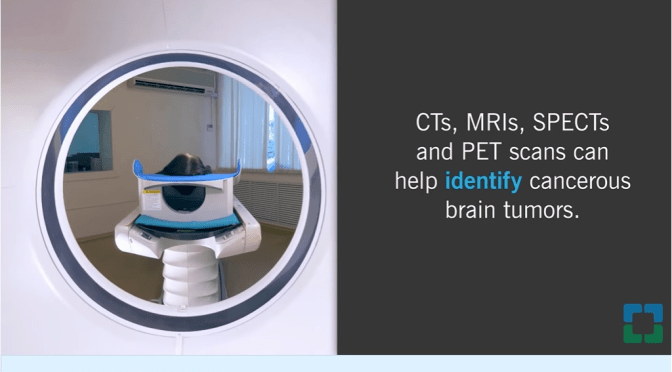
A brain tumor is an abnormal growth or mass of cells in or around the brain. It is also called a central nervous system tumor. Tumors that develop in the brain are called primary tumors. Tumors that spread to the brain after forming in a different part of the body are called secondary tumors or metastatic tumors. This video focuses on primary malignant brain tumors.

Chapters: 0:00 What is a primary malignant brain tumor? 0:31 What are the main kinds of malignant brain tumors? 1:35 How are brain tumors graded? 1:57 How are primary malignant brain tumors treated? 2:53 When should you see your provider?

For more information on brain tumors, please visit https://cle.clinic/2R1OXLr

Empowering Patients Through Education And Telemedicine