Category Archives: Technology

Technology: Smart, Voice-Assisted Operating Rooms

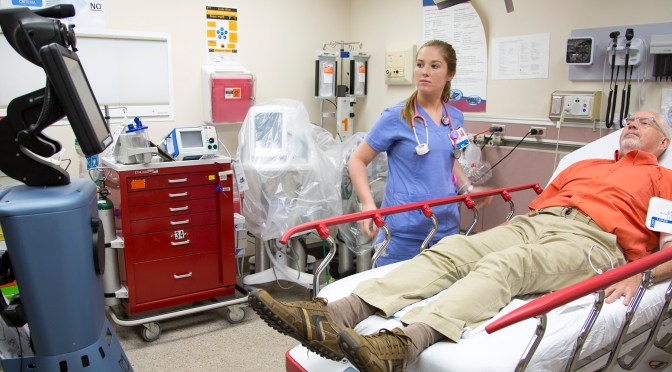
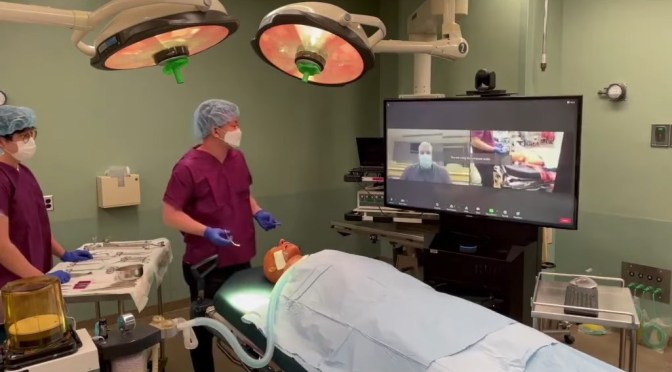
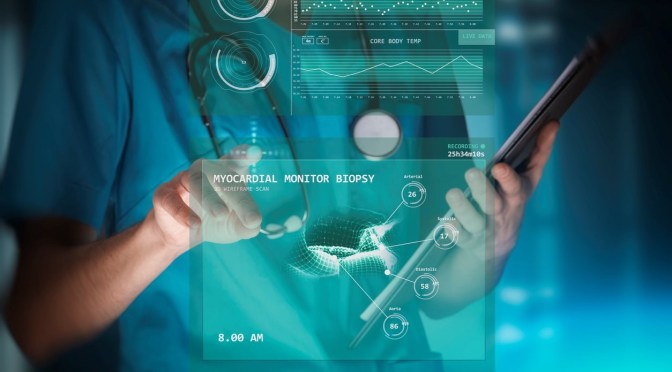
Are Amazon Alexa and Google Home limited to our bedrooms, or can they be used in hospitals? Do you envision a future where physicians work hand-in-hand with voice AI to revolutionize healthcare delivery? In the near future, clinical smart assistants will be able to automate many manual hospital tasks—and this will be only the beginning of the changes to come.

Voice AI is the future of physician-machine interaction and this Focus book provides invaluable insight on its next frontier. It begins with a brief history and current implementations of voice-activated assistants and illustrates why clinical voice AI is at its inflection point. Next, it describes how the authors built the world’s first smart surgical assistant using an off-the-shelf smart home device, outlining the implementation process in the operating room. From quantitative metrics to surgeons’ feedback, the authors discuss the feasibility of this technology in the surgical setting. The book then provides an in-depth development guideline for engineers and clinicians desiring to develop their own smart surgical assistants. Lastly, the authors delve into their experiences in translating voice AI into the clinical setting and reflect on the challenges and merits of this pursuit.

The world’s first smart surgical assistant has not only reduced surgical time but eliminated major touch points in the operating room, resulting in positive, significant implications for patient outcomes and surgery costs. From clinicians eager for insight on the next digital health revolution to developers interested in building the next clinical voice AI, this book offers a guide for both audiences.
Read more

Smart Watches: New Heart Surgery Remote Monitors

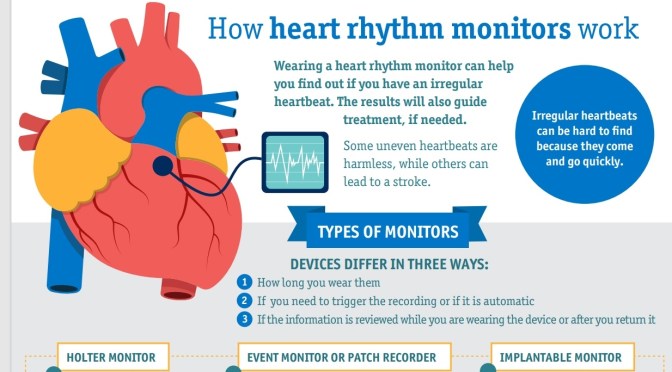
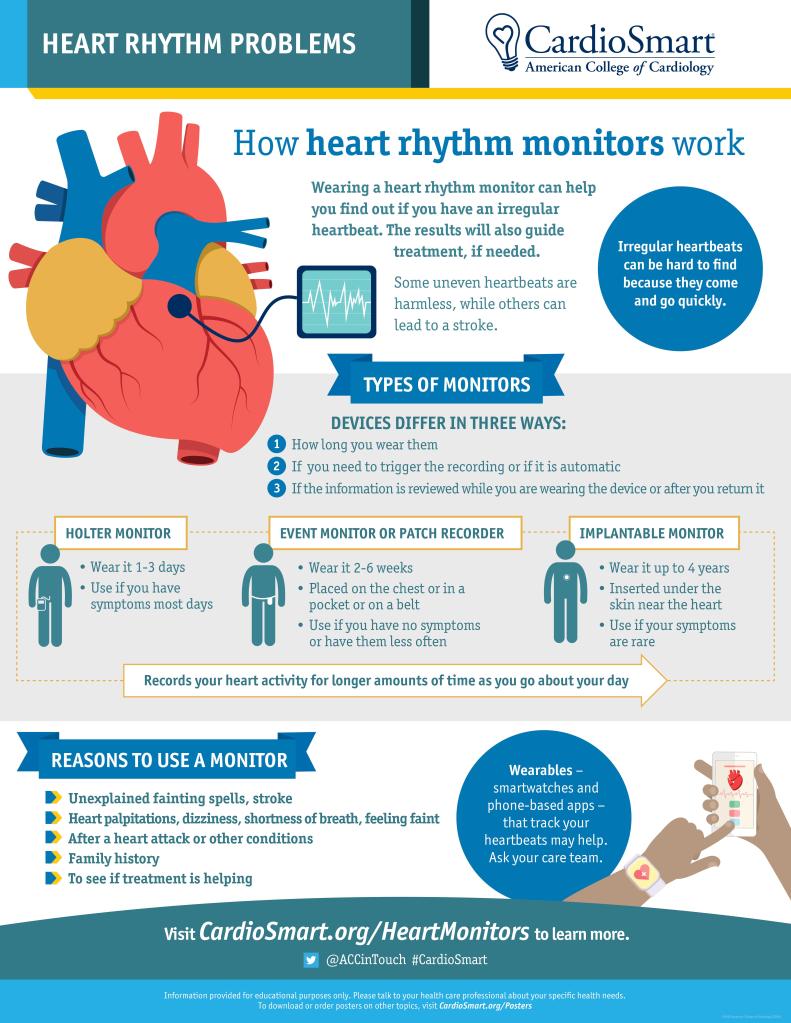
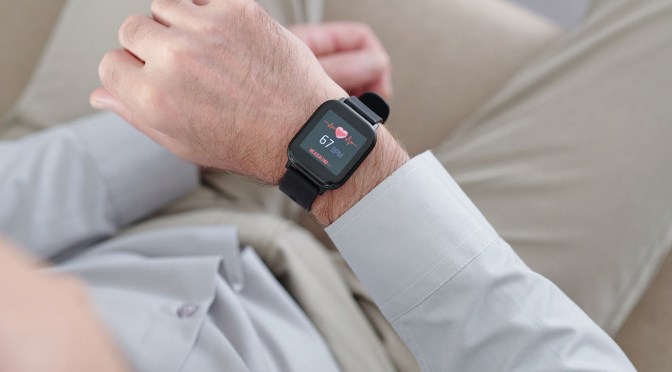
Smartwatches just keep getting smarter: the latest versions can estimate your blood oxygen level and record an ECG (a measurement of your heart’s electrical activity). A new study suggests these sophisticated devices may provide a safe, accurate way to monitor people at home after they undergo a minimally invasive heart valve replacement procedure.

The study included 100 people who had a transcatheter aortic valve replacement, most of whom went home within a day or two after the procedure. All received a smartwatch that recorded their heart rate, steps, pulse, oxygen saturation, and an ECG measurement. During next 30 days, the smartwatch detected 29 of 38 heart-related problems — mostly heart rhythm abnormalities — among 34 participants.

The findings suggest that smartwatches could be an effective way to remotely monitor patients from home, say the authors, whose study was published March 29, 2022, in the Journal of the American Heart Association.

Technology: The Lancet Digital Health – July 2022

Covid-19: Can A Vaccine Be Developed That Lasts?

“Roughly two and a half years into the pandemic, White House officials and health experts have reached a pivotal conclusion about Covid-19 vaccines: The current approach of offering booster shots every few months isn’t sustainable.

Though most vaccines take years to develop, the Covid shots now in use were created in record time—in a matter of months. For health authorities and a public desperate for tools to deal with the pandemic, their speedy arrival provided a huge lift, preventing hospitalizations and deaths while helping people to escape lockdowns and return to work, school and many other aspects of pre-Covid life.”

Stem Cells: Bone Marrow Transplants (Mayo Clinic)

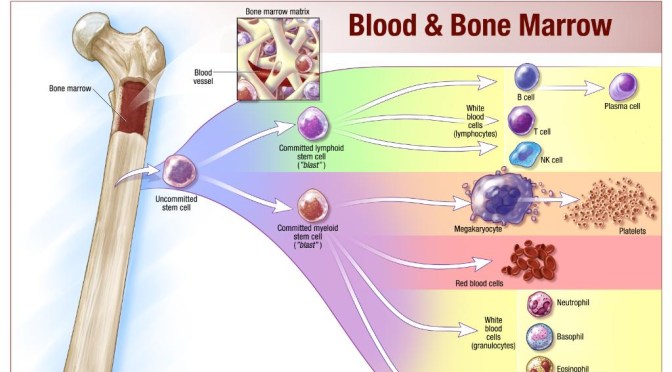
Clinical advances by the Mayo Clinic Transplant team offer new possibilities in treatment. Mayo Clinic is a world leader in setting standards for stem cell transplant. Allogenic transplant involves using stem cells from a donor and replacing diseased or damaged bone marrow. This video reviews the transplant process. Mayo Clinic is making bone marrow transplant safer and improving the lives of people who need them.

Advances by the Mayo Clinic Transplant Program are offering new possibilities in treatment for patients requiring bone marrow transplant. Autologous bone marrow transplant utilizes healthy stem cells from a person’s own body to help recover from high dose chemotherapy. This video reviews the conditions autologous stem cell transplantation is most often used to treat and what to expect throughout the process.

Heart Disease: Molecular Mapping To Predict Risk

Vulnerability to heart disease can be projected before symptoms occur, Mayo Clinic discovered in preclinical research. This proof-of-concept study revealed that heart muscle changes indicate who is vulnerable to disease later in life. These changes can be detected from blood samples through comprehensive protein and metabolite profiling. This exploratory mapping, conducted in the Marriott Family Comprehensive Cardiac Regenerative Program within Mayo Clinic’s Center for Regenerative Medicine, is published in Scientific Reports.

“The team implemented state-of-the-art technologies to predict who is vulnerable and who is protected from heart disease,” says Andre Terzic, M.D., Ph.D., a Mayo Clinic cardiologist and the senior author. “In this era of post-genomic medicine, the acquired foundational knowledge provides guidance for development of curative solutions targeted to correct the disease-causing maladaptation.” Dr. Terzic is the Marriott Family Director, Comprehensive Cardiac Regenerative Medicine, for the Center for Regenerative Medicine and the Marriott Family Professor of Cardiovascular Research.

Hospital Tech: The Johns Hopkins Stroke Center

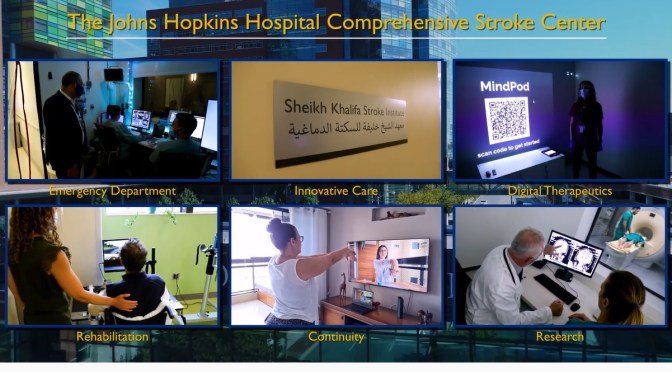
The mantra of The Johns Hopkins Hospital’s Comprehensive Stroke Center is “time is brain.” Innovations and teamwork help ensure that this mantra applies to all stages of stroke recovery. Take a peek into the multifaceted treatment strategies offered by the center’s team of experts.

These include stroke risk screenings, hyperacute emergency treatments, innovative hospital care such as digital therapeutics, early rehabilitation, programs to ensure smooth transitions to home, and cutting-edge clinical research. The Stroke Center team is on a mission to improve the life of every patient who has had a stroke. #Stroke #JohnsHopkins

Emergency Care: Flying Intervention Team Use In Acute Ischemic Stroke

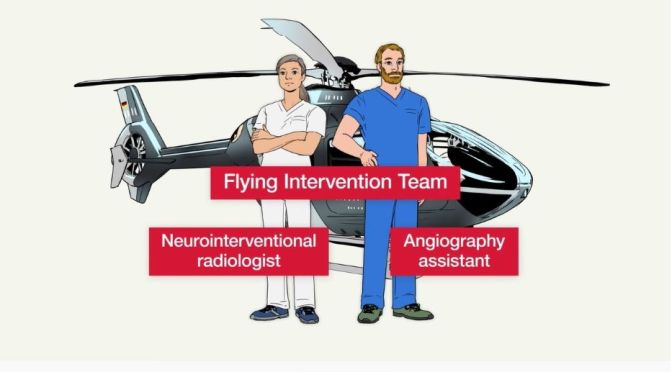
In a nonrandomized controlled intervention study published in JAMA, researchers in Germany assessed whether deployment of a flying interventional team, consisting of a neurointerventional radiologist and an angiography assistant, was associated with a shorter time to endovascular thrombectomy for patients in rural or intermediate population areas in Southeast Bavaria.

This video explains the study design. Click https://ja.ma/FIT for full details.

COMMENTARY:

Stroke prevention by a healthy lifestyle, including a good diet, regular exercise, and sleep is of course preferable to treatment.

However, stroke still claims more than 100,000 lives per year in the United States, and is a major factor in disability.

Recognition of a stroke is the first crucial step, and has been discussed in DWWR previously; FAST is the Menmonic and guiding principle. Ask the patient to smile, and it may be assymmetric, with one side drooping. Ask the patient to raise both arms, and one may drift down. Ask the patient to repeat a simple sentence, and he may be unable to do so. And above all be speedy, since time is of the essence, and treatment must take place within a very few hours.

Modern medical centers in large cities frequently have a team dedicated to treating stroke. The patient goes for a CT or MRI while  the Catheter team assembles. An intravenous clot dissolver, tPA, is often used, or possibly a catheter is inserted into an artery and guided to the  proper location. Sometimes the clot is mechanically removed as in the accompanying video.

The helicopter stroke response team featured in the posting is one aspect of the speed that is so essential; any delay will result in death, sometimes permanently, of brain cells.

Acute Heart attack treatment is basically similar to stroke, and was the pioneering venture into the interventional radiology described above. Also, the heart may be the source of the clots that lodge in the brain, especially from atrial fibrillation.

Please enjoy the following video which shows how mechanical clot removal is achieved.

—Dr. C.