Category Archives: Prevention

THE DOCTORS 101 CHRONIC SYMPTOMS & CONDITIONS #6: OSTEOARTHRITIS (OA)

Osteoarthritis (OA) was considered a Degenerative disease when I went to Med School in the late 50s. I am more interested in OA since I have developed it myself.
There is a 40-60% hereditary component. My father’s mother had arthritis badly in her hands, as did my mother’s mother, and so on. A lot of genome-correlation work has shown many different genes involved,

But without a single big contributor, OA appears to be “multifactorial”, similar to a lot of common diseases like Diabetes l. Trauma can be a factor. Old sports injuries, like an ACL tear, that you thought a thing of the past, may come back to haunt you in later years.

INFLAMMATION, the most popular explanatory cause of the decade, may be operating in OA. For instance, you can imagine that OBESITY would contribute to hip and knee OA simply through the traumatic force of gravity. But obesity is also a disease of Inflammation, and increases IL-6 and other cytokines as well.

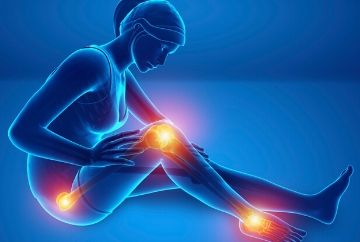
My own OA involves the classic distal 2 interphalangeal joints (go to the wikipedia manekin for a color-representation of OA classic locations). The base of my thumb, neck and back are also a problem.
Strangely, but wonderfully, my “wheels”, the Hips and Knees, are spared. I have exercised a lot in my life. Clearly, you can’t “wear out” your joints with ordinary exercise.

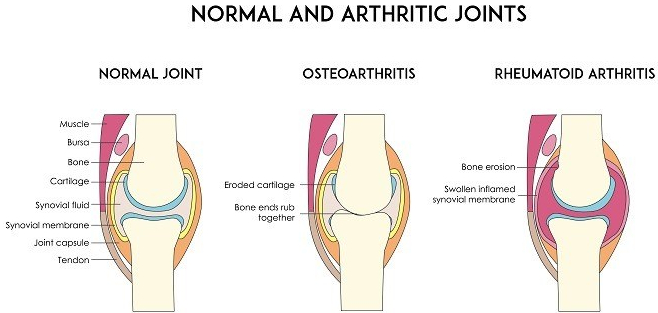
Our joints have evolved to allow us to move. Since bone has a lot of pain fibres, it would be painful to move the joints, directly bone-on-bone. So we have cartilage on the ends of the bones and discs between the vertebrae. The cartilage is slick to reduce friction.

Cartilage has no blood to supply it with nutrients. Instead, it relies on the joint (synovial) fluid. The cartilage is like a sponge. Walking alternately compresses and relaxes the spongy cartilage, increasing the synovial fluid circulation, thus improving the nutrition of the cartilage. If the Cartilage disappears, there is pain.

I am not a fan of pain medication. My belief was strengthened by the side effects of the study of a medication designed to genetically block pain transmission by injection into the painful joints. The side effect was virtual dissolution of the joints in a fraction of those treated. I felt more comfortable with my pain after reading the article.

Although Acetaminophen helps a little, NSAIDs usually work better, perhaps because of their anti-inflammatory action.
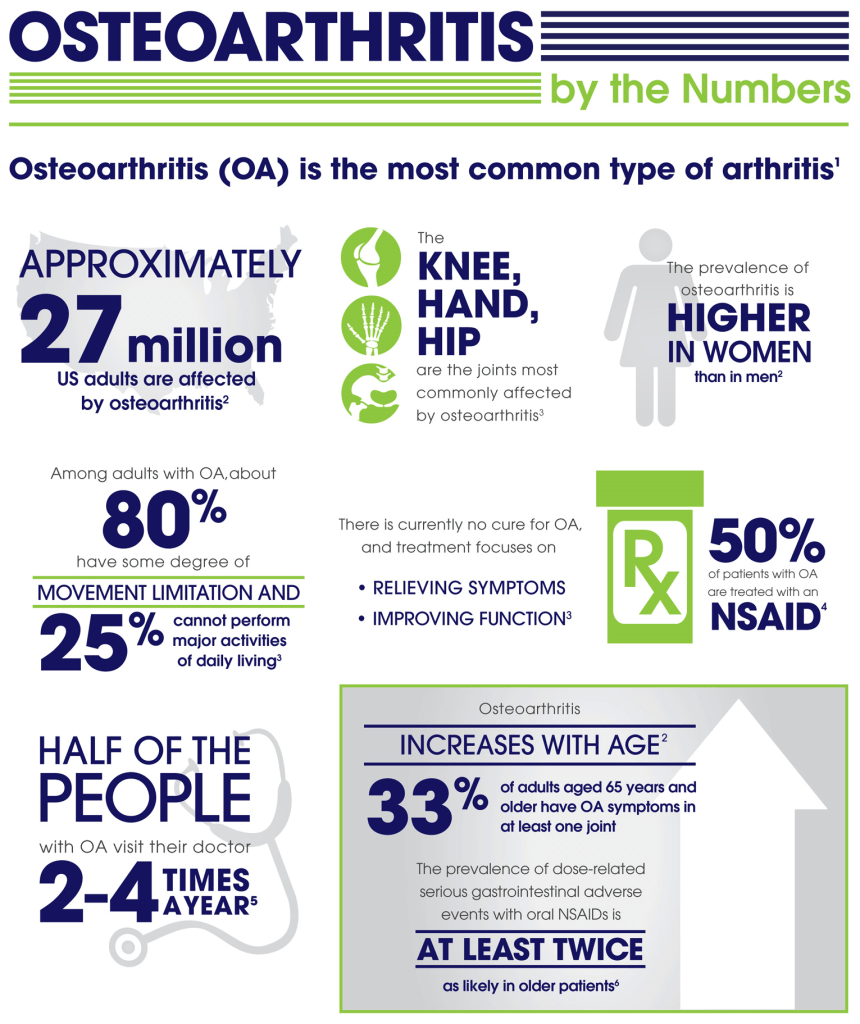
If, like me, you have stomach issues, there are the COX-2 inhibitors like Celebrex. The one dose I recently took was almost magical in its effects. Maybe if you don’t use pain Meds much, they work better.

I do take Glucosamine-Chondroitin, thinking that providing building blocks for cartilage couldn’t hurt. Along this line I also EAT CARTILAGE whenever I eat Chicken or ribs, being careful not to damage my teeth in the act of of exercising my jaws.

I also take Curcumin, hoping to relieve some pain, in spite of the fact that it is poorly absorbed (some brave souls take it by injection). I don’t know if any of this helps, How can you know in such a variable disorder, in the absence of controlled studies.

And pain has no OBJECTIVE markers, and is notoriously hard to study. We literally know more about the surface of mars than we know about Pain.

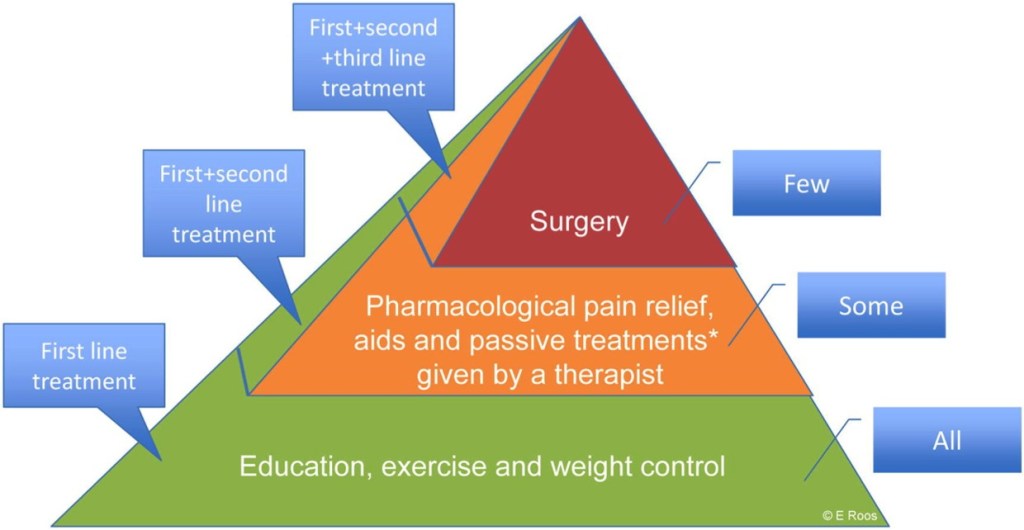
SLEEP, DIET, and EXERCISE, by minimizing OA factors kike OBESITY and INFLAMMATION are the best bet for preventing and treating OA at present.
–DR. C

THE DOCTORS 101 CHRONIC SYMPTOMS & CONDITIONS #5: SCIATICA & BACK PAIN

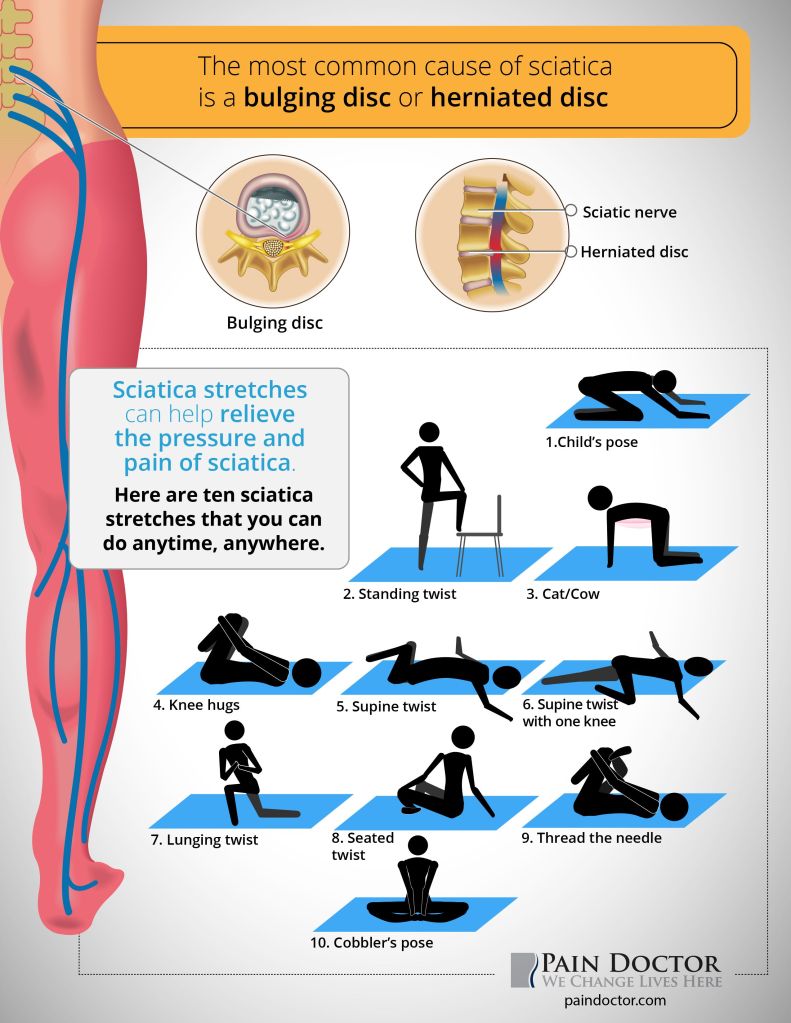
Chronic back pain and sciatica are very common, and increasing in prevalence. The human back does not seem to have been designed for obesity coupled with sedentary habits. I have had both back pain and sciatica . My wife had surgery in an attempt to control her back pain, my son successfully controlled his back pain with medical treatment, and an 87 year old friend recently had successful micro-neurosurgical treatment.

I will summarize these stories and will finish with some generalizations I believe will help those wanting to avoid a lot of misery. The sooner you start the better.

My back pain developed after an ill-advised use of a shovel to get rid of some grass intruding on my asphalt driveway, and caused me to miss work for the only day in 35 years of practice. Sciatica then developed on my left side. I could not sleep flat, and would sit all night in a comfortable chair. A hospital bed helped me outlast the impressive calf pain.

My wife developed severe back pain eventually leading to a “laminectomy and fusion”. Some level of back pain and incapacity plagued her the rest of her life.

My son developed severe sciatica and went to an Orthopedist. After a CAT scan revealed a rupture disc, he was penciled in for surgery. When asking about alternative treatments, the doctor told him, half laughingly, to lose 20% of his body weight and to start swimming. He went on a 30 day, 1000 calorie/day diet and lost 30 lbs. He has been swimming daily for the past 10 years. He has had no more back pain.

My 87 year old friend developed sciatica on his right side, had no luck with PT and pain meds including opioids. Microsurgery by a neurosurgeon successfully removed his ruptured disc, and he has had little or no pain after the first week.

Sciatica at least has a well defined cause: something is irritating that long nerve which starts in the small of the back and travels to its’ destination in the foot. That something is often an extrusion from an intervertebral disc, a cushion between the block-like vertebral bodies.

This herniation can be confirmed by a CAT scan or MRI, and removed by minimally invasive microsurgery. Beyond that model problem, down through spinal stenosis and ending in chronic back pain, the understanding gets progressively more fuzzy, treatment ever more contrived.

Prevention sounds better and better. The most important thing in preventing back pain is to MAINTAIN A NORMAL WEIGHT. Our backs were not designed for vertically compressive forces. The lock-step increasing incidences of obesity and back/sciatic problems support this idea.

REGULAR EXERCISE is very important. Swimming and walking are 2 of the best forms of exercise. Exercises like running on hard surfaces, jumping in volleyball, and weight lifting seem less optimal.

The ABDOMINAL MUSCLES stabilize the spine, and prevent excessive motion. Walking and swimming both exercise and strengthen the abdominals.

Maintaining FLEXIBILITY and RANGE OF MOTION are important. flexibility will help prevent those unplanned, sudden motions from throwing your back out of alignment, or maybe generating a painful muscle tear.

Finally, getting into the habit of BENDING YOUR LEGS and tensing the stabilizing abdominals when you pick up something on the floor is a help.

I question the wisdom of back surgery for back pain alone, especially if accompanied by spinal fusion. Even when there is sciatica, the statistics show that treatment with surgery is no better than medical therapy after 2 years.

The development of microsurgical techniques may give surgery an edge, however. At the risk of cliche, AN OUNCE OF PREVENTION IS WORTH A POUND OF CURE.

–Dr. C

MEN’S HEALTH: YOUR “FIRST PROSTATE CHECKUP” (UCLA)

Dr. Jesse Mills, Director of The Men’s Clinic at UCLA talks about what to expect during a first prostate checkup.

Website

COMMENTARY

Prostate checking, especially by PSA, has been controversial in recent years.

The naysayers have cited statistics that show too many unnecessary operations on slow-growing, non-life threatening cancers lowering quality-of-life.

My old urologist was following a prostate nodule with yearly checks with PSA tests. He retired, and the enlightened, younger urologist, who replaced him, thought PSA superfluous.

A friend, also a Doctor, was similarly advised, dropped the PSA screening, developed high grade prostatic Cancer, and died of it.

I continued checking my PSA every 6 months, risking a positive test, leading to biopsy, leading to unnecessary treatment.

The UCLA prostate checkup video touts Prostate MRI as an intermediate step, and, in my mind validates my choice of continuing PSA screening.

—Dr. C

CORONAVIRUS: RESPIRATORY-DROPLET CONTACT IS MAJOR WAY COVID-19 SPREADS

From the Wall Street Journal (June 16, 2020):

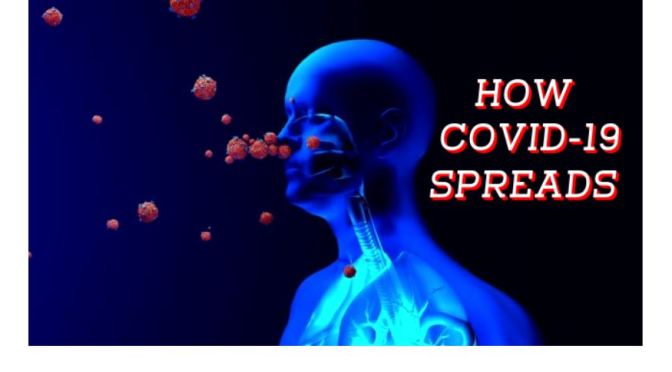
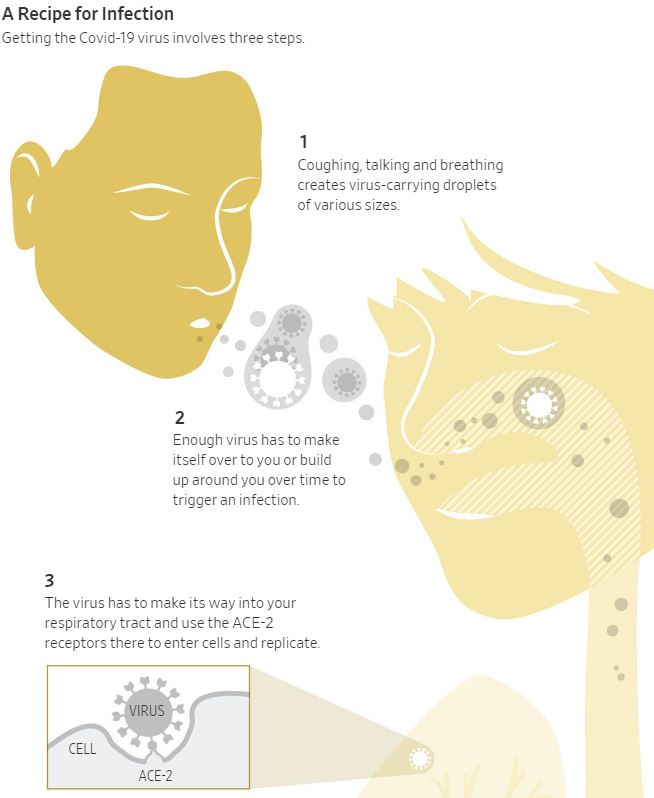
Health agencies have so far identified respiratory-droplet contact as the major mode of Covid-19 transmission. These large fluid droplets can transfer virus from one person to another if they land on the eyes, nose or mouth. But they tend to fall to the ground or on other surfaces pretty quickly.

Some researchers say the new coronavirus can also be transmitted through aerosols, or minuscule droplets that float in the air longer than large droplets. These aerosols can be directly inhaled.

Illustration: Erik Brynildsen

Sufficient ventilation in the places people visit and work is very important, said Yuguo Li, one of the authors and an engineering professor at the University of Hong Kong. Proper ventilation—such as forcing air toward the ceiling and pumping it outside, or bringing fresh air into a room—dilutes the amount of virus in a space, lowering the risk of infection.

Another factor is prolonged exposure. That’s generally defined as 15 minutes or more of unprotected contact with someone less than 6 feet away, said John Brooks, the Centers for Disease Control and Prevention’s chief medical officer for the Covid-19 response. But that is only a rule of thumb, he cautioned. It could take much less time with a sneeze in the face or other intimate contact where a lot of respiratory droplets are emitted, he said.

Read more

PREVENTION: “FORWARD CLINICS” ARE ALL-INCLUSIVE, FLAT-FEE PRIMARY CARE

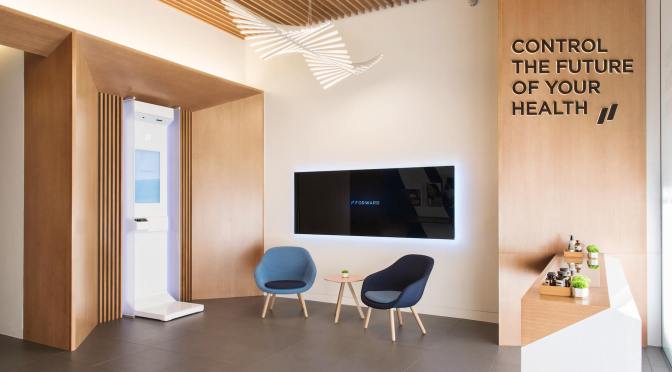
Forward care is evidence-based, focused on prevention and improvement. Set goals and collaborate for better health.

  1. Connect Your Biometrics Sensors
    • Receive your Sensor Kit
    • Record measurements in the app
    • Review insights together with your doctor
  2. Complete Your Labs at Home
    • Schedule your at-home blood draw with a lab specialist
    • Receive comprehensive results
  3. Create a Personalized Plan During Your Baseline Visit
    • Discuss your health goals and concerns
    • Review your biometrics and lab results
    • Develop a personalized, preventive plan
  4. Answer Questions In-App for Insights on Your Mental Health
    • Answer a short series of questions in-app
    • Receive a measure for anxiety and depression
    • Partner with your doctor on your results
  5. Customize Your Plan Based on Your Genetics
    • Receive your Genetics Kit
    • Review the results with your doctor
    • Update your plan to address your risks
  6. See Your Doctor In Person for a Custom Follow Up Visit
    • Request an in-person visit in the app
    • Review your progress with your doctor
    • Complete a physical exam and diagnostics
  7. Assess Your Skin Cancer Risk
    • Complete a physical exam of your skin
    • Capture high-definition images of any moles or blemishes
    • Discuss your skin health and cancer risks with your doctor
  8. Receive a Message From Your Doctor to Update Your Plan
    • Your doctor will check-in regularly 
    • Update your doctor on progress and goals 
    • Ask questions, anytime from anywhere
  9. Develop Nutrition Goals Based on Recurring Labs
    • Review your latest labs with your doctor
    • Develop a nutrition plan for targeted results
    • Measure progress with future labs

Website

COMMENTARY

Forward Healthcare differs from a conventional primary care clinic in several, generally good ways.

Most importantly, they stress PREVENTATIVE care. Blood tests that monitor diabetes, metabolic syndrome, and anemia are done regularly, since they have a laboratory on premises. They have their own EMR (electronic medical record) platform, and their own telemedicine platform, which are downloaded on the initial visit.

They give out a “sensor kit” consisting of temperature monitor, Pulse-oximetry, and a BP monitor, which wirelessly sends information to medical records.

Telemedicine is available through their own Downloaded platform. Although I get the impression that Telehealth isn’t as central as I would have expected in a technology oriented operation, it is increasingly important.

The monthly membership fee of $149 pays for the above and unlimited Doctor Availability 24/7 without copay.

Concierge Medicine has the monthly/yearly fee and unlimited access, but has a copay. Both will utilize your insurance, and neither treats patients in the hospital or provides referral care.

Government Health care is coming, and with it longer waiting times, shorter Doctor interaction times, and probably less time for Preventative Health Care.

Systems like Forward Health and Concierge Medicine will be the upper tier of a 2-tier system.

Proactive attention to Health in my opinion is essential in the future if we are to have a healthy nation, and not “bankrupt the system”. Telehealth is growing in importance, and offers help in making medical expertise more convenient, widely available and for less cost.

I am happy to see progressive Systems like Forward Health offer a preventative option to the present, broken, reverse-incentivized, fee-for-service System.

—Dr. C.

TELEHEALTH CARE: PATIENTS CAN EXPECT EXPANDED “CONTACTLESS EXPERIENCES”

From Healthcare IT News (June 12, 2020):

Technology-enabled workflows now enable patients to complete most of the registration formalities prior to the visit, be it a virtual consult or a clinic visit. Registration kiosks in hospital lobbies may soon be enabled with facial recognition software to eliminate the need for touching any surface.

Routine examinations are also going virtual, with many diagnostic procedures now possible through remotely controlled devices. Caregivers are beginning to do their patient rounds through virtual visits. This trend will only grow in the coming years.

A vast and growing array of automated communication tools allows caregivers to use rule-based messaging to push everything from health coaching, post-discharge care instructions, and appointment reminders through IVR, text, SMS, and mobile alerts.

Read full article

WOMEN’S HEALTH: RISK FACTORS AND PREVENTION OF OSTEOPOROSIS

I have heard the same story over and over. You get older, you trip over your dog or on the edge of a rug, you fall and break your hip, and in treatment or convalescence, you get a pneumonia and die, or at least you get weaker, setting you up for the next fall. Your course is downhill.

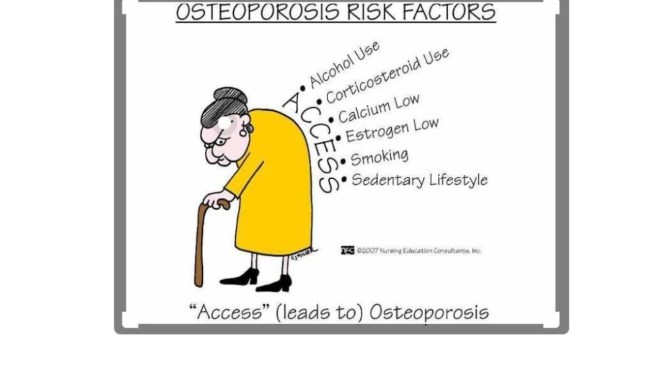
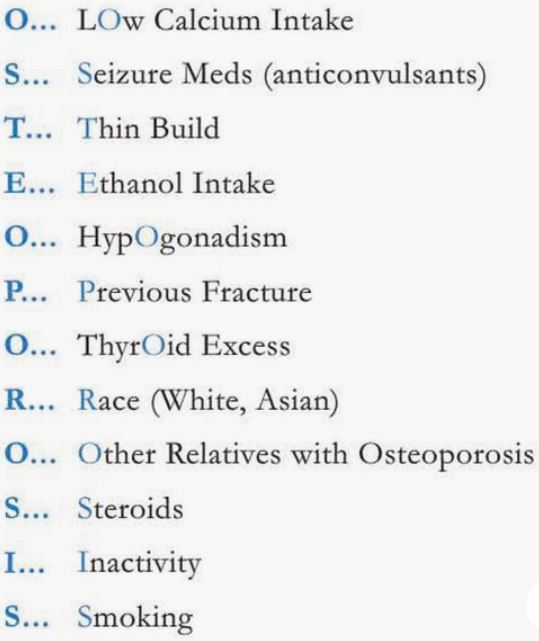
The culprit is often OSTEOPOROSIS. Osteoporosis is a disease characterized by loss of bone mass, as opposed to Osteomalacia, discussed in a recent podcast on this site, which is softening of bone The word itself is a MEMONIC for the RISK FACTORS; Then comes WHAT TO DO.

The RISK FACTORS and Prevention Strategies can be remembered in the following mnemonic:

Osteoporosis prevention begins when you are a child, with healthy diet rich in Calcium, and lots of exercise. Your bone mass peaks in the early 20s. While you are young, in your reproductive years, your reproductive hormones, Estrogen and Testosterone protect you.

Women should develop a Preventative strategy during menopause. Being THIN, like i am, is generally a marker of good health, much better than being Fat.

But especially as you get older and Lose muscle mass, Osteoporosis can become a problem, maybe because your bones don’t get the stress required to keep them strong.

BONE DENSITY DECLINES WITH AGE. I get a DEXASCAN as often as my insurance allows, about every 2 years, and am due this summer.

More and more treatments for Osteoporosis are emerging, if your bone loss becomes severe enough.

KEEP IN CONTACT WITH YOUR DOCTOR.

–Dr. C

PODCAST: “MEDDIET” ALTERS GUT MICRIOBIOME IN OLDER PEOPLE, IMPROVES FRAILTY, COGNITION, INFLAMMATION

We observed that increased adherence to the MedDiet modulates specific components of the gut microbiota that were associated with a reduction in risk of frailty, improved cognitive function and reduced inflammatory status. 

Dr Philip Smith, Digital and Education Editor of Gut and Consultant Gastroenterologist at the Royal Liverpool Hospital interviews Professor Paul O’Toole; who is Professor of Microbial Genomics, Head of School of Microbiology and Principal Investigator in APC Microbiome Ireland, an SFI funded centre at University College Cork, Ireland, on “Mediterranean diet intervention alters the gut microbiome in older people reducing frailty and improving health status: the NU-AGE 1-year dietary intervention across 5 European countries” published in paper copy in Gut in July 2020.

Read full study

COMMENTARY

Diet is one of the 3 pillars ( or 4, if you don’t consider intellectual stimulation a form of exercise) of health. And there are 3 prime dimensions to diet: Quality, Quantity, and Timing. This excellent study addresses the Quality of the diet. Vegetables, fruits and whole grains are the foundation.

Dietary Fiber is the main difference between the healthful Mediterranean diet and the highly processed diet so common in America.

How can you be sure you are eating enough fiber? Read on.
On almost all cans and boxes, you will find a nutritional statement, by law. Assuming that the contents are “real food”, and preferably “organic”, look for the “fiber” in grams, and the “calories” in 100’s, and mentally divide the grams of fiber by 100s  of calories, and you get a number. Let’s say that your fiber for the day totals “25” gms. and your calories for the day Totals 2500; that is “25” hundred calories. Divide the 25 grams by the 25 hundred calories, and you get “1”. Anything less than 1 is low in fiber.

25 grams of fiber is about the daily recommendation for fiber. 25 hundred calories is a ballpark figure for an average diet.
PORTION SIZE DOESN’T MATTER, since your dividend is a ratio.
The bacteria in your MICROBIOME feed on the fiber, and the higher and more diverse the fiber ( within reason. Hay is high in fiber) the healthier the food.

Blueberries are good for a fruit at 4-5 gms. of fiber per hundred calories. Broccoli is a good vegetable at 10 gms fiber per hundred calories, carrots about 3, and so on.

Sugar is the perfect “bad” food, at no fiber for as many calories as you can pack in. It makes you Want more, and “desensitizes” your taste buds to the natural sweetness of fruit, or even vegetables.

HIGH FIBER foods are MORE FILLING, leading you to eat less.
Civilization and Capitalism pushes too much food and too many calories at us. Overeating , obesity, and many of the modern illnesses is the result.
Generally, fresh fruits and vegetables are preferred, though cooking doesn’t do much harm, other than some vitamin loss that can be replaced.

Whole grain cereals have fiber in addition to other nutrients. Also, the complex carbohydrates in whole grains  are released more slowly than wIth refined cereals. This floods your blood less rapidly with glucose, and elicits a Less precipitous insulin response. This results in a lower, healthier  “glycemic Index”.

Vegetables, fruits Legumes, seeds, nuts and their oils are the mainstay of the Vegan diet, which is healthful If enough protein and essential fats are ingested.

Fish, eggs, milk and cheeses are other components of the Mediterranean diet.

I take many of my daily Vegetable and fruits and  liquefy them in a food blender. Drinking my daily vegetables and fruits is a tasty and convenient way to improve my diet. I Savor individually those items I find most tasty, like nuts, apples, avocado, And fruit in season. This exercises my jaws, which is probably healthy.

YOUR MICROBIOME helps you in many ways that science is just beginning to understand. A healthy Microbiome is a DIVERSE Microbiome. FIBER is the food of the Microbiome, and a diversity in dietary fiber leads to a diverse Microbiome. A diverse, happy Microbiome produces many biological substances, like neurotransmitters, and probably communicates with the brain directly through the gut-brain Axis.

The Podcast on the 1 year Meddiet showed how directly a diet can BENEFIT HEALTH STATUS.

-Dr. C.

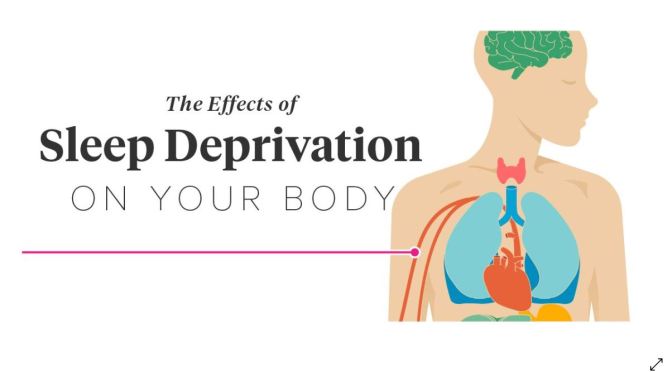
STUDIES: CHRONIC SLEEP DEPRIVATION CAUSES TOXIC CHANGES IN GUT HEALTH, INCREASED EARLY MORTALITY

From Harvard Medical School (June 4, 2020):

“We took an unbiased approach and searched throughout the body for indicators of damage from sleep deprivation. We were surprised to find it was the gut that plays a key role in causing death,” said senior study author Dragana Rogulja, assistant professor of neurobiology in the Blavatnik Institute at HMS.

The first signs of insufficient sleep are universally familiar. There’s tiredness and fatigue, difficulty concentrating, perhaps irritability or even tired giggles. Far fewer people have experienced the effects of prolonged sleep deprivation, including disorientation, paranoia, and hallucinations.

Total, prolonged sleep deprivation, however, can be fatal. While it has been reported in humans only anecdotally, a widely cited study in rats conducted by Chicago-based researchers in 1989 showed that a total lack of sleep inevitably leads to death. Yet, despite decades of study, a central question has remained unsolved: Why do animals die when they don’t sleep?

Now, Harvard Medical School (HMS) neuroscientists have identified an unexpected, causal link between sleep deprivation and premature death.

Read full article