Category Archives: Medicine

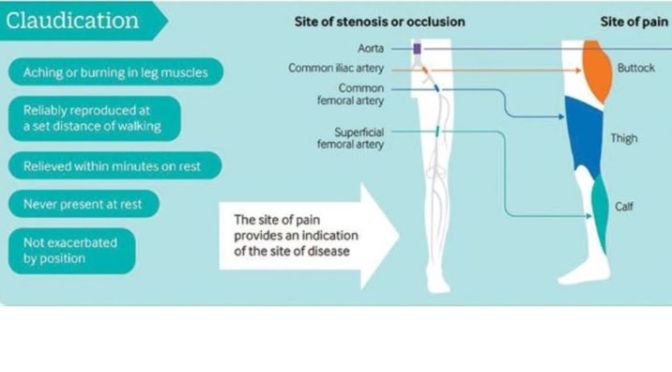
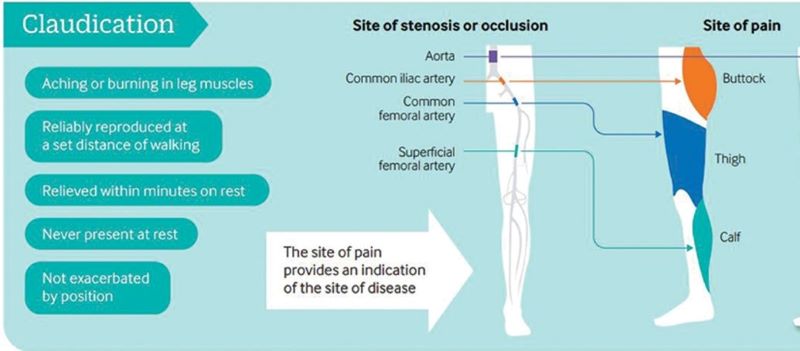
INFOGRAPHIC: EXERCISE FOR ‘CLAUDICATION’ (BMJ STUDY)

Exercise training is a safe, effective and low-cost intervention for improving walking ability in patients with IC. Additional benefits may include improvements in QoL, muscle strength and cardiorespiratory fitness. Clinical guidelines advocate supervised exercise training as a primary therapy for IC, with walking as the primary modality.

However, evidence is emerging for the role of various other modes of exercise including cycling and progressive resistance training to supplement walking training. In addition, there is emerging evidence for home-based exercise programmes. Revascularisation or drug treatment options should only be considered in patients if exercise training provides insufficient symptomatic relief.

Abstract

Peripheral artery disease (PAD) is caused by atherosclerotic narrowing of the arteries supplying the lower limbs often resulting in intermittent claudication, evident as pain or cramping while walking. Supervised exercise training elicits clinically meaningful benefits in walking ability and quality of life. Walking is the modality of exercise with the strongest evidence and is recommended in several national and international guidelines. Alternate forms of exercise such as upper- or lower-body cycling may be used, if required by certain patients, although there is less evidence for these types of programmes. The evidence for progressive resistance training is growing and patients can also engage in strength-based training alongside a walking programme. For those unable to attend a supervised class (strongest evidence), home-based or ‘self-facilitated’ exercise programmes are known to improve walking distance when compared to simple advice. All exercise programmes, independent of the mode of delivery, should be progressive and individually prescribed where possible, considering disease severity, comorbidities and initial exercise capacity. All patients should aim to accumulate at least 30 min of aerobic activity, at least three times a week, for at least 3 months, ideally in the form of walking exercise to near-maximal claudication pain.

Read full study

COVID-19 VIDEO: ‘CRITICAL CORONAVIRUS-BUSTING THERAPIES EXPLAINED’

Health experts say having a vaccine is just one front in a two-front battle against COVID-19. The other is effective treatments for those who are already sick with the disease. WSJ breaks down the three most promising types in development. Photo Illustration: Jacob Reynolds/WSJ.

TELEMEDICINE: EYE & EAR TELE-CONSULTS, PRIMARY CARE AT MOUNT SINAI (NYEE)

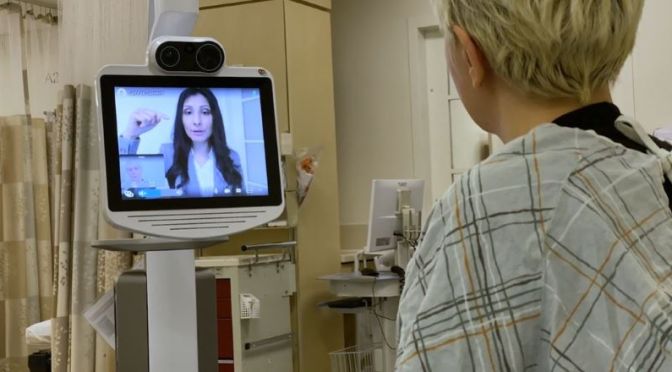
From tele-consults in the ED to on-site fundus imaging at Primary Care offices, New York Eye and Ear Infirmary of Mount Sinai (NYEE) is adapting to the rapidly changing healthcare environment with innovative new applications and technologies and making them a permanent part of our patient service. These approaches are not only valuable social distancing tools, to reduce coronavirus exposure of physicians, staff, and patients, but they also allow greater access to care and quicker and more effective triage of patients.

For more information about NYEE, visit www.nyee.edu

INTERVIEW: ANTHONY FAUCI ON COVID-19 (JAMA VIDEO)

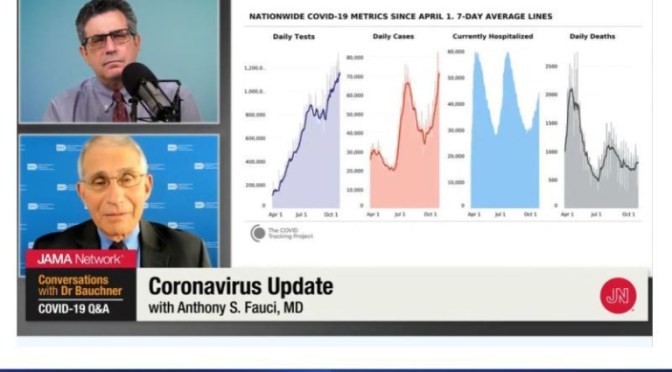
Anthony S. Fauci, MD returns to JAMA’s Q&A series to discuss the latest developments in the COVID-19 pandemic, including the continued importance of nonpharmaceutical interventions (masking, handwashing, physical distancing) for managing rising case numbers in the US and globally.

Recorded October 28, 2020.

Topics discussed in this interview: 0:00 Introduction 0:20 NAM Presidential Citation for Exemplary Leadership 1:19 COVID-19 numbers and excess deaths 4:05 National masking mandate 5:55 How to get people to accept masking 7:07 Herd Immunity and the Great Barrington Declaration 9:51 The holidays and airplane travel 13:44 Therapies update 17:54 Vaccines update 20:08 Vaccine distribution 22:00 Vaccine safety 24:42 How Australia has dealt with COVID-19 spikes 27:00 Acknowledgements and baseball

THE DOCTORS 101 CHRONIC SYMPTOMS & CONDITIONS 21: PERIPHERAL NEUROPATHY

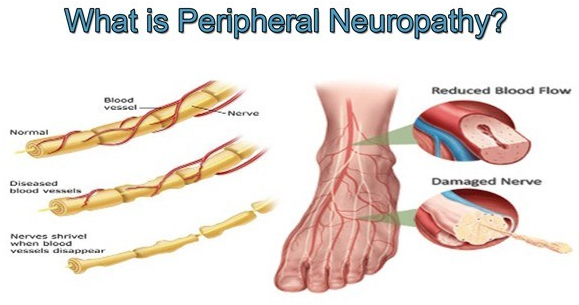
Peripheral Neuropathy is a common problem, and almost a quarter of the population will eventually suffer from it. It is very common in diabetes and metabolic syndrome, alcoholism, and in cancer therapy.

Even getting older is a risk; almost 10% of individuals 65 years old have some symptoms. There are more than 100 different types of peripheral neuropathy, and often it is just one feature of a primary illness.

Sometimes there is no known cause, such as in 2 of my older friends. I have a diminished vibratory sense in my feet, which causes me no noticeable problem. The longer nerves are more likely to be involved, except for the rare sensory ganglionopathy which is symptomatic of some cancers ( a “paraneoplastic disorder”) , some infections and autoimmune diseases.

When the sensory ganglia are involved, the numbness, tingling or pain can be more central, such as in the face or upper arm. There are 3 types of nerves that can be involved in peripheral neuropathy; Sensory, Motor and autonomic.

The sensory nerves deal with sensations, such as hot, cold, touch, pain, tingling, and numbness. Motor nerve involvement results in weakness or paralysis of an arm, leg or other area under Voluntary control. The autonomic nervous system coordinates activities beyond voluntary control, such as sweating, salivation, food propulsion and heart rate, which can be activated or inhibited.

The symptoms of neuropathy depend upon the type of nerve involved. Balance is a complex ability that can be disturbed by a lack of proper sensory nerve function (Position sense or proprioception) motor weakness, vision or coordination which involve higher centers.

The medical evaluation of peripheral neuropathy begins with a family practitioner or internist who does a detailed history, asking about such things as diet, medications, alcohol consumption, and injuries. Vitamin intake is important, but can be overdone.

Peripheral nerve symptoms can actually be caused by excessive B6, pyridoxine. The upper limit is 100 Mg.. A physical exam checks for weakness, sensory problems, reflexes and balance. Blood tests may reveal diabetic, kidney, liver, thyroid or immune problems problems.

A major disorder associated with neuropathy may be revealed and pursued. If nothing turns up, and the neuropathy is significant, referral may be needed to a neurologist, or other appropriate specialist. Many specialized tests and treatments may be needed.

Even with the best of care, a specific “cure” may not be found. Peripheral neuropathy can often be avoided by a healthy lifestyle.

–Dr. C.

Article on Peripheral Neuropathy

HEALTH: ‘DIABETES AND CHRONIC KIDNEY DISEASE’ – NEW GUIDELINES (OCT 2020)

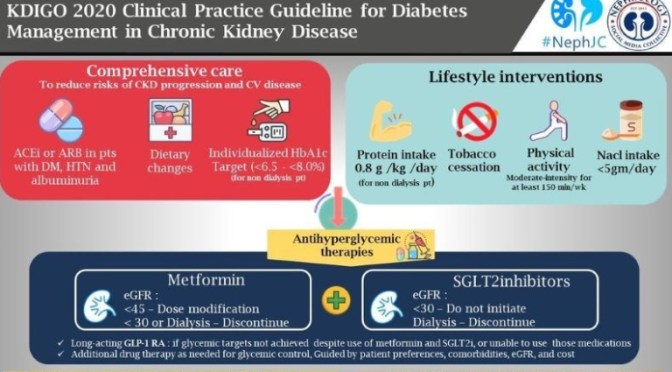
Comprehensive care in patients with diabetes and CKD

Management of CKD in diabetes can be challenging and complex, and a multidisciplinary team should be involved (doctors, nurses, dietitians, educators, etc). Patient participation is important for self-management and to participate in shared decision-making regarding the management plan. (Practice point).

We recommend that treatment with an angiotensin-converting enzyme inhibitor (ACEi) or an angiotensin II receptor blocker (ARB) be initiated in patients with diabetes, hypertension, and albuminuria, and that these medications be titrated to the highest approved dose that is tolerated (1B).

Lifestyle interventions in patients with diabetes and CKD

We suggest maintaining a protein intake of 0.8 g protein/kg)/d for those with diabetes and CKD not treated with dialysis (2C).

On the amount of proteins recommended in these guidelines, they suggest (‘recommend’ becomes a ‘suggest’ at this level of evidence) a very precise  intake of 0.8g/kg/d in patients with diabetes and CKD. Lower dietary protein intake has been hypothesized but never proven to reduce glomerular hyperfiltration and slow progression of CKD, however in patients with diabetes, limiting protein intake below 0.8g/kg/d can be translated into a decreased caloric content, significant weight loss and quality of life. Malnutrition from protein and calorie deficit is possible.

Physical activity

We recommend that patients with diabetes and CKD be advised to undertake moderate-intensity physical activity for a cumulative duration of at least 150 minutes per week, or to a level compatible with their cardiovascular and physical tolerance (1D).

Read full guidelines