Dr. C’s Journal: Types Of Cancer Screening Tests

There are a number of recommended screening tests for cancer.
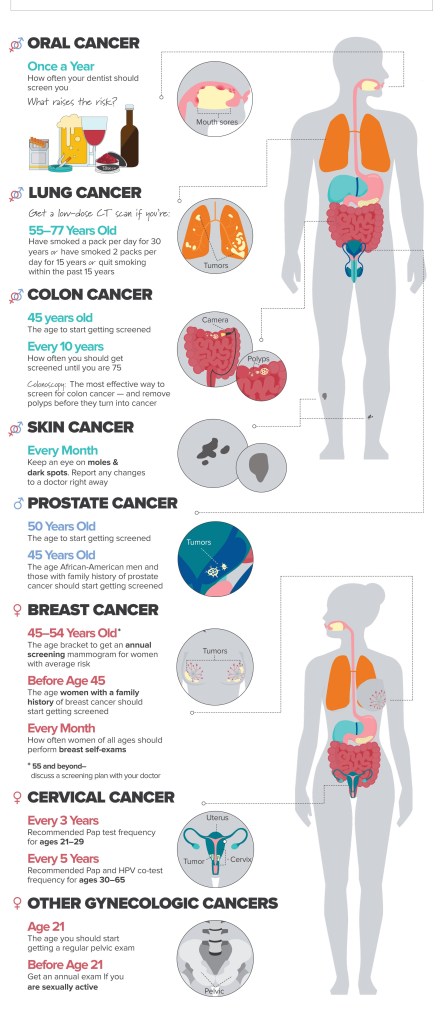
Mammography has been shown quite effective in reducing deaths from breast cancer, it is recommended for women ages 40 to 74.

HPV and PAP tests are recommended for cervical cancer screening in women. Testing should begin at age 21 and end at age 65.

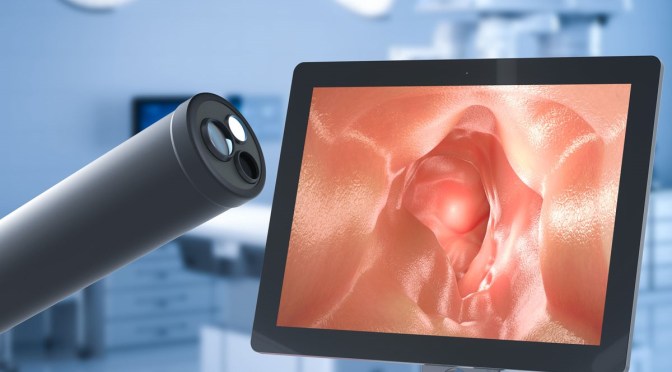
Colonoscopy is recommended for colorectal cancer screening for both men and women ages 45 through 75.

HCT, a type of CT, is recommended for heavy smokers at ages 15 to 80.

Where the risks are high, there are other tests not generally recommended for everybody. Tests are available for liver cancer, prostate cancer, skin cancer, and ovarian cancer where are the risk is high. In women with BRCA1 And BRCA2  mutations, breast MRIs are recommended.

Personally, I get a yearly PSA test, mainly because a good friend, a physician, died within 3 years of prostate cancer when he stopped taking the test.

I also get a skin examination by a dermatologist every six months, because I have a very fair skin, probably caused by the freckle variant of the MC1R gene.

There are a number of symptoms and signs that suggest cancer,  particularly when they don’t go away, such as fatigue, weight loss or gain for no apparent reason; trouble swallowing, nausea, or abdominal pain; swelling or lumps anywhere in the body; cough or hoarseness; unusual bleeding; change in bowel habits; fevers or night sweats; bleeding areas in the mouth. Protracted headaches or vision problems can be worrisome.

In short, any distressing or unusual symptom that doesn’t improve on its own should be watched very carefully, and reported to your doctor; but it is far better to pick them up early with a test or a doctors routine examination than to wait for symptoms to develop.

—Dr. C.
Dr. C’s Journal: Recent Gains In Cancer Care

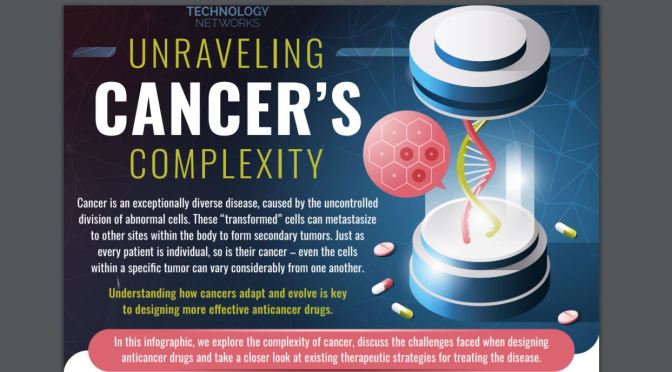
Recent medical advances in the treatment of cancer you have been amazing. Many of these advances have taken advantage of our own immune system‘s and fighting the cancer. If you or a loved one have had the recent diagnosis of cancer, there are several general things that you should know.

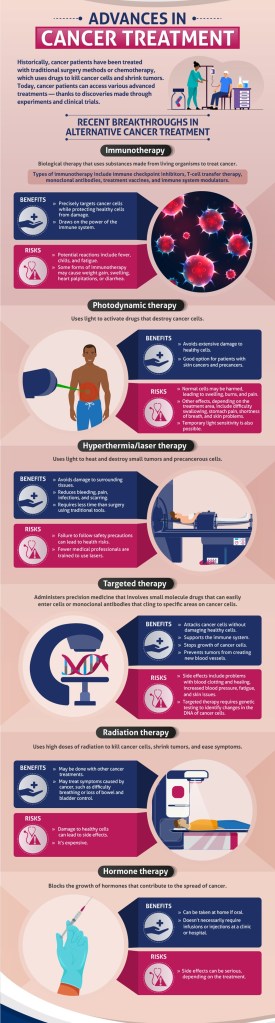
MVU MHA 2021 Q4 Infographic_ Advances, Breakthroughs, and Innovations in Cancer Treatment

The amazing technological advances in medicine have a come with a price tag, more than just the astronomical cost.

Preventative medicine it is given little attention in the medical profession these days, it wasn’t that great in the past either. The reason? Doctors don’t get paid to prevent disease; they get paid for treating it, and doctors are merely human beings like the rest of us and have a fondness for making money. Besides, the individual patient never knows whether he would’ve gotten the disease, had he not tried to prevent it. It takes a large number of people in a planned study to discern that.

Sleep, diet and exercise have all been casualties.

If you have established cancer, your tendency will be to give up on any exercise that you have been doing. This is an error. Depression is very common in patients with cancer, and inactivity makes it worse. Exercise is the one of the best things you can do for depression, and it may well  benefit cancer itself. To be sure to ask your doctor directly about this.

Diet is also extremely important. Many Cancers produce substances that kill the appetite. Weight loss in cancer is one of the hallmarks of the disease. It becomes very important to maintain a good diet.

Sleep is also very important. Just a day or two with poor sleep can harm the Immune cells, and with immune system damage, cancer can only worsen.

Drug studies improve medical care. They also deliver care free of charge, except for your time in taking part in the study. The usual Cancer study compares the new drug with established treatment. There is minimal worry that you are going to be getting a sham treatment.

Certain medical centers are known to specialize in certain areas of cancer treatment. For instance, in Southern California, the University of San Diego is known to be a Center that treats pancreatic cancer. The city of Hope in Los Angeles is known to be a center specializing in CAR-T cell treatment, A promising if expensive treatment for pancreatic cancer. 

It is very definitely worth your while to check into the availability of specialized care centers and drug studies in your area.

One of my friends developed melanoma and was told by his doctor to get his affairs in order. This absurd statement was made by a cancer doctor in one of the best hospitals in our area. In checking with an oncologist of my acquaintance, I found that a mere 30 miles away was a center specialized in the treatment of Malignant Melanoma. He went to the center for treatment, and was given a drug called a checkpoint inhibitor. He was virtually asymptomatic in a year. Unfortunately, patients can rarely expect such dramatic results.

In the history of the world, it has never been easier to learn about your disease, in this case cancer, and participate in its treatment. Especially in medicine, the best is none too good; it pays to do your homework, or at least find a medical advocate who will pursue your cause.

—Dr. C.

Viral Infections: The Risks And Causes Of Shingles

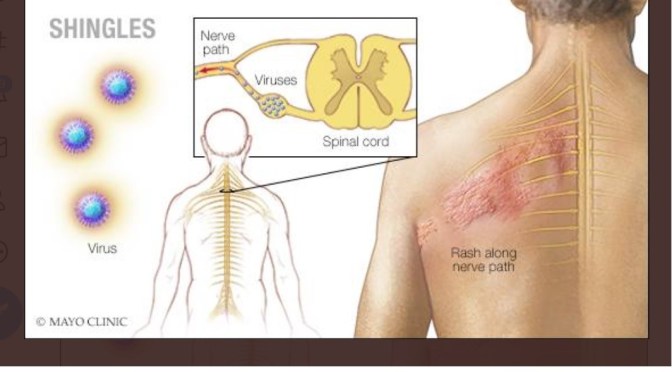
Shingles is a viral infection that causes a painful rash. Although shingles can occur anywhere on your body, it most often appears as a single stripe of blisters that wraps around either the left or the right side of your torso.

Shingles is caused by the varicella-zoster virus — the same virus that causes chickenpox. After you’ve had chickenpox, the virus lies inactive in nerve tissue near your spinal cord and brain. Years later, the virus may reactivate as shingles.

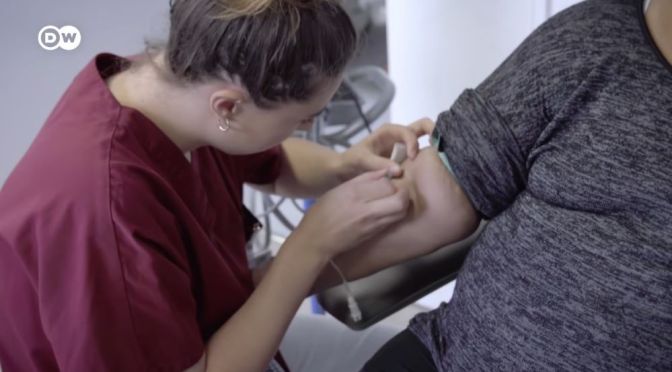
Shingles isn’t a life-threatening condition, but it can be very painful. Vaccines can help reduce the risk of shingles. Early treatment can help shorten a shingles infection and lessen the chance of complications. The most common complication is postherpetic neuralgia, which causes shingles pain for a long time after your blisters have cleared.

Insights: The Lucrative Business Of Diabetes (2022)

In our modern consumer society, Type 2 diabetes has become a widespread disease. Companies are developing drugs that are increasingly expensive, but not necessarily more effective. Health authorities are powerless. Diabetes is spreading rapidly, all over the world.

The disease destroys lives and puts a strain on public budgets. The UN is calling on governments to take action. Diabetes is proof that modern societies are incapable of adequately treating chronic disease. It affects around 430 million people worldwide, with two main metabolic disorders falling under the name diabetes.

Type 1 is an autoimmune disease that must be treated with lifelong doses of insulin, while type 2 can develop when a person’s diet is too high in fat and sugar and they do not engage in enough physical activity. With turnover of $46 billion, diabetes is a massive and extremely lucrative market. Constantly promised miracle cures have not led to satisfactory treatment, with patients either taking too many drugs or no longer being able to afford them.

It’s a desperate situation, and the only ones benefiting seem to be pharmaceutical companies. A medical focus on blood glucose levels has led to an overreliance on medication, sometimes without due concern for dangerous side effects. Patients become trapped in a cycle of treatment, which in many cases still does not halt the disease’s progression. This can lead to amputations, blindness and heart attacks.

And yet there are alternatives that could flatten the curve of the type 2 diabetes epidemic, while reducing health care spending. Improved diet can be a preventative measure, and a strict adherence to diet can also bring about remission in the case of Type 2 diabetes. But these solutions require effort, as well as a complete rethinking of chronic disease management. Filmed on three continents, this documentary features industry whistleblowers, patients, researchers and medical professionals. It also confronts pharmaceutical companies about their responsibility for the situation.

Cardiometabolic Health: 93% Of U.S. Adults Fail Test

ess than 7% of the U.S. adult population has good cardiometabolic health, a devastating health crisis requiring urgent action, according to research led by a team from the Friedman School of Nutrition Science and Policy at Tufts University in a pioneering perspective on cardiometabolic health trends and disparities published in the July 12 issue of the Journal of the American College of Cardiology. Their team also included researchers from Tufts Medical Center.

Researchers evaluated Americans across five components of health: levels of blood pressure, blood sugar, blood cholesterol, adiposity (overweight and obesity), and presence or absence of cardiovascular disease (heart attack, stroke, etc.). They found that only 6.8 percent of U.S. adults had optimal levels of all five components as of 2017-2018.

Infographic: Age-Related Macular Degeneration

An eye disease that causes vision loss.

Macular degeneration causes loss in the center of the field of vision. In dry macular degeneration, the center of the retina deteriorates. With wet macular degeneration, leaky blood vessels grow under the retina.

Blurred vision is a key symptom.

A special combination of vitamins and minerals (AREDS formula) may reduce disease progression. Surgery may also be an option.

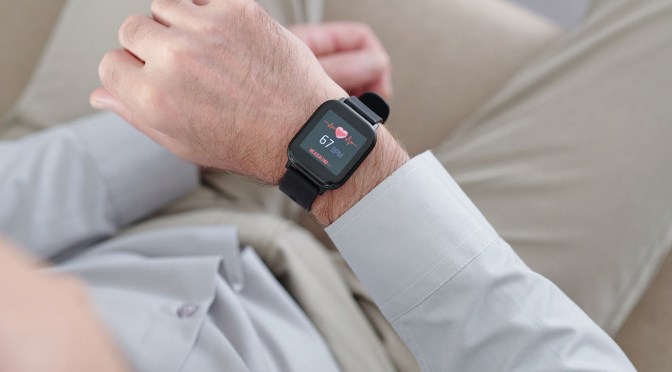
Smart Watches: New Heart Surgery Remote Monitors

Smartwatches just keep getting smarter: the latest versions can estimate your blood oxygen level and record an ECG (a measurement of your heart’s electrical activity). A new study suggests these sophisticated devices may provide a safe, accurate way to monitor people at home after they undergo a minimally invasive heart valve replacement procedure.

The study included 100 people who had a transcatheter aortic valve replacement, most of whom went home within a day or two after the procedure. All received a smartwatch that recorded their heart rate, steps, pulse, oxygen saturation, and an ECG measurement. During next 30 days, the smartwatch detected 29 of 38 heart-related problems — mostly heart rhythm abnormalities — among 34 participants.

The findings suggest that smartwatches could be an effective way to remotely monitor patients from home, say the authors, whose study was published March 29, 2022, in the Journal of the American Heart Association.

Eye Health: Why Corneal Transplants Are Rising

At one time, replacement parts for the eyes must have seemed unimaginable. Nowadays, if the inner lens of the eye becomes clouded by a cataract, a routine surgery to swap it out with a new artificial lens restores vision.

But what happens if the outer lens of the eye (the cornea) becomes damaged or diseased? You can have that replaced, too. “It’s not as common as cataract surgery, but many people get corneal diseases after age 50 and may need a corneal transplant,” says Dr. Nandini Venkateswaran, a corneal and cataract surgeon at Harvard-affiliated Massachusetts Eye and Ear.

More than 49,000 corneal transplants occurred in 2021 in the US, according to the Eye Bank Association of America.

What is the cornea?

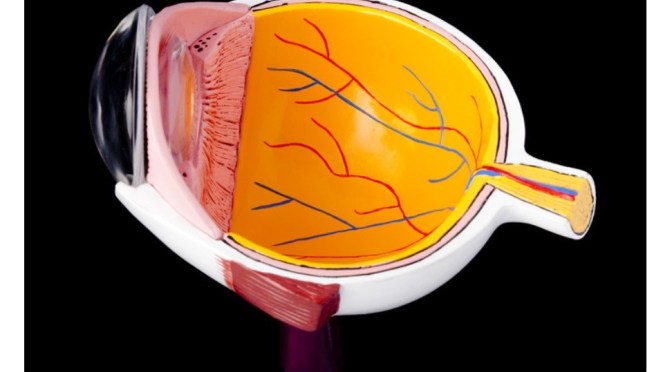
The cornea is a dome of clear tissue at the front of each eye, covering the iris and pupil, that acts as a windshield that protects the delicate eye apparatus behind it, and focuses light onto the retina, which sends signals that the brain turns into images (your vision).

You need this combo of windshield and camera lens to focus and see clearly. But many things can go wrong within the five layers of tissue that make up the cornea. That can make it hard to see and rob you of the ability to read, drive, work, and get through other activities in your day.

How does damage to the cornea occur?

It may stem from a number of causes:

  • Injuries, such as a fall. “Falls are a big reason for people to come in with acute eye trauma. The cornea can be damaged easily if something pokes it,” Dr. Venkateswaran says.
  • Previous eye surgeries. “Especially for adults who’ve had several eye surgeries — such as cataract and glaucoma surgeries — the inner layers of the cornea can become damaged and weakened with age,” she adds.
  • Illness. Problems like severe corneal infections, or genetic conditions such as Fuchs’ endothelial dystrophy, can cause vision loss.

What are the options for treating corneal damage?

Cornea treatment depends on the type of problem you have and the extent of the damage. “It’s a stepwise approach. Sometimes wearing a specialty contact lens or using medications can decrease swelling or scarring in the cornea,” Dr. Venkateswaran says.