THE DOCTORS 101 CHRONIC SYMPTOMS & CONDITIONS #48: URTICARIA (HIVES)

ALLERGY is a type of reaction that can vary from annoying to fatal. The question has always been: what possible utility to the body does the allergic reaction, which has survived evolution, provide? The best theory fingers parasitic infestations; not only can parasites cause allergic reactions, Indicate allergy by showing blood eosinophilia, but the allergic reaction seem to help us fight parasitic infestation, which was much more common in humanity’s  past, and in present day underdeveloped societies.

URTICARIA consists of a number of little welts or bumps that pop up on the skin and are very itchy. This reaction is caused by little darkly-staining cells called MAST CELLS, which release Histamine  and other irritants into the skin, causing hives. These mast cells are provoked into releasing their irritating cargo by IGE antibodies, the basis of true allergy.
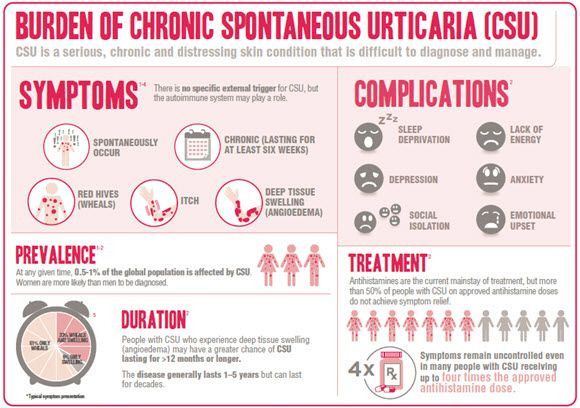
Treatment consist of removing the cause, blocking the action of the IgE antibodies, or giving medication to block the action of the histamine( anti-histamines).

There are multiple common causes, several giving its name to a type of Urticaria. Pressure urticaria can be caused by a belt or tight fitting clothing pressing on the skin to cause the hives. Solar urticaria can be caused by sunlight.

Cold urticaria can be caused by exposure to very cold objects. Hives can also be caused stress, exercise, different foods(seafood and strawberries are the most famous), different drugs(penicillin and aspirin are the most famous), and scratching on the skin(dermatographia).

Hives can occur as a feature of ANAPHYLAXIS. If the IgE-mast cell reaction is extensive, the blood pressure can drop, internal organs can be affected, and emergency treatment must take place to prevent death.
My only experience with hives was after a bee sting, when I broke out with itchy bumps. I had desensitization with honeybee venom, although this is not always done these days. Be sure to check with your doctor if you have such a reaction, however.

The biggest recent improvement in treating people who are incapacitated with frequently recurring and long lasting hives is anti-IGE, an expensive but very effective injection.

If you have hives, be sure to keep a record of events that immediately preceded the hives, including foods, activities,, and exposures. Although the recommended Mayo clinic article that follows suggests that you see a dermatologist or an allergist, I would reverse that and suggest the allergist first.

—Dr. C.

Read more

ATHEROSCLEROSIS: STRESS, LACK OF SLEEP & EXERCISE AND POOR DIET RAISE RISKS

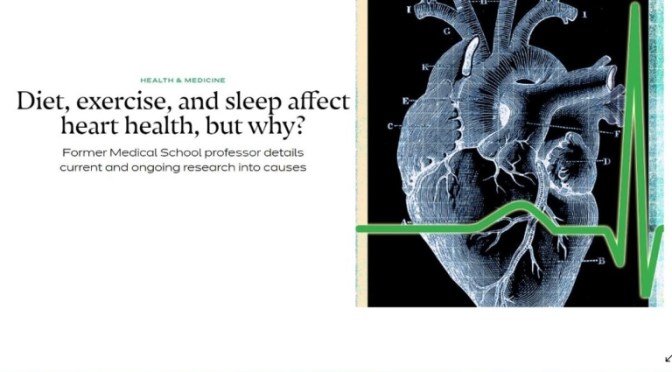
Swirski acknowledged that “there is no question” that genetics play a role in cardiovascular health, but in the last several years, four risk factors — stress, sleep interruption or fragmentation, diet, and sedentary lifestyle — have been clearly identified as contributing to atherosclerosis, commonly referred to as hardening of the arteries, which can lead to a variety of complications, including death.

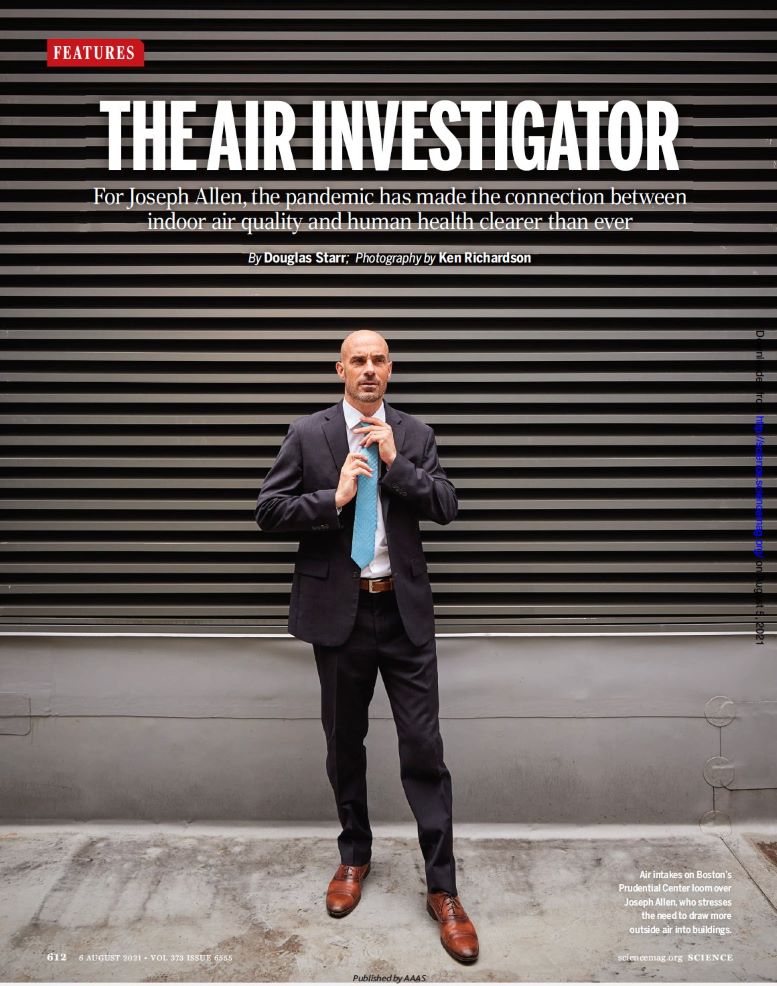
SCIENCE: CLEANING INDOOR AIR WILL IMPROVE HUMAN HEALTH AND COGNITION

Read full article

COMMENTARY:

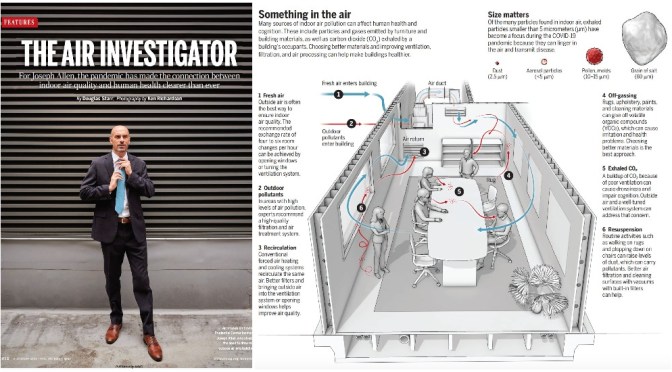
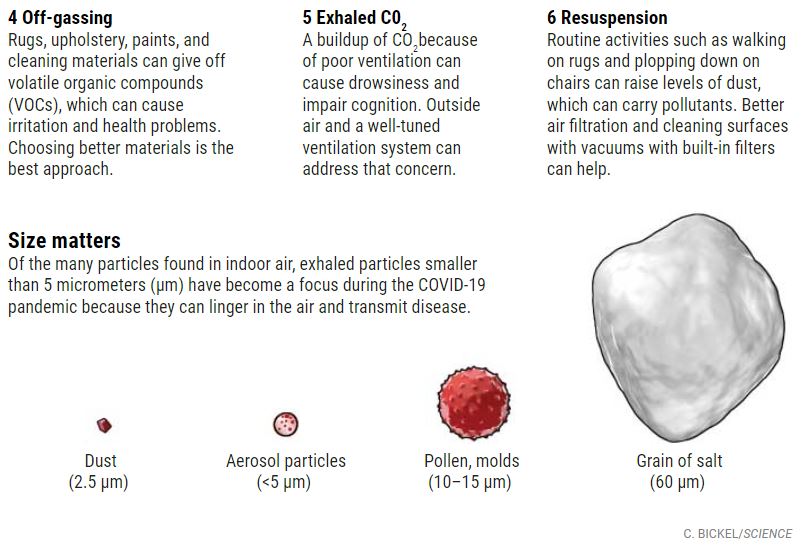
Joseph Allen, the “air investigator”, was apparently on board early in the COVID-19 epidemic, stressing the importance of suspended  air particulates, less than 2 microns in size, causing transmission of the disease.

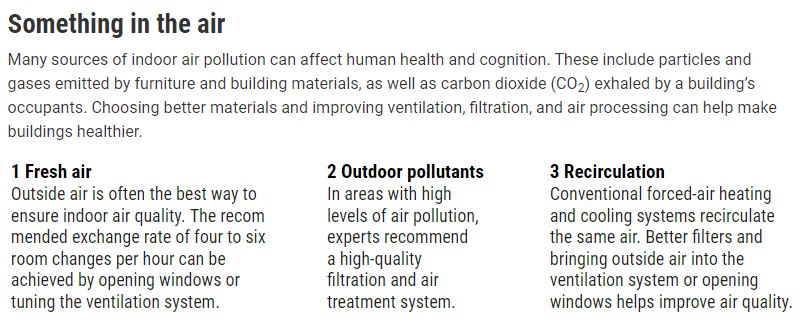
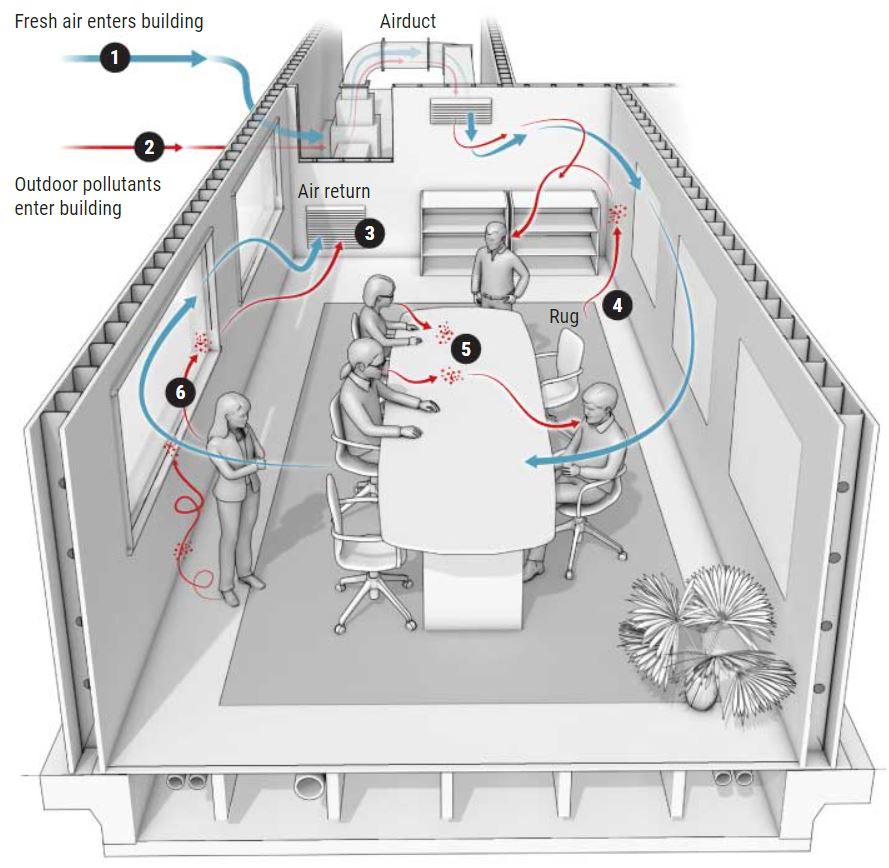
His article in Science: “clean indoor air will improve human health and cognition” is well worth reading, or at least inspecting the info graphic. As a practicing allergist, I was aware that inside dust mite particles and mold spores made allergies worse. We had a service where we would go into homes and sample the air. An excess of certain Indoor mold spores, compared with those outside, would indicate a “problem home”. We would then try to find the water leakage source that produced the molds.

I also had a patient who could not tolerate a new house, with its carpets and other artificial materials. The only place where she felt better was in an old seaside house 100 miles south of San Francisco. I thought there were some psychological factors, but who knows? Volatile organic compounds, VOCs, probably affect some people more severely.

Beginning shortly after the energy crisis in the 80s, the “sick building syndrome”, characterized by headache and fatigue in certain buildings, was on the news. The eventual solution was to create better ventilation, with a reduction of CO2 and VOCs in those buildings. In addition, federal agencies began banning certain artificial  fabrics that out-gassed VOCs.

There was eventually less talk about sick building syndrome, except for the occasional air system which was contaminated with Legionella bacteria.

The present article stresses accumulation of CO2 and VOCs In the stale air in the individual home or office as a cause of diminished attention and productivity.

CO2 monitors still cost about $200, and so I think I am going to just try to increase the ventilation in my office, where I get sleepy in the afternoon, by opening the windows and sliding doors. I wonder about  the indoor CO2 in Scandinavian winters, where depression is increased.

—Dr. C.

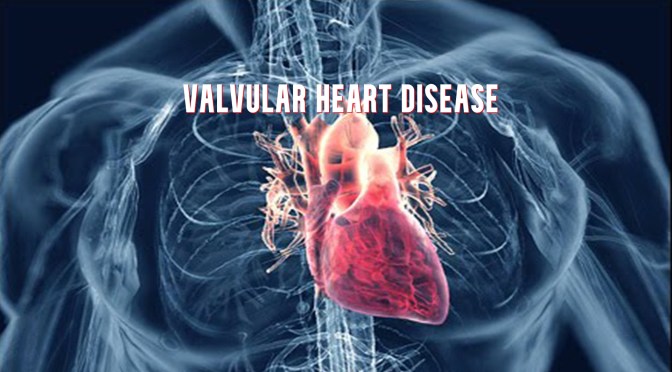
DR. C’S JOURNAL: WHAT IS VALVULAR HEART DISEASE?

I continue to be amazed by-and grateful for -the astounding collection of miracles that is the human body. Each element is durable if properly maintained and potentially provides us with a long and healthy life. The heart Valves are a part this wonderful orchestra, opening and closing about 2 billion times in a full lifetime.

It is possible to visually appreciate our heart and it’s valves, but millions of other microscopic-nanoscopic-little protein machines are also opening, closing, twisting and folding anonymously, allowing us to live and move.

Now is a particularly good time to talk about the heart valves because imaging devices are available to detect, and surgical techniques are at hand to treat, the common problems that develop in the course of optimally guiding our blood through the heart, into 2 separate circuits, the pulmonary, and the systemic. Life can be defined as an island of order in a sea of chaos. Energy is required to allow this island to fend off dissolution. The energy is used to continually maintain the integrity of our cells, the island in this metaphor, and keep entropy at bay.  Myriads of biochemical mechanisms direct this repair. Sleep, diet, and exercise aid in the mending.

We use our bodies in the daytime, and at night switch to a cleansing and repairing function, sleep.  Diet, and our resident microbiome, provide the materials for this restoration. Exercise helps utilize excessive nutrients, and directs our metabolism towards regeneration and repair.

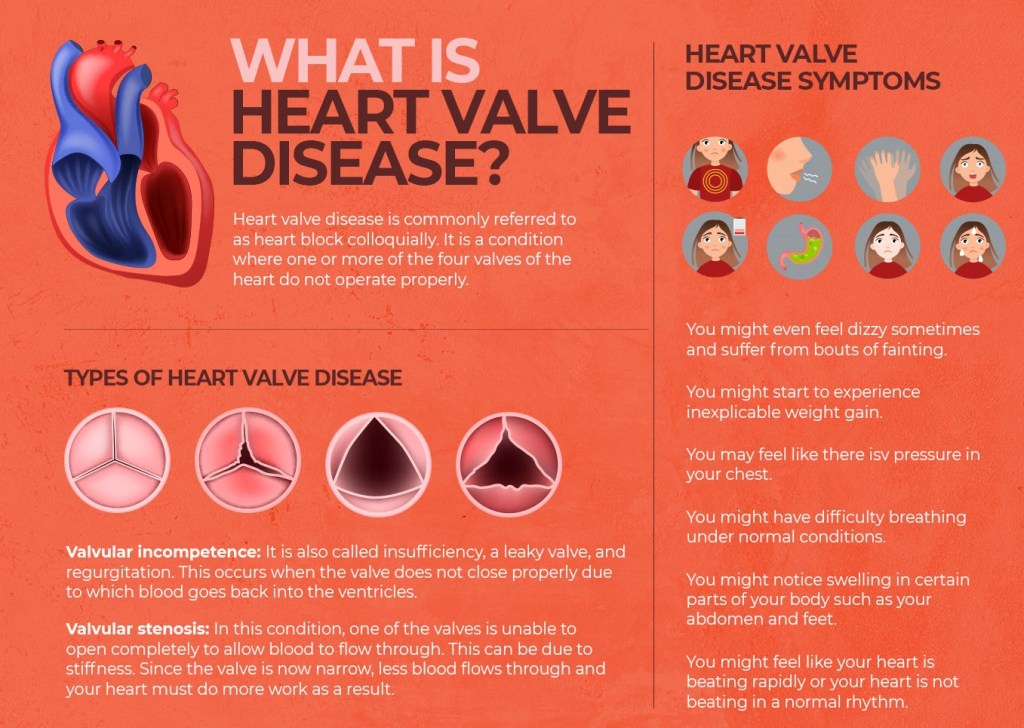
Some valvular problems are present at birth because of defective development. Bicuspid aortic valves and mitral prolapse are examples. Hypertension places a strain on the entire system. Type two diabetes can cause inflammation and abnormal deposits in the valves. A variety of biochemical pathways active during the formation of the heart can go awry and fail to maintain the neatly layered deposits of collagen, proteoglycans and elastic tissue that forms the basis of the valves, and the endothelial cells that line them.

Tobacco smoke, which harms in so many other ways, can also damage the heart valves, as can infections, which sometimes grow on the heart valves themselves. Symptoms of heart valve disease include abnormal sounds that your doctor can hear, or the the presence of fatigue, shortness of breath, swelling of the ankles, and dizziness, which are common symptoms of cardiac malfunction. Unusual chest pains, particularly with mitral prolapse, and irregular heartbeat can also be present.

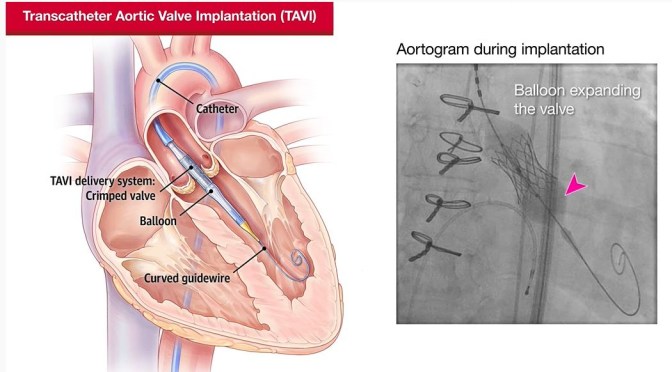
Replacement of some valves via a catheter inserted in an artery is one of the recent advances in treatment of Valvular heart disease.

Ultrasound is particularly useful in diagnosing valvular heart disease, but a whole cafeteria of diagnostic tests are available to doctors these days.
Please refer to the following Mayo clinic article for more information.

—Dr. C

Read more

MEDICINE: TRANSCATHETER TREATMENTS FOR VALVULAR HEART DISEASE (JAMA VIDEO)

Transcatheter valvular repair and implantation has become increasingly common for treating patients diagnosed with valvular heart diseases.

0:00 This video summarizes the three transcatheter valvular therapies currently in use in the United States: transcatheter aortic valve implantation (TAVI), transcatheter valve-in-valve procedures, and transcatheter edge-to-edge mitral valve repair.

0:47 Transcatheter aortic valve replacement (TAVI) for patients with severe aortic stenosis regardless of surgical risk 2:47 Transcatheter valve-in-valve procedures for patients with bioprosthetic valve failure

3:35 Transcatheter mitral valve repair for high surgical risk degenerative mitral regurgitation and for severe functional mitral regurgitation regardless of surgical risk.

Read the complete review.

THE DOCTORS 101 CHRONIC SYMPTOMS & CONDITIONS #47: POST-TRAUMATIC STRESS DISORDER (PTSD)

PTSD, post traumatic stress disorder, has been increasingly recognized by the medical community, and was admitted to the status of a psychiatric disorder in 1980. It was first recognized as “shell shock” in combat soldiers.

The movie, “Patton”, featured one such case; abusive behavior of a soldier by Patton hit the newspapers, and he was sidelined for the start of “ operation overlord“. Since the majority of soldiers were not incapacitated , Patton thought the soldier was cowardly.

As an allergist, I was sent one case of PTSD; Believe it or not, the referring physician thought it might be an “allergy”, so little was it understood.

Now, memory consolidation  is considered to be one of its dimensions. An incompletely consolidated memory allows flashbacks to be considered the real thing.

PTSD is partly under genetic control, since identical twins are more more likely to experience the condition. Anxiety and other psychiatric problems such as depression and substance abuse  can be associated. Women are more likely to experience it. Individuals with low cortisol, elevated norepinephrine or a small amygdala or more likely to develop PTSD. Even children can be involved if they have been abused physically.

Any kind of a frightening experience, especially sexual, can be a cause.
Symptoms can include recurrent distressing memories, flashbacks, or nightmares of the traumatic event, or emotional distress and anxiety on exposure to a similar experience.

Treatment can include medication for depression, but  benzodiazepines should be avoided. Cognitive behavioral therapy has enjoyed some success, but treatment is generally difficult. Please consult the attached Cleveland clinic article for more information.

–Dr. C

Read more

THE DOCTORS 101 CHRONIC SYMPTOMS & CONDITIONS #46: COCCYDYNIA

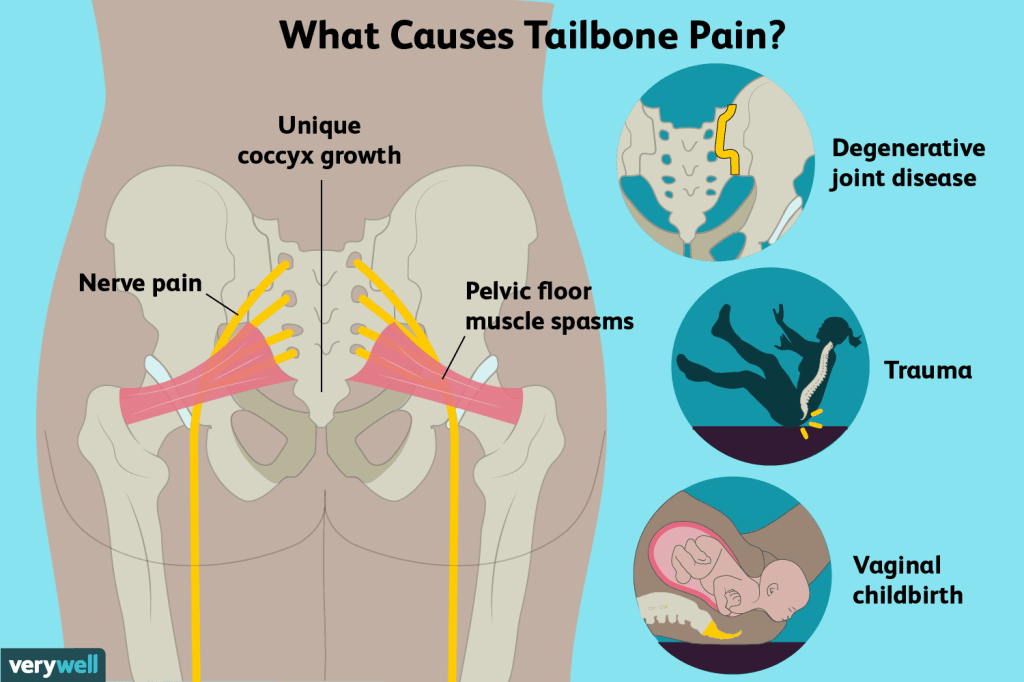
Pain is the hallmark of Coccydynia (Tailbone Pain). The word can be divided into two parts; the first, coccy, refers to the triangular structure itself, which sits at the bottom of the vertebral column, and comes from the Greek word for ”cuckoo”. I previously thought it translated as “tail”. The second part of the word, -“dynia” translates as “pain”, which is much more appropriate.

The coccyx, or tailbone, is one of those useless vestiges of evolution, joining ranks with the appendix and paranasal sinuses. It sits just above the gluteal cleft on your backside, and  is the conjunction of four or five boney segments which are either fused, or joined by a variety of bony, cartilaginous or fibrous unions.

If these unions are damaged, irritated, or fractured, PAIN can result.
The attached muscles, the anus in front, and the buttocks(gluteus maximus) in back, account for some of the activities that can cause pain when the coccyx is disordered.

The main causes of coccydynia are falling on your backside, sports has bicycling, especially on irregular surfaces, or childbirth, which requires mobilization of the coccyx in order for the baby to exit.

One of my friends recently developed coccydynia from riding for several hours on a very bumpy dirt pathway. She has had the pain for two or three weeks now, has pain while sitting & upon getting up, but can walk without pain. Sleeping, especially on her side, causes no problems.

Ibuprofen affords temporary relief, but she likes to avoid taking it regularly because of side effects. Most people with coccydynia will recover after a few weeks, or occasionally a few months, and will be sufficiently impressed to avoid the causative activities.

If the pain persists for a long time or prevents normal activities, you should visit the doctor for diagnostic tests.

Please refer to the article by the Cleveland clinic for more information.

—Dr. C.

Read more