
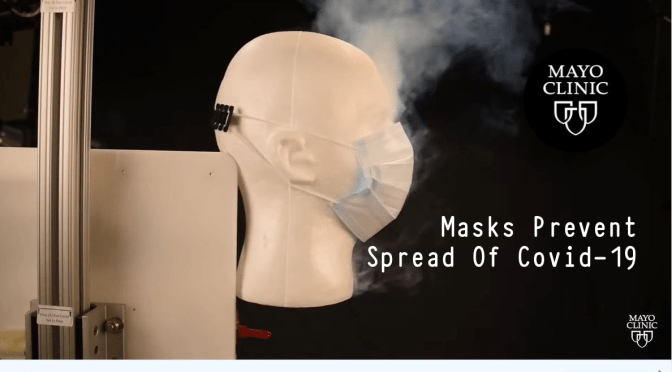
Mayo Clinic researchers recently published a study that shows the proper use of masks reduces the spread of respiratory droplets. The findings strongly support the protective value and effectiveness of widespread mask use and maintaining physical distance in reducing the spread of COVID-19. Reporter Jason Howland has more in this Mayo Clinic Minute.
Tag Archives: Women’s Health
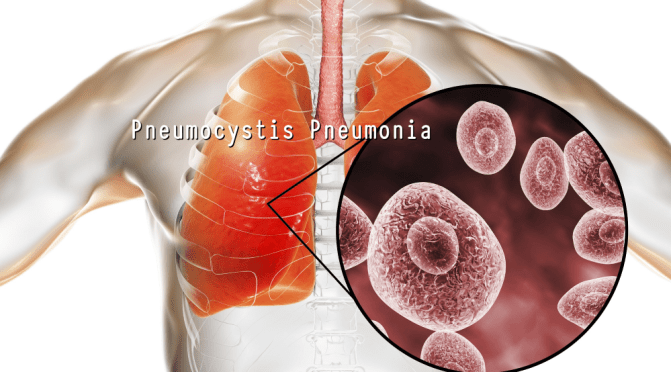
DR. C’S JOURNAL: WHAT IS PNEUMOCYSTIS PNEUMONIA?
Pneumocystis is found in the respiratory tract of most mammals and Man. Pneumonia from this organism was extremely rare or unknown before the advent of AIDS.
When the lymphocyte count of a person with AIDS drops below 500, or especially 200, pneumocystis pneumonia is a frequent complication. Symptoms include cough, fever, rapid breathing, and shortness of breath.. The chest x-ray typically shows a “ground glass” appearance, caused by fluid inside the air sacs and throughout the lung. Treatment is usually with trimethoprim sulfa.

Immunosuppressive therapy is often given for organ transplants and auto immune diseases these days. Patients and doctors should be on the lookout for pneumocystis symptoms in this situation. Even long-term corticosteroids can produce enough immunosuppression to allow pneumocystis to invade the body.
Pneumocystis Jeroveci is the causative organism, and used to be called pneumocystis Carini. Doctors suspect this disease when an immuno-suppressed patient, especially AIDS , has a dry cough, with pneumonia and a very low oxygen concentration, more severe than expected. Fluid taken from the lung shows several organisms in little sacks or cysts.
Treatment is with sulfonamids, if they are tolerated. Cortisone must be given not the same time to prevent a severe reaction from absorption of the dead organisms. Pneumocystis is a yeast-like fungus and is also discussed under opportunistic fungal infections.
The following article will give you more information.
—Dr. C.
DR. C’S JOURNAL: EFFECTS & SYMPTOMS OF LONG COVID
COVID-19 is admittedly a pandemic and has caused much economic and social disruption in the world. Now we learn that it may not be over after a few of weeks of illness. LONG COVID is now an accepted syndrome.
You can tell because of the many clinics for handling it being set up by the NHS in England, and millions in research money being directed towards a solution.
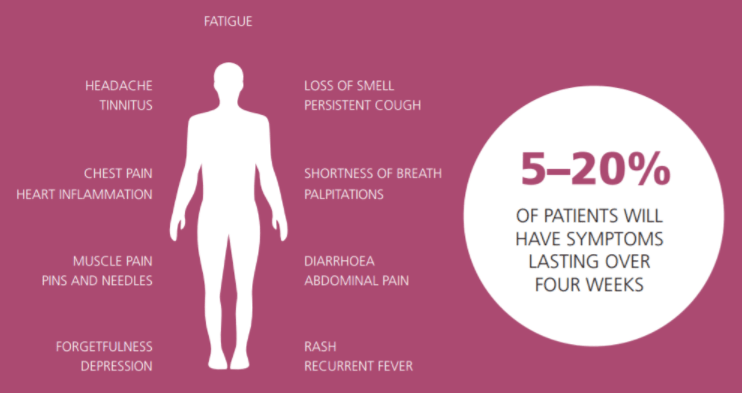
The most disturbing thing to me is that infected but asymptomatic or mildly ill people may get this condition, and have one or more symptoms for a long time .Certainly, those more seriously ill develop long Covid symptoms more commonly.
Long Covid is taking its place with chronic fatigue syndrome, posttraumatic stress disorder and post ICU syndrome as poorly understood conditions. They may in fact be taking place simultaneously, even if they are not identical.
The cause can be due to continuing viral infection in older or immune compromised individuals. Vascular damage is another reason that could account for the widespread involvement of practically any organ system that doesn’t go away after a few weeks.
Structural damage to the alveoli of the lungs and other organs can also play a role, which would account for shortness of breath as a prominent persistent symptom. Although it has not been highlighted in the articles that I have read, auto immunity can also be playing a role in long Covid.
This would go along with The myocarditis rarely caused by the mRNA vaccines; perhaps some of the protein sequences of the spike proteins have similar shapes to some human tissues. Name a symptom, and you’ll probably find it listed among the 50 odd symptoms mentioned in the Wikipedia article on long Covid, which is appended to the end of this article.
The most prominent symptoms include extreme fatigue, mental fog, and shortness of breath. Treatment is mainly supportive and general. After ruminating on this condition, it’s going to be quite a while before Yours truly wants to breathe in other peoples air spaces; I plan to continue masking in public, distancing and avoiding large groups.
That being said, I am planning to go out to eat dinner tonight, and can hopefully be placed at the edge of the room. I will inquire as to the vaccination status of our waiter. The people at my table will all be doubly vaccinated, which is not complete assurance of safety, but will help make me feel relatively comfortable.
I also plan on getting a booster shot as soon as it is available. Hopefully, the vaccine incorporating the special mutations of the delta virus will be soon available. You don’t want to be infected by this nasty, promethian shape-shifter. Take care.
–Dr. C
Read more

Melanoma: How To Catch Skin Cancer Early (Mayo)
DOCTORS PODCAST: MEDICAL & TELEHEALTH NEWS (JULY 24)
A weekly podcast on the latest medical, science and telehealth news.
THE DOCTORS 101 CHRONIC SYMPTOMS & CONDITIONS #44: SYPHILIS (STD)
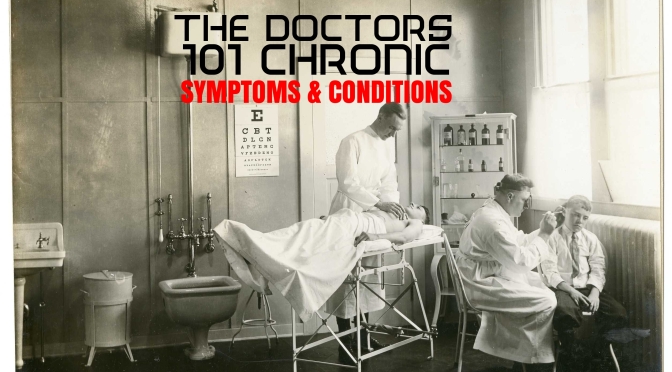
Syphilis is a venereal disease, or STD, that is unusual, unique in many ways. First of all, it is one of the few major diseases to have originated in the Americas, the New World, and carried back to Europe most likely by Columbus; Popularized by “guns germs and steel”, the infectious disease traffic was almost all the other way, most famously smallpox which decimated the Native Americans.
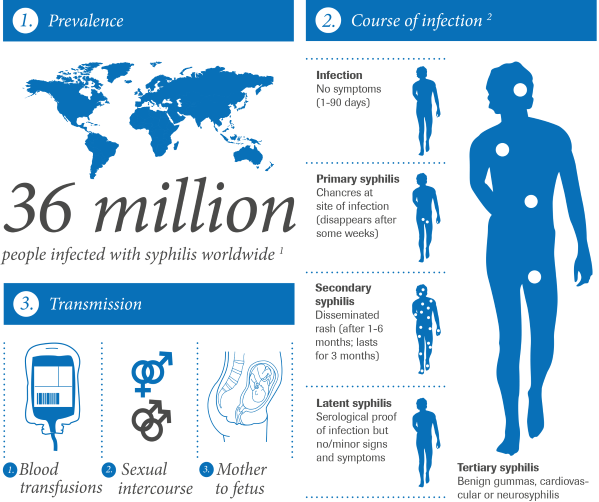
A second unusual characteristic is that it’s treatment(penicillin) is known, cheap, easy, and yet Syphillis infects millions of people yearly, most commonly to be sure in the developing world, but also large numbers in America where is helped by AIDS, and spread by men having sex with men.
A third unusual characteristic is that syphilis can mimic practically any disease. There are three stages. The first stage is a painless ulcer, usually on the genitals. After a few weeks, the second stage develops, showing a widespread rash and other symptoms. After a few more months, problems develop in the heart, brain, or growths ( gummas) in many other areas .
When I was in medical school we used to go to an old peoples home to listen for aortic regurgitation, and observe the neurologic symptoms of syphilis patients. Syphilis is still a cause of aortic insufficiency, if untreated.
Treponema pallidum, The causative agent, is also unusual. It has a very small geome, and has many missing cellular mechanisms, making it dependent upon Homo sapiens, it’s only known Reservoir. The fragile but very active organism will die in a few hours outside of its human host. Like it’s confederate,AIDS, The infection can easily spread from mother to child with devastating consequences. It is one of the major diseases for which pregnant mothers are tested.
Syphilis is one of the best arguments for being monogamous. If this can’t be, remember that syphilis is easily treatable, and that you should report any unusual illnesses to your doctor.
—Dr. C
RESEARCH: ‘THE SCIENCE OF HEALTHY AGING’ (SCRIPPS)
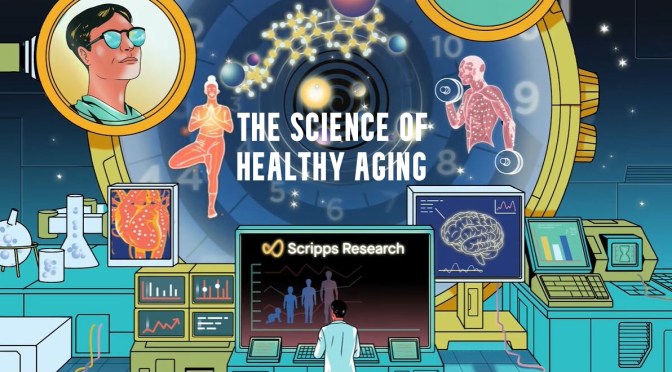
Although growing older comes with a number of major life changes, science can help inform the things we do in the here in and now to forestall the most serious features of the aging self, promoting healthspan and not just lifespan.

- Build Muscle – Muscle mass is one the best predictors of health and longevity. Muscle tissue is known to release its own chemicals called myokines, which can have benefits that span cognition, immunity and anti-cancer activity. By performing regular, resistance-based exercise that prioritizes strength, we can delay the loss of bone density and risk of physical injuries.
- Vitamin D – Commonly known as the sunshine vitamin, vitamin D is in fact a critical hormone that helps maintain healthy bones, boost our immune system and improve our cardiovascular function. With age, the production of vitamin D in the skin can become less efficient, so if we don’t spend enough time outdoors, our risk of vitamin D deficiency may increase.
- Neurodegenerative Diseases – One of the most unsettling aspects of aging is the potential for neurodegenerative disease. These conditions are increasingly prevalent in those with diabetes, suggesting that the brain’s blood flow and energy supply may be compromised. Research indicates that regular physical exercise, a healthy whole foods diet and staying intellectually active could at least slow the rate of decline.
- Mindfulness – As we get older, major arteries can become thicker and less flexible, leading to increased blood pressure and undue strain on the heart. A regular mindfulness practice such as yoga or meditation has been shown to stem the release of stress hormones like cortisol and adrenaline. By freeing us from this “fight-or-flight” state, this habit can improve blood flow and reduce the risk of heart attack and stroke.
- Stay Social – As social animals, maintaining a strong sense of community and close personal relationships into old age are underestimated contributors to longevity. While social isolation in seniors can result in significant physical and mental decline, research suggests that close loved ones offer important emotional support and behavioral modifications that can overcome periods of high stress.
- Metabolism – “My metabolism is slowing down!” That’s what we often hear, as the aging body becomes less effective at using energy, placing us at risk of obesity and type 2 diabetes. By maintaining our muscle mass and reducing sugar consumption, we can support hormonal health, preserve our metabolism and keep our vitality into those advanced years. As scientists continue to find ways to extend our lives, paying attention to these keys to healthy aging can help increase the quality of those extra years.
THE DOCTORS 101 CHRONIC SYMPTOMS & CONDITIONS #43: CELIAC DISEASE
Celiac disease – I know of no disease more rare that is a fixation for more people. Practically everything I see in the processed food area advertises itself as being gluten free, yet celiac disease affects about only one in 100 people. Even the dogs that I see on my walk are claimed by their owner to be on a gluten restricted diet.
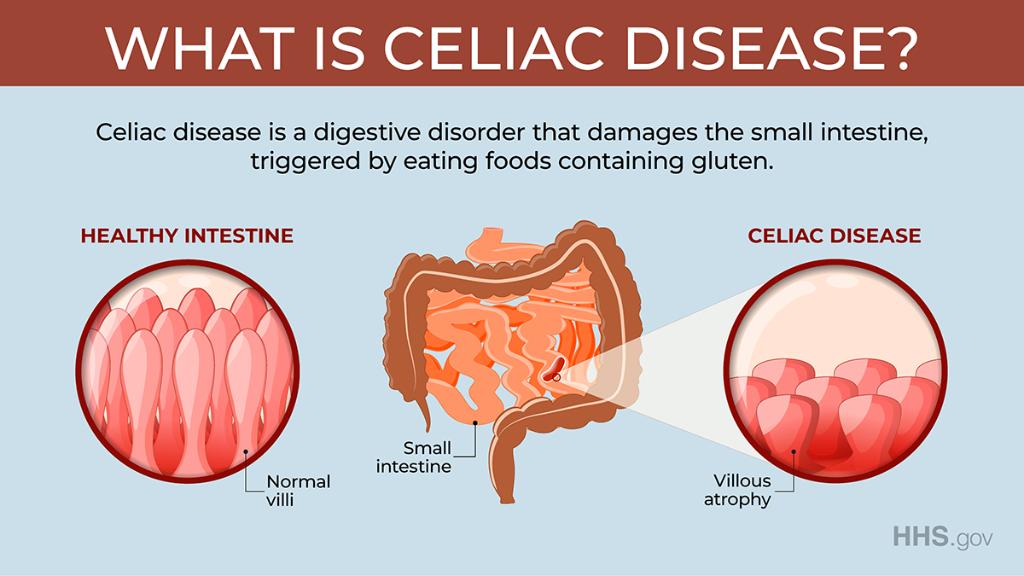
Celiac disease-it’s hard to imagine a more complicated and variable disease. Although Coeliac Disease runs in families with HLA-DQ2 and HLA-DQ8, having these markers is not alone sufficient to cause Coeliac Disease. Eating gluten is not even sufficient, but requires an enzymatic change via tTG2 to make gluten fire up the immune system. Testing for an antibody to tTG2 is one of the better tests for celiac disease, and a drug that blocks tTG2 has recently proven helpful as a treatment for celiac disease.
CD often starts in young children, but the disease can begin at any age. Although gastrointestinal symptoms such as diarrhea or constipation, bloating, and bulky, oily stools are typical, even clear-cut cases may have no recognized symptoms at all. In other cases almost any organ can be involved, or the symptoms can be non-specific such as Weight loss, anemia and fatigue.
it is estimated that only about 10% of people with celiac disease are ever proven to have the diagnosis. It Is massively under diagnosed in spite of permeating the popular lore.
A lot of people place themselves on a gluten-free diet and claim to feel better, but being on a gluten-free diet makes the diagnosis difficult to make; if celiac disease is seriously suspected, the doctor will place the patient on a gluten-containing diet which allows the tests, such as anti-t-TG2, or villous atrophy of the small bowel to become positive.
Among people who actually have real, valid, proven celiac disease, who have every reason to want to restrict gluten to improve their Disease, 40% of them have great difficulty in adhering to the necessarily draconian gluten free diet.
Even the doctors can have a blind eye to celiac disease, since it is quite rare. A good friend of mine with chronic bloating went to a gastroenterologist who declared her free of disease, without having ruled out celiac disease. One would think that a gastroenterologist would be tuned in to coeliac disease, given the prominence of gastrointestinal symptoms and pathology.
The patient should be her own advocate.
—Dr. C
Read more

DR. C’S JOURNAL: CAUSES & SYMTPOMS OF INSOMNIA
Sleep has many functions, among which are clearing the body of toxins and consolidating memory. The exact amount we need is determined by age, and genetics among another things. From what I’ve read, eight hours is required, plus or minus an hour.
That being said, there are a few among us who are super sleepers. Going back in history this probably included Mozart and Thomas Edison: They could live healthy, productive lives with as few as three or four hours of sleep. Genetic mutations, including changes to the Orexin Gene receptor account for true super-sleepers.
Familial fatal insomnia is a genetic disease operating through prion proteins, and does not illuminate the problem of insomnia. In most people there are two major forces which determine the onset of sleep, the circadian rhythm, and sleep pressure.
The TIMING of the sleep varies from morning larks to night owls. These shifts in the circadian rhythm is also genetic, involving many genes, including PER and CRY. Diurnal rhythm can apparently be changed, But with difficulty.
The sleep pressure is caused by the gradual daily accumulation of adenosine in the system, apparently resulting from the stripping away of the phosphate groups from the energy currency, ATP. This can be assuaged by caffeine containing drinks, such as tea or coffee. Caffeine temporally blocks the effect of adenosine, but when it wears off, you usually go right back to your fatigue state.
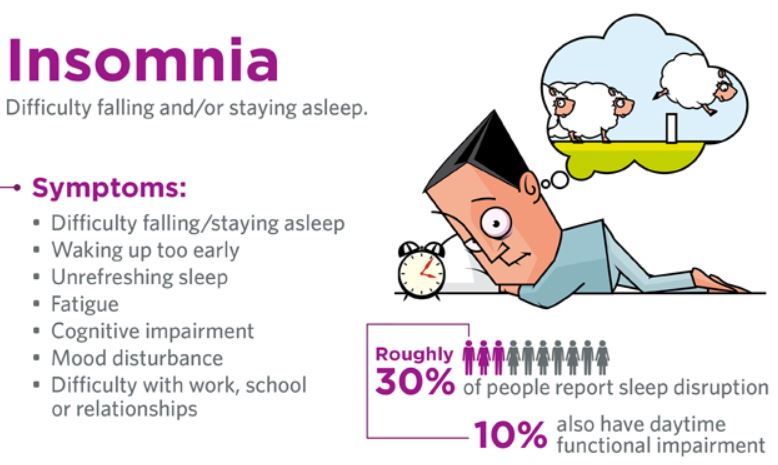
INSOMNIA occurs when you do not get as much sleep as you need, and are tired in the daytime. This is a major problem for a lot of people.
Insomnia has many causes. Stress will cause an increase in Cortisone in the bloodstream which interferes with sleep. Caffeinated drinks nicotine and other stimulants can cause you to have difficulty falling asleep, and alcohol will help you fall asleep but will often result in awakening in the middle of the night when the alcohol is metabolized.
Depression, Parkinson’s, chronic pain, gastroesophageal reflux and any other medical conditions can interfere with sleep. Sleep apnea, often associated with overweight and heavy snoring, is a special problem that sometimes needs the help of a sleep specialist.
Some poor habits such as reading in bed, doing work in bed, eating at bedtime, and heavy exercise just before bed can also be a problem.
A regular routine of Preparing for sleep, such as brushing and flossing and taking a warm shower are also helpful; you can get more details by looking up “sleep hygiene”.
A lot of people take a nap, but this can cause some difficulty in going to sleep. Among things you can do to prevent insomnia include living an active life, making your bedroom comfortable for sleep, and using your bedroom ONLY for sex and sleep.
Please refer to the accompanying Mayo clinic article for more organized information.
—Dr. C.
Mayo Clinic articlehttps://www.mayoclinic.org/diseases-conditions/insomnia/symptoms-causes/syc-20355167
Tachycardia: Types, Causes & Symptoms (Mayo Clinic)
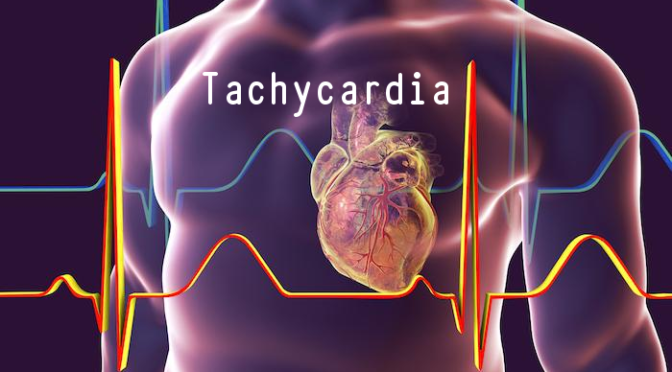
Tachycardia is the medical term for a heart rate over 100 beats per minute. There are many heart rhythm disorders (arrhythmias) that can cause tachycardia.
Types of tachycardia
There are many different types of tachycardia. They’re grouped according to the part of the heart responsible for the fast heart rate and cause of the abnormally fast heartbeat. Common types of tachycardia include:
- Atrial fibrillation. Atrial fibrillation is a rapid heart rate caused by chaotic, irregular electrical impulses in the upper chambers of the heart (atria). These signals result in rapid, uncoordinated, weak contractions of the atria.Atrial fibrillation may be temporary, but some episodes won’t end unless treated. Atrial fibrillation is the most common type of tachycardia.
- Atrial flutter. In atrial flutter, the heart’s atria beat very fast but at a regular rate. The fast rate results in weak contractions of the atria. Atrial flutter is caused by irregular circuitry within the atria.Episodes of atrial flutter may go away themselves or may require treatment. People who have atrial flutter also often have atrial fibrillation at other times.
- Supraventricular tachycardia (SVT). Supraventricular tachycardia is an abnormally fast heartbeat that starts somewhere above the lower chambers of the heart (ventricles). It’s caused by abnormal circuitry in the heart that is usually present at birth and creates a loop of overlapping signals.
- Ventricular tachycardia. Ventricular tachycardia is a rapid heart rate that starts with abnormal electrical signals in the lower chambers of the heart (ventricles). The rapid heart rate doesn’t allow the ventricles to fill and contract efficiently to pump enough blood to the body.Ventricular tachycardia episodes may be brief and last only a couple of seconds without causing harm. But episodes lasting more than a few seconds can become a life-threatening medical emergency.
- Ventricular fibrillation. Ventricular fibrillation occurs when rapid, chaotic electrical impulses cause the lower heart chambers (ventricles) to quiver instead of pumping necessary blood to the body. This can be deadly if the heart isn’t restored to a normal rhythm within minutes with an electric shock to the heart (defibrillation).Ventricular fibrillation may occur during or after a heart attack. Most people who have ventricular fibrillation have an underlying heart disease or have experienced serious trauma, such as being struck by lightning.
 Doctors Without Waiting Rooms