Tag Archives: TELEMEDICINE

TELEHEALTH CARE: PATIENTS CAN EXPECT EXPANDED “CONTACTLESS EXPERIENCES”

From Healthcare IT News (June 12, 2020):

Technology-enabled workflows now enable patients to complete most of the registration formalities prior to the visit, be it a virtual consult or a clinic visit. Registration kiosks in hospital lobbies may soon be enabled with facial recognition software to eliminate the need for touching any surface.

Routine examinations are also going virtual, with many diagnostic procedures now possible through remotely controlled devices. Caregivers are beginning to do their patient rounds through virtual visits. This trend will only grow in the coming years.

A vast and growing array of automated communication tools allows caregivers to use rule-based messaging to push everything from health coaching, post-discharge care instructions, and appointment reminders through IVR, text, SMS, and mobile alerts.

Read full article

TELEMEDICINE: WHAT ITS FUTURE GROWTH LOOKS LIKE OVER THE NEXT 5-10 YEARS

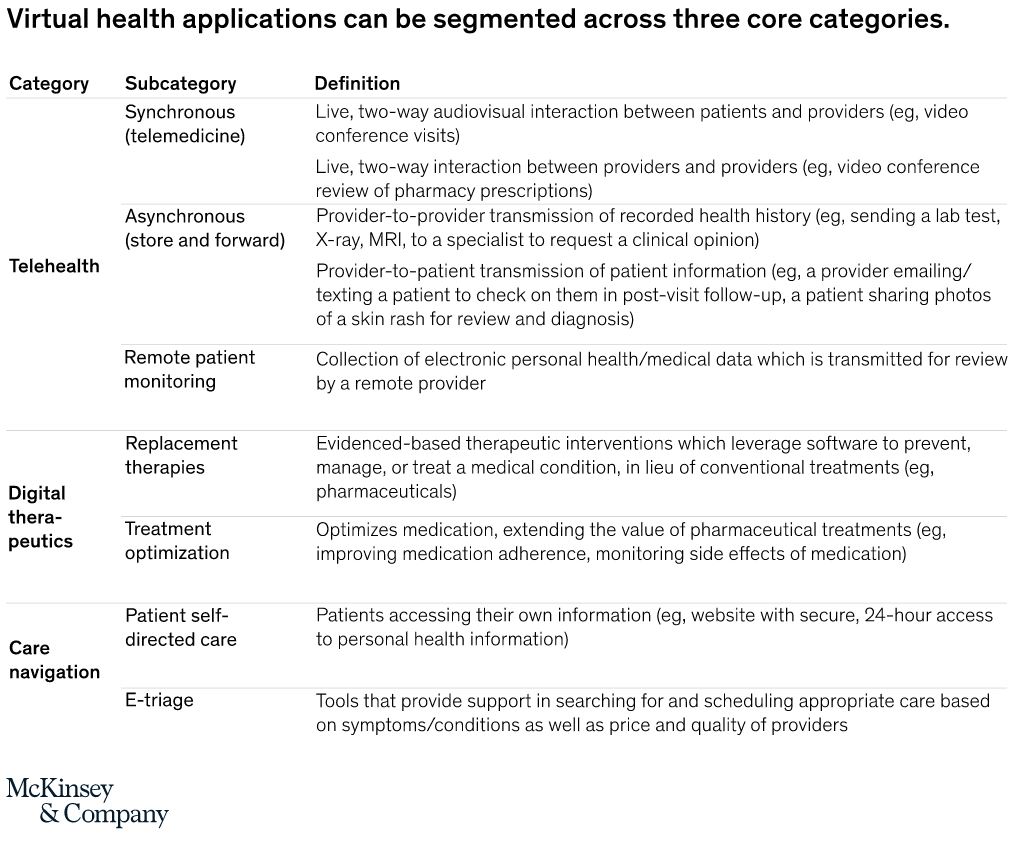
From McKinsey & Company (June 11, 2020):

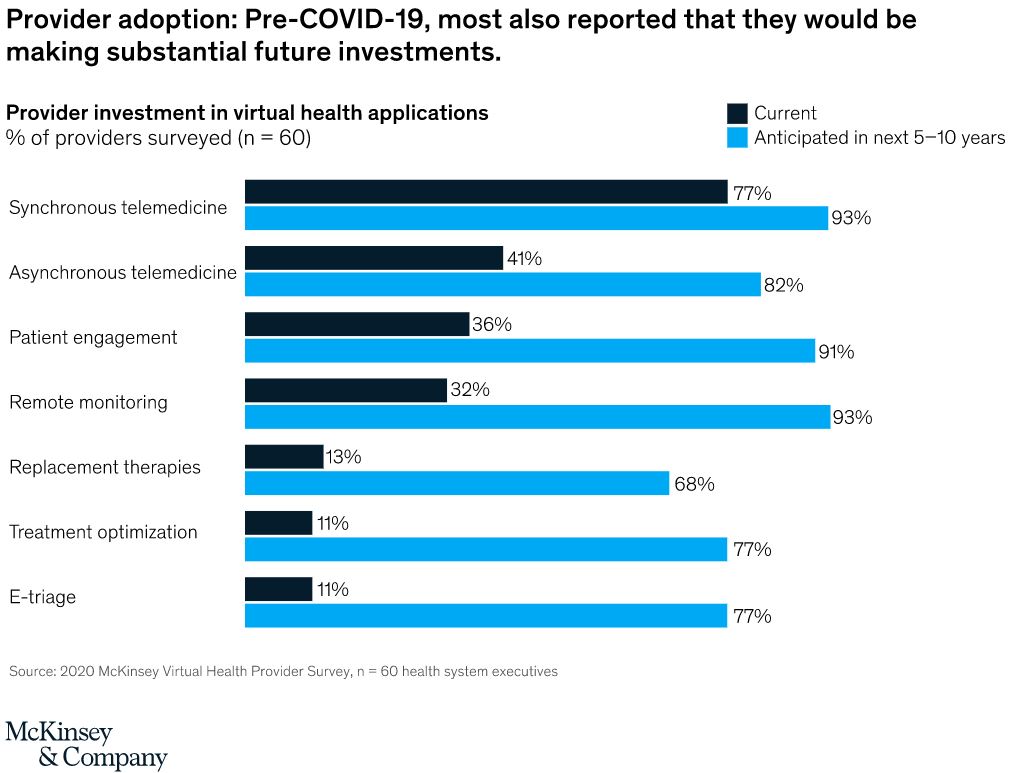
For the past 10 to 15 years, virtual health has been heralded as the next disrupter in the delivery of care, but there has been minimal uptick in adoption. The COVID-19 pandemic is pushing against structural barriers that had previously slowed health system investment in integrated virtual health applications.

Read full article

COMMENTARY

Health Providers, especially the systems and networks, are the key to “next Generation” health care delivery. They are the main target audience of this article. If they invest in Telehealth, and make it easy and integrated, Patients will adopt Telemedicine happily.

The article Classified the elements of the future Telehealth,  citing Telemedicine As the digital equivalent of the traditional Doctor-Patient verbal Interaction. They call this “synchronized” Telehealth.

Everything else, the myriads of other activities that comprise the totality of health care, is labeled something else. The Patient is involved in some of these activities, such as being monitored by a device at home, being the recipient of her records or medications, or even interfacing with technology as in “E-triage”.

Many interactions such as Doctor-Doctor, Doctor-Pharmacist, Doctor-insurance,  Rounding, To mention a few, take place away from the Patients’ sphere. The REAL change will be when these are Eventually taken over by Computers, aided by Artificial intelligence.

In the meanwhile, Providers should invest in Technology to remain competitive. Also, it goes without saying, Patients should invest in Knowledge and Technology if they are to get the most out of this new Reality.

—Dr, C.

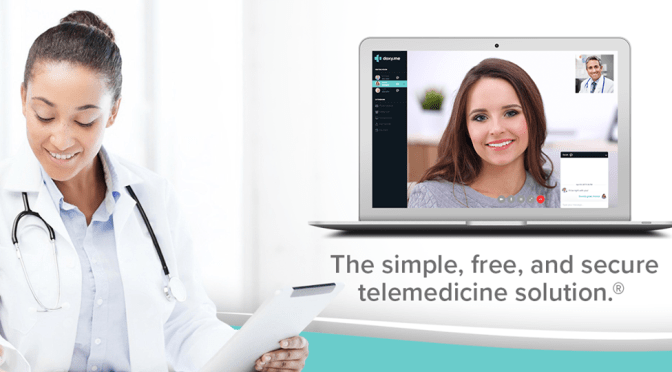
TELEMEDICINE: “DOXY.ME” IS A FREE, LOW-TECHNOLOGY ENTRY FOR VIRTUAL VISITS

  • Simple and convenient to use – See your doctor from anywhere, just click their personalized room link (like doxy.me/YourDrsName) to join them for a video call.
  • No downloads or accounts – No need to download software or create an account. Just use a browser on a computer or device with a camera and microphone.
  • Private and secure – All data is encrypted, your sessions are anonymous, and none of your information is stored. We adhere to HIPAA, PIPEDA, and GDPR data privacy requirements.

WEBSITE

PODCASTS: TELEMEDICINE TECHNOLOGY CAN LEAVE MANY PATIENTS BEHIND

Amid the Covid-19 pandemic, more doctors are turning to telemedicine. That’s a problem for tens of millions on the wrong side of the digital divide.

SPEAKING ON A landline, the patient complained of an itchy eye. On the call’s other end, physician Carla Harwell considered the possibilities, from seasonal allergies to vision-damaging herpes. Luckily, the elderly patient’s daughter was visiting during the phone consultation, so Harwell asked her to text a picture of her mom’s eye. The photo shocked Harwell. It was the worst case of bacterial conjunctivitis the doctor had ever seen.

Without the picture, Harwell would have told the octogenarian patient to call back in a few days or come to her office, risking an in-patient visit during the Covid-19 pandemic. She certainly wouldn’t have prescribed the antibacterial eye drops needed to treat the infection. “I probably would not have prescribed anything,” Harwell says. “That’s a scary thought.”

Read more

COMMENTARY

Telehealth is here, will remain after the pandemic, and is useful in many situations.

Being older, poorer, minority, Linguistically challenged, rural, less informed and less Tech-savvy reinforce each other in comprising Barriers to proper Medical care of ANY kind, especially Telemedicine. These handicaps will hopefully improve with time, and should be A societal priority.

Special internet-connected roving Aid-mobiles in afflicted areas is one feasible idea that would help. Responding to a lesser “911” number, the health-van could go to the calling persons location,  help the person to the van, take pictures and other data for a Telehealth Doctor to evaluate, and facilitate treatment.

A neighborhood Telehealth site is also workable, and was a precondition to Rural Telehealth access, pre-pandemic.
If you are reading this message, congratulations! You are increasing your information, technical facility and your access to better Healthcare.

—Dr. C.

TELEHEALTH: OLDER ADULTS INCREASINGLY FIND VIRTUAL VISITS SAME AS IN-PERSON

From the John A. Hartford Foundation:

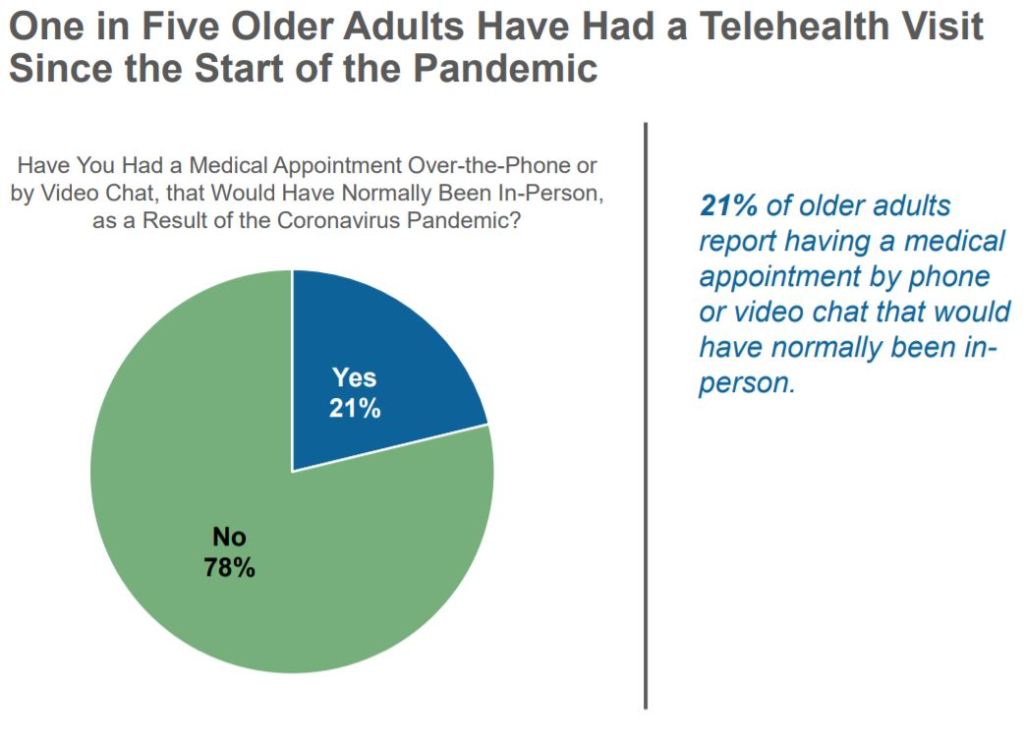
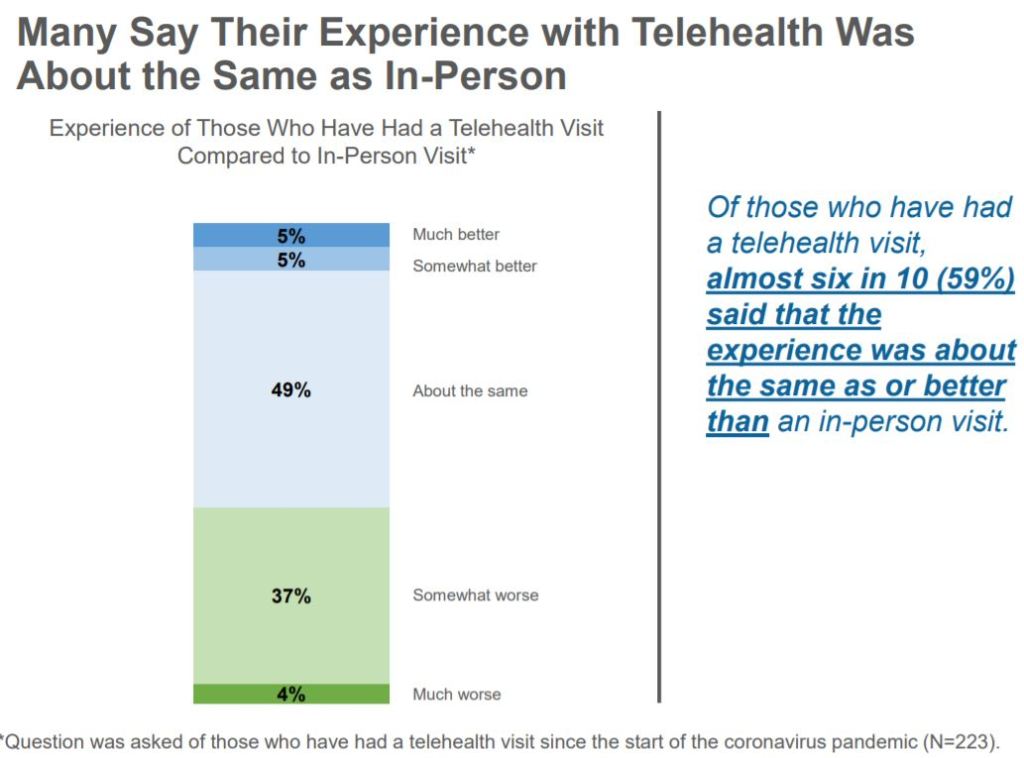
While the benefits of telehealth are myriad and more apparent than ever, our survey revealed that 41% of older adults did not see telehealth as living up to the in-person experience. Providers must optimize the technology so that it caters to the less tech-savvy patient and caregivers—especially, if it is their only means of accessing health care—so that it replicates the in-person visit as close as possible. 

survey we recently conducted shows that more than half of US adults age 70 and older (55%) experienced a disruption in their medical care during the first month of social distancing due to COVID-19. These older adults were most likely to delay primary or preventive care, and that’s alarming. Even more worrying, 15% of older adults put off essential medical treatment because of the pandemic. We don’t need medical degrees to know that delaying necessary care does not make the outcomes better.

As older adults continue to delay getting needed care, the problem will compound—increasing pent-up demand for services will ultimately vex health systems as patients’ conditions worsen. We think about the 4Ms of age-friendly care – what Matters, Medication, Mentation and Mobility – and how the pandemic may be delaying the assessments and interventions needed to prevent medication errors or to preserve cognitive and functional status.

Read full article

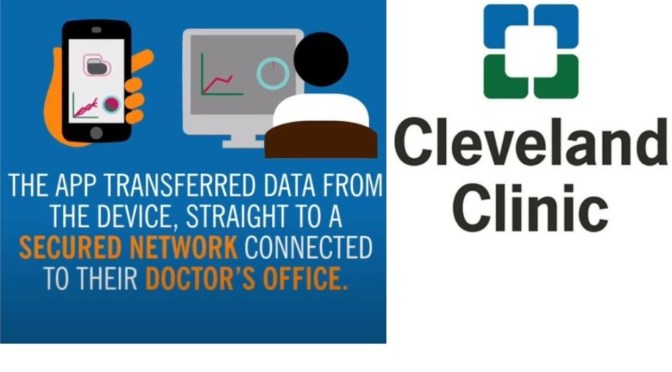
TELEHEALTH: “Smartphones Used to Monitor Heart Patients with Pacemakers”

In a first of its kind study, Cleveland Clinic researchers found Bluetooth-enabled pacemakers successfully transferred information to doctors 95% of the time through an app on the patient’s smartphone or tablet. In comparison, traditional bedside consoles were successful 77% of the time.

Read more

TELEMEDICINE: A REVIEW OF 9 CONDITIONS THAT CAN BE TREATED ONLINE (VIDEO)

TELEMEDICINE is here to stay! With all its’ advantages Patients will demand It!

This video is one of the few to highlight WOMENS’ HEALTH as an appropriate field for Telehealth. A remote visit first may at least let the Doctor order some tests that will accelerate your care.

Urinary problems can also be appropriate for telemedicine; the MEDICAL HISTORY is such a VALUABLE DIAGNOSTIC TOOL!

Psychological and Psychiatric care could be completely remote, by telemedicine. The Doctor could save on expenses, and deliver care less expensively.

Distance disappears as a barrier to Consultations and second opinions. A University medical center or prestigious multi specialty Clinic are on your doorstep.

Of course, barriers remain in the form of regulations, litigation, bureaucracy, and Insurance, but these can be overcome, if the Will is there.

—Dr. C

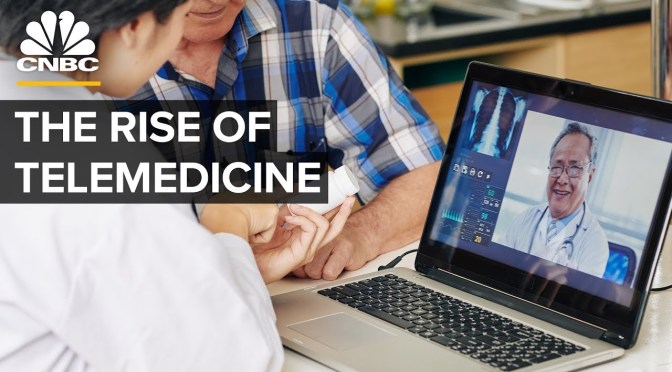
VIDEO: “IS TELEMEDICINE THE FUTURE OF HEALTH CARE?”

The coronavirus pandemic has overwhelmed hospitals, physicians and the medical community. That’s pushed telemedicine into the hands of providers and patients as the first response for primary care. Telemedicine isn’t new to the medical community, however it hasn’t been embraced due to insurance coverage, mindset and stigma. Here’s how it works and what it means for the future of health care.

COMMENTARY

The safety and convenience of Telemedicine have been amply illustrated by Covid 19. It’s place in the future of Medicine would seem to be assured.

Once the epidemic is over, however, some sticky details, waved away by fiat during the early days, must be addressed.

Will Payment parity be allowed by the Health insurance companies (And Medicare) be continued? Will cross-border Practice still be allowed by the states. Will more Doctors modernize? Will lawyers (and litigious patients) restrain themselves?
Stay Tuned!

—Dr. C.