Tag Archives: Technology

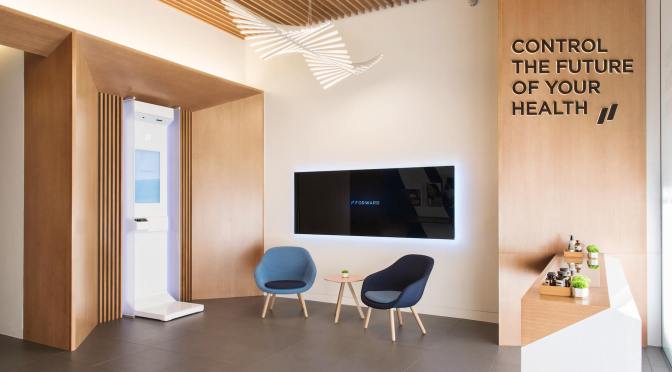
PREVENTION: “FORWARD CLINICS” ARE ALL-INCLUSIVE, FLAT-FEE PRIMARY CARE

Forward care is evidence-based, focused on prevention and improvement. Set goals and collaborate for better health.

  1. Connect Your Biometrics Sensors
    • Receive your Sensor Kit
    • Record measurements in the app
    • Review insights together with your doctor
  2. Complete Your Labs at Home
    • Schedule your at-home blood draw with a lab specialist
    • Receive comprehensive results
  3. Create a Personalized Plan During Your Baseline Visit
    • Discuss your health goals and concerns
    • Review your biometrics and lab results
    • Develop a personalized, preventive plan
  4. Answer Questions In-App for Insights on Your Mental Health
    • Answer a short series of questions in-app
    • Receive a measure for anxiety and depression
    • Partner with your doctor on your results
  5. Customize Your Plan Based on Your Genetics
    • Receive your Genetics Kit
    • Review the results with your doctor
    • Update your plan to address your risks
  6. See Your Doctor In Person for a Custom Follow Up Visit
    • Request an in-person visit in the app
    • Review your progress with your doctor
    • Complete a physical exam and diagnostics
  7. Assess Your Skin Cancer Risk
    • Complete a physical exam of your skin
    • Capture high-definition images of any moles or blemishes
    • Discuss your skin health and cancer risks with your doctor
  8. Receive a Message From Your Doctor to Update Your Plan
    • Your doctor will check-in regularly 
    • Update your doctor on progress and goals 
    • Ask questions, anytime from anywhere
  9. Develop Nutrition Goals Based on Recurring Labs
    • Review your latest labs with your doctor
    • Develop a nutrition plan for targeted results
    • Measure progress with future labs

Website

COMMENTARY

Forward Healthcare differs from a conventional primary care clinic in several, generally good ways.

Most importantly, they stress PREVENTATIVE care. Blood tests that monitor diabetes, metabolic syndrome, and anemia are done regularly, since they have a laboratory on premises. They have their own EMR (electronic medical record) platform, and their own telemedicine platform, which are downloaded on the initial visit.

They give out a “sensor kit” consisting of temperature monitor, Pulse-oximetry, and a BP monitor, which wirelessly sends information to medical records.

Telemedicine is available through their own Downloaded platform. Although I get the impression that Telehealth isn’t as central as I would have expected in a technology oriented operation, it is increasingly important.

The monthly membership fee of $149 pays for the above and unlimited Doctor Availability 24/7 without copay.

Concierge Medicine has the monthly/yearly fee and unlimited access, but has a copay. Both will utilize your insurance, and neither treats patients in the hospital or provides referral care.

Government Health care is coming, and with it longer waiting times, shorter Doctor interaction times, and probably less time for Preventative Health Care.

Systems like Forward Health and Concierge Medicine will be the upper tier of a 2-tier system.

Proactive attention to Health in my opinion is essential in the future if we are to have a healthy nation, and not “bankrupt the system”. Telehealth is growing in importance, and offers help in making medical expertise more convenient, widely available and for less cost.

I am happy to see progressive Systems like Forward Health offer a preventative option to the present, broken, reverse-incentivized, fee-for-service System.
—Dr. C.

HEALTHCARE: TOP DIGITAL TECHNOLOGY TRENDS (2020)

From MD+DI (June 17, 2020):

MD+DI Logo

Remote-care solutions like telehealth and wearable devices are included in the new approach that healthcare professionals will be embracing as they position their businesses to best serve patients in a COVID-19 world. Digital healthcare product solutions address critical issues for the remote delivery of care or the “hospital at home” that have been resonating long before we began looking at all our interactions through a social-distancing lens.

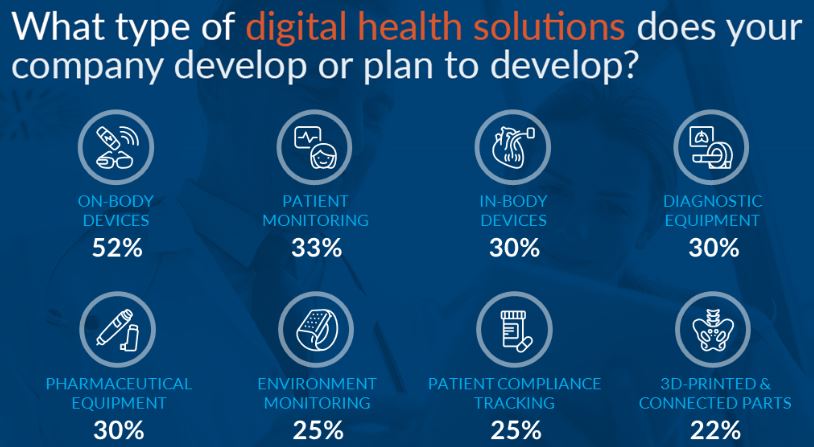
Wearables and On-Body Devices – Real-time data collection and communication are critical to digital health initiatives. More than half of survey respondents—52%—said they are currently developing or planning to develop wearable or on-body devices as part of their strategy. Another 33% said the same for patient-monitoring solutions.

Miniaturization, flexible circuitry, and biometric capturing sensors are leading to exciting new devices that will help patients in recovery or with chronic issues. The data communicated from these solutions will equip healthcare providers and patients with the data that can transform healthcare.

Seamless technology integration – A range of emerging technologies, including artificial intelligence (AI), 5G, cloud-based applications, and a growing roster of IoMT devices. 

More than nine in 10 healthcare solution providers agree that the collection and purposing of data should be standardized to enable interoperability between devices and within product platforms, according to the survey.

2020 Digital Health Technology Trends survey

Read more

TECHNOLOGY: H4D “CONSULT STATION” – 1ST CONNECTED LOCAL TELEMEDICINE BOOTH

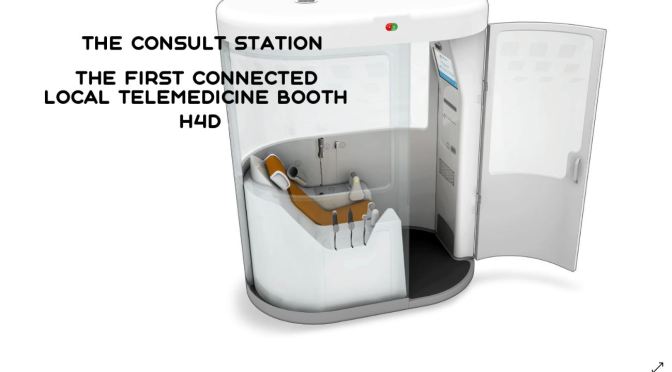
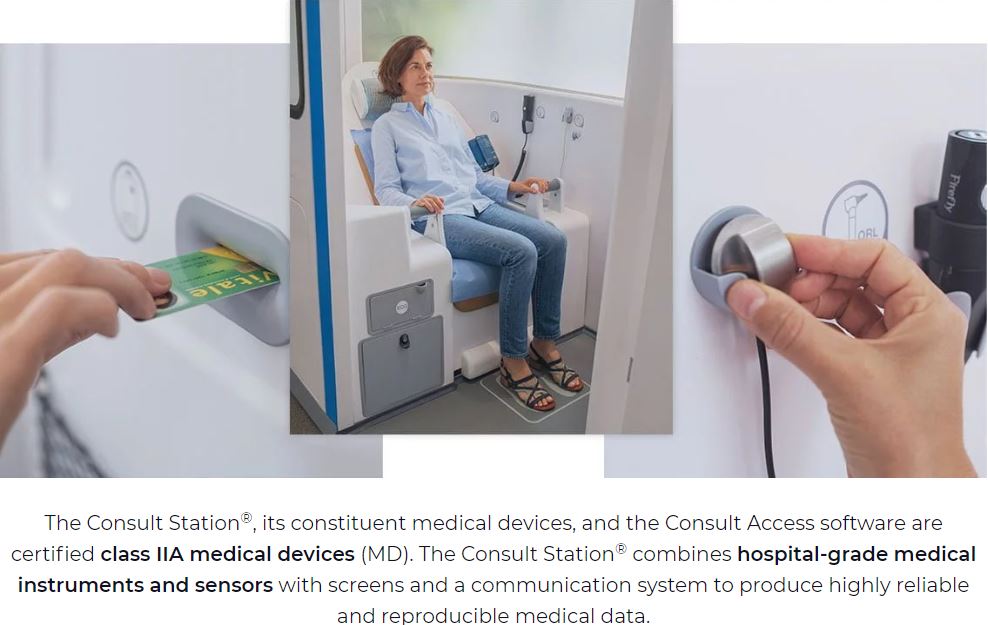
H4D facilitates access to healthcare by allowing patients to consult a doctor remotely in the Consult Station®, the first connected local telemedicine booth. This medical device allows quality healthcare to be delivered for primary care, occupational health, and general health promotion.

Website

COMMENTARY

CONVENIENCE, SIMPLICITY, and SAFETY area all goals of TECHNOLOGY going forward.

The “hands-free” check-in for hospitals and hotels are convenient and safety, but require a certain level of familiarity with technology, and may be Hard for the elderly to use. I think about the airport check-in kiosks, and store check-out points. The solution is to have “helpers” stationed by to assist.

The Telemedicine booth, with devices for examination of the ears, nose, and throat, a stethoscope probe for the lungs, payment port, video camera, etc certainly offers convenience, but may need helpers for guidance, and to clean after every use.

I’m betting on a super I Phone in all areas, although cost and band width improvement will be needed.

—Dr. C

TELEHEALTH CARE: PATIENTS CAN EXPECT EXPANDED “CONTACTLESS EXPERIENCES”

From Healthcare IT News (June 12, 2020):

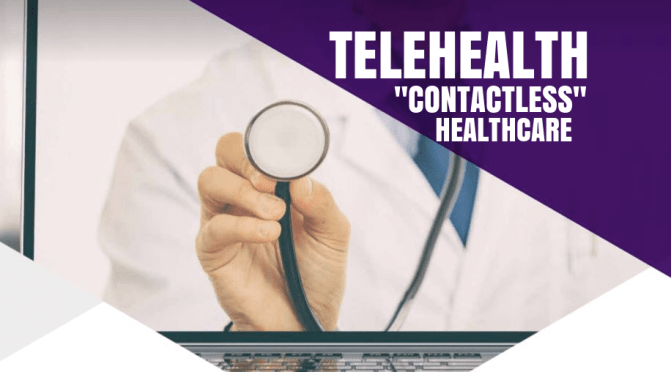
Technology-enabled workflows now enable patients to complete most of the registration formalities prior to the visit, be it a virtual consult or a clinic visit. Registration kiosks in hospital lobbies may soon be enabled with facial recognition software to eliminate the need for touching any surface.

Routine examinations are also going virtual, with many diagnostic procedures now possible through remotely controlled devices. Caregivers are beginning to do their patient rounds through virtual visits. This trend will only grow in the coming years.

A vast and growing array of automated communication tools allows caregivers to use rule-based messaging to push everything from health coaching, post-discharge care instructions, and appointment reminders through IVR, text, SMS, and mobile alerts.

Read full article

TELEMEDICINE: “DOXY.ME” IS A FREE, LOW-TECHNOLOGY ENTRY FOR VIRTUAL VISITS

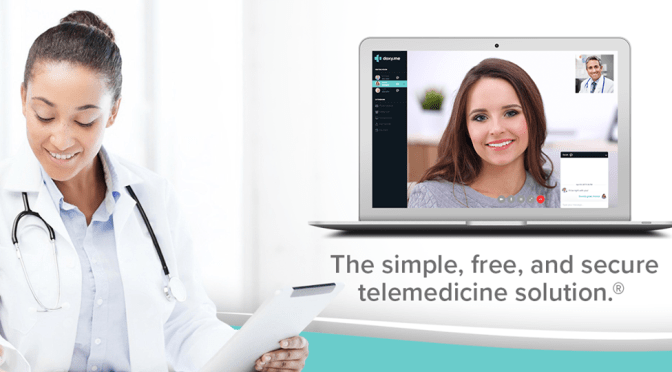
  • Simple and convenient to use – See your doctor from anywhere, just click their personalized room link (like doxy.me/YourDrsName) to join them for a video call.
  • No downloads or accounts – No need to download software or create an account. Just use a browser on a computer or device with a camera and microphone.
  • Private and secure – All data is encrypted, your sessions are anonymous, and none of your information is stored. We adhere to HIPAA, PIPEDA, and GDPR data privacy requirements.

WEBSITE

PODCASTS: TELEMEDICINE TECHNOLOGY CAN LEAVE MANY PATIENTS BEHIND

Amid the Covid-19 pandemic, more doctors are turning to telemedicine. That’s a problem for tens of millions on the wrong side of the digital divide.

SPEAKING ON A landline, the patient complained of an itchy eye. On the call’s other end, physician Carla Harwell considered the possibilities, from seasonal allergies to vision-damaging herpes. Luckily, the elderly patient’s daughter was visiting during the phone consultation, so Harwell asked her to text a picture of her mom’s eye. The photo shocked Harwell. It was the worst case of bacterial conjunctivitis the doctor had ever seen.

Without the picture, Harwell would have told the octogenarian patient to call back in a few days or come to her office, risking an in-patient visit during the Covid-19 pandemic. She certainly wouldn’t have prescribed the antibacterial eye drops needed to treat the infection. “I probably would not have prescribed anything,” Harwell says. “That’s a scary thought.”

Read more

COMMENTARY

Telehealth is here, will remain after the pandemic, and is useful in many situations.

Being older, poorer, minority, Linguistically challenged, rural, less informed and less Tech-savvy reinforce each other in comprising Barriers to proper Medical care of ANY kind, especially Telemedicine. These handicaps will hopefully improve with time, and should be A societal priority.

Special internet-connected roving Aid-mobiles in afflicted areas is one feasible idea that would help. Responding to a lesser “911” number, the health-van could go to the calling persons location,  help the person to the van, take pictures and other data for a Telehealth Doctor to evaluate, and facilitate treatment.

A neighborhood Telehealth site is also workable, and was a precondition to Rural Telehealth access, pre-pandemic.
If you are reading this message, congratulations! You are increasing your information, technical facility and your access to better Healthcare.

—Dr. C.

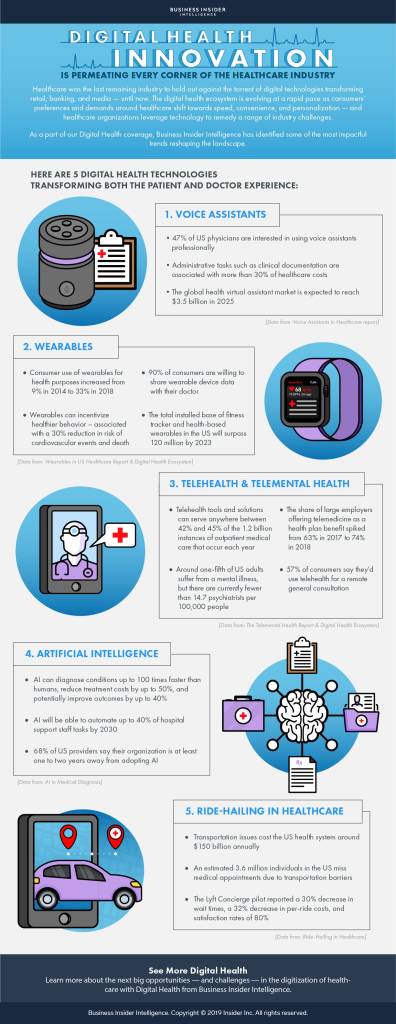
INFOGRAPHICS: “DIGITAL HEALTH TECHNOLOGIES IMPROVING PATIENT CARE”

COMMENTARY

The technology of telemedicine will predictably and steadily get better.
Medical assistants, mostly human at present, are commonplace, notably in specialty offices, and machines using improving voice-to-text transcription are getting better.

Wearable devices are proliferating and hopefully coming down in cost, and platform technology is improving though still glitchy.

Patients generally accept Telemedicine. They like the saving of travel time and infection exposure.

Doctors may drag their feet because the increased effort and legal exposure is not compensated by increase in payment. On the contrary, pre-Covid compensation was LESS for a televisit. Continuing Parity would help.

The politicians at the state level should eventually make licenses valid across state borders.

The big wild card is the Legal Profession. Unless they develop restraint( and litigious patients reform), there could be a feeding Frenzy, which would delay implementation of a very good idea.

Eventually telemedicine deserves to be 50% or more of medical practice.

—Dr. C.

TELEMEDICINE: STANFORD MEDICINE UTILIZES IPADS IN EMERGENCY DEPARTMENT

From a Stanford Medicine article (April 27, 2020):

“Far from separating us from our patients, it is actually expanding on what we can do,” said Ryan Ribeira, MD, clinical assistant professor of emergency medicine at the Stanford School.

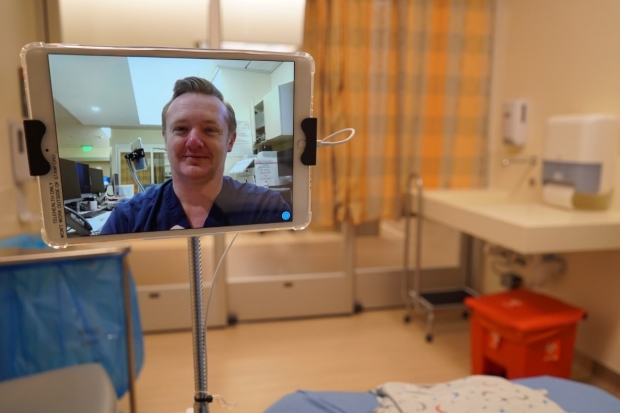
An iPad in a patient room at Stanford Health Care’s emergency department. Photo by Susan Coppa

Caring for patients remotely greatly reduces the use of protective equipment — an estimated 80-120 sets per day. The risk of exposure has also been minimized for physicians, nurses and other caregivers, particularly those who are pregnant, immune-compromised or otherwise at high risk of complications from COVID-19. 

When the staff at Stanford Health Care’s Marc and Laura Andreessen Emergency Department started connecting with patients in isolation via iPad, they found an unexpected benefit: The approach offered a more personal, human-centered experience. 

The iPad project moved from conception to implementation in just eight days, starting with a drive-through program in a Stanford Health Care garage: Patients remained in their cars while a physician assessed them by video from inside the emergency department. 

To bring the program into patient rooms, technology specialists at Stanford Health Care ensured the tablets had necessary features, such as the ability to auto-answer calls. When a caregiver calls to check in, the patient receives a few rings as advance notice, then the iPad answers itself. 

The iPad has also been paired with portable handheld ultrasound scanners that quickly plug in, eliminating the need for a bulky ultrasound cart that requires decontamination after every use. And patients participating in clinical research can consent via iPad.

Read full article