
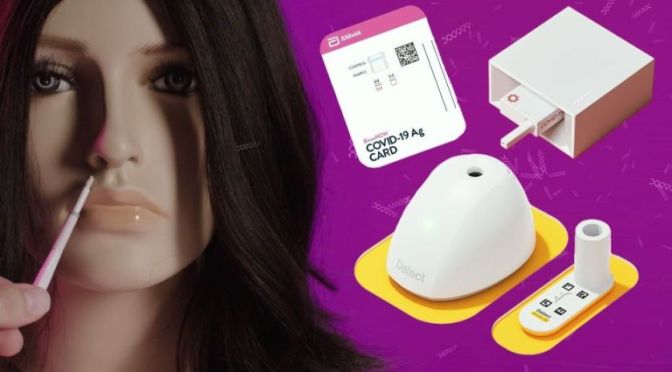
New high-tech Covid-19 tests promise better and earlier detection of the virus—similar to a PCR test. WSJ’s Joanna Stern (and her mannequin clone) tried out the Detect Covid-19 Test and Cue Health Monitoring System to see how they compare with rapid antigen tests. Photo illustration: Ryan Trefes/ WSJ
Tag Archives: Technology
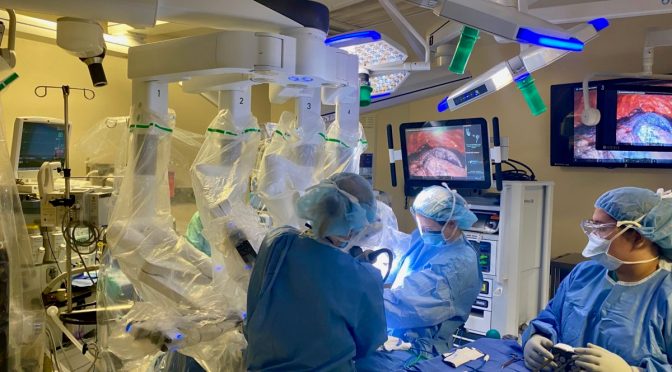
Technology: Lung Cancer Robotic Surgery (Video)
Inside the OR: Lung Cancer Robotic Surgery
Northwestern Medicine Thoracic Surgeon Samuel S. Kim, MD, explains a breakthrough in lung cancer surgery.

Wearable Monitors: Heart Rate Variability Tracking

Telemedicine: Disruptive & Sustaining Innovation
“…telemedicine can improve through both sustaining innovation (incremental improvement upon what we are already doing for patients) and through disruptive innovation (simpler solutions for patients with simpler needs and/or patients we are not currently serving).”

Telemedicine as a Sustaining Innovation
Most telemedicine in its current form is a sustaining innovation. There has been incremental improvement in telecommunication technologies from the traditional phone to current videoconferencing software integrated with electronic medical records, development of secure platforms for short messaging service (SMS) between patients and providers, and introduction of connected devices that can monitor and transmit patients’ health data to their providers.
Disruptive Telemedicine
Beyond improving the way care is already delivered, telemedicine may also serve as a vehicle for disruption in overlooked health care markets, particularly low-end or new-market segments. Many customers are currently overserved by traditional care delivery in the form of regular visits (in-person or virtual) with a physician, which are structured to provide more than what they need and less of what they want.
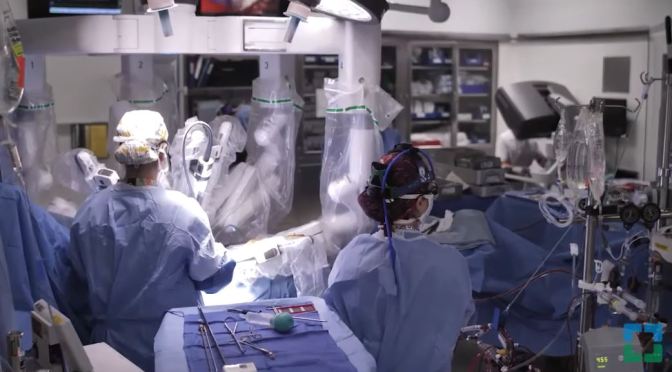
Technology: Robotically Assisted Heart Surgery
Robotically assisted heart surgery is a minimally invasive option most often used for mitral valve repair. Cleveland Clinic cardiothoracic surgeons explain how it works and what to expect.
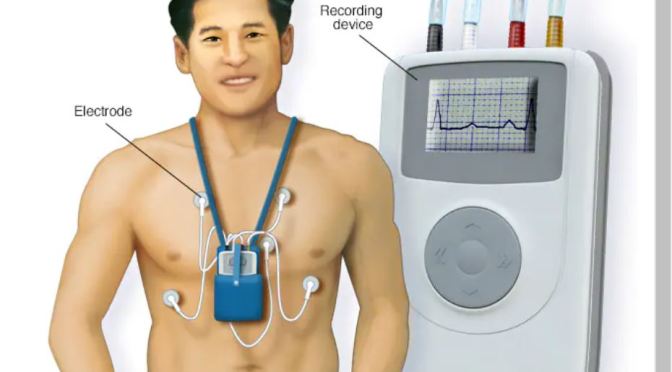
Technology: Wearable Heart Monitors (Mayo)
It’s like an auto mechanic running a diagnostic test on your car’s engine while it’s out of the garage and traveling down the road. Wearable heart monitors are valuable tools that cardiologists use to determine if you are experiencing atrial fibrillation, which is your heart beating at an irregular or rapid rhythm.
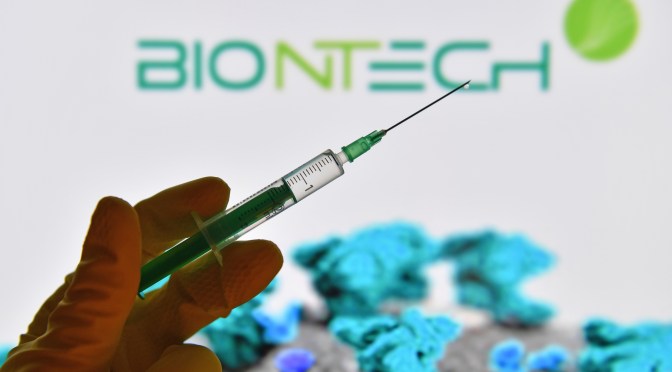
COVID-19: HOW BIONTECH USED ITS CANCER RESEARCH TO CREATE A VACCINE (CNBC)
Over a month and a half before the World Health Organization officially declared a pandemic, BioNTech CEO Uğur Şahin met with his wife, BioNTech’s co-founder and chief medical officer Özlem Türeci, and together they agreed to redirect most of the company’s resources to developing a vaccine. Up until that point, BioNTech was little-known internationally and primarily focused on developing novel cancer treatments. The founders were confident in the potential of their mRNA technology, which they knew could trigger a powerful immune response. That confidence wasn’t necessarily shared by the broader medical community. No mRNA vaccine or treatment had ever been approved before. But the couple’s timely breakthrough was actually decades in the making. CNBC spoke with Şahin and Türeci about how they, along with Pfizer, created a Covid-19 vaccine using mRNA.
COMMENTARY:
This commentary concerns a video showing aspects of the development of MRNA vaccines. It is all about Pfizer’s German partner, BioNtech, which manufactures the vaccine. They have produced the bulk of the worlds mRNA vaccines, due to Pfizer‘s great financial strength and experience in marketing.
Moderna, a wholly American company and by comparison a small fry, has also been doing decades of work with mRNA platform technology, mainly on cancer treatment.
With $800 million from the U.S. government, Moderna was able to scale up their manufacturing process and deliver a vaccine, approved by the FDA, shortly after Pfizer did so.
These vaccines were made possible by two technical advances.
The first advance was in substituting pseudouridine for uridine in the mRNA, so that the target cells natural defenses would not destroy it. The second involves coating the mRNA with a nano size particle to get it into the target cell.
Each of these advances will probably receive a Nobel prize, and is an elegant example of the sophistication of modern biotechnology.

 Doctors Without Waiting Rooms