
Tag Archives: Regenerative Medicine

Regenerative Medicine: Rotator Cuff Tear Benefit

“The data we analyzed suggested a nearly threefold reduction in revision surgery in patients who received bone marrow aspirate concentrate, compared to those who did not,” says Bradley Schoch, M.D., an orthopedic surgeon and principal investigator. “This procedure is growing in use throughout the practice of orthopedic surgery and commonly added as a surgical adjunct to rotator cuff tears.”

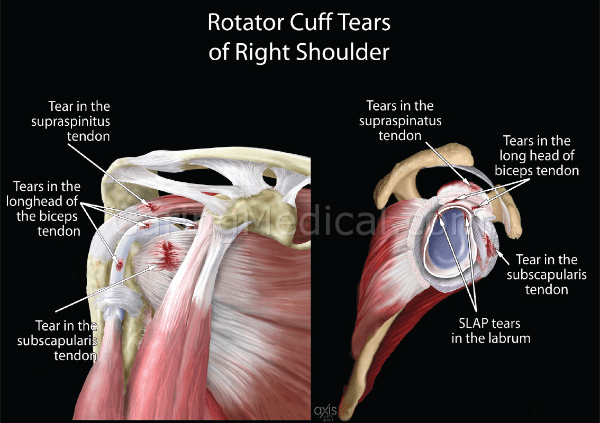
Mayo Clinic – Applying regenerative medicine to a common shoulder surgery could have an impact on the need for follow-up revision surgery in some patients, according to a Mayo Clinic study of real-world evidence.


Mayo Clinic researchers analyzed the largest set of data available to determine if adding bone marrow aspirate concentrate to repaired tissue after standard rotator cuff surgery would improve outcomes for patients. Bone marrow aspirate is fluid taken from a patient’s bone marrow that contains concentrated growth factors, stem cells and other specialized cells that may regenerate tissue and cartilage.

The analysis identified 760 patients who had a regenerative intervention added to augment rotator cuff repair surgery. Those patients were compared to 3,888 patients who did not have any biologic intervention at the time of surgery. The data indicated that 114 patients who opted for bone marrow aspirate concentrate at the time of surgery were less likely to need a second surgery.

The results of the Mayo Clinic study are published in the Orthopaedic Journal of Sports Medicine.

Regenerative Medicine: How It Slows Down Aging

“Diverse aging populations, vulnerable to chronic disease, are at the cusp of a promising future. Indeed, growing regenerative options offer opportunities to boost innate healing, and address aging-associated decline. The outlook for an extended well-being strives to achieve health for all,”

Andre Terzic, M.D., Ph.D., a Mayo Clinic cardiologist

Regenerative medicine could slow the clock on degenerative diseases that often ravage the golden years, a Mayo Clinic study finds. Life span has nearly doubled since the 1950s, but health span — the number of disease-free years — has not kept pace. According to a paper published in NPJ Regenerative Medicine., people are generally living longer, but the last decade of life is often racked with chronic, age-related diseases that diminish quality of life. These final years come with a great cost burden to society.

Researchers contend that new solutions for increasing health span lie at the intersection of regenerative medicine research, anti-senescent investigation, clinical care and societal supports. A regenerative approach offers hope of extending the longevity of good health, so a person’s final years can be lived to the fullest.

Read more

Medicine: Using Stem Cells To Treat Osteonecrosis

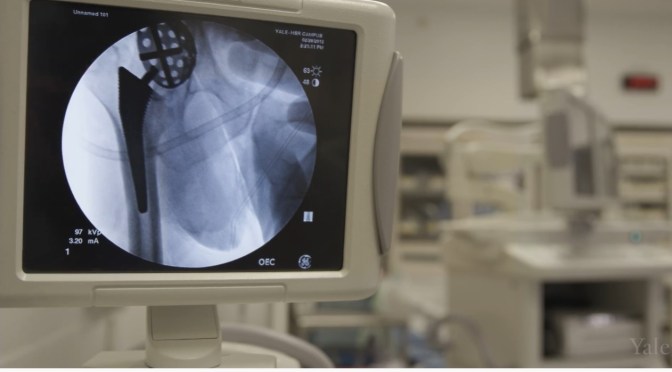
Daniel Wiznia, MD, an orthopaedic surgeon with Yale School of Medicine, is practicing a surgical technique designed to render 10% of hip replacements unnecessary. Regenerative properties from a patient’s own stem cells are responsible for regrowing bone, restoring blood flow, and being able to avoid further interventional surgery.

Osteonecrosis, also known as avascular necrosis, occurs in more than 20,000 Americans each year. As the condition progresses, bone cells known as osteoblasts become unable to repair themselves and sustain the integrity of the bone, and ultimately die. The bone deterioration leads to a decrease in blood flow to the area, further weakening the entire skeletal structure of the upper leg.

If unaddressed, the ball portion of the hip’s ball and socket joint will cave in on itself and collapse, requiring a total hip replacement. The fact that patients often receive this diagnosis during their 30s and 40s presents a particular challenge.

While the lifespan of hip prosthetics has dramatically increased in recent years, a patient who undergoes a total hip arthroplasty, or total hip replacement, at that age will almost certainly require a revision later in life. This redo of the same surgery at an older age comes with an entirely new set of risks and potential complications, making it that much harder to manage down the road.

Read more