Tag Archives: Inflammation

Health: Four Tests For Chronic Inflammation

These are four of the most common tests for inflammation:

  • Erythrocyte sedimentation rate (sed rate or ESR). This test measures how fast red blood cells settle to the bottom of a vertical tube of blood. When inflammation is present the red blood cells fall faster, as higher amounts of proteins in the blood make those cells clump together. While ranges vary by lab, a normal result is typically 20 mm/hr or less, while a value over 100 mm/hr is quite high.
  • C-reactive protein (CRP). This protein made in the liver tends to rise when inflammation is present. A normal value is less than 3 mg/L. A value over 3 mg/L is often used to identify an increased risk of cardiovascular disease, but bodywide inflammation can make CRP rise to 100 mg/L or more.
  • Ferritin. This is a blood protein that reflects the amount of iron stored in the body. It’s most often ordered to evaluate whether an anemic person is iron-deficient, in which case ferritin levels are low. Or, if there is too much iron in the body, ferritin levels may be high. But ferritin levels also rise when inflammation is present. Normal results vary by lab and tend to be a bit higher in men, but a typical normal range is 20 to 200 mcg/L.
  • Fibrinogen. While this protein is most commonly measured to evaluate the status of the blood clotting system, its levels tend to rise when inflammation is present. A normal fibrinogen level is 200 to 400 mg/dL.

Commentary:

Inflammation is an essential, evolutionarily conserved mechanism that our bodies have developed for excluding infections, toxins, and damaged or cancerous cells.

Acute inflammation in response to infections is almost always beneficial, except where it is disproportionate to the danger that it fights; the common cold is  probably innocuous, but we develop symptoms from our bodies’ response. Covid has been found to incite disproportionately severe inflammation, which can lead to severe disease, and the need for corticosteroids.

Chronic inflammation is a different animal, and is usually undesirable. Sometimes it is due to an infection, such as tuberculosis, which won’t go away. Sometimes the bodies immune system develops a disordered communication system, and fights its own cells, called auto immunity.

Chronic inflammation can also be caused by obesity, chronic stress, cigarette smoking, alcohol in excess, and cancer, which can also be CAUSED BY chronic inflammation.

Chronic inflammation is also associated with Alzheimer’s, heart disease, rheumatoid arthritis, and type two diabetes. Asthma is a chronic inflammatory disease of the airways. IBD, inflammatory bowel disease, is a chronic inflammatory disease of the intestinal tract.

The symptoms of chronic inflammation very widely depending on the area involved. Abdominal pain, chest pain, joint pain, skin rashes, fatigue, and fever are some of the symptoms.

You can reduce your likelihood of chronic inflammation by maintaining normal weight, having regular exercise, eating a diet rich in natural vegetables and fruits (antioxidants),  avoiding alcohol and cigarette smoke, and by reducing or handling your stress.

—Dr. C.

Read more

Inflammation: Three Ways It Affects Your Health

Acute inflammation happens as a part of our defense mechanism to clear out pathogens. So when a virus or bacteria invades us, we need to quickly mount an acute inflammatory response to get rid of the pathogen. Sometimes, that acute immune response isn’t enough to get rid of the pathogen. That’s when we elevate the level to the adaptive immune response. That’s when you involve specific lymphocytes, T and B cells, to fight off the infection.

So inflammation is a necessary process for dealing with pathogens but sometimes, it can also turn against us. Chronic inflammation happens because the body fails to get rid of the cause of the inflammation, such as viruses and bacteria. In those conditions, such as, you know, chronic infection with HIV or hepatitis virus or lung COVID, in which case we there may be a persistent viral reservoir that’s causing this chronic inflammation, the inflammation itself becomes the enemy.

Even though inflammation evolve to counter pathogens, it’s also engaged by other causes, and so having this amount of fat, for example, alone is able to trigger the immune system and induce the chronic inflammatory response that then fuels further problems to happen because the body is sort of trying to fight off a non-existent infection and therefore, it can sort of engage a chronic state of inflammation.

I can’t think of a disease which doesn’t involve inflammation, but we are now learning more and more about the physiological role of inflammation. Homeostasis ensures that we have a normal operation of different physiological functions like heart rate, breathing and glucose levels or insulin levels. Those two system, the inflammatory system and the homeostasis, they work together to maintain each other. Sometimes, the inflammatory response has to override the homeostatic response.

That includes things like adaptation to a different diet. The immune cells are now known to be able to sense differences in dietary conditions and adapt the intestine for future absorption of nutrients. This kind of events that are not necessarily at all related to pathogens, but for maintaining physiology. Inflammatory responses are integral in order to maintain health. So a molecular-level understanding of inflammation is necessary to understand the logic by which these systems function, and also it provides the pharmaceutical target for future therapies of inflammatory diseases.

DR. C’S JOURNAL: SIGNS AND SYMPTOMS OF APPENDICITIS

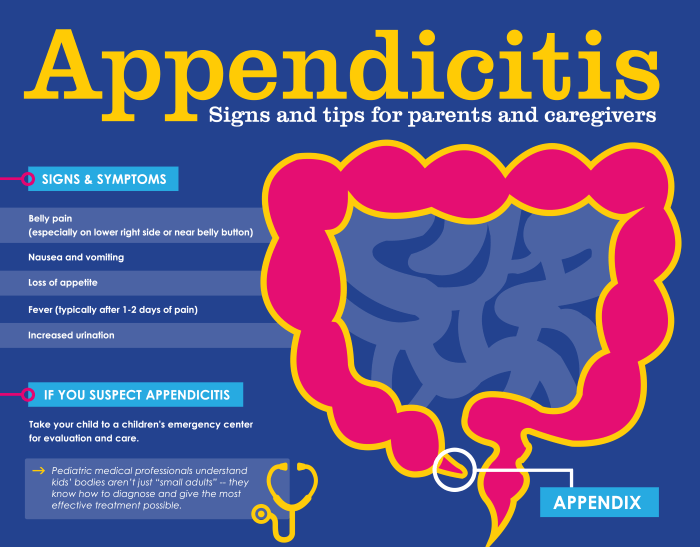
The appendix is a finger like projections at the origin of the colon in the right lower part of your abdomen. It may become inflamed, especially if there is a blockage. Appendicitis is best considered a medical emergency, since it may rupture and infect the entire abdominal cavity.

When I was a practicing pediatrician, appendicitis was one of the two conditions I refused to allow myself to overlook; the other one was meningitis, which is now mostly prevented by immunization.

Pain in the abdomen is almost invariably present as the main symptom of appendicitis. This pain often begins around the belly button and then migrates to the right lower part of the abdomen. The patient should try to notice whether jarring the abdomen by walking makes the pain worse; if so, this finding would favor an inflammatory condition like appendicitis.

A similar condition, diverticulitis, may cause similar symptoms in the left lower part of the abdomen, and other conditions may cause confusion. The doctor checks to see if it is more painful in the right lower belly area, and she may pull her hand away suddenly. If the pain intensifies, there may be inflammation around the appendix. Sometimes a vaginal examination or rectal examination will be needed to help with the diagnosis; the appendix is close to these areas.

Other symptoms and signs may be a low-grade fever, vomiting, add an elevated white blood cell count. In the modern medical era, ultrasound, CT scans, and MRIs are sometimes used to visualize the appendix to evaluate its size and possible inflammation.

Treatment used to consist only of surgery, but with imaging techniques available to prevent disaster, the condition can be treated with antibiotics. 30 to 50% of those so treated will still eventually require surgery. Removal of the appendix is now sometimes performed through a fiberoptic scope, leading to more rapid recovery.

A dilemma is present for individuals who go to the south pole to live for several months, and where weather may prevent them from getting proper medical help. Such  people may have their appendix removed as a preventative. Of course they also can take antibiotics if appendicitis develops, but it’s really scary to use medical treatment only, without the aid of modern imaging techniques.

Please consult the following Mayo clinic article for more information.

—Dr. C.

Read more

THE DOCTORS 101 CHRONIC SYMPTOMS & CONDITIONS #52: RHEUMATOID ARTHRITIS

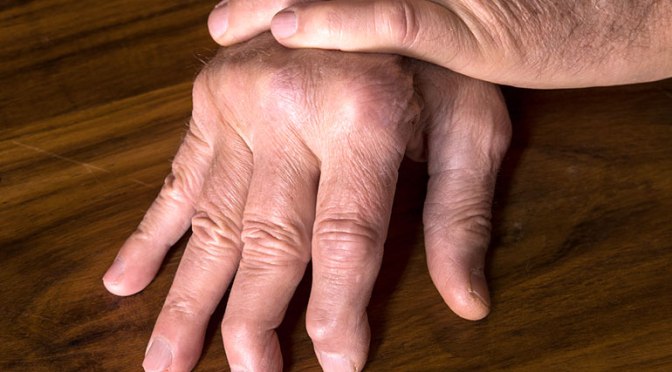
Painful, stiff joints are almost the rule as we get older, it seems. Both osteoarthritis and rheumatoid arthritis contribute to that eventuality. Osteoarthritis typically worsens as we get older, whereas rheumatoid arthritis starts in middle age.

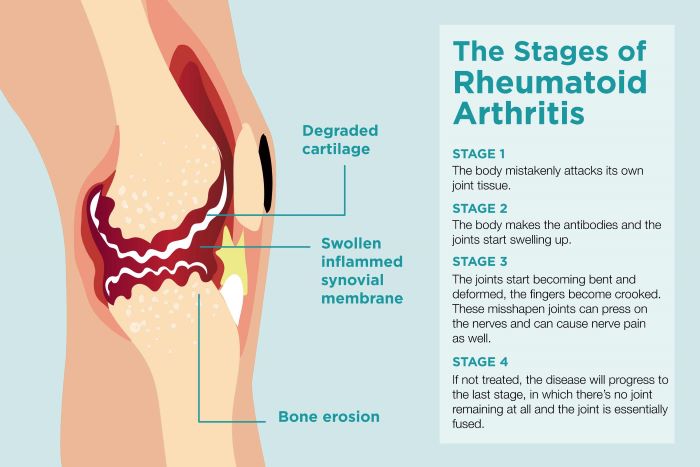
Rheumatoid arthritis is much more severe than osteoarthritis, since it is an autoimmune condition with an episodic inflammatory component. A recent medical study of different blood substances found that the “metabolome” has many markers for exacerbation of rheumatoid arthritis.

The main test currently being used to show exacerbation is CRP, C-reactive protein. Rheumatoid factor tests, such as anti-CCP, are used to confirm the diagnosis.

Rheumatoid arthritis tends to involve the small joints of the hand, and osteoarthritis the larger joints, such as the hips and knees. I go a bit against the grain, having diagnosed osteoarthritis of my fingers and toes, more typical of RA, but, even at the age of 89, my large joints are still in good shape, even with a lot of walking. Since walking is thought to increase the perfusion of joint fluid to nourish the knee cartilages, perhaps I should say BECAUSE of walking. Running tends to wear the knees and hips out, because of high impact on the joints.

The inflammation of rheumatoid arthritis tends to wax and wane, but during an exacerbation can be quite incapacitating. The interleukin TNF seems instrumental in causing these flares, and antibodies directed towards TNF, such as etanercept, has been a helpful treatment. This injection is also given for other inflammatory, autoimmune conditions such as psoriasis, particularly psoriatic arthritis, and the inflammatory bowel diseases.

Almost half the people who have rheumatoid arthritis also experience signs and symptoms in other tissues, such as the skin, eyes, heart, and lungs. It is truly a systemic, autoimmune disease.

For more information please consult the following mayo clinic article on rheumatoid arthritis.

—Dr. C.

Read more

THE DOCTORS 101 CHRONIC SYMPTOMS & CONDITIONS #51: PSORIASIS (SKIN DISEASE)

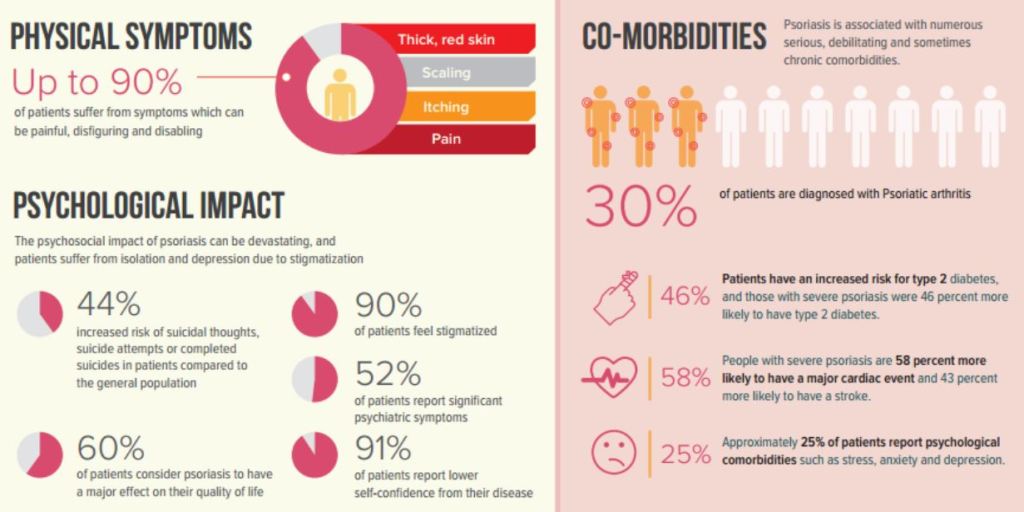
Psoriasis is a common skin disease, thought to be in the auto immune category. One of the main elements supporting auto immunity is it’s frequent association with an arthritis, which can be severe.

Eczema (atopic dermatitis) is both a skin and an allergic disease, and looks a bit like psoriasis. In my practice I saw many patients with psoriasis, perhaps people confusing allergy and dermatology.

Both psoriasis and eczema have a red inflamed base, with many little silvery scales of skin on top. These patchy areas tend to be on the outside bends of the elbows and knees in psoriasis, contrasting with eczema, where the dermatitis is located on the inside of the bends. Eczema is a lot more itchy.

The cause of the skin lesions in psoriasis is thought to be due to an interleukin called TNF, which calls to the area a number of inflammatory cells which, in addition to the thickened skin area and excess of epithelial cells, leads to a characteristic appearance under the microscope; biopsies are uncommonly needed when there is doubt about the diagnosis.

In its severe form, psoriasis can be very disfiguring, irritating, painful or itchy, and life altering. You have probably seen advertisements on TV.
Psoriasis has accumulated many different treatments, since it has been recognized and treated over such a long period of time. The basis of many effective treatments is “shotgun” systemic  immunosuppression, which reduces the autoimmune inflammatory reaction, but with side effects.

Topical Cortisone cream is the cheapest reasonably effective treatment, and works for mild cases. More recent treatments are specifically aimed out the interleukins which cause the disease, like TNF.

Please refer to the mayo clinic article for more pictures, and discussion of treatment.

—Dr. C.

Read more

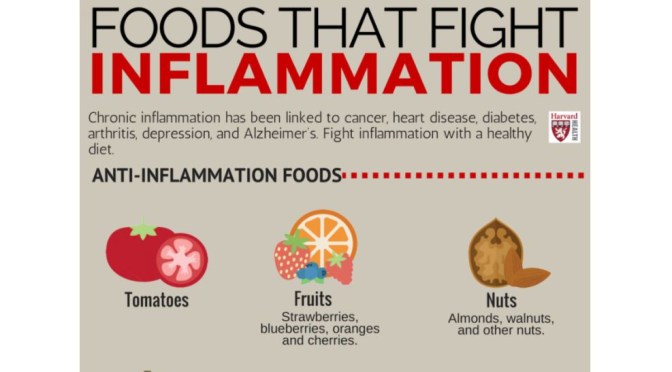
Health: Foods That Fight Inflammation (Harvard)

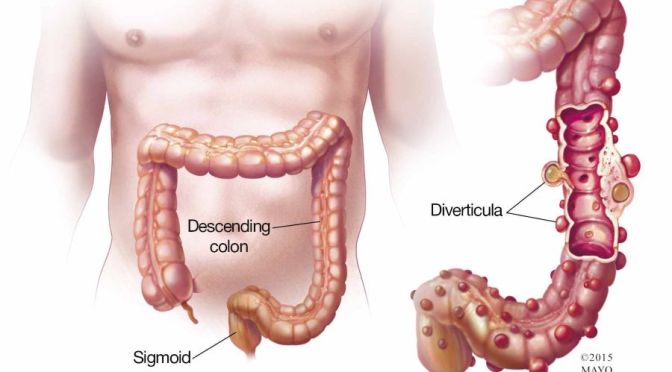
HEALTH: LOOKING OUT FOR DIVERTICULITIS (HARVARD)

What is diverticulitis?

Diverticulitis arises from a condition called diverticulosis, which occurs when weak areas in the inner wall of the colon bulge outward and form tiny pouches. Many people get diverticulosis as they age. In fact, diverticulosis affects about 58% of US adults over age 60. Getting enough fiber in your diet can help protect against diverticulosis.

Know the signs of diverticulitis

The most common symptoms of diverticulitis are abdominal pain (usually on the lower left side) and fever. The pain is distinct and sharp, and may strike over a few hours. Other symptoms may include a combination of loss of appetite, nausea, vomiting, abdominal bloating and cramping, and not passing gas or stool.

A mild case of diverticulitis that causes only minimal pain in the lower abdomen can resolve on its own within a day or two. However, you should seek immediate medical attention if your symptoms are not going away or you are feeling worse, such as having increasing pain, fever, bloody stools, or abdominal bloating with vomiting.

Treatment depends on whether you have uncomplicated or complicated diverticulitis. Your doctor can determine this by using a combination of blood tests and imaging studies, such as a CT scan.

How is uncomplicated diverticulitis treated?

As the name implies, uncomplicated diverticulitis is the less serious of the two. It means that the inflammation or infection is confined to one section of the colon, and that there is no evidence of complicating factors.

Uncomplicated diverticulitis is typically treated at home with oral antibiotics. You’ll also be prescribed “bowel rest” for a few days, which often includes a clear liquid diet. This gives your bowel a chance to rest and heal, and may reduce pain. Additionally, you’ll follow a low-fiber diet (about 10 to 15 grams of fiber a day) until your symptoms improve.

Some people may need to be hospitalized to receive intravenous (IV) antibiotics. A hospital stay is more likely if you’re 65 or older or have other medical conditions, such as heart disease, diabetes, or chronic obstructive pulmonary disease.

People usually begin to feel improvement from treatment after about three days. If you feel well enough and the symptoms have subsided, you can gradually resume your regular diet.

If symptoms haven’t responded to antibiotics after a week, you probably will undergo CT scans and other tests to see if you have complicated diverticulitis.

How is complicated diverticulitis treated?

Complicated diverticulitis means you have a specific complication that requires a longer course of IV antibiotics, and possibly surgery.

Pope Francis had scarring in a segment of colon where he previously had diverticulitis, which had caused a narrowing in the colon called stenosis. In a case like this, the unhealthy part of the colon is removed, and the remaining colon is then reconnected.

Other types of complications that may occur during an active diverticulitis infection include:

  • Abscess. A diverticular abscess is a collection of pus (a fluid that can form at the site of infection) outside of the intestinal wall. If the abscess doesn’t get better with antibiotics, a doctor will need to drain the pus using a needle, under guidance through images on a CT scan.
  • Perforation. Diverticulitis can cause a hole in the colon that allows bowel contents to spill into the abdominal cavity. If you have a perforation, your abdomen may feel tender to touch, hard, or enlarged. Surgery repairs the hole. Sometimes part of the colon around the hole must be removed.
  • Fistula. A fistula is an abnormal connection between the inflamed and infected segment of the colon and adjacent organs, such as other parts of the intestine or the bladder. Surgery consists of colon resection and removing the fistula.

Can diverticulitis be prevented?

Eating a high-fiber diet and managing stress may lower the risk of developing pouches in the colon known as diverticula. So it makes sense that these lifestyle interventions might help make diverticulitis less likely to occur. However, once you have diverticulosis, there is no proven way to prevent one of the diverticula from becoming infected or inflamed.

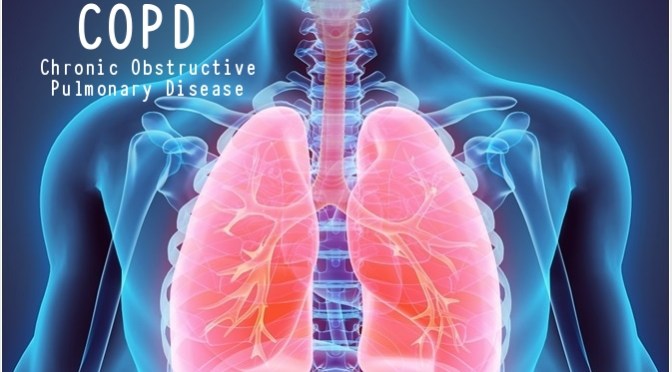
DR. C’S JOURNAL: COPD -CHRONIC OBSTRUCTIVE PULMONARY DISEASE

COPD is the brother of asthma. Both can cause shortness of breath and wheezing. Asthma is the more Treatable of the two, and is due to muscle spasm around the airways which narrow those airways making it more difficult to breathe in and especially out.

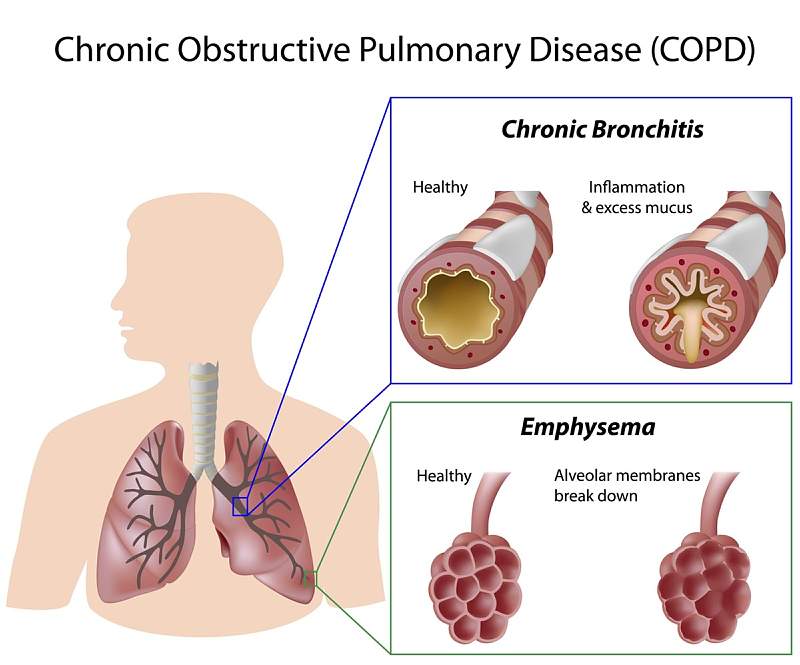
COPD comes in 2 general forms,  Chronic bronchitis and emphysema.
Chronic bronchitis is an inflammation of the airways, which differs from the usual allergic asthmatic TH2 type of inflammation. The inflammation of chronic bronchitis is the more common TH1 inflammation that comes from the likes of bacteria and viruses.

The second type of COPD is usually caused by cigarette smoke or other fumes which lead to the destruction of the air sacs and associated elastic tissue, allowing a check valve type of obstruction to occur on breathing out.

COPD is rarely a pure type of chronic bronchitis or emphysema, and is usually an admixture of the two. In fact there can be an “asthmatic element” mixed into COPD, which allows for a better response to the myriads of medication that we now have for asthma.

The symptoms of COPD include shortness of breath, wheezing, chest tightness and chronic cough with production of sputum. Coughing up a significant volume of phlegm from your chest suggests chronic bronchitis rather than emphysema.

The symptoms of COPD come on rather slowly and are usually not noticed until the problem is severe. After all, the cigarette smoker is EXPECTED to cough isn’t he?

As COPD becomes very advanced, fatigue, lack of energy, and unintended weight loss may occur. Swelling of the legs may be a problem and could indicate involvement of a heart; with COPD the right side of the heart has a hard time moving blood through the diseased lungs.

We’ve all seen people pushing around a cart with an oxygen tank. These people most often are smokers who developed COPD. One particularly disgusting advertisement against cigarette smoking showed a person with a hole in the windpipe (tracheostomy) through which he was smoking his cigarette.

Pulmonary function testing it’s often helpful in diagnosing asthma and COPD. In pulmonary function testing, the amount of air in the lungs  and the rapidity with which it can be expelled from the Lungs is measured and graphed. it is the rate of flow on exhalation that is diminished in COPD and asthma, the slower the rate the worse the blockage.

In the case of asthma the test is repeated after a bronchodilating adrenaline type medication has been given. The REVERSIBILITY of the airway obstruction is shown by comparing the airway function before and after treatment  With no improvement, usually COPD is usually the culprit.

In both asthma and COPD, respiratory infection is a big problem. The compromised lung is usually very vulnerable to these inflammatory reactions. There are a score of medications  that are commonly used in asthma which also benefit COPD to a certain degree. Doctors have a large armamentarium for respiratory disease these days.
As mentioned, asthma is more treatable. However if it is poorly treated or neglected, a condition known as REMODELING can occur which will render treatment less effectual.

Please check with the Mayo clinic article on COPD for more information.

—Dr. C.

Mayo Clinic article

THE DOCTORS 101 CHRONIC SYMPTOMS & CONDITIONS #30: ACNE (Vulgaris)

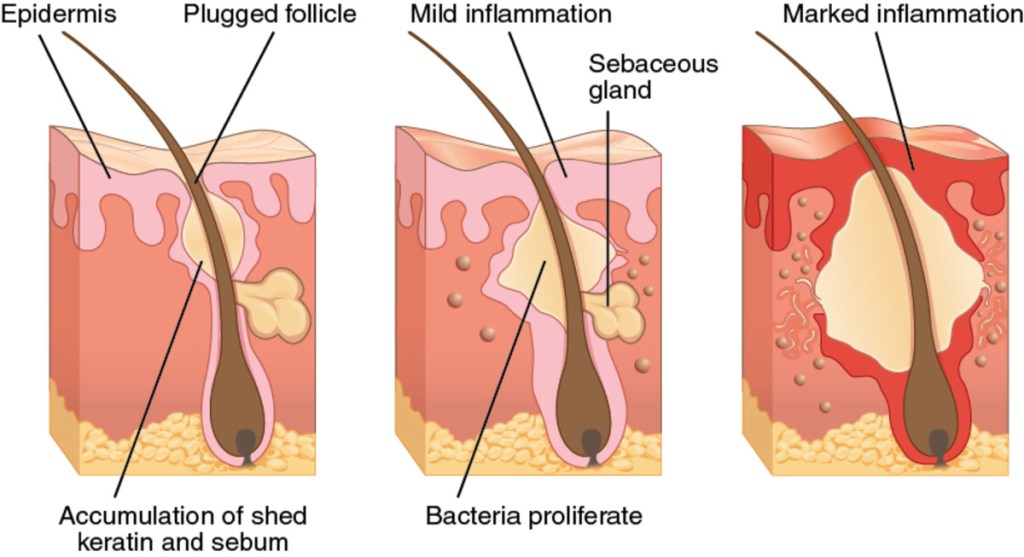
ACNE is almost a rite of passage in adolescents, although it is not totally restricted to the teen years; women may experience acne during pregnancy, or at the time of menopause. It afflicts about 90% of kids during their PUBERTAL growth spurt, though is moderate or severe in only 15%.

Acne is caused by PLUGGING of the sebaceous glands of the skin. Infection by certain skin BACTERIA follows. Check the accompanying video for a description of the battle between the “Good guys”, Staph epidermidis and Cutibacterium acnes, vs. the bad guy, Proprionibactrium
acnes.

Acne tends to run in families. The steroid HORMONES like Testosterone and Cortisone promote Acne. STRESS tends to chronically raise Cortisol and is a factor in Acne, and many chronic illnesses as well.

A person who is having trouble with Acne should avoid sweets and greasy foods, which is a good idea for everybody. Skin cleansers, using salicylic or azelaic acids and benzoyl peroxide may help, and creams containing retinoic acid derivatives may be useful..

The doctor may prescribe an antibiotic like tetracycline in resistant cases. Cystic acne may be scarring, but otherwise “the zits” depart with the pubertal years.

–Dr. C.

Further reading at Mayo Clinic