Tag Archives: Coronavirus

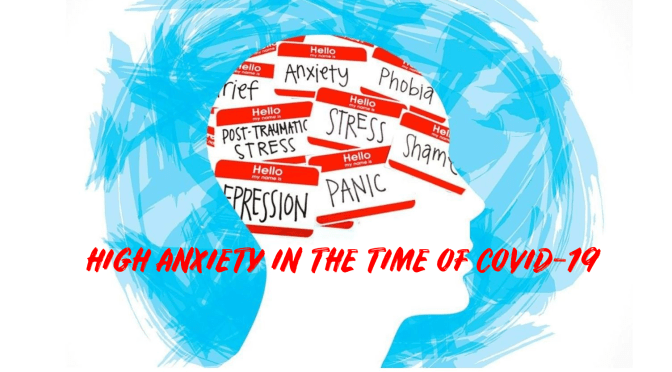
OPINION: “HIGH ANXIETY IN THE TIME OF COVID-19”

Develop interest in life as you see it; in people, things, literature, music – the world is so rich, simply throbbing with rich treasures, beautiful souls and interesting people. FORGET YOURSELF.

Henry Miller

Individualism and authenticity are highly valued traits in a free democratic society. My own concepts of American ideals canonize the  associated freedom. But there is never a “free lunch” in the realm of human nature.

Roy F. Baumeister’s  Book, “Escaping The Self” (which I read a couple of decades ago and either loaned out or lost) started me thinking about the BURDEN OF SELFHOOD. I recently listened to a BBC podcast on the Philosophy of Authenticity (BBC Radio 4 – In Our Time has upwards of 1000 forty-five-minute programs on topics I recommend highly). They discussed the  plight of the “Existential Hero”, and rekindled my interest in the over-demanding Self,  which idea I will argue can help guide an approach to ANXIETY.
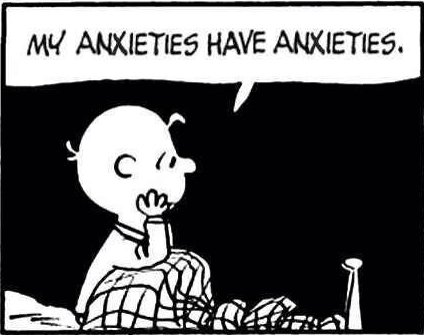
Cooped in by SARS CoV-2, the U.S. has experienced a sharp rise in Anxiety and Depression. The Pandemic has deprived us of the sociability, diversions and travel that had previously lured us outside ourselves, and our jobs (except for the computer-connected) which give us purpose. The connectivity (and self-abnegation preached) in religious services has long been on the wane in secular America, and Covid 19 has temporarily closed the remaining Houses of Worship.

How does the Idea of getting OUTSIDE OURSELVES help the person in the grips of Anxiety? If nothing else, it serves as an organizing principle for the CHANGES IN BEHAVIOR (eg. CBT) necessary for lessening Anxiety. Changes in behavior are necessary; you cannot merely will Anxiety away.

IMAGINE the self as an expensive over-large HOUSE. It’s construction started at the moment of your birth, and progressed through infancy (perhaps with a few defects- we can always blame our parents – i.e. attachment theory). It was damaged by Adolescence, improved by our education and occupation, and remodeling continues our entire lives.

Being restricted to our homes is like Solitary Confinement. Having only our own minds to keep us company is severe punishment for 99% of humanity. What would you do if deprived of the internet and confined to a mountain cabin for just one day?  We are used to pervasive and instant connectivity. Our norms of isolation now would have been considered quite expansive just a generation ago. Well, maybe practice living with ourselves is a benefit of Covid – that which does not kill us, etc…

Using the house analogy, we spend a lot of Money and effort decorating the outside of the house  to impress our neighbors (‘amor propre’ of Rousseau). Spending time on Facebook rather than improving the inside, via  re-framing and behavioral change. The many rooms of the house also suggests the many compartments of the mind, some of which are more accessible than others, some almost unknown.

The analogy is far from perfect. For one thing our house should have legs to let us, the little person inside (the ‘homunculus’ of consciousness metaphor), walk our expensive and beloved (I hope) house through the world. Or better yet, ESCAPE IT BY OUTWARD FOCUS.

The ‘yourself-embracing reality’, out in the world, without the distortions (and protections) of your carefully crafted identity.

Do you dare?

Service (work) gets you outside yourself. To quote Kant:

“I slept and dreamt that life that life was joy. I awoke and saw that life was service. I acted, and behold, service was joy.”

Mindfulness (meditation) gets you outside yourself, to focus on the outside world. The religions of the world prescribe much of our behavior, defining our self-importance, and our expensive houses as “pride”, as something to diminish.

The word Ecstasy (not the recreational drug) is from the Greek (“to step outside oneself”). Ecstasy ( as well as orgasm, i.e. Woody Allen) may be OK occasionally, but for every day, most of us would prefer the Delphic Oracle admonition: “Medan agan (μηδὲν ἄγαν) – “Nothing in Excess”.

Enough hot air already! For those who prefer practical tips or neurobiology to conceptual framework, see the articles below.
-Dr. C.

Article #1

Article #2

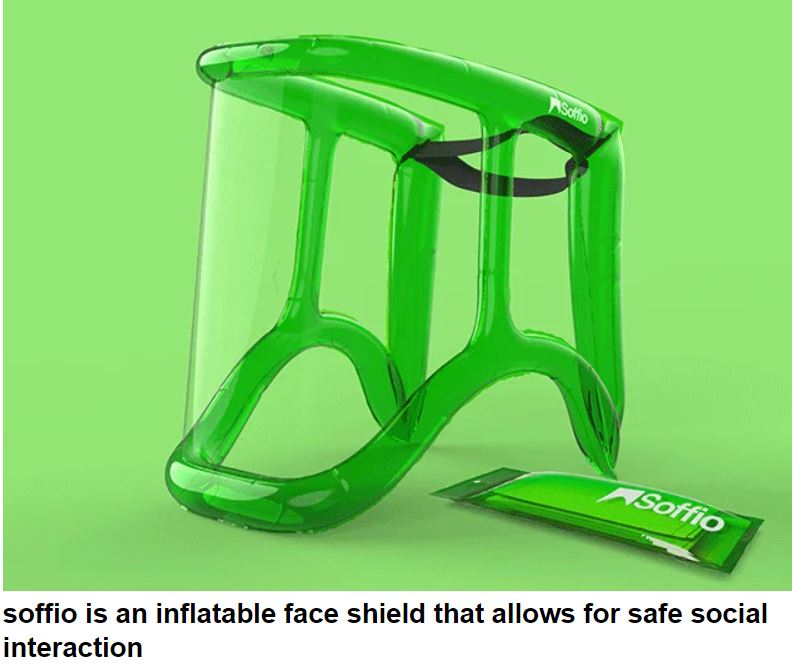
OPINION: FACE MASKS AND SHIELDS TO PREVENT COVID

My main exercise for the day is a 45 minute fast walk around my community.

Hat – check. Sunglasses – check, FACE SHIELD – check.

Yes, face shield. The shield has the advantage of allowing me to talk, plus being more comfortable to wear. I clean it with a woolen cloth on one side and cotton on the other, hoping for a condenser electrostatic effect (I’m open to suggestion from engineers).

If I cough, any large particles of mucus would impact the shield, leaving only tiny aerosol particles to escape around the edges into the environment to endanger others.

It is Saturday today, and I pass a man and a woman pushing a baby buggy, and give them wide berth. I don’t consider 6-feet far enough distancing. 12-18 feet would be better, since, at 88-years of age, I am at least 2-3 times more susceptible.

A 12-year old zooms by me on a scooter. His age predicts less viral effluent, and the exposure time is less. I then go by a large collection of 20-year olds, Wide berth again, and, holding my breath, continuing to walk fast.

As I walk, I breathe air in through my nose, and out through my mouth. I feel the warmth (and purity) of the exhaled air, which may push aside and dilute any contaminants coming from the outside.

Another group of young adults! Well, maybe the risk is not as bad as the numbers would indicate. Odds are there would be only one spreader in the group, and the healthy ones would act as particle filters for me.

So far, not a single young person had a mask on. They are probably just thoughtless young people, and not necessarily “objectors” believing that mask-wearing is a sign of submission. As Peggy Noonan said in her column in today’s WSJ:

“…IT’S A SIGN OF RESPECT, RESPONSIBILTY AND ECONOMIC ENCOURAGEMENT”.

Going forward, we must all do our part to reduce the likelihood of another Covid surge. WEARING A MASK PROTECTS OTHERS.

I finally spied 2 masks! They were fitted on 2 ceramic lions flanking a front door. It is true that felines can catch Covid. But ceramic ones?

I thought I was walking fast, but was overtaken from the rear by a long-legged young lady. She passed within 4 feet of me, and of course had no mask on. I only hope she didn’t have Covid, and that my shield worked.

On the subject of the effectiveness of wearing a shield, while walking I tune into the odors along the way. I use the odors as surrogate aerosols, especially a recently fertilized curbside flower bed, I compare walking by the flowers, with and without my face shield, and find that the shield reduces but does not eliminate the odor. For more distant odors, like a barbecue, it does not make a difference.

Perhaps the shield, like the prow of a ship, pushes aside STREAMS of particle-laden air. Like coughing or talking nearby. But if the particles (yes, odors are nanometer particles) are well mixed with the air, there is no effect. Air must be breathed, after all.

There are a couple of other things I practice on my walk. I exercise my EYES by looking into the DISTANCE as much as possible. I try to walk as erect as I can. Gravity, my friend in grounding many big Covid-containing mucus particles, tries to bend me over.

The BOTTOM LINE, until more information is available), is: SPREADERS WEAR MASKS, SUSCEPTIBLES  WEAR SHIELDS. Of course, hand-washing, social-distancing, coughing into your elbow, and staying at home, especially if sick, are all still important admonitions.,

-Dr. C.

For further reading

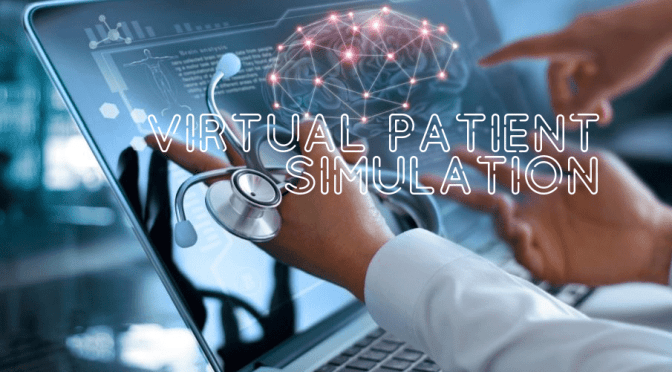
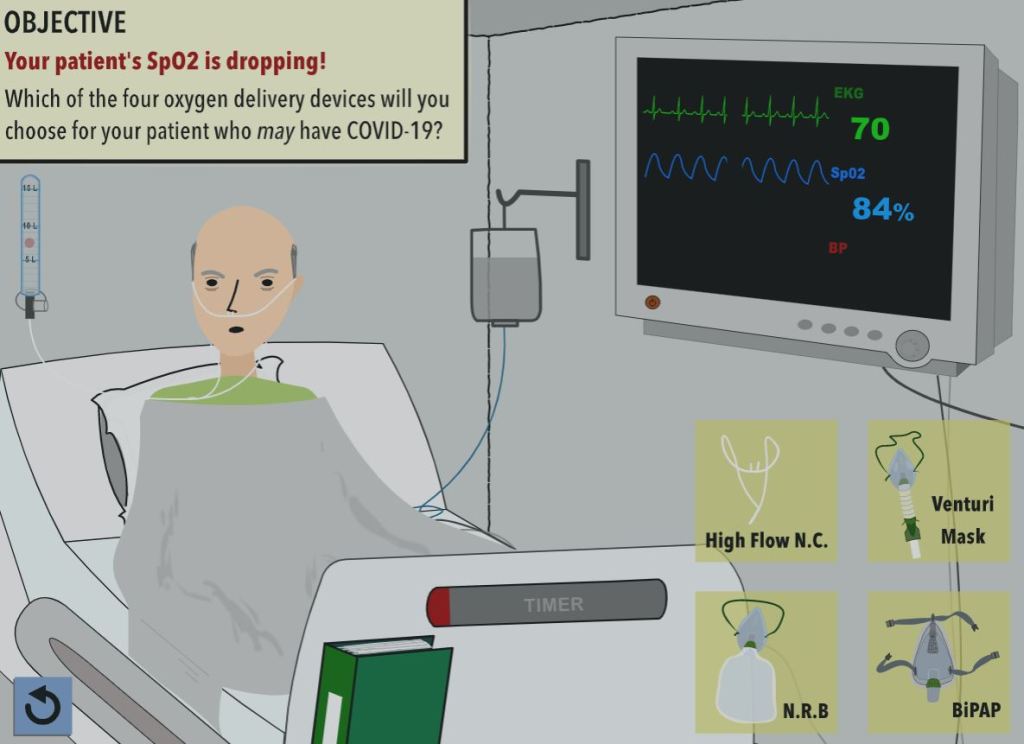
PHYSICIAN’S CORNER: NEJM “COVID-19 PRIMER – VIRTUAL PATIENT SIMULATION” (2020)

CLICK ON PATIENT BELOW TO LAUNCH “VIRTUAL PATIENT SIMULATION”

COMMENTARY

This interactive simulated case of Covid 19 (SARS CoV-2) is remarkable: a unique opportunity to stand in the shoes of a ER Doctor without any risk, except to our egos.

This is meant for doctors, but the intellectually curious  Guests of this site might enjoy the experience, especially Doctor Lisa Sanders fans.
The vocabulary is full Medical, and will give a foretaste of the words I will slowly be exploring. I believe that patients should not be intimidated by their lab reports.

I’ll start the vocabulary journey with FERRITIN which is a marker for IRON STORES in the body. You can have too much iron, which is dangerous (iron overload), in which case the ferritin is high.

There was a time when I had too little iron ( was anemic, with a hemoglobin of 8.6, and felt terrible) and my ferritin was low. I now check my ferritin every 6 months to make sure I am taking enough iron to offset my blood loss, which is another story I will tell when I start go through my medicine cabinet and discuss the Meds one at a time.

The reason for testing ferritin in our interactive Covid 19 case was because ferritin is markedly elevated in cases of inflammation/ infection. It is an “acute phase reactant”, and may reflect the “cytokines storm” that may be a contributor to the lethality of Covid 19.

There is another way to benefit from this simulation: the train-wreck of a patient serves as a cautionary tale of what you wish NOT to become. Our present medical profession is so DISEASE oriented. How much better if our society and our medical profession were HEALTH oriented instead.

—Dr. C.

CORONAVIRUS PODCAST: TRACING APPS, Antiviral remdesivir’S PROMISE

The Coronapod team pick through the latest news, plus we hear from the researchers making lemonade out of lockdown lemons.

In this episode:

01:10 Can contact-tracing apps help?

Governments around the world are banking on smartphone apps to help end the spread of the coronavirus. But how effective might these apps might be? What are the risks? And how should they fit into wider public health strategies?

Editorial: Show evidence that apps for COVID-19 contact-tracing are secure and effective

13:30 Antiviral remdesivir shows promise

Early results from a US trial of the antiviral drug remdesivir suggest it shortens recovery time for patients with COVID-19. We unpick the findings.

News: Hopes rise for coronavirus drug remdesivir

16:52 One good thing

Our hosts pick out things that have made them smile in the last week, including blooming trust in scientists, cooking experiments, and a neighbourhood coming together to clap for healthcare workers.

21:34 Unexpected opportunities

We hear from three researchers making the most of lockdown, studying tiny earthquakes, building balcony-based citizen science projects, or enlisting gamers to fight the coronavirus.

Fold-it, the protein-folding computer game

TELEMEDICINE: “FORWARD TRIAGE” FOR SCREENING PATIENTS DURING COVID-19

 Direct-to-consumer (or on-demand) telemedicine, a 21st-century approach to forward triage that allows patients to be efficiently screened, is both patient-centered and conducive to self-quarantine, and it protects patients, clinicians, and the community from exposure.

Interview with Dr. Judd Hollander on how health systems can use telemedicine services during the Covid-19 pandemic.

It can allow physicians and patients to communicate 24/7, using smartphones or webcam-enabled computers. Respiratory symptoms — which may be early signs of Covid-19 — are among the conditions most commonly evaluated with this approach. 

Health care providers can easily obtain detailed travel and exposure histories. Automated screening algorithms can be built into the intake process, and local epidemiologic information can be used to standardize screening and practice patterns across providers.

Disasters and pandemics pose unique challenges to health care delivery. Though telehealth will not solve them all, it’s well suited for scenarios in which infrastructure remains intact and clinicians are available to see patients. Payment and regulatory structures, state licensing, credentialing across hospitals, and program implementation all take time to work through, but health systems that have already invested in telemedicine are well positioned to ensure that patients with Covid-19 receive the care they need. In this instance, it may be a virtually perfect solution.

Read full article at NEJM

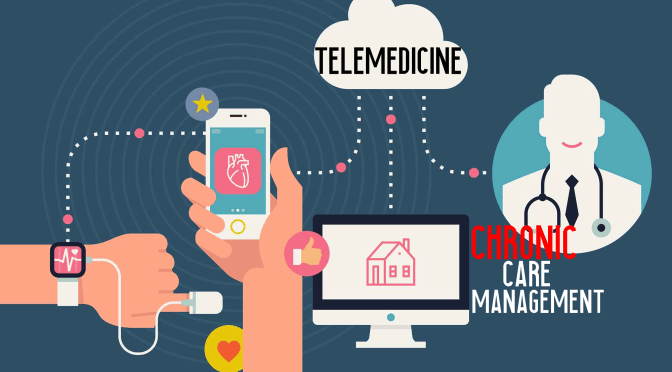
VIRTUAL HEALTH: “CHRONIC CARE MANAGEMENT” PROVES VALUE OF TELEMEDICINE

From a ComputerWorld article (April 27, 2020):

While the pandemic will prove the value of virtual care in a crisis, it will also demonstrate the effectiveness for ongoing chronic care management,” she said. “This moment will have a lasting effect on the adoption of virtual care and accelerate the shift from in-person care to virtual first engagement for multiple conditions and use cases.”

While the need for remote care will not be as acute once the pandemic crisis subsides, demand for telehealth systems will likely remain high. Forrester now expects more than one billion virtual care visits this year, the vast majority of them related to COVID-19.

“…After the crisis subsides, there will be a patient population that will want to continue to receive care online for some things, like managing chronic conditions, follow-up visits after an inpatient stay, surgery or to discuss diagnostic results,” she said.

In this case, it will be important for healthcare providers to ensure that patients are aware of the availability of services.

Read full article

Coronavirus : The Race To Expand Antibody Testing, Public Health Investment

Benjamin Thompson, Noah Baker, and Amy Maxmen discuss the role of antibody tests in controlling the pandemic, and how public-health spending could curtail an economic crisis. Also on the show, the open hardware community’s efforts to produce medical equipment.

In this episode:

02:08 Betting on antibodies

Antibody tests could play a key role in understanding how the virus has spread through populations, and in ending lockdowns. We discuss concerns over their reliability, how they could be used, and the tantalising possibility of immunity.

News: The researchers taking a gamble with antibody tests for coronavirus

10:25 Economy vs public health, a false dichotomy

Jim Yong Kim, former president of the World Bank, argues that strong investment in public health is crucial to halt the ongoing pandemic and to prevent a global financial crisis. We discuss his work with US governors to massively increase contact tracing, and his thoughts on how researchers can help steer political thinking.

News Q&A: Why the World Bank ex-chief is on a mission to end coronavirus transmission

19:00 One good thing this week

Our hosts talk about staying positive, and pick a few things that have made them smile in the last 7 days, including a tiny addition to the team, a newspaper produced by children in lockdown, and a gardening update.

Six Feet of Separation, the newspaper staffed by kids

22:51 Open hardware

Researchers are stepping up efforts to design and produce ventilators and personal protective equipment for frontline medical staff. We hear how the open hardware movement is aiding these efforts, and the regulations that teams need to consider if their designs are to make it into use.

Technology Feature: Open science takes on the coronavirus pandemic

COMMENTARY

Coronavirus Testing and Tracking (1) are the two pillars of surveillance which will hopefully replace the “shotgun” method of universal distancing that America has tried so far. Quarantining only those who are contagious makes much more social and economic sense than quarantining everybody, and it seemed to work in South Korea (2) and Taiwan (3).

There are problems both with testing-accuracy and availability- and tracking, which is in tension with individuality and freedom.
Still we have no choice but to try, because people and businesses need to socialize and make some money.

Some epidemiologists predict that Covid 19 will smolder on, hopefully not overtaxing our health system, until “herd immunity” gets to 60-70 percent of the population.

As a highly susceptible octogenarian, I plan to keep my distance and become one of the minority protected by herd. And maybe an effective immunization or drug will come along.

—Dr. C.

Podcasts: “The Usefulness of Telehealth and Digital Health During COVID-19 “

In the current times that we live in health care professionals are looking for ways to provide safe, quality care from a distance. Telehealth and Digital health are proving to be the perfect tools during this COVID-19 pandemic. 

PART I

In today’s episode Part I, we are joined with Dr. Amit Sachdev and Dr. Curtis Lowery. Dr. Sachdev is a physician most recently at the Brigham and Women’s Hospital, Harvard Medical School and he is currently working on the COVID response.

Dr. Curtis Lowery is the director of the UAMS Institute for Digital Health and Innovation. He also serves as a professor for the UAMS Department of Obstetrics and Gynecology. This episode is in two parts and it serves as an introduction to telehealth and digital health amidst the COVID-19 pandemic.

PART II

In part 2 of our conversation with Dr. Amit Sachdev and Dr. Curtis Lowery over the usefulness of telehealth and digital health during the COVID-19 pandemic. Dr. Sachdev is a physician most recently at the Brigham and Women’s Hospital, Harvard Medical School and he is currently working on the COVID response. Dr. Curtis Lowery is the director of the UAMS Institute for Digital Health and Innovation. He also serves as a professor for the UAMS Department of Obstetrics and Gynecology. Let’s continue the conversation.

Website