Tag Archives: Conditions

Skin Conditions: A Review Of Urticaria (Or Hives)

One out of five people experience hives in their lifetime. These are itchy bumps, which are surrounded by a field of redness, and itch like crazy.

Hives are caused by the release of histamine from mast cells in the tissues, or basophiles in the bloodstream.
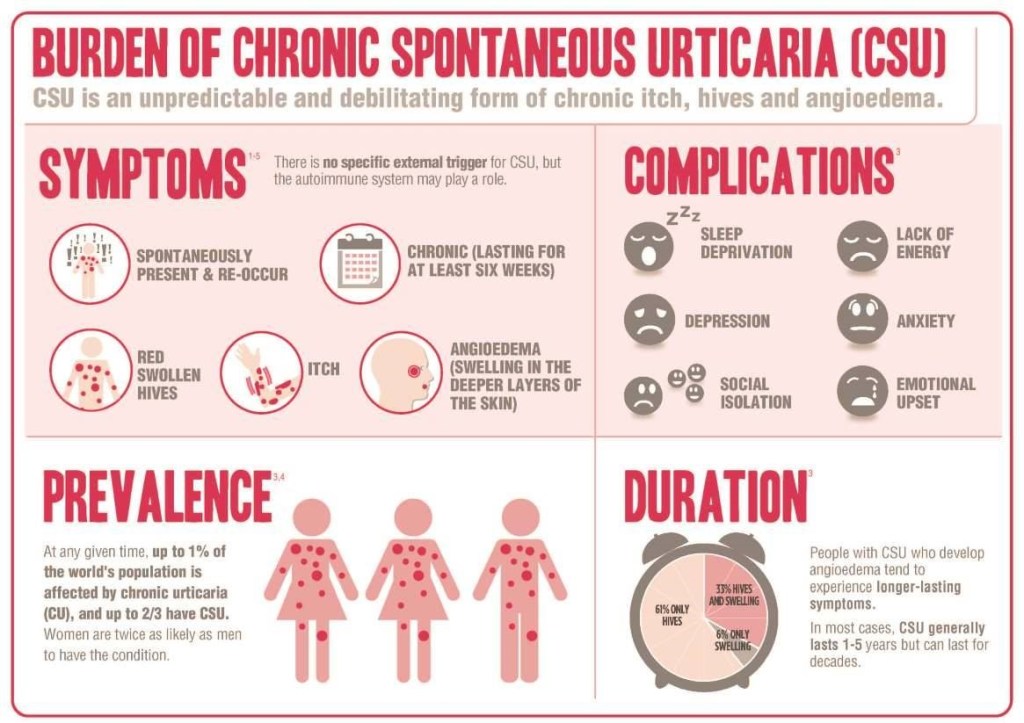
Itching is the chief annoyance, which can cause sleep loss, as well as misery severe enough to distract from normal activities. Hives are sometimes associated with angioedema, which is swelling in certain areas, such as the throat and windpipe, which can be fatal. Extensive hives, with leaking of fluid out of the blood vessel’s can also cause low blood pressure, which can be fatal, especially if you’re in a precarious situation, such as swimming.

The topic has been increasingly understood, and therefore growing increasingly complex, and I will only touch on some high points. I would recommend the review of Dermnet from New Zealand, which is included below if you want more complete and reasonably understandable information.

I have had hives only one time, after being stung by a bee for the third or fourth time. Within a few seconds, I started itching all over my body, but had no dizziness so apparently didn’t lose much fluid from my blood vessels. The hives went away after taking an antihistamine. I sometimes get itchy after wearing a tight belt, which is probably caused by histamine release due to “ pressure urticaria. As mentioned in previous articles, I also get itchy skin without hives if I let my skin get too dry, helped by lubricants, and have itchy ears for which I take drops of mineral oil into my ears, and wash the wax out every few months.

Urticaria, or hives, can be in a limited  area or all over the body, can last a few days or come and go indefinitely, and can be mild or incapacitating. They can be caused by a huge variety of known things, from infections, such as upper respiratory infections, foods such as peanut, drugs such as antibiotics, contactants, such as latex gloves, and stings or other injectants, which  can generalize into severe and sometimes fatal anaphylaxis.

Adrenaline, and antihistamines, are needed immediately in these situations. You may have heard of the rapidly injectable EpiPen, which you must carry with you if at risk.

Often with chronic urticaria, the cause remains unknown or “idiopathic”. As an allergist, this used to drive me almost as crazy as my patients, A lot of progress has been made in the last few decades. About half of the unknown causes turns out to be antibodies directed towards the allergic antibody, IGE, which can be treated by yet another antibody, omalizumab, or some other expensive new medications.

If you have urticaria that continues, and interferes with your enjoyment of life, You can help your doctor out by carefully remembering the circumstances, under which the hives occur, and the places on your body where they are the most annoying. Ask your relatives if they have any autoimmune diseases, like lupus, or vitiligo. Know exactly what medication you are taking, and bring a list with you.

Angioedema can be fatal due to blockage of breathing and demands immediate attention. ACE Inhibitors can cause these swellings, which often occur without itching.

Once again, go to the excellent and understandable article by Dermnet/urticaria/an overview.

—Dr. C.

Infographic: Systemic Arterial Hypertension

Systemic arterial hypertension is the most important modifiable risk factor for all-cause morbidity and mortality worldwide and is associated with an increased risk of cardiovascular disease (CVD).

Fewer than half of those with hypertension are aware of their condition, and many others are aware but not treated or inadequately treated, although successful treatment of hypertension reduces the global burden of disease and mortality. The aetiology of hypertension involves the complex interplay of environmental and pathophysiological factors that affect multiple systems, as well as genetic predisposition.

The evaluation of patients with hypertension includes accurate standardized blood pressure (BP) measurement, assessment of the patients’ predicted risk of atherosclerotic CVD and evidence of target-organ damage, and detection of secondary causes of hypertension and presence of comorbidities (such as CVD and kidney disease). Lifestyle changes, including dietary modifications and increased physical activity, are effective in lowering BP and preventing hypertension and its CVD sequelae.

Pharmacological therapy is very effective in lowering BP and in preventing CVD outcomes in most patients; first-line antihypertensive medications include angiotensin-converting enzyme inhibitors, angiotensin II receptor blockers, dihydropyridine calcium-channel blockers and thiazide diuretics.

READ MORE

Circulatory Conditions: Peripheral Artery Disease

April 4, 2023: Peripheral Artery Disease (PAD) is a chronic circulatory condition, which, if not treated, can lead to limb amputations. PAD affects nearly 20 million Americans. An estimated 200,000 people, disproportionately from minority communities, suffer avoidable amputations every year.

What is peripheral artery disease?

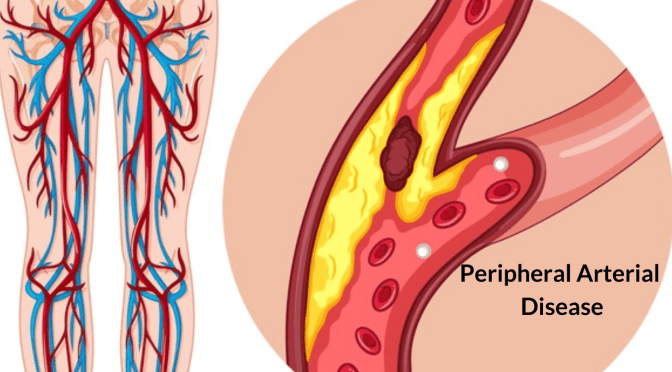
Peripheral artery disease (PAD) is plaque buildup in your leg arteries. Your leg arteries carry oxygen and nutrient-rich blood from your heart to your arms and legs. Other names for this are peripheral vascular disease or peripheral arterial disease.

Shaped like hollow tubes, arteries have a smooth lining that prevents blood from clotting and promotes steady blood flow. When you have peripheral artery disease, plaque (made of fat, cholesterol and other substances) forms gradually inside your artery walls. Slowly, this narrows your arteries. This plaque is also known as atherosclerosis.

Many plaque deposits are hard on the outside and soft on the inside. The hard surface can crack or tear, allowing platelets (disc-shaped particles in your blood that help it clot) to come to the area. Blood clots can form around the plaque, making your artery even narrower.

If plaque or a blood clot narrows or blocks your arteries, blood can’t get through to nourish organs and other tissues. This causes damage ― and eventually death (gangrene) ― to the tissues below the blockage. This happens most often in your toes and feet.

PAD can get worse faster in some people more than others. Many other factors matter, including where in your body the plaque forms and your overall health.

READ MORE

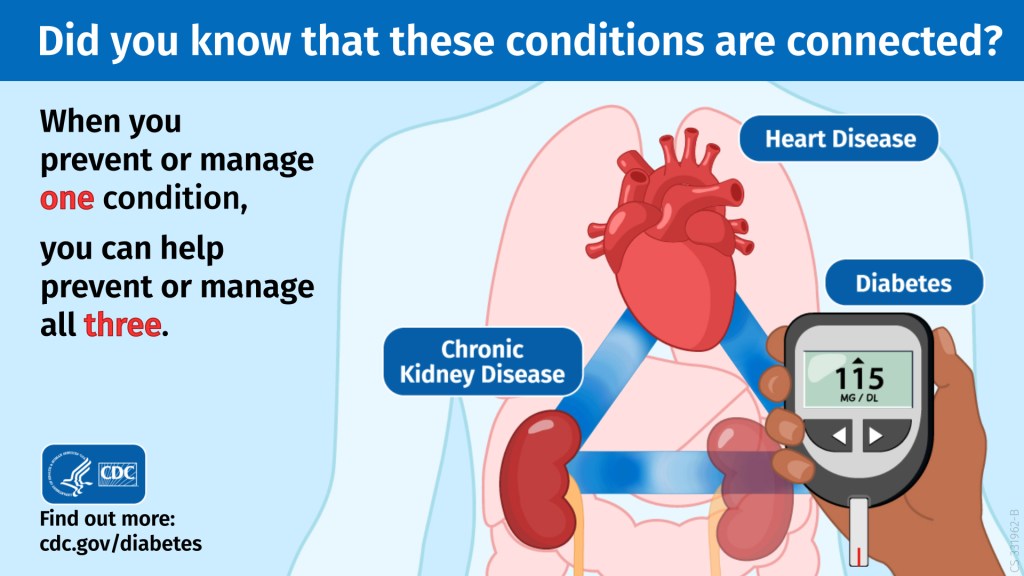
Conditions: How Chronic Kidney Disease, Diabetes & Heart Disease Are Linked

The body is complicated! While organs in your body each have a specific job to do to keep you healthy, they still rely on each other to function well. When one organ isn’t working the way it should, it can put stress on other organs, causing them to stop working properly as well.

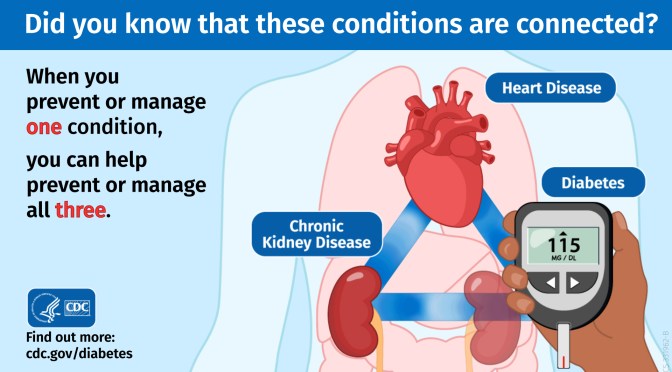
The relationship between chronic kidney disease (CKD), diabetes, and heart disease is one example of the ways our organs are connected.

The body uses a hormone called insulin to get blood sugar into the body’s cells to be used as energy. If someone has diabetes, their pancreas either doesn’t make enough insulin or can’t use the insulin it makes as well as it should.

If someone has CKD, their kidneys are not able to filter out toxins and waste from their blood as well as they should.

Heart disease refers to several types of heart conditions. The most common condition, coronary artery disease, leads to changes in blood flow to the heart, which can cause a heart attack.

Make the Connection

So how are these three conditions connected? Risk factors for each condition are similar and include high blood sugar, high blood pressure, family history, obesity, unhealthy diet, and physical inactivity.

High blood sugar can slowly damage the kidneys, and, over time, they can stop filtering blood as well as they should, leading to CKD. Approximately 1 in 3 adults with diabetes has CKD.

When the kidneys don’t work well, more stress is put on the heart. When someone has CKD, their heart needs to pump harder to get blood to the kidneys. This can lead to heart disease, the leading cause of death in the United States. Change in blood pressure is also a CKD complication that can lead to heart disease.

Luckily, preventing or managing one condition can help you prevent and manage the others and lower the risk for more complications.

THE DOCTORS 101 CHRONIC SYMPTOMS & CONDITIONS #61: EDEMA (SWELLING)

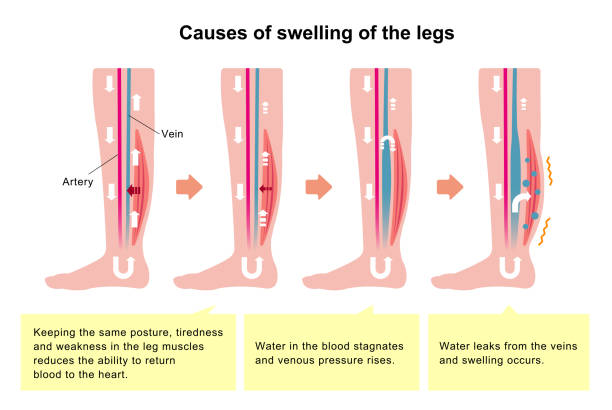
Swelling of the ankles becomes increasingly common as you get older. This swelling can be caused by thrombophlebitis, or skin infections which have been discussed in previous articles. Otherwise it is usually part of a condition called edema.

Edema is commonly caused by problems in the cardiovascular system, kidneys, or liver. Edema can occur in the face and abdominal cavity or elsewhere, But because of gravity and the fact that we are  usually upright-on our feet, it is usually is most prominent in the legs, especially the ankles. Edema can be caused by a normal pregnancy. The developing baby puts quite a strain on the heart and circulatory system.

Chronic accumulation of fluid in the tissues usually occurs because of heart and blood vessel problems, liver disease (albumin lack), diet (excess salt intake), kidney disease (deficient salt excretion), vein problems (valve malfunction), and lymphatic problems (surgical lymph node excision).

Obesity contributes by impacting the heart and liver primarily. Proper sleep, diet and exercise help in most of these areas, and edema is rare in healthy people.

I have always considered sugar(obesity, cardiovascular effects) and salt(hypertension, cardiovascular and  kidney load) as poisonous. I discovered the valve incompetence in the veins of my left leg because it became more blue than my right leg. With good exercise, sleep, diet program and compression stockings, edema never occurred.

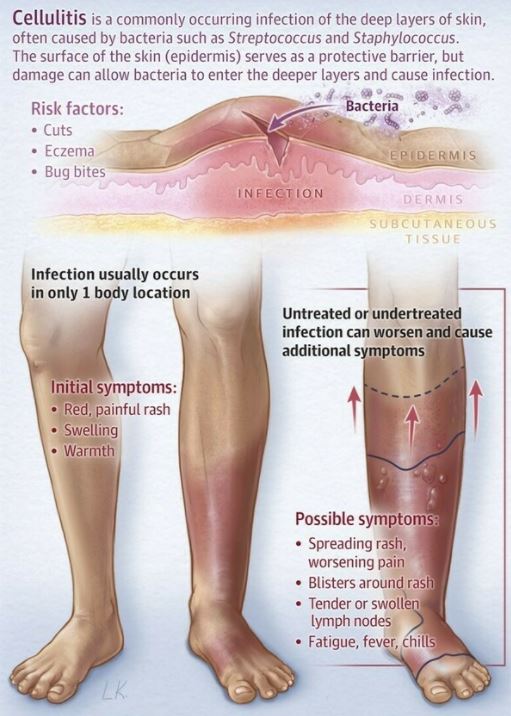
The swelling and stretched shiny skin in the ankles that I see in many of my overweight friends makes a tempting target for germs of all kinds. and small skin sores often follow.

If you developed swelling in your ankles or other areas, it’s best to check with your doctor to get an explanation.

—Dr. C.

DR. C’S JOURNAL: VITILIGO

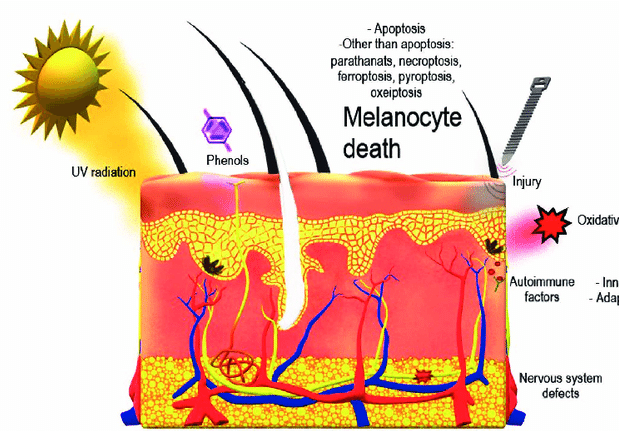
Vitiligo is the loss of skin color in patches. Most often it is widespread. It tends to occur on the hands, or around the mouth, and can start where there are irritations or injuries to the skin, such as with tattoos. This generalized Vitteligo begins in middle age, but a more localized, or segmental Vitelligo can start earlier, and affect one area or side of the body.

Well-tanned skin, and skin with a darker color make the vitiligo stand out more prominently and give more trouble.

When I was a kid, I had a sort of reverse vitiligo, namely freckles. With freckles, the pigment gathers into small spotty areas, and leaves the rest of the skin without sunburn protection. I can attest to the fact that ANY kind of skin difference will lead to social problems; the main suffering  with vitiligo is social.

Vitiligo is considered an autoimmune condition, and carries with it an increased likelihood of other autoimmune conditions, primarily thyroid and other endocrine.

Mimicking vitelligo, skin pigment can also disappear in areas of irritation or surface infection, such as in tinea versacolor and pityriasis alba. There is often a “halo” around a pigmented negus.

There are various treatments which aim to lighten up the surrounding skin area, or Increase pigmentation of the affected area. Such techniques use ultraviolet light, in combination with various various creams and medicines. Even surgery is sometimes used, so great it is the suffering of affected individuals.

Please refer to the accompanying article for more information.

—Dr. C.

Read more

THE DOCTORS 101 CHRONIC SYMPTOMS & CONDITIONS #60: ITCHY EARS

Itchy ears; even if from trivial causes, they demand attention. Swimmer’s ear is a subset of itchy ears, which can lead to some severe infections and sleepless nights. Water remaining in the ears dissolves the natural, protective earwax, and provides a nice warm bath for some nasty bugs like Pseudomonas aeruginosa. Swimmers ear is the result, and the best strategy is to prevent it by keeping  the water out.

After swimming, I often twist some Kleenex and insert it into  my ear canal to “wick out” the water. Some people use a 70% Isopropyl alcohol solution to rinse out the water. Don’t use the 99% isopropyl alcohol; it’ll burn like crazy and for some reason is not as effective an antibacterial. If the itchy ear starts to become painful, and the pain is made worse by pulling on the earlobe, the best strategy is to call the doctor.

Hearing aids comprise a special problem. Earwax can damage the mechanism of the hearing aid, and the hearing aid can cause an irritation that produces itching. Be sure to ask the audiologist about how to prevent problems.

I wear earplugs to deliver sound to my ears when I swim. The ear plugs can cause irritation or even an allergic reaction. I believe this is one of the reasons my ears itch most of the time. My ENT physician suggested that I put a little baby oil in my ear, which I am continuing to do.

Accumulations of earwax can also cause itching. Most of the time I remove the wax myself with an over-the-counter kit containing an ear syringe and glyceryl peroxide. About every third time I need wax removed from my ear, I go to the ENT doctors  to be sure I don’t have some sort of fungal infection or other chronic condition.

If you swab your ear with a Q-tip, you risk pushing the wax deeper into the canal, and create a problem. Nonetheless, I still occasionally put a little bit of 1% hydrocortisone cream if the itching gets extreme. My doctor said that this accelerates the build up of debris and the need for irrigating the canal.

The old adage that you shouldn’t put anything into your ear smaller than your elbow is a good interdict to embrace. Digging out the wax with some sort of instrument risks damaging the canal or hurting your eardrum.

For more information, please look at the following posts.

—Dr. C.

Mayo Clinic Article

Healthy Hearing Article

THE DOCTORS 101 CHRONIC SYMPTOMS & CONDITIONS #33: The Common Cold’

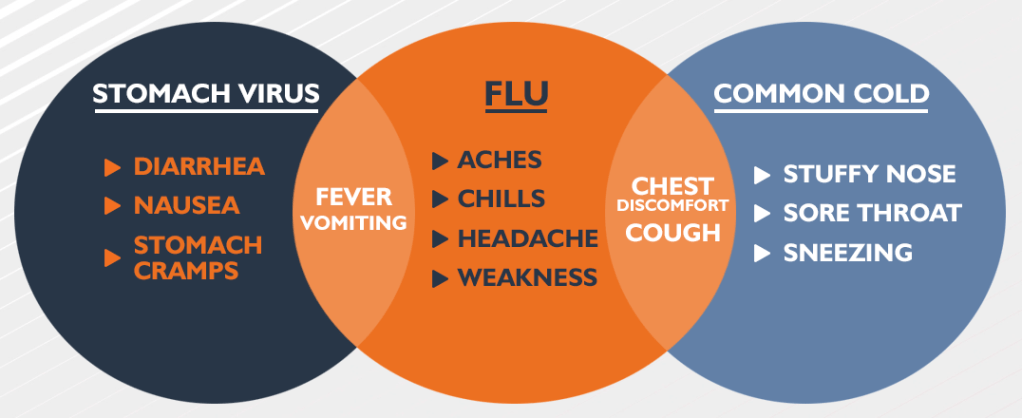
The common cold is one of the most frequent of human diseases, and causes billions of dollars in lost work yearly. I haven’t heard of many cases of colds or flu recently, in the Era of Covid.

Distancing, mask wearing, and hand washing prevents colds too. The common cold spreads by AEROSOL transmission, and autoinnoculation into the nose from contaminated surfaces, just like Covid.

By far the most common cause of the Common Cold is the RHINOVIRUS, of which there are 100 serotypes. Coronaviruses, Influenza, Parainfluenza, RSV and enteroviruses also produce cold-like symptoms. The large number of viruses causing the Common cold makes developing an effective vaccine difficult.

Adults eventually encounter most of the serotypes prevalent in their community, and don’t catch many colds. However, when adults travel, they experience a new, unfamiliar group of viruses endemic to their destination. How often do we take a trip and come back with a Cold, or worse. We lack immunity to the microorganisms we have not yet encountered, just like children.

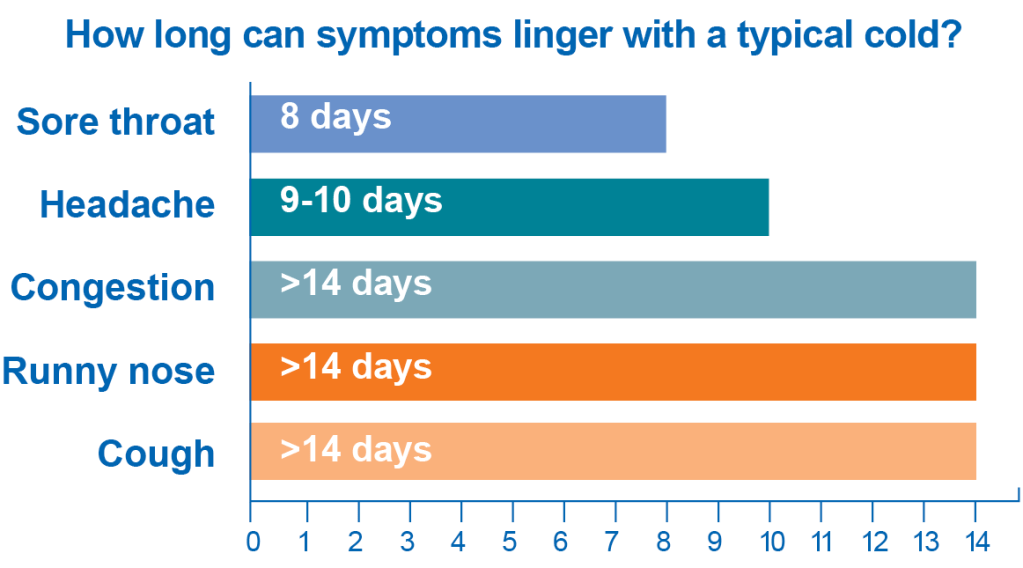
When I was in pediatric allergy practice, I feared nothing so much as the cold temperatures in October. The kids would come back to school, and start getting colds, averaging 7-8 per year. It is commonly thought by researchers that cold symptoms are not produced so much by viral damage to the respiratory membranes, as by the body’s immune response to those viruses.

My experience confirms that opinion. A cold was a worry for my patients. Rhinovirus infection often triggered a severe ashmatic response, sometimes sending the children to the ER if not the Hospital ICU.

It was the allergic reaction to the virus that caused the severe wheezing. After the epidemic of Covid subsides, and becomes endemic, don’t give up all of your newly-acquired habits. Hand-washing, distancing, and even masks prevent other respiratory disease transmission too.

–Dr. C.