Tag Archives: Colon

Colorectal Cancer: Some Myths & Facts Explained

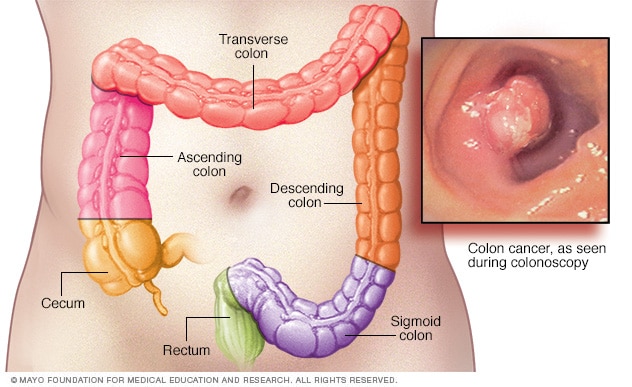
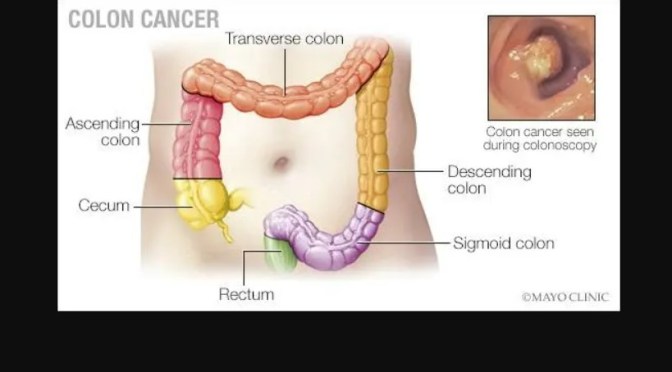
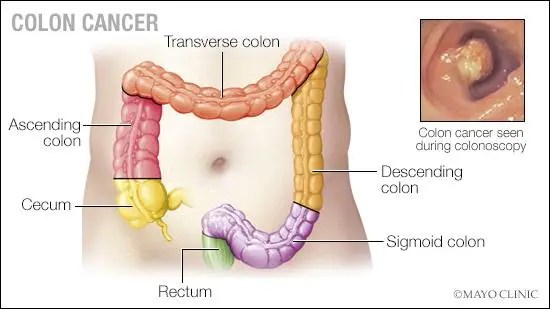
Mayo Clinic Cancer Blog – Colon cancer can occur in any part of the colon. An examination of your entire colon using a long, flexible tube equipped with a camera (colonoscopy) is one way to detect colon cancer and polyps. It can be easy to feel confused by screening recommendations for common types of cancer. Test your knowledge of why, when and how you can be screened with these myths and facts:

Colorectal cancer is rare.

Myth. Colorectal cancer is the second-leading cause of cancer-related death in men and women combined. Roughly 1 in 25 women will have colorectal cancer, and about 1 in 23 men will have colorectal cancer. To put that in perspective, when watching a football game, of all the players on the field, about one player would be diagnosed with colorectal cancer in their lifetime.

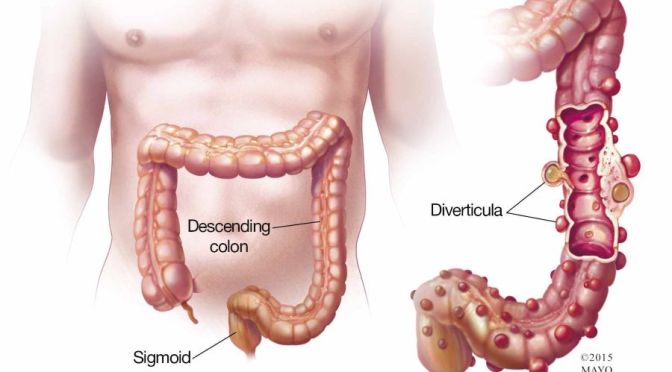
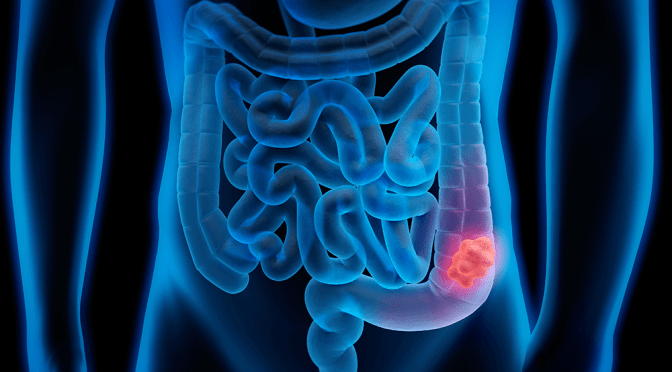
Colon cancer locations

Colorectal cancer can happen when you are young.

Fact. The rate of colorectal cancer is increasing in people under 50. Rates of colorectal cancer in people under 50 have doubled since 1990. In people over 65, the diagnosis rates have been decreasing, most likely because of colorectal cancer screening.

READ MORE

Colon Cancer Options: Intraoperative Radiation Therapy Vs Radiation

What is the difference between intraoperative radiation therapy and normal radiation? Is radiation a standard treatment option, or are there other approaches?

Mayo Clinic (March 28, 2023):

ANSWER: Colon cancer is one of the most common malignancies in the U.S., with more than 100,000 new cases diagnosed each year. Over a lifetime, it is estimated that 1 in 23 men and 1 in 26 women will be diagnosed with colon cancer. Typical colon cancers start as a polyp-like growth in the inside layer of the colon, which can be seen during a colonoscopy. Most cancer organizations recommend starting colonoscopy screenings at age 45.

When the treatment team is concerned about achieving negative margins, or removing the entire tumor with an edge of normal tissue around the specimen, intraoperative radiation therapy may be considered. Intraoperative radiation therapy rarely is used for colon cancer, but, when necessary, the area of concern is directly targeted with a single fraction of radiation during surgery. 

When a mass is found during a colonoscopy or cancer is suspected, biopsies are taken and reviewed by a pathologist. In this scenario, most patients are asymptomatic. Without preventive colon cancer screenings, a tumor may grow to an advanced stage before it causes any symptoms that a patient or health care professional would recognize. The most common signs and symptoms of colon cancer are anemia, which may lead to fatigue; abdominal pain; blood in the stool or other bowel changes; weight loss; and signs of obstruction.

Once colon cancer is diagnosed, the next step is a staging examination. This involves a history and physical examination; blood work; confirmation that a full colonoscopy has been performed; and CT scans of the chest, abdomen and pelvis. The results of these tests will allow your health care professional to assign a clinical stage. In stages 1 and 2, the tumor remains in the colon wall with no evidence that it has spread further. With stage 3, there is concern that the tumor cells have spread to the regional lymph nodes, and in stage 4 colon cancer, the tumor cells have spread outside of the local area to other organs  most commonly the liver, lungs or peritoneum.

Surgery is the mainstay of treatment for stages 1, 2 and 3 disease and is usually the first step in the treatment process. The segment of the colon bearing the tumor is removed, along with the draining lymph nodes. The ends of the intestine are reconnected, and the specimen is sent to the pathologist who then performs a histologic examination of the colon and the associated lymph nodes. The pathologist will assign a final pathologic stage to the tumor, which will dictate the need for any additional treatment.

Inflammation: Treating Ulcerative Colitis (UC)

Since ulcerative colitis (UC), a condition that causes inflammation in the colon and rectum, is never medically cured, certain lifestyle behaviors can help you manage symptoms and better cope with your condition. In addition to managing stress, paying attention to what you eat can have a big impact on your quality of life.

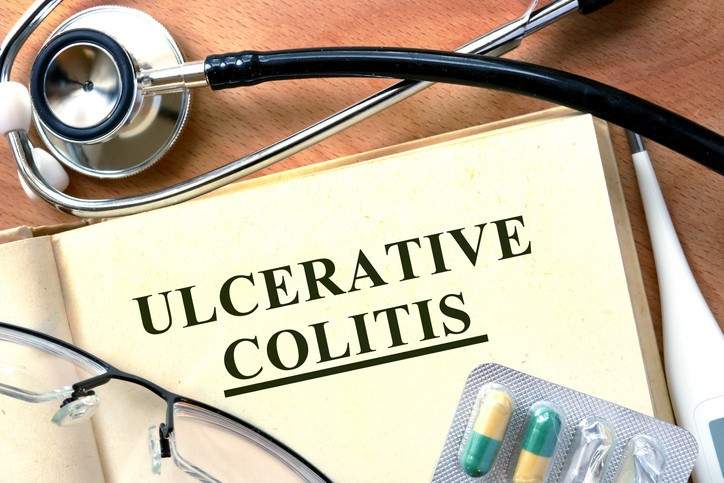
A notepad with "ulcerative colitis" printed on it and a stethoscope laying next to it.

You should eat a well-balanced, healthy diet rich in fresh fruits and vegetables, such as a Mediterranean style diet. Avoid preservatives and emulsifiers, such as carrageenan, carboxymethylcellulose, and polysorbate-80.

If you have inflammatory bowel disease and also irritable bowel syndrome (IBS), a low-FODMAP diet may be helpful. FODMAP stands for the short-chain carbohydrates known as fermentable oligosaccharides, disaccharides, monosaccharides, and polyols. Some people who eat high-FODMAP foods have an increased risk of problems like diarrhea, bloating, abdominal pain, and flatulence. FODMAPs include the following:

  • disaccharides, such as lactose (in milk and other dairy products)
  • monosaccharides, such as fructose (for example, in apples and honey)
  • oligosaccharides, such as fructans (in wheat, onions, and garlic, for example) and galactans (commonly found in beans, lentils, and soybeans)
  • polyols, such as sorbitol and mannitol (in some fruits, vegetables, and artificial sweeteners).

A low-FODMAP diet can help reduce abdominal pain, bloating, and diarrhea and improve stool consistency in people with IBS who also have well-controlled IBD. Consult with your doctor and a nutritionist about how FODMAP reduction may fit into your dietary plan.

Read more

Infographic: Colonic Diverticular Disease

Diagnosis: Six Warning Signs Of Colon Cancer

Colon cancer is one of the most common cancers in people of all genders and the third leading cause of cancer-related deaths in the United States. It happens when the cells that line the colon become abnormal and grow out of control.

Chapters: 0:00 Intro 0:22 What is colon cancer? 1:00 6 warning signs of colon cancer 2:13 How are patients screen for colon cancer? 2:32 Who is at risk for colon cancer? 3:15 Is colon cancer treatable?

DR. C’S JOURNAL: SIGNS AND SYMPTOMS OF APPENDICITIS

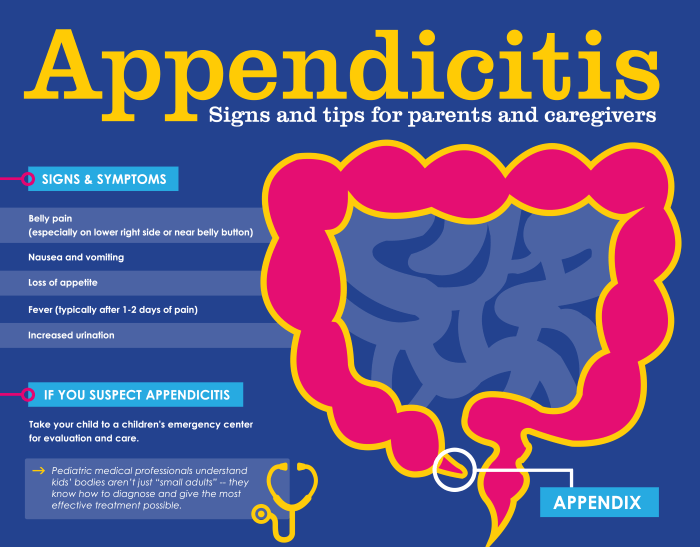
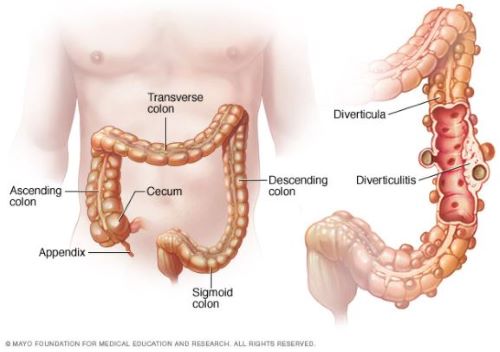
The appendix is a finger like projections at the origin of the colon in the right lower part of your abdomen. It may become inflamed, especially if there is a blockage. Appendicitis is best considered a medical emergency, since it may rupture and infect the entire abdominal cavity.

When I was a practicing pediatrician, appendicitis was one of the two conditions I refused to allow myself to overlook; the other one was meningitis, which is now mostly prevented by immunization.

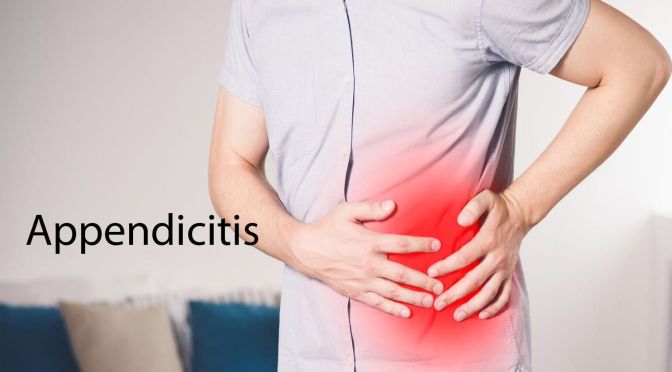
Pain in the abdomen is almost invariably present as the main symptom of appendicitis. This pain often begins around the belly button and then migrates to the right lower part of the abdomen. The patient should try to notice whether jarring the abdomen by walking makes the pain worse; if so, this finding would favor an inflammatory condition like appendicitis.

A similar condition, diverticulitis, may cause similar symptoms in the left lower part of the abdomen, and other conditions may cause confusion. The doctor checks to see if it is more painful in the right lower belly area, and she may pull her hand away suddenly. If the pain intensifies, there may be inflammation around the appendix. Sometimes a vaginal examination or rectal examination will be needed to help with the diagnosis; the appendix is close to these areas.

Other symptoms and signs may be a low-grade fever, vomiting, add an elevated white blood cell count. In the modern medical era, ultrasound, CT scans, and MRIs are sometimes used to visualize the appendix to evaluate its size and possible inflammation.

Treatment used to consist only of surgery, but with imaging techniques available to prevent disaster, the condition can be treated with antibiotics. 30 to 50% of those so treated will still eventually require surgery. Removal of the appendix is now sometimes performed through a fiberoptic scope, leading to more rapid recovery.

A dilemma is present for individuals who go to the south pole to live for several months, and where weather may prevent them from getting proper medical help. Such  people may have their appendix removed as a preventative. Of course they also can take antibiotics if appendicitis develops, but it’s really scary to use medical treatment only, without the aid of modern imaging techniques.

Please consult the following Mayo clinic article for more information.

—Dr. C.

Read more

HEALTH: LOOKING OUT FOR DIVERTICULITIS (HARVARD)

What is diverticulitis?

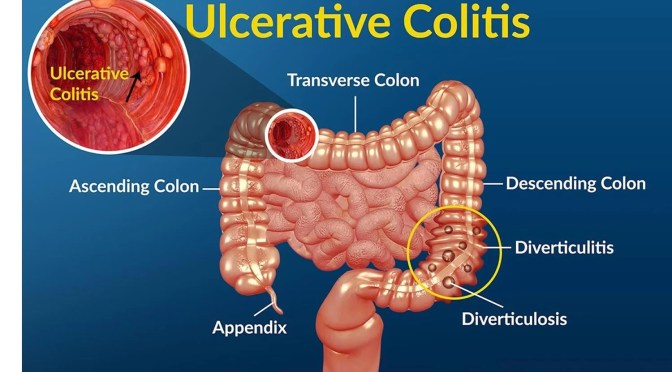
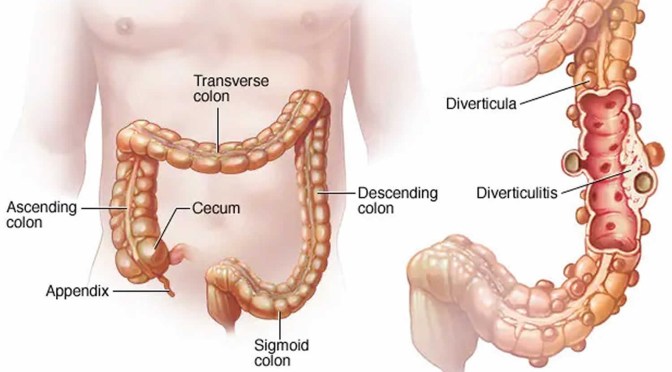
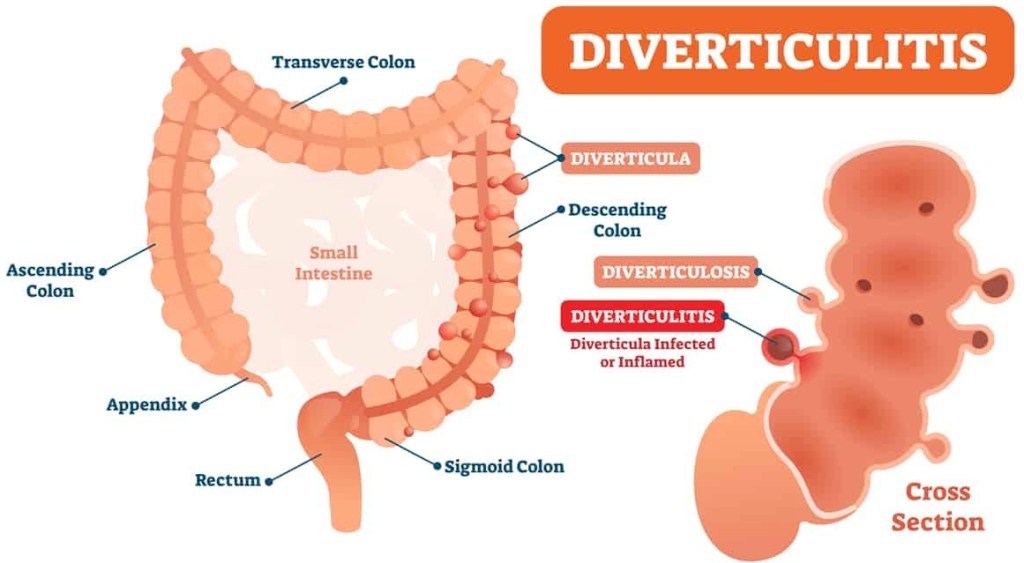
Diverticulitis arises from a condition called diverticulosis, which occurs when weak areas in the inner wall of the colon bulge outward and form tiny pouches. Many people get diverticulosis as they age. In fact, diverticulosis affects about 58% of US adults over age 60. Getting enough fiber in your diet can help protect against diverticulosis.

Know the signs of diverticulitis

The most common symptoms of diverticulitis are abdominal pain (usually on the lower left side) and fever. The pain is distinct and sharp, and may strike over a few hours. Other symptoms may include a combination of loss of appetite, nausea, vomiting, abdominal bloating and cramping, and not passing gas or stool.

A mild case of diverticulitis that causes only minimal pain in the lower abdomen can resolve on its own within a day or two. However, you should seek immediate medical attention if your symptoms are not going away or you are feeling worse, such as having increasing pain, fever, bloody stools, or abdominal bloating with vomiting.

Treatment depends on whether you have uncomplicated or complicated diverticulitis. Your doctor can determine this by using a combination of blood tests and imaging studies, such as a CT scan.

How is uncomplicated diverticulitis treated?

As the name implies, uncomplicated diverticulitis is the less serious of the two. It means that the inflammation or infection is confined to one section of the colon, and that there is no evidence of complicating factors.

Uncomplicated diverticulitis is typically treated at home with oral antibiotics. You’ll also be prescribed “bowel rest” for a few days, which often includes a clear liquid diet. This gives your bowel a chance to rest and heal, and may reduce pain. Additionally, you’ll follow a low-fiber diet (about 10 to 15 grams of fiber a day) until your symptoms improve.

Some people may need to be hospitalized to receive intravenous (IV) antibiotics. A hospital stay is more likely if you’re 65 or older or have other medical conditions, such as heart disease, diabetes, or chronic obstructive pulmonary disease.

People usually begin to feel improvement from treatment after about three days. If you feel well enough and the symptoms have subsided, you can gradually resume your regular diet.

If symptoms haven’t responded to antibiotics after a week, you probably will undergo CT scans and other tests to see if you have complicated diverticulitis.

How is complicated diverticulitis treated?

Complicated diverticulitis means you have a specific complication that requires a longer course of IV antibiotics, and possibly surgery.

Pope Francis had scarring in a segment of colon where he previously had diverticulitis, which had caused a narrowing in the colon called stenosis. In a case like this, the unhealthy part of the colon is removed, and the remaining colon is then reconnected.

Other types of complications that may occur during an active diverticulitis infection include:

  • Abscess. A diverticular abscess is a collection of pus (a fluid that can form at the site of infection) outside of the intestinal wall. If the abscess doesn’t get better with antibiotics, a doctor will need to drain the pus using a needle, under guidance through images on a CT scan.
  • Perforation. Diverticulitis can cause a hole in the colon that allows bowel contents to spill into the abdominal cavity. If you have a perforation, your abdomen may feel tender to touch, hard, or enlarged. Surgery repairs the hole. Sometimes part of the colon around the hole must be removed.
  • Fistula. A fistula is an abnormal connection between the inflamed and infected segment of the colon and adjacent organs, such as other parts of the intestine or the bladder. Surgery consists of colon resection and removing the fistula.

Can diverticulitis be prevented?

Eating a high-fiber diet and managing stress may lower the risk of developing pouches in the colon known as diverticula. So it makes sense that these lifestyle interventions might help make diverticulitis less likely to occur. However, once you have diverticulosis, there is no proven way to prevent one of the diverticula from becoming infected or inflamed.

THE DOCTORS 101 CHRONIC SYMPTOMS & CONDITIONS #19: DIVERTICULOSIS

Your large bowel, or colon, is at the end of the Gastrointestinal tract. It starts on the right side of your abdomen, where the small intestine empties into the caecum. This is also where the Appendix bulges down, looking like a little finger coming from the caecum. The 5 foot long large intestine is the final processing area of your food, after the nutrients have been absorbed.

The Colon contains virtually all of the microbiome, reduces the volume of the fecal matter, and propels it to its final destination. The propelling muscles are an inner circular ring, and 3 outer longitudinal strips. These outer strips of muscle do not completely encircle the Colon, allowing for protuberances of lining membrane and circular muscle to balloon out into prominences called Taenia.

It is in these weakened areas, especially where blood vessels penetrate that little herniations form over the years. Diverticulosis occurs in 50% of people more than 60 years of age, and in almost everybody more than 80 years.

Diverticulosis is a condition where pressures up to 120 mm or mercury, generated by the colonic muscles gradually push out little pouches of lining membrane called diverticula. Nobody knows why some people get an INFLAMMED diverticulum.

Age, of course, is a factor, as are Obesity, diabetes, smoking and poor diet; a tendency toward inflammation is common in all of these risk factors. Comparing diverticulitis with Appendicitis is an interesting exercise. The symptoms are mirror images of each other. Appendicitis occurs on the right side.

Diverticulitis usually occurs on the left side, except in asian people. The asian DIET seems to favor diverticula on the right side. When asians immigrate to the U.S. and start eating more Red meat and fewer vegetables, the diverticula shift to the left side.

Signs of Diverticulitis include gastrointestinal symptoms, such as pain, tenderness,nausea, cramps, constipation, and Fever. Rectal bleeding can sometimes occur. Treatment includes antibiotics.

If the condition worsens, serious complications, such as abcess may develop and require surgery. As usual, Prevention, including diet and exercise, is better than Treatment. A HIGH FIBER DIET is the best prevention.

–Dr. C.

Article #1 to readDiverticular disease of the colon: New perspectives in symptom development and treatment

Article #2 to readManagement of Colonic Diverticulitis | Effective Health Care Program