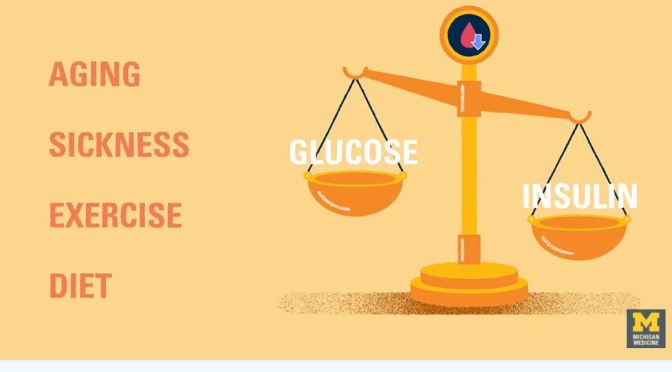
In this video, you’ll learn the basics of how to treat a high blood glucose result with a Correction Dose of insulin, how to calculate the Correction Dose, and when not to give a Correction Dose.
Tag Archives: Children
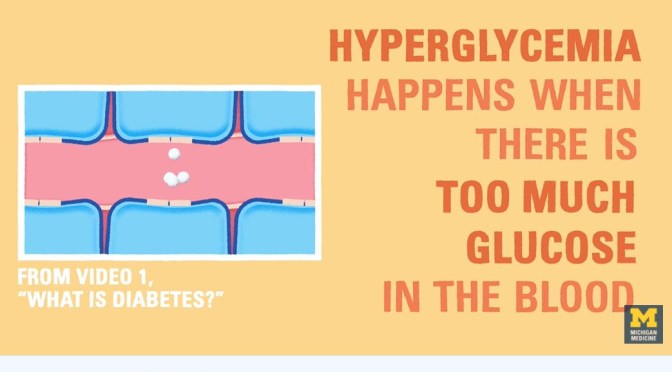
Type 1 Diabetes: What Causes Hyperglycemia?
In this video, you’ll learn about what causes hyperglycemia, what symptoms to look for, and how it affects the health of people living with type 1 diabetes.
COMMENTARY:
Hyperglycemia refers to an excess of glucose in the blood stream. The fact that we do not all have hyperglycemia is a tribute to the fine-tuned regulation, or homeostasis, of the normal body,
Glucose is our main source of energy especially for the brain. When we eat, our intestinal tract breaks down the complex starches and sugars we eat into glucose, which is absorbed into the bloodstream. This triggers the pancreatic beta cells to produce insulin, which allows glucose to get through the cell membrane and into our cells.
Hyperglycemia results mainly when pancreas produces insufficient insulin, or our cells exhibit insulin resistance. This can occur in diabetes, other diseases affecting the pancreas or stressful conditions which decreases insulin sensitivity.
Excess of glucose in the blood stream washes out water and salts with excessive urination, causing thirst, and drying out of the cells; the distorted vision of hyperglycemia is one such symptom thot results.
In the most common types of hyperglycemia, the cells are starved of glucose, and need to breakdown fats for energy. This produces a ketosis, or acidosis of the bloodstream, increasing the dehydration.
My wife suffered from diabetes, and had her only severe episode in Canada. She started vomiting before we discovered the high blood sugar, and couldn’t drink enough fluids by mouth. She was hospitalized in Canada and received excellent treatment with intravenous fluid and insulin.
Over the years, chronic excess of sugar attached to the protein of her cells, as manifested by excessive hemoglobin A-1 C, or glycohemoglobin, in her bloodstream. She passed away a decade ago.
A healthy lifestyle, with good sleep, diet and exercise is essential
Sugar should be considered a poison.
Regular vegetables fruits and cereal grains help avoid the excess sugar of fast foods. Exercise helps to utilize extra sugar and mitigate stress.
Please refer to the article on hyperglycemia by the Mayo clinic for a more complete discussion.
—Dr. C.
Read morehttps://www.mayoclinic.org/diseases-conditions/hyperglycemia/symptoms-causes/syc-20373631

THE DOCTORS 101 CHRONIC SYMPTOMS & CONDITIONS #60: ADHD
Trouble with impulsivity and inadequate ability to pay attention characterizes most of the human race. It is particularly characteristic of childhood; while developing, all children are hyperactive and inattentive, compared with an adult standard.
Children and adults inflicted with extremes of these two neurodevelopmental problems have a particular difficulty in our complex, organized, and demanding society, and consequently“ excessive“ hyperactivity and inattention are presently considered a disease, with specific diagnostic criteria, and medicinal, psychiatric, and sometimes instrumental treatments.
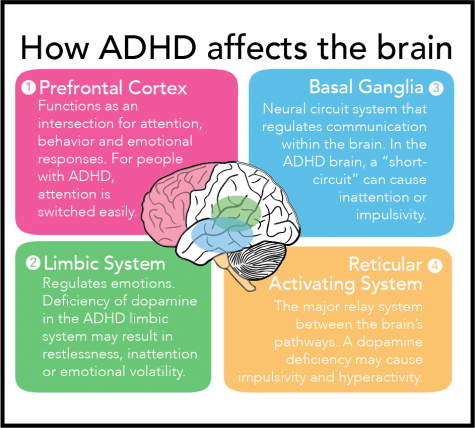
ADHD is divided into predominantly inattentive, predominantly hyperactive/impulsive, and combined. I will concentrate on certain features of the attentive aspect.
I encourage you to read the excellent Mayo clinic article which covers most bases, including advice for parents and relatives who have to deal with these sometimes difficult individuals.
ADHD most commonly involves children. It leads to difficulty at school, and often suboptimal interpersonal relations. Drugs such as amphetamines and Ritalin are most commonly given, and seem to work; it is always amazing to see a stimulant quieting down an overactive child. Struggling college students often consume these same medications, since they seem to give a short term boost In concentration, ability to learn, and performance in tests.
Caffeine is the poor man’s drug and also sometimes helps. 60 years ago I worked in the UCLA clinic where we checked problem children for “split dominance”, where the children may throw with the right hand and kick with the left foot. There is no mention of this in the literature now, and indeed FADS have characterized the whole area.
My middle son had difficulty in school and was hard to get along with. I tried him on some amphetamine, but he wisely spit it out. He turned out to have dyslexia (poor reading ability), studied engineering in college, and is running his own company; Entrepreneurs are often dyslexic.
Be very careful before labeling a child with the stigma of ADHD. Try loving and working with her more. If the situation is clear cut, make sure the least five of the nine criteria are present before agreeing to try drugs.
One of my grandchildren was very slow in learning, and was distracted easily. His mother persisted in sending him to a Montessori preschool, and when he went into his growth spurt (I like to think he myelinated his neural pathways), a miraculous change took place; He now seems very interested in many things and does excellent work at school.
You cannot lavish too much attention on developing children. ADHD thought present in somewhat less than 10% of children, particularly boys. It is also being increasingly recognized in adults, where it interferes with their personal, home, and occupational lives. Anxiety, depression, and other psychiatric problems may follow.
I wonder if inattention also afflicts some of my elderly friends; if they don’t pay attention to what they’re doing, they may well FALL, and curtail their lives. We could all pay better attention to what we are doing.
TOO MUCH ability to pay attention, however, could grade into obsessive compulsive disorder. In more extreme forms, ADHD is certainly real, and failure to intervene can result in distressing secondary problems. However, it is almost too convenient a category for assigning children. Haste in categorization may result in missing other problems.
When normal, our brains are amazingly fine tuned instruments. The best thing to do is keep them exercised, stimulated, and well nourished.
—Dr. C.

THE DOCTORS 101 CHRONIC SYMPTOMS & CONDITIONS #2: NASAL CONGESTION
Chronic nasal congestion, the constant condition of not being able to breathe through your nose, can be a major problem, interferes with sleep (often via sleep apnea), undermining one of the 4 pillars of health (sleep, diet, exercise and intellectual stimulation). Well, maybe a second one as well, since it is hard to function intellectually when you are sleepy all the time.
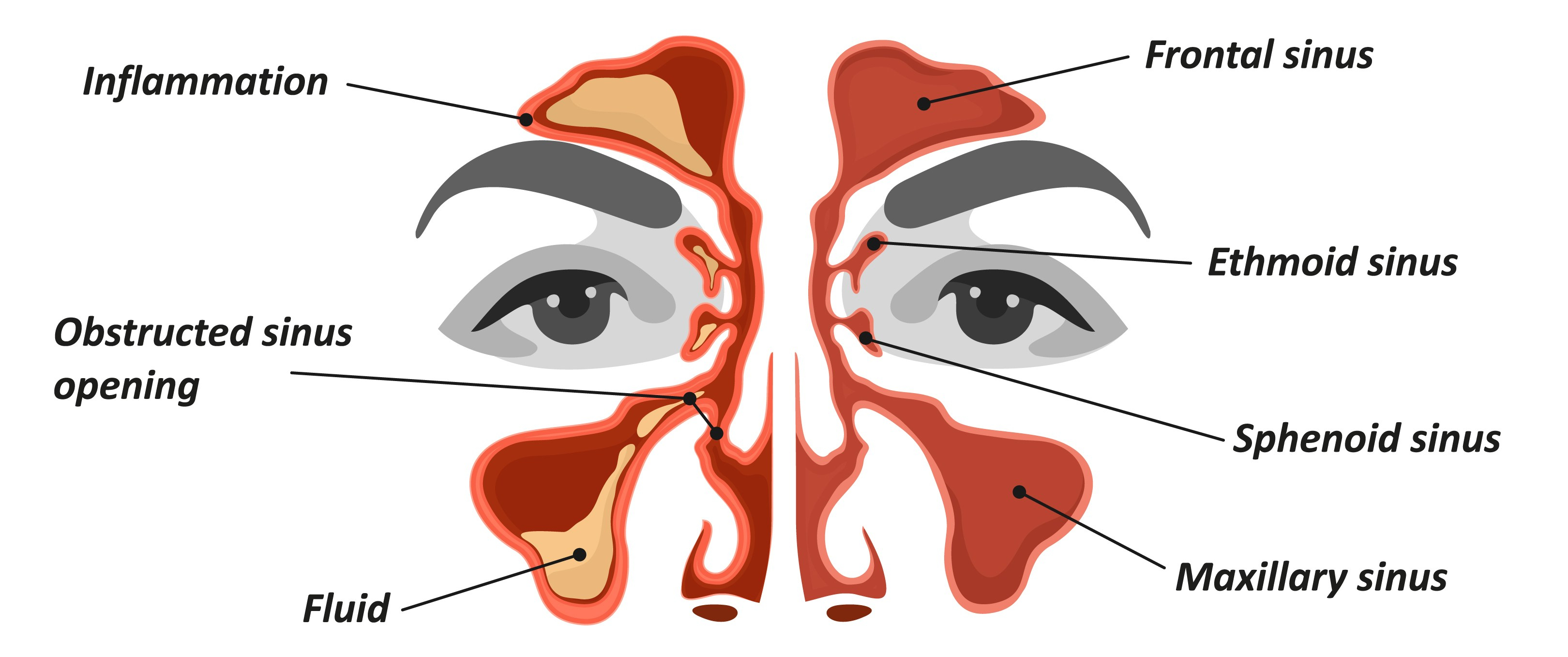
Chronic nasal congestion in kids is often due to allergy and associated ADENOID (located at the back of the throat) ENLARGEMENT. Adenoids can cause sleep apnea and pulmonary hypertension, ear infections and sinusitis.
If left untreated, the bones of the face don’t grow properly, and the constricted bony structures can lead to later problems. Nasal polyps can be a factor in nasal airflow blockage, and their removal may benefit the blockage.
If associated with sinusitis and aspirin (aspirin is rarely used in children anymore because if Reyes’ Syndrome) sensitivity, the combination is known as “sampters’ triad. Regrowth of the polyps is common and aspirin desensitization may be helpful.
ALLERGIC RHINITIS is treated by avoidance, medication and desensitization. SINUSITIS can cause chronic nasal blockage. Both medical and surgical treatments are useful.
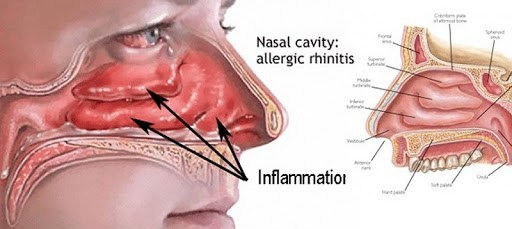
One-sided nasal blockage raises a red flag. One of my young patients had pushed a rock into his nose, which I then removed. Nasal polyps can be on one side, and can be removed, NASAL SEPTAL DEVIATION can cause one-sided nasal blockage, and if severe can be surgically corrected.
The nasal tissues are “erectile tissues” I have a nasal septal deviation to my left side. I SLEEP ON MY SIDE to CONTROL my SLEEP APNEA (more when I get to that subject, which certainly qualifies as a chronic problem), When I sleep on my right side, I don’t breathe as well since my “good side” is down and becomes study.
Those lucky people who breathe freely on both sides, and who sleep on their sides, may possibly be aware that the DOWN SIDE (my good side, above) blocks up. It seems that the nasal tissues are “erectile tissues” body wants to REST one side at a time, and the down side is easier, since gravity pools the blood there.
Nasal tissues are under the control of the autonomic nervous system, decongest (nasal passages are open) with the alarm (fight or flight, “sympathetic”) reaction, and do the opposite (tissues congest, nasal passages close) when the “parasympathetic” takes over after a meal, when you are “vegetating”. in front of the TV

TELEMEDICINE: 80% OF PEDIATRIC PATIENTS SEEN REMOTELY AT JOHNS HOPKINS CHILDREN’S CENTER
From Johns Hopkins Medicine (April 30, 2020):
“A lot of our pediatric divisions are now seeing 80% or more of their patients by video or telephone,” says Hughes.
The Children’s Center’s preparations for the virus and the disease it causes, COVID-19, were unwittingly sparked by pediatrician Helen Hughes and her early work in telemedicine outreach for pediatric subspecialists. In 2018, she spearheaded development of a telemedicine collaboration with the Talbot County Health Department on Maryland’s Eastern Shore.

The goal was to ease the burden of long treks to Johns Hopkins’ Baltimore campus for young patients — especially medically complex patients — for follow-up visits. At the time, she said, “This is where the future of health care is headed. Video technologies can allow us to do so many things for our patients without having to see them in person every time.”
The Children’s Center, notes Hughes, had been conducting between zero and eight video visits per month for the past two years. In the second half of March, after the coronavirus had clearly arrived, Johns Hopkins pediatricians and pediatric subspecialists saw 800 patients via telemedicine. That number increased to 1,400 telemedicine visits in the first half of April. Additionally, MyChart users in April jumped to 71%.
 Doctors Without Waiting Rooms