Tag Archives: Breast Cancer

Women’s Health Review: Mammogram Guidelines

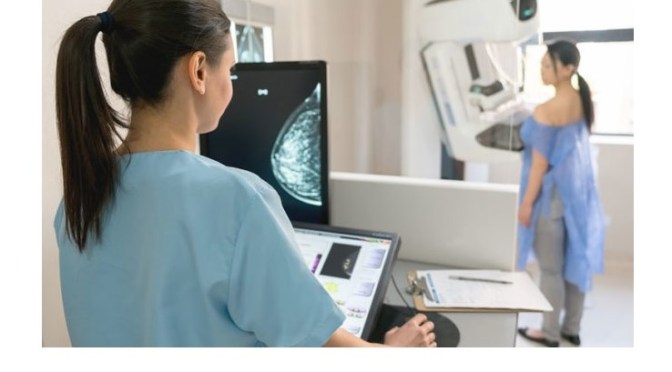
Mount Sinai Health System (May 31, 2023) – When and how often to have a screening mammogram is a choice you must make. Different expert groups do not fully agree on the best timing for this test.

Before having a mammogram, talk to your provider about the pros and cons of having the test. Ask about:

  • Your risk for breast cancer
  • Whether screening decreases your chance of dying from breast cancer
  • Whether there is any harm from breast cancer screening, such as side effects from testing or overtreatment of cancer when it’s discovered

Mammography is performed to screen women to detect early breast cancer when it is more likely to be cured. Mammography is generally recommended for:

  • Women starting at age 40, repeated every 1 to 2 years. (This is not recommended by all expert organizations.)
  • All women starting at age 50, repeated every 1 to 2 years.
  • Women with a mother or sister who had breast cancer at a younger age should consider yearly mammograms. They should begin earlier than the age at which their youngest family member was diagnosed.

Mammography is also used to:

  • Follow a woman who has had an abnormal mammogram.
  • Evaluate a woman who has symptoms of a breast disease. These symptoms may include a lump, nipple discharge, breast pain, dimpling of the skin on the breast, changes of the nipple, or other findings.
Medicine: A Historical Look At Breast Cancer

Breast cancer is best looked at from the historical perspective, as did Lindsay Fitzharris in the December 3, 2022 issue of the Wall Street Journal.

Can you imagine having breast cancer in the mid 1800s before the germ theory was developed? 50% of all surgeries died of severe infection at that time.  Before the development of anesthesia, of course, cancer removal was extremely painful as well. Even if the patient escaped dying from infection, the one size fits all  often meant removal of some chest wall muscles, leading a gaping wound.

Today, prophylactic breast imaging (mammography) often discovers the cancer at a very early and treatable stage.

Searching the cancer cells for rogue genes and surface markers often shows the way to better treatment; no longer does one size fit all.

Sometimes the breast lump is removed with minimal surgery and radiation is used, often yielding better results than the old time radical mastectomy.

Surgery itself is often aided by tissue biopsy, and now, with “intelligent” knives, gases from the surgical cut, using mass spectrophotometry, can tell the surgeon whether the tissue being cut is cancerous or normal.

Immunization methods are in development which will help your immune system to conquer any residual cancer, and “smart” T cells can be used to attack cancer cells directly.

Breast cancer Is still the most common cause of cancer deaths in women, even with all of the modern developments. Early detection is very beneficial, as with Breast self-examination and regular mammograms as prescribed by your doctor.

Extra care should be taken in families with certain genetic markers like like the BRCA gene.

—Dr. C.

Women’s Health: Finding A Lump In Your Breast (JHM)

Johns Hopkins Medicine: What To Do When You Find a Lump in Your Breast? Breast imaging radiologist, Emily Ambinder discusses common questions one may have when discovering a lump in the breast.

Video timeline: 0:03 Why do lumps form in the breast? 026 What are the different types of lumps? 0:55 Can breast lumps form because of physical impact? Could those lumps become cancerous? 1:23 What do i do if i have found a lump? 1:47 What makes breast imaging at Johns Hopkins different? 2:01 What is a mammogram? 2:29 What is a breast ultrasound? 2:53 What else do I need to do if I have a lump?

Read more

Breast Cancer: Benefits Of An Early Mammogram

A women’s lifetime risk of developing breast cancer is one in eight. Research has shown that the earlier you detect breast cancer the more options there are for treatment and a better chance for a cure.

What is a mammogram?

A mammogram is a low-dose X-ray of breast tissue. Healthcare providers use mammograms, or mammography, to look for early signs of breast cancer before symptoms develop. This is called a screening mammogram. Providers also use mammography to look for any abnormalities if you develop a new symptom, such as a lumppain, nipple discharge or breast skin changes. This is called a diagnostic mammogram.

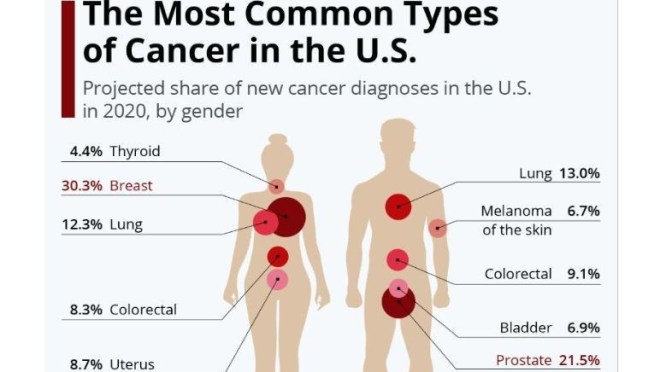
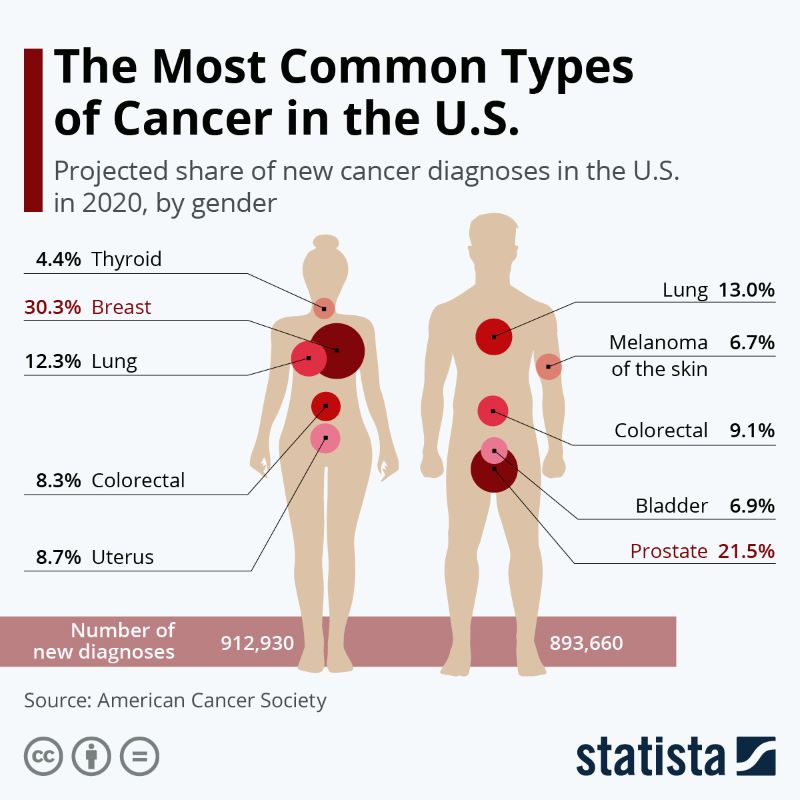
Aside from skin cancer, breast cancer is the most common cancer that affects people assigned female at birth and represents 14% of all new cancer diagnoses in the United States. While breast cancer treatment therapies continue to improve and have contributed to a reduction in cancer-related deaths, early diagnosis through screening mammograms has a greater overall impact on survival rates.

Read more

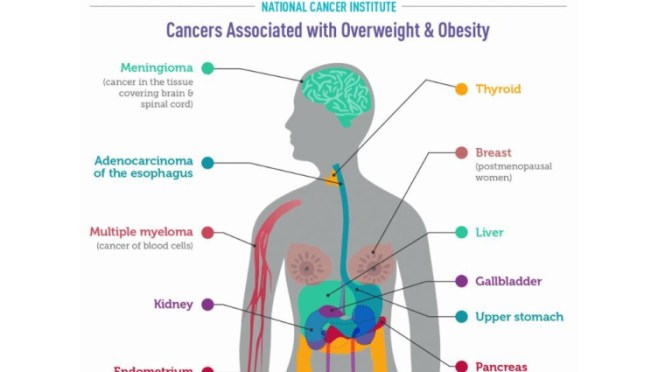
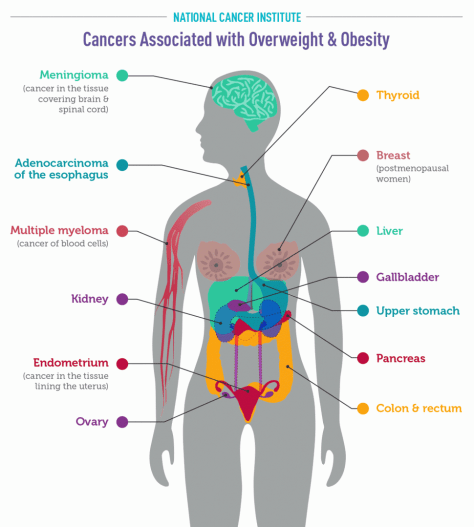
INFOGRAPHIC: A LOOK AT “CANCERS ASSOCIATED WITH OVERWEIGHT & OBESITY

There is consistent evidence that higher amounts of body fat are associated with increased risks of a number of cancers (6), including:

  • Endometrial cancer: Obese and overweight women are two to about four times as likely as normal-weight women to develop endometrial cancer (cancer of the lining of the uterus), and extremely obese women are about seven times as likely to develop the more common of the two main types of this cancer (7). The risk of endometrial cancer increases with increasing weight gain in adulthood, particularly among women who have never used menopausal hormone therapy (8).
  • Esophageal adenocarcinoma: People who are overweight or obese are about twice as likely as normal-weight people to develop a type of esophageal cancer called esophageal adenocarcinoma, and people who are extremely obese are more than four times as likely (9).
  • Gastric cardia cancer: People who are obese are nearly twice as likely as normal-weight people to develop cancer in the upper part of the stomach, that is, the part that is closest to the esophagus (10).
  • Liver cancer: People who are overweight or obese are up to twice as likely as normal-weight people to develop liver cancer. The association between overweight/obesity and liver cancer is stronger in men than women (1112).
  • Kidney cancer: People who are overweight or obese are nearly twice as likely as normal-weight people to develop renal cell cancer, the most common form of kidney cancer (13). The association of renal cell cancer with obesity is independent of its association with high blood pressure, a known risk factor for kidney cancer (14).
  • Multiple myeloma: Compared with normal-weight individuals, overweight and obese individuals have a slight (10% to 20%) increase in the risk of developing multiple myeloma (15).
  • Meningioma: The risk of this slow-growing brain tumor that arises in the membranes surrounding the brain and the spinal cord is increased by about 50% in people who are obese and about 20% in people who are overweight (16).
  • Pancreatic cancer: People who are overweight or obese are about 1.5 times as likely to develop pancreatic cancer as normal-weight people (17).
  • Colorectal cancer: People who are obese are slightly (about 30%) more likely to develop colorectal cancer than normal-weight people (18).A higher BMI is associated with increased risks of colon and rectal cancers in both men and in women, but the increases are higher in men than in women (18).
  • Gallbladder cancer: Compared with normal-weight people, people who are overweight have a slight (about 20%) increase in risk of gallbladder cancer, and people who are obese have a 60% increase in risk of gallbladder cancer (1920). The risk increase is greater in women than men.
  • Breast cancer: Many studies have shown that, in postmenopausal women, a higher BMI is associated with a modest increase in risk of breast cancer. For example, a 5-unit increase in BMI is associated with a 12% increase in risk (21). Among postmenopausal women, those who are obese have a 20% to 40% increase in risk of developing breast cancer compared with normal-weight women (22). The higher risks are seen mainly in women who have never used menopausal hormone therapy and for tumors that express hormone receptors. Obesity is also a risk factor for breast cancer in men (23).In premenopausal women, by contrast, overweight and obesity have been found to be associated with a 20% decreased risk of breast tumors that express hormone receptors (22).
  • Ovarian cancer: Higher BMI is associated with a slight increase in the risk of ovarian cancer, particularly in women who have never used menopausal hormone therapy (24). For example, a 5-unit increase in BMI is associated with a 10% increase in risk among women who have never used menopausal hormone therapy (24).
  • Thyroid cancer: Higher BMI (specifically, a 5-unit increase in BMI) is associated with a slight (10%) increase in the risk of thyroid cancer (25).

Website

COMMENTARY

Obesity increases the incidence of cancer, and complicates its treatment.
A healthy life style.,’including good sleep, diet and exercise, should prevent obesity in all but extreme genetic aberrations.

It is better to prevent problems than to grapple with them.
Stay healthy!

—Dr. C.