
Dr. C’s Journal: The Rise Of Antimicrobial Resistance

We are immersed in a vast sea of tiny organisms, microbes, most of which are either helpful or neutral. There are a few bad actors that can harm people and are responsible for plagues of the past, such as the black death, cholera and influenza epidemics.
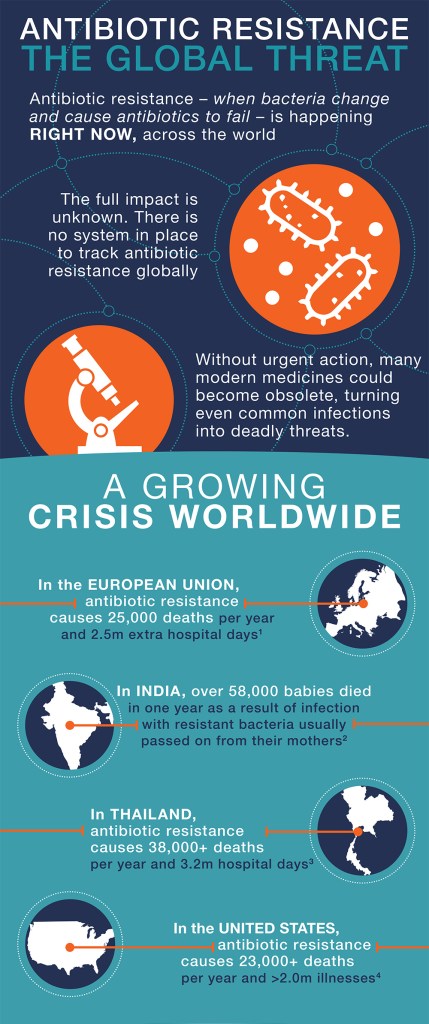
This whole picture changed in the late 30s with the advent of Sulfonamides, and especially Penicillin, the “magic bullet”. I was practicing medicine early in the days when antibiotics eliminated almost all infections.

In fact, at one time infections were thought to be a problem of the past. Unfortunately, overusage, chronic multiple infections, surgically implanted devices, immune suppression for cancer and autoimmune diseases have allowed bacteria, fungi and viruses to evolve resistance mechanisms.

At the present time there are a number of bacteria, such as staphylococci, actino bacteria, enterococci, and candida that are essentially untreatable. Even if they are somewhat treatable, second and third level antibiotics are so toxic that they can cause problems with the kidney, liver, or heart.

In later postings, I plan to consider specific organisms and the situations in which they operate. I will also eventually talk about efforts to create new antibiotics by harvesting genetic material from unusual places, even our oceans.

—Dr. C.

Telemedicine: New Survey Finds Virtual Care Is Now Mainstream Care Delivery

“Telemedicine is here to stay,” said Dr. Rahul Sharma, professor and chair of emergency medicine at Weill Cornell Medicine and co-author of a commentary on the results. “Health care organizations really need to think about the next steps regarding the future of virtual care, such as how we integrate it into our systems, and how to make sure we are meeting the needs of both our clinicians and our patients.”

The survey, conducted in March, polled members of NEJM’s Catalyst Insight Council who are clinicians, clinical leaders and executives in organizations that deliver care. The survey received 984 responses from around the world, 609 from the United States. Dr. Sharma, who is also emergency physician-in-chief at New York-Presbyterian/Weill Cornell Medical Center and executive director of the Center for Virtual Care at Weill Cornell Medicine, helped formulate the questions with his co-author Dr. Judd E. Hollander, senior vice president of health care delivery innovation at Sidney Kimmel Medical College at Thomas Jefferson University in Philadelphia.

Of U.S. respondents, 71 percent reported that telemedicine has improved patient health, while a similar proportion said it provides at least moderate quality specialty or mental health care. For primary care, that share was 81 percent. When responses across all countries are included, the results differ only slightly from those of U.S. respondents.

Read more

Dr. C’s Journal: Signs & Symptoms Of Prostatitis

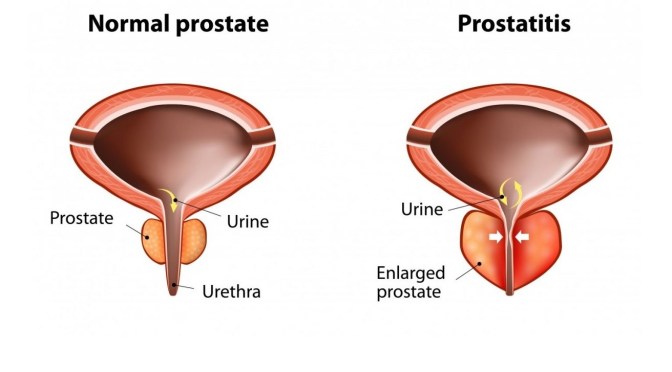
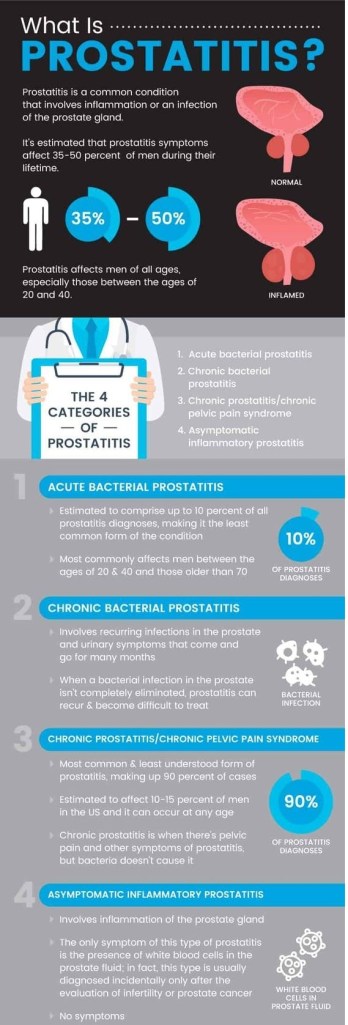
Prostatitis seems to be a catchall diagnosis varying anywhere from clear cut acute bacterial infection of the prostate gland with burning on urination, fever, positive cultures, and response to antibiotics, through recurrent nagging symptoms that can include pain on urination, urine flow obstruction, sexual dysfunction, blood in the urine, and chronic pain syndromes affecting the pelvic region.

Prostatitis constitutes perhaps 10% of urology practice, and is often frustrating to patients and physicians alike.

Symptoms are shared with BPH and prostate cancer, which are more clear-cut entities with standard diagnosis and treatment.

Prostate and bladder stones can give similar symptoms on rare occasions. STDs can be a diagnostic consideration in people with multiple sexual partners, and with international travel, we mustn’t forget parasitic infections.

From the patient’s standpoint, the important thing is to find a good urologist who can sort out the symptoms and find a proper diagnosis and treatment plan.

Please refer to the following Cleveland clinic article for a more orderly discussion.

—Dr. C.

Read more

Medicine: The ABCs Of Hepatitis (Mayo Clinic)

Approximately 5.3 million people in the US have hepatitis. Listen as Dr. Stacey Rizza breaks down the ABCs of hepatitis. Vaccines protect against hepatitis A, and are especially important for children and travelers. Hepatitis C is transmitted from person to person through bodily fluids. The virus can cause liver damage and death.

COMMENTS:

For the past three months, hundreds of cases of severe hepatitis cases among children have been noticed, especially in England and America, but present in more than 50 countries. These cases of Hepatitis were not caused by any of the usual suspects.

This puzzling increase in pediatric hepatitis apparently is due to Adenovirus 41, plus infection with adeno-associated virus 2. The double requirement is probably why it took a while to crack the causation mechanism. Genetic factors and the Covid lockdown may also have contributed.

—Dr. C.

Mayo Clinic: Bladder Cancer Explained

Learning about bladder cancer can be intimidating. Mark Tyson, M.D., a urologist at Mayo Clinic, walks you through the facts, the questions, and the answers to help you better understand this condition.

Video timeline: 0:00 Introduction 0:37 What is bladder cancer? 0:53 Who gets bladder cancer? / Risk factors 1:32 Symptoms of bladder cancer 1:59 How is bladder cancer diagnosed? 2:39 Treatment options 3:25 Coping methods/ What now? 4:04 Ending

For more reading visit: https://mayocl.in/3vcSF5u.

Infographics: Chronic Wounds In Older Adults

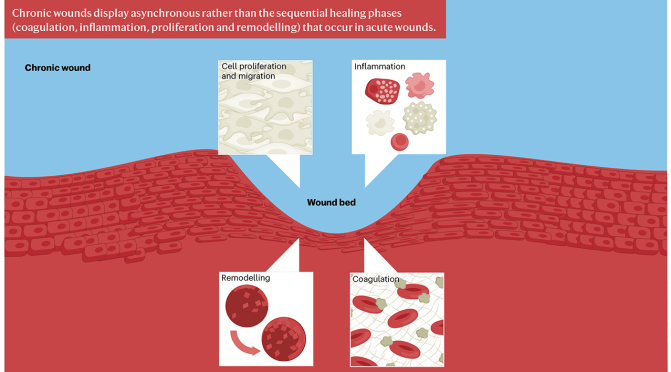
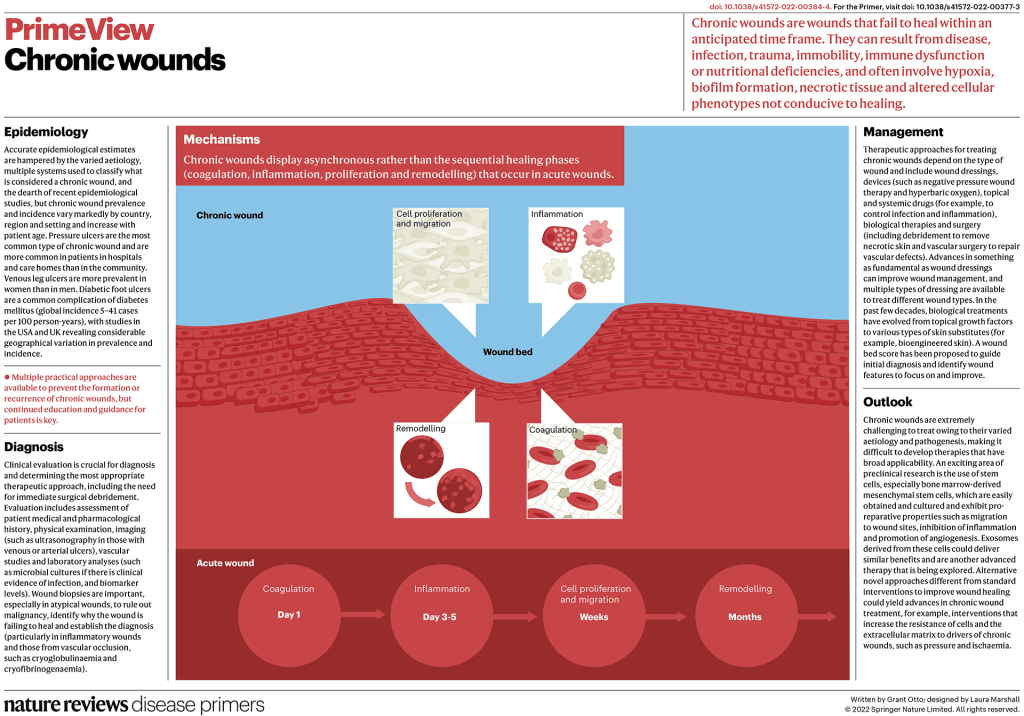
  • Chronic wounds are common, costly, and are more likely to affect older adults.
  • Venous ulcers, neuropathic ulcers, ischemic ulcers, and pressure injuries each necessitate unique prevention and treatment strategies.
  • With the evidence and pragmatic guidance provided herein, providers will have the working knowledge to successfully manage chronic wounds.

Appropriate prevention, diagnosis, and treatment of chronic wounds is important for providers across specialties. Wounds affect patients in all care settings and result in significant cost and morbidity. The burden of this condition falls largely on older adults, for whom the incidence of chronic wounds far exceeds that of younger populations.

 Medicare costs for wound care in 2014 were estimated at greater than $28 billion, and the prevalence for most wound types was greatest in patients aged 75 or older.

 Venous ulcers are the most common lower extremity wound type, comprising 45% to 60% of all wounds, followed by neuropathic ulcers (15% to 25%), ischemic ulcers (10% to 20%), and mixed ulcers (10% to 15%).

 Fortunately, new wound-treatment modalities continue to emerge. This review summarizes the latest information regarding prevention, identification, classification, and treatment of chronic wounds. Guidance on management of major wound types and pearls regarding dressing selection are provided.

Low Back Pain: Top New Approaches To Treatment

How big is this problem, and what did this study find?

Worldwide, low back pain is a leading cause of disability and affects more than 560 million people. In the US, four in 10 people surveyed in 2019 had experienced low back pain within the past three months, according to the Centers for Disease Control and Prevention.

Protect yourself from the damage of chronic inflammation.

Science has proven that chronic, low-grade inflammation can turn into a silent killer that contributes to cardiovas­cular disease, cancer, type 2 diabetes and other conditions. Get simple tips to fight inflammation and stay healthy — from Harvard Medical School experts.

Old Age: ‘Hyperexcitable Neurons’ Interrupt Sleep

For many older adults, a good night’s rest is elusive. The implications of chronically poor sleep can be far-reaching and include a decline in cognitive functioning and detrimental effects on health and general well-being. Fortunately, relief may be in sight.

A new study led by investigators at the Stanford University School of Medicine shows that neurons in the lateral hypothalamus, a brain region, play a pivotal role in sleep loss in old mice. More specifically, the arousal-promoting hypocretin neurons become hyperexcitable, driving sleep interruptions.

Read the full story: https://stan.md/3JQ7z77

Luis de Lecea, PhD, is a professor of psychiatry and behavioral sciences at Stanford Medicine. He is the study’s senior author and hopes the finding could pave the way to new drug treatments for age-related sleep problems in humans.

Shi-Bin Li, PhD, is an instructor in the Psychiatry and Behavioral Sciences department at Stanford Medicine. He is also a basic life research scientist in the de Lecea lab, and is the lead author of the study. Lisa Kim is Senior Manager of Media Relations for Stanford Medicine and Stanford Health Care. Lisa has a deep background in journalism, as she is an Emmy Award-winning journalist who has covered stories on both the national and local levels.

NEWSLETTERS: TUFTS HEALTH & NUTRITION – AUGUST 2022

Easy, Flavorful, Exciting Veggies

Knowing how to build flavor in vegetable dishes can help you enjoy more of these healthful foods.

The research is clear: eating more whole or minimally processed plants is better for our health. Knowing how to easily make foods like vegetables taste great can help you consume more of these health-promoting options in place of less healthful choices. Building Flavor. Most U.S. adults don’t meet the recommended intake of vegetables. When

Empowering Patients Through Education And Telemedicine