
Category Archives: Women’s Health

OPINION: THE BENEFITS OF HIGHLY NUTRITIOUS DIETS

Vitamins and minerals, as we all know, are of critical importance to our health. Gone are the days when scurvy(vitamin C) was the scourge of the high seas, and rickets (vitamin D) was common in the children of smoke-filled industrial cities with insufficient sunlight.

We are in a state of such overabundance that many medical authorities feel that vitamin supplementation merely makes our toilets healthier.

Covid 19, with a deficit of prevention and treatment options, has forced a new appreciation of the role of our immune systems in fending off Covid, and future viral plagues that are certain to follow. Optimum Health has never been more important.

A May 4, 2020, British Medical Journal (BMJ) article highlights the role of vitamins C and D, and minerals, especially Zinc, in functioning of our immune systems. Here are several highlights from the article:

  • Foods that are naturally abundant in vitamin C such as broccoli (60 mg/100 g), blackcurrants (130 mg/100 g), fortified breakfast cereals (up to 134 mg/100 g) and oranges (37–52 mg/100 g)45  should be made accessible to older individuals who are most in need of their nutritional benefits.
  • In the UK 5.5% of men and 4% of women 65 years and over (around 1 in 20) presently have zinc intakes lower than the lower reference nutrient intake (the level below which deficiency could occur).46 The consumption of foods naturally abundant in zinc such as canned crab (5.7 mg/100 g), canned shrimps (3.7 mg/100 g), canned adzuki beans (≈2.3 mg/100 g) and boiled eggs (1.3 mg/100 g) should be encouraged as a supplementation strategy to reinforce immunity.
  • Tolerable upper intake levels (ULs) are intake levels which should not be surpassed as toxicity problems could appear.47 For vitamin D a UL of 50 µg/day is advised and for zinc a UL of 25 mg/day is recommended. 47 There is insufficient evidence to establish UL for vitamin C, but available human data suggest that supplemental daily doses of up to about 1 g, in addition to normal dietary intake, are not associated with adverse gastrointestinal effects.47 Not having an adverse effect, however, is not necessarily indicative of a benefit either, and ongoing trials are warranted.
  • Among those with established respiratory conditions or pneumonia, specific nutrients such as vitamin C, D or zinc could be considered as potential adjuvants to conventional treatment pathways.

Susceptible people, particularly the old, should use every safe measure to stay well.

– Dr. C

Read full article

OPINION: THE ” FOUR PILLARS OF HEALTH AND THRIVING”

Homo sapiens have been around for upwards of 200,000 years and our bodies have evolved to deal with conditions far different than we experience in today’s life.

For about 95% of our species’ existence we have had:

  • Far more SLEEP. We were diurnal, going to bed at sundown, awakening at sunrise.
  • A more natural and varied DIET. We had to gather or kill what we ate.
  • Far more EXERCISE as we walked many miles on most days.
  • INTELLECTUAL STIMULATION. Well, here at least we moderns have an advantage, and our brains are better for it, If we get enough Sleep, Diet and Exercise.

Intellectual stimulation is really just a form of exercise. Exercise of the brain; as the brain is in a way like a muscle. If you don’t exercise your muscles, they waste away. If you don’t exercise your brain, your synapses waste away. To overwork a cliche : use it or lose it. Your muscles and brain are very energy-intensive and therefore expensive in evolutionary terms. Metabolic mechanisms have evolved to weed out that which is not needed and not used.

We could then say that there are the “Three Pillars of Health: Sleep, Diet, and Exercise, with the understanding that exercise refers to both muscles and brain. But they are exercised in such radically different ways, and each is prominent at different times in life. Children are reluctant to exercise their brains and are in constant motion. The elderly have much less muscle to exercise, but the aged brain still works quite well if you nurture and use it. So Intellectual Stimulation is best considered a separate category.

SLEEP, DIET, EXERCISE and INTELLECTUAL STIMULATION are then the “Four Pillars of HEALTH and THRIVING”.

These Four Pillars come as a package, reinforce each other, and are intricately interconnected. You can’t afford to neglect one without diminishing the others. But we will be discussing them separately, since they are separately researched and enacted.

Keep tuned.

—Dr. C.

Further reading

CARDIOLOGY PODCAST: “ATRIAL FIBRILLATION – A COMPREHENSIVE OVERVIEW”

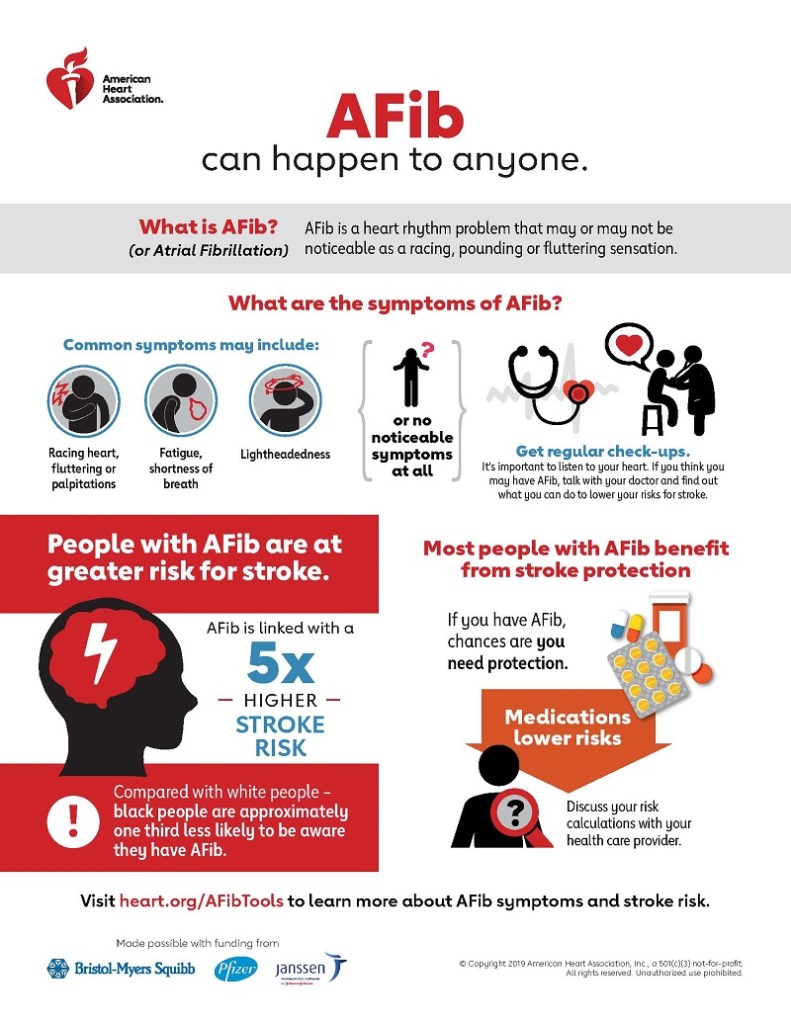
Atrial fibrillation is chaotic and irregular atrial arrhythmia, the prevalence of which increases progressively with age. It causes significant morbidity and death. Many patients are asymptomatic or have symptoms that are less specific for cardiac arrhythmias, such as mild dementia or silent strokes. 

Gregory Lip, Price-Evans Chair of Cardiovascular Medicine, University of Liverpool, gives us an overview of the condition.

Read more on Atrial Fibrillation at BMJ

TELEMEDICINE “LANGUAGE” SKILLS WILL CONTINUE TO INCREASE AT A RAPID RATE

From a New York Times article (May 5, 2020):

Calling my patients at home, with or without video, has become my new normal. After 25 years of being a pediatrician, telemedicine is teaching me new ways to communicate with families.

I try to hear the mother above the babbling of her baby. And then to listen to the babbling of the baby. Is it joyful? Are there big breaths between the babbling?

A federal government waiver, issued early in March, expanded the use of federally funded health insurance — Medicaid, Medicare and the Children’s Health Insurance Program — to pay for telemedicine visits. The goal was to allow more people with symptoms of illness to be heard, and sometimes also seen, by a health care provider without the risk of exposure to coronavirus at a doctor’s office or hospital.

The federal government has been expanding the use of telemedicine for years — but like so many changes in this pandemic, what used to take years to transform, we are now doing within weeks.

Read more

TELEMEDICINE: Obstetrics & Gynecology Services

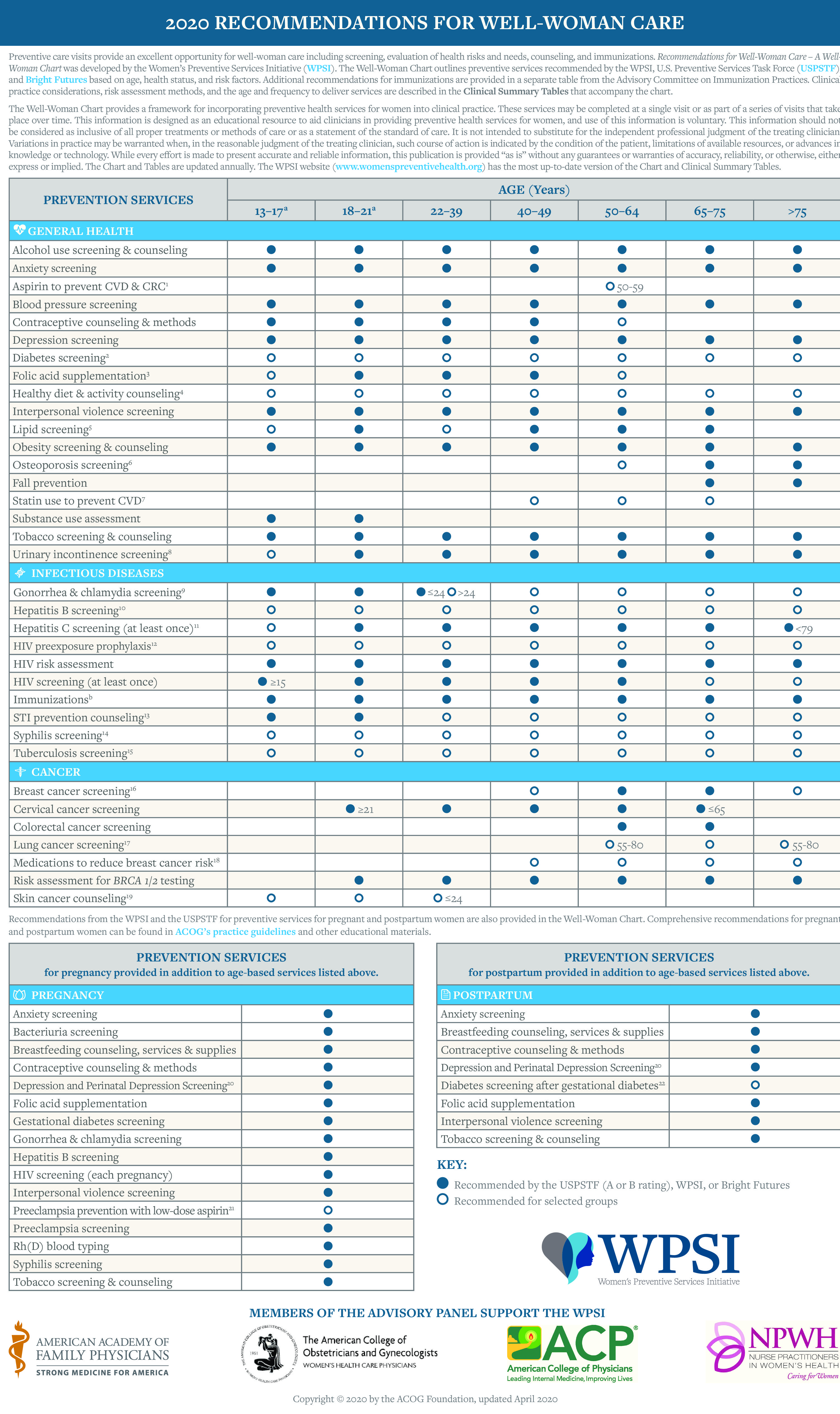
The following list contains preventive services that may be done via telehealth (from ACOG.org):

General Health

  • Alcohol screening and counseling regarding alcohol use
  • Anxiety Screening and referral*
  • Counseling regarding aspirin to prevent CVD and CRC
  • Blood pressure screening (if patient has appropriate resources available such as a blood pressure cuff)
  • Contraceptive counseling, discussion of methods, and prescribing contraceptives that do not require an in-person visit such as intrauterine devices or implants*
  • Depression screening and referral
  • Fall Prevention counseling
  • Counseling regarding folic acid supplementation
  • Healthy diet and activity counseling
  • Interpersonal and domestic violence screening and discussion of available resources*
  • Obesity screening (if patient has appropriate resources available such as a scale)
  • Substance use assessment (drug use)
  • Tobacco screening and cessation counseling
  • Urinary incontinence screening*
     

Infectious disease

  • HIV risk assessment*
  • Sexually Transmitted Infection prevention counseling*

Cancer

  • Counseling and possible prescribing of medications to reduce breast cancer risk 
  • Risk assessment for BRCA testing
  • Skin cancer counseling

Pregnancy and postpartum

  • Breastfeeding services and supplies*
  • Postpartum contraceptive counseling, discussion of methods, and  prescribing contraceptives that do not require an in-person visit such as intrauterine devices or implants
  • Depression screening and referral
  • Counseling regarding folic acid supplementation
  • Interpersonal and domestic violence screening and discussion of available resources*
  • Preeclampsia prevention with low-dose aspirin
  • Preeclampsia screening (if patient has appropriate resources available)
  • Tobacco screening and cessation counseling

*WPSI recommendation. For more information about each recommendation, please see our WPSI Recommendation page.

Download Well-Woman Care Chart

ACOG.org website

Read this May 4, 2020 “Women’sHealth” article for information about what a Telemedicine Visit is like

TELEMEDICINE: CHECKLIST – DERMATOLOGIST SESSIONS

According to the American Academy of Dermatology, “The technology has reached a point where, in many situations, health care providers can use IT to offer quality health care services remotely,” and they support telemedicine as an additional treatment tool to supplement in-person services.

To get the most from your telemedicine appointment, board-certified dermatologists offer these tips:

  1. Contact your insurance provider to find out if your plan covers telemedicine appointments. Many insurance providers are updating their plans to cover telemedicine visits during the coronavirus pandemic. Find out what type of telemedicine visits are covered by your insurance.
  2. Gather essential information. This is especially important if you have a telemedicine appointment with a dermatologist you haven’t seen before. Knowing your medical history will help your dermatologist make a diagnosis, decide treatment options, and prescribe medicine, if necessary. Ask your dermatologist’s office if they have any forms you need to fill out before your appointment.Before your appointment, make a list of the following:
    • Medications you take
    • Major illnesses or surgeries you have had
    • Previous skin problems
    • When your current symptoms began
    • Your allergies
    • Illnesses that your family members have had, such as cancer, heart disease, or diabetes
  3. Find out how to reach your dermatologist. Talk to your dermatologist’s office to make sure you know what type of telemedicine appointment you will have, and how your dermatologist will reach out to you. Ask when and how to send the pictures and information you gather.
    • For video visits, you will be sent a website link you can use to connect with your dermatologist at the time of your appointment.
    • For telephone visits, you may be given instructions on when to expect a call from your dermatologist.
    • undefined
  4. Write down all your questions. Doing this helps you remember everything you plan to talk to your dermatologist about and make the most of your appointment.
  5. Take pictures. To help your dermatologist examine your concern, take clear pictures of the areas you need examined. Follow these tips to make sure the pictures are the highest-possible quality:
    • Make sure your pictures are well-lit. Take your pictures in natural light, if possible. Use another light source, like a book light or flashlight, if needed. Make sure that there aren’t any shadows or glares on the area you are taking pictures of.
    • Take multiple pictures, including one of each side of the area you need examined. Make sure to show the entire area around your spot or rash. If your spot is hard to see, you may want circle it or draw an arrow pointing toward it with a marker.
    • Take pictures to compare. For example, if you have a spot on your hand, take pictures of both hands so your dermatologist can see how that area usually looks. Make sure you also take a close-up and a far-away picture of the areas you are concerned about so your dermatologist can compare.
    • Just like an in-person dermatologist appointment, do not wear makeup. If you need your nails examined, take off any nail polish you have on before taking any pictures.
    • Get help. If you live with someone, ask them to take pictures of hard-to-reach areas, such as your back. If you live alone, use a mirror to make sure you are taking pictures of the right spot.
    • If your picture turns out blurry, delete it and replace it with one that is clearer.
  6. Avoid irritating your skin before your appointment. Try to avoid doing things that could change the appearance of your skin before you begin your telemedicine appointment or take your pictures. Some examples of things to avoid are taking a hot shower, rubbing or picking at your skin, or applying skin care products.
  7. Find a private space. Find a quiet and private space without distractions to have your appointment. Make sure you can connect to the internet in that space and it has the best-possible lighting.

For more information

GERIATRIC TELEMEDICINE: NEW CONNECTIVITY AND CONVENIENCE AT HOME

From Becker’s Hospital Review (May 1, 2020):

Connectivity in combination with mobile devices is making home-based services like telepharmacy and telemedicine a reality. These are great options if patients feel too sick to leave their home or they want a second opinion. It’s also possible to connect people in rural areas with academic medical centers. During the pandemic, the use of telemedicine has risen dramatically.

“Technology is enabling access to healthcare in many ways,” Holcomb said. “You no longer need to live in certain places to get access to great care, and you no longer have to go to your physician in person, for many aspects of a visit – this is helping people get care, even as they stay at home.”

Against the backdrop of the aging population and ongoing pandemic, technology is likely to continue to influence healthcare consumer expectations. Almost every aspect of life has been transformed by the emergence of digital conveniences. Digital technology is transforming industries, including shopping, communications and entertainment. Healthcare is no exception.

Read full article

Howard Fillit, MD: The Positives of Telemedicine Adoption for Geriatric Patients

CORONAVIRUS PODCAST: TRACING APPS, Antiviral remdesivir’S PROMISE

The Coronapod team pick through the latest news, plus we hear from the researchers making lemonade out of lockdown lemons.

In this episode:

01:10 Can contact-tracing apps help?

Governments around the world are banking on smartphone apps to help end the spread of the coronavirus. But how effective might these apps might be? What are the risks? And how should they fit into wider public health strategies?

Editorial: Show evidence that apps for COVID-19 contact-tracing are secure and effective

13:30 Antiviral remdesivir shows promise

Early results from a US trial of the antiviral drug remdesivir suggest it shortens recovery time for patients with COVID-19. We unpick the findings.

News: Hopes rise for coronavirus drug remdesivir

16:52 One good thing

Our hosts pick out things that have made them smile in the last week, including blooming trust in scientists, cooking experiments, and a neighbourhood coming together to clap for healthcare workers.

21:34 Unexpected opportunities

We hear from three researchers making the most of lockdown, studying tiny earthquakes, building balcony-based citizen science projects, or enlisting gamers to fight the coronavirus.

Fold-it, the protein-folding computer game

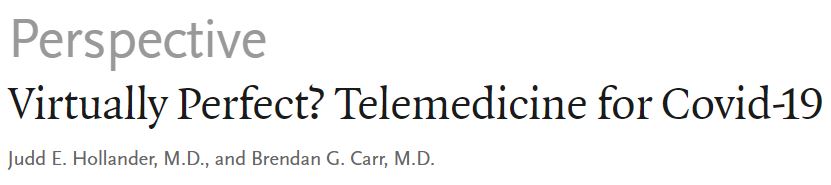
TELEMEDICINE: “FORWARD TRIAGE” FOR SCREENING PATIENTS DURING COVID-19

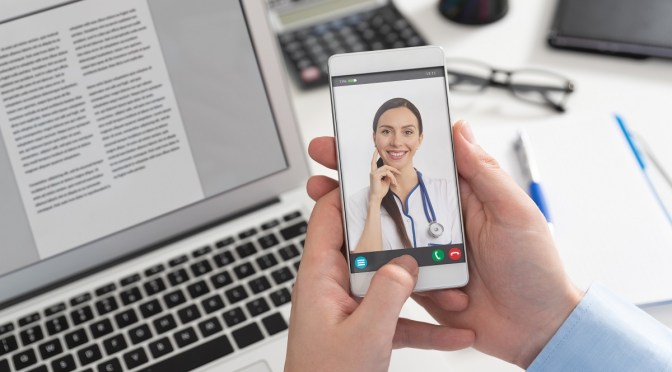
 Direct-to-consumer (or on-demand) telemedicine, a 21st-century approach to forward triage that allows patients to be efficiently screened, is both patient-centered and conducive to self-quarantine, and it protects patients, clinicians, and the community from exposure.

Interview with Dr. Judd Hollander on how health systems can use telemedicine services during the Covid-19 pandemic.

It can allow physicians and patients to communicate 24/7, using smartphones or webcam-enabled computers. Respiratory symptoms — which may be early signs of Covid-19 — are among the conditions most commonly evaluated with this approach. 

Health care providers can easily obtain detailed travel and exposure histories. Automated screening algorithms can be built into the intake process, and local epidemiologic information can be used to standardize screening and practice patterns across providers.

Disasters and pandemics pose unique challenges to health care delivery. Though telehealth will not solve them all, it’s well suited for scenarios in which infrastructure remains intact and clinicians are available to see patients. Payment and regulatory structures, state licensing, credentialing across hospitals, and program implementation all take time to work through, but health systems that have already invested in telemedicine are well positioned to ensure that patients with Covid-19 receive the care they need. In this instance, it may be a virtually perfect solution.

Read full article at NEJM

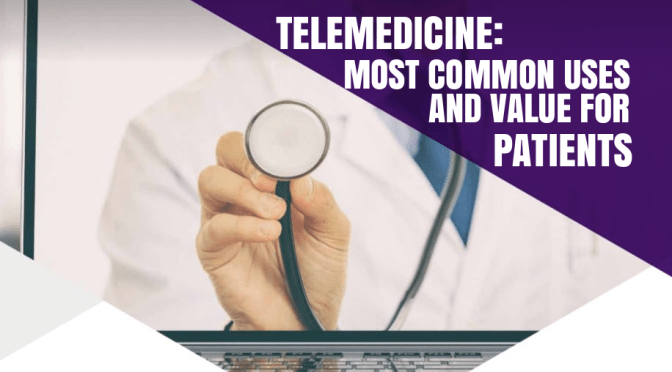
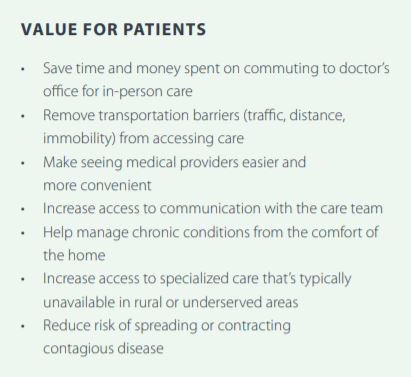
TELEMEDICINE: “THE MOST COMMON USES AND HIGHEST VALUE FOR PATIENTS”

Telehealth had been gaining momentum in recent years, but the COVID-19 pandemic is propelling physician practices to quickly figure out how they can best use the technology to provide patients with care while practicing physical distancing.

(From an AMA article -April 29, 2020)

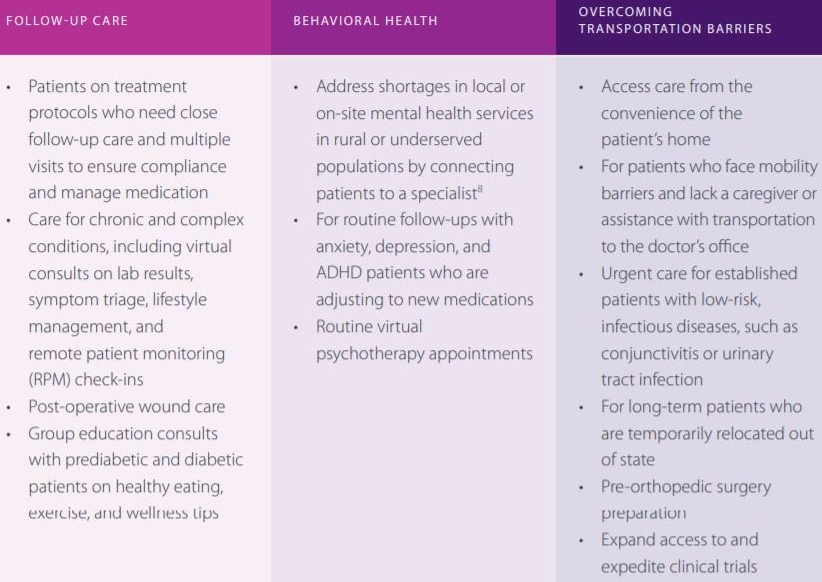
COMMON USES FOR TELEHEALTH INCLUDE: