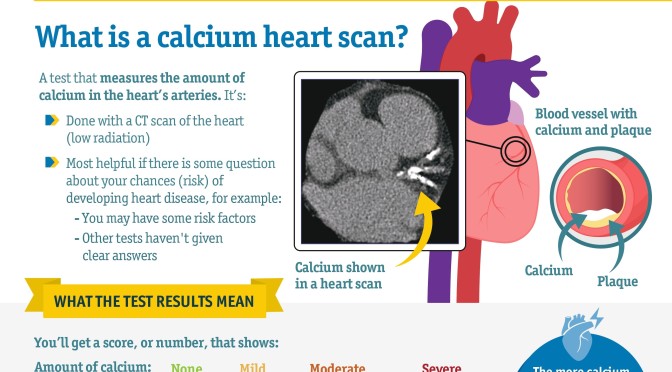
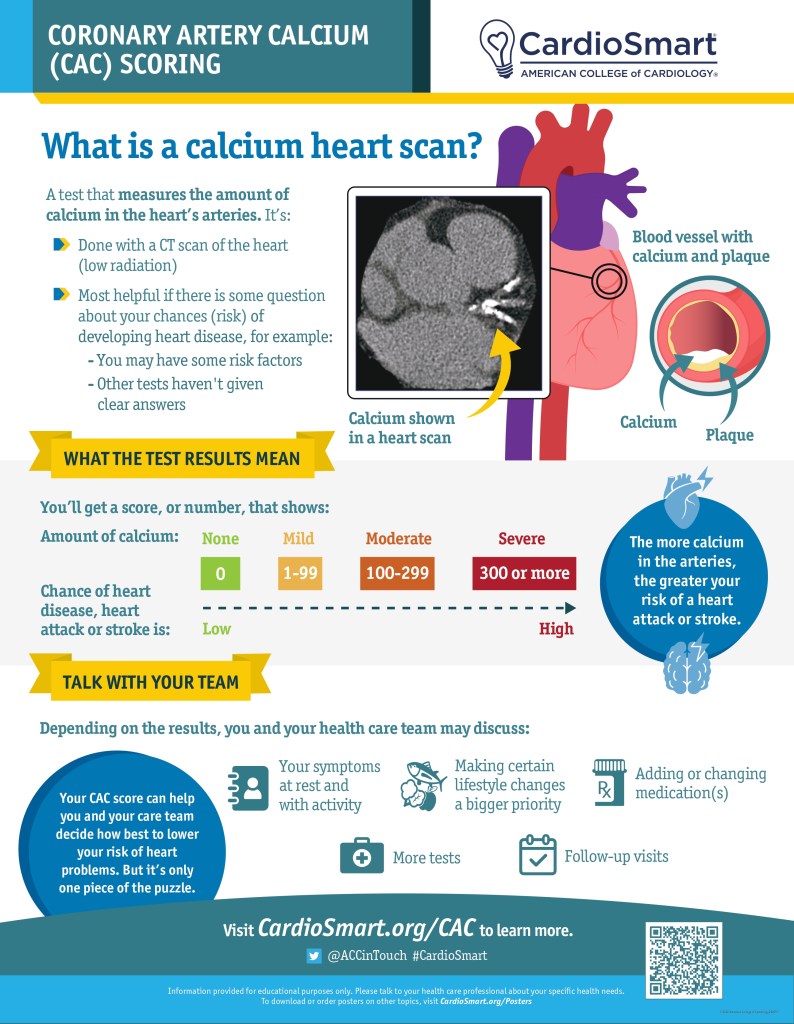
A CT scan of the heart measures the amount of calcium in the heart’s arteries. The more calcium in the arteries, the greater your risk of a heart attack or stroke.
Knowing your coronary artery calcium (CAC) score can help you and your care team decide how best to lower your risk of heart problems. But it’s only once piece of the puzzle.
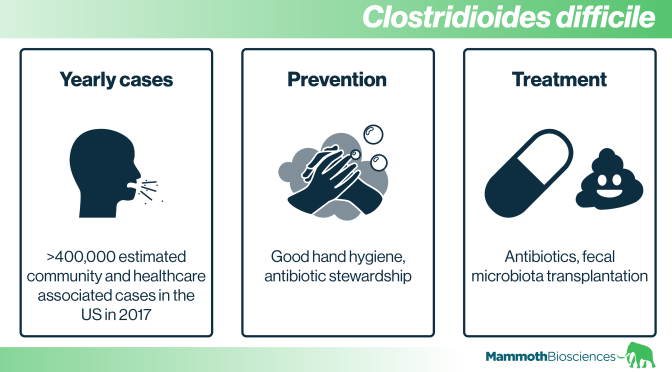
“C. diff is a severe, difficult-to-treat infection,” says family medicine specialist Daniel Allan, MD.
“Studies show that you’re seven to 10 times more likely to get C. diff while you’re taking antibiotics or right after.”
Cleveland Clinic – Clostridioides difficile (C. diff) is a type of harmful bacteria that causes inflammation in your large intestine (also known as pseudomembranous colitis). The main symptom of a C. diff infection is frequent, watery and sometimes bloody diarrhea. If diarrhea persists, it can lead to:
C. diff is common in the environment. Some people even carry C. diff in their gut but don’t have any signs of illness. Most of the time, the “good” bacteria in your gut prevent a C. diff infection. But certain antibiotics can wipe out your gut bacteria. If you encounter C. diff while taking antibiotics, the bacteria can flourish and grow and make you sick.
“Think about your colon as a plush green lawn. The thick grass crowds out the weeds,” illustrates Dr. Allan. “But if your yard is mostly dirt, all kinds of weeds will grow. Antibiotics reduce the rich collection of bacteria in your gut (the thick grass). This gives C. diff (the weeds) an opportunity to take hold.”
C. diff is most dangerous for people age 65 or older or with a weakened immune system. People who are healthy can also develop life-threatening complications if they don’t receive prompt care.
UCLA Health – Dr. Erik Dutson, surgical director of the Center for Obesity and METabolic Health (COMET), provides an overview of bariatric surgery at UCLA Health. See how this minimally invasive surgery changes lives.
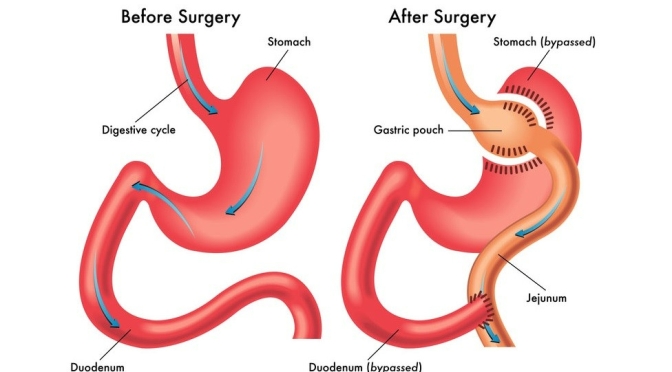
Bariatric surgery, also known as weight loss surgery, helps you lose weight by removing or rerouting a portion of your stomach. The surgery limits the amount of food you can eat or the amount of calories your body can absorb. Research has shown that bariatric surgery can help you lose up to 85% of excess weight.
These types of procedures have also been shown to:
Control high blood pressure
Improve sexual dysfunction
Increase fertility
Increase life expectancy
Provide pain relief
Treat conditions such as type 2 diabetes and sleep apnea
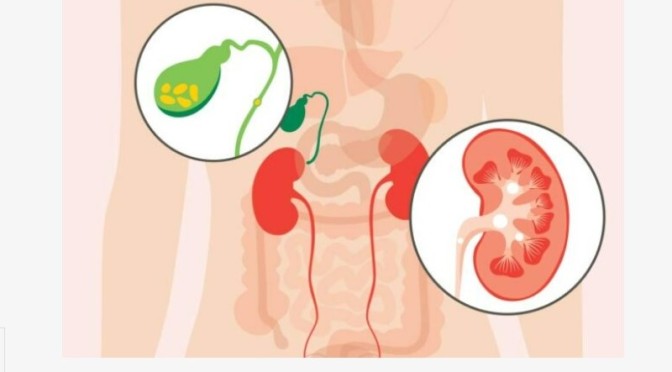
Gallstones (gallbladder stones) develop in your digestive tract and can be as small as a grain of sand or as large as a golf ball. Gallstones can cause a blockage in your gallbladder or bile ducts. A diet high in fat or cholesterol can contribute to the development of gallstones.
CLEVELAND CLINIC
Kidney stones develop in your urinary tract and can be as small as a grain of sand but can grow to several inches in diameter. Kidney stones move through your urinary tract into your ureter and block the flow of urine. A diet high in sodium, oxalates or animal protein can contribute to the development of kidney stones. An insufficient intake of fluids or calcium can also lead to the formation of kidney stones.
Symptoms of gallstones
If you have gallstones, you may experience the following symptoms:
Abdominal pain.
Back pain.
Chest pain.
Nausea and vomiting.
Fever and chills.
Jaundice.
Dark-colored urine.
Where does it hurt?
Gallstones cause pain in your mid-upper abdomen that may radiate to your back or under your right shoulder.
Symptoms of kidney stones
If you have kidney stones, you may experience the following symptoms:
Severe back pain that may travel down to your groin.
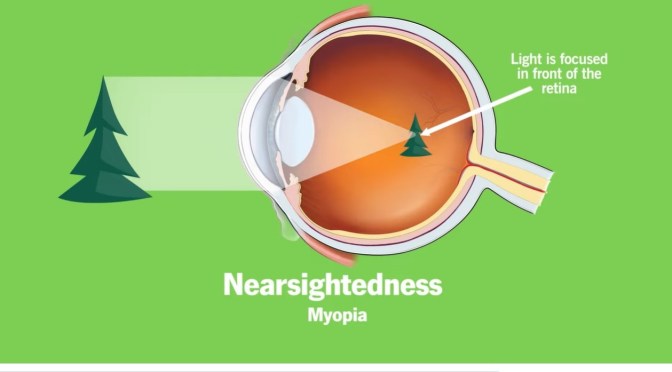
Cleveland Clinic – Nearly 1 out of 3 people have a vision disorder called myopia, or nearsightedness, which makes it difficult to view things in the distance. How does it happen? And is there a cure?
Chapters: 0:00 Intro 0:32 What causes nearsightedness? 1:01 Why can’t you see far? 1:20 When does nearsightedness usually begin? 1:42 What are symptoms of nearsightedness? 1:59 Can nearsightedness be corrected? 2:23 Is there a cure for nearsightedness?
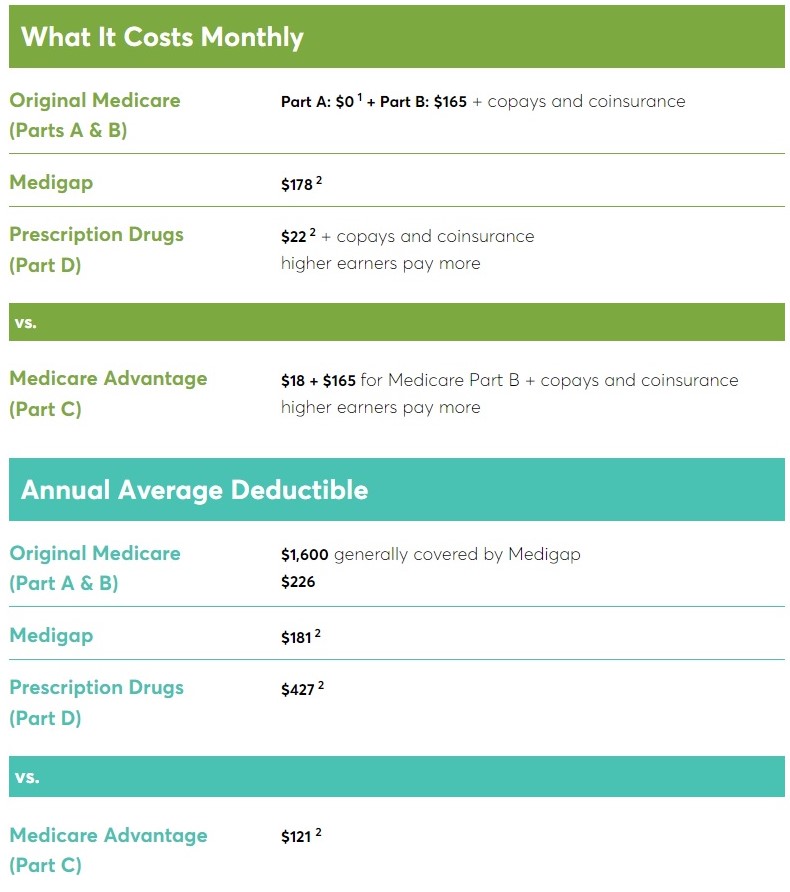
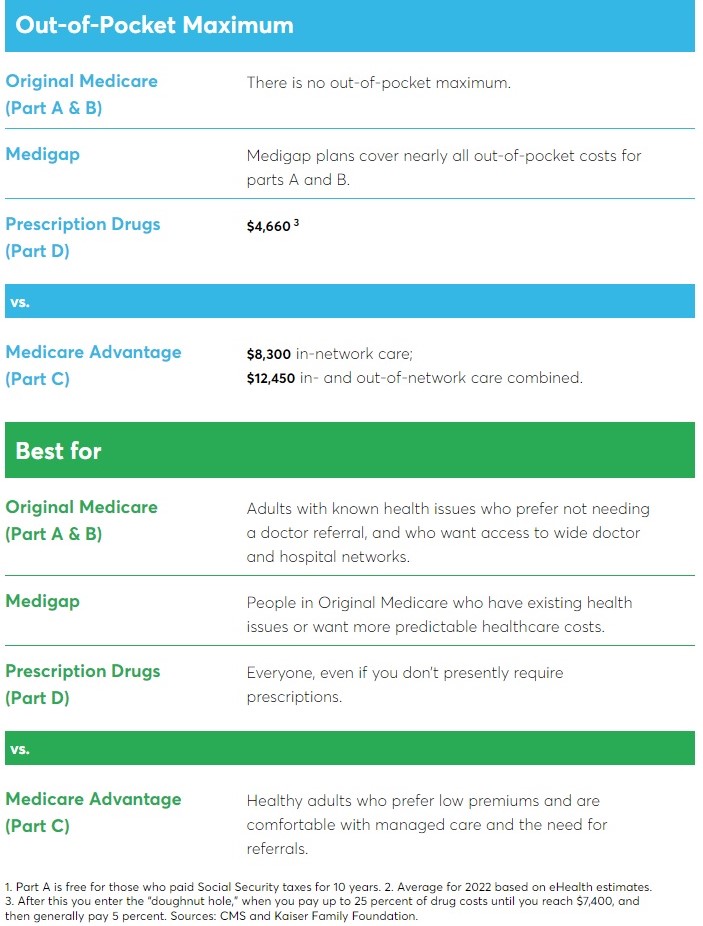
When you’re ready to start reviewing plans, check out the Medicare plan finder tool, which will let you compare Medicare Advantage and Part D prescription drug plans available in your area. You can also get this information by calling Medicare at 800-633-4227.
If you’re looking for a Medigap plan, you can also start at medicare.gov, where you can compare the different types of coverage, as well as find the policies available in your ZIP code.
Another good resource is the State Health Insurance Assistance Program (SHIP), which provides free guidance over the phone. To find your state’s program, go to shiphelp.org or call 877-839-2675.
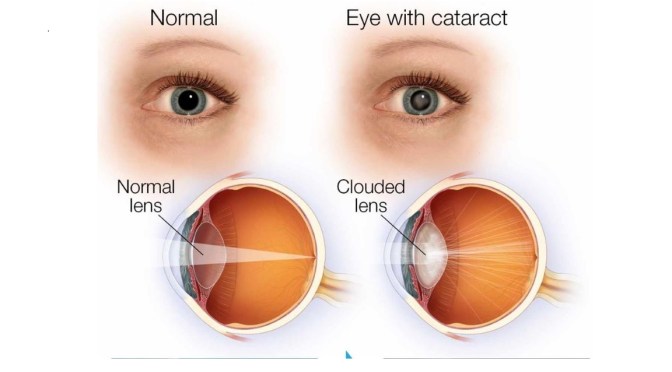
Cataracts in the eye lens are a later-in-life reality that leads to vision problems for many people. This video shares describes what cataracts are, how they form, and warning signs to help you detect them early.
Chapters: 0:00 Intro 0:10 What are cataracts? 0:43 What are the warning signs of cataracts? 2:44 How are cataracts diagnosed? 3:04 Talk to your eye doctor
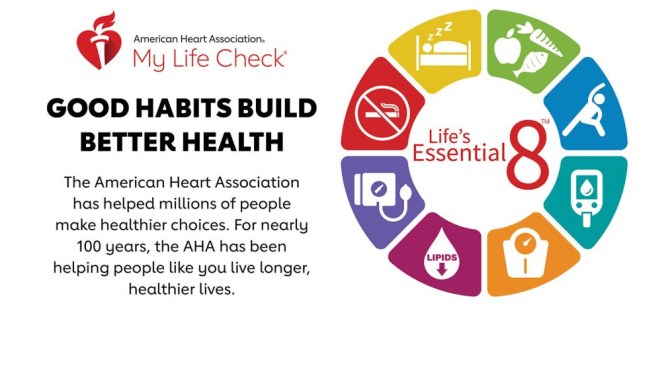
The American Heart Association (AHA) recently revised its checklist for achieving optimal heart health, introducing its new Life’s Essential 8. The list replaces the AHA’s decade-old Life’s Simple 7.
Sleep health is the new addition to the cardiovascular health scoring tool, which now advises that adults get seven to nine hours per night. The organization updated four of the categories:
Diet: More emphasis was given to following heart-healthy diets like the DASH and Mediterranean.
Nicotine exposure: Secondhand smoke and vaping were added as risk factors.
Blood lipids: People now can get a non-fasting blood sample that measures total, HDL, and non-HDL cholesterol. Non-HDL cholesterol can provide similar risk information as LDL cholesterol.
Blood sugar: Measurements now include hemoglobin A1c, a key component to assessing type 2 diabetes risk.
Three categories were unchanged:
Physical activity: The optimal weekly level is at least 150 minutes of moderate activity or 75 minutes of vigorous activity.
Body mass index (BMI): A BMI of 18.5 to 24.9 is ideal for heart health.
Blood pressure: Levels less than 120/80 millimeters of mercury (mm Hg) remain optimal. Stage 1 hypertension is 130 to 139 mm Hg for systolic pressure (the first number) or 80 to 89 mm Hg for diastolic pressure (the second number).
You can calculate your heart health score at mlc.heart.org. The guidelines were published online June 29, 2022, by Circulation.
A transient ischemic attack (TIA) is sometimes called a “mini-stroke.” It is different from the major types of stroke, because blood flow to the brain is blocked for only a short time—usually no more than 5 minutes.1
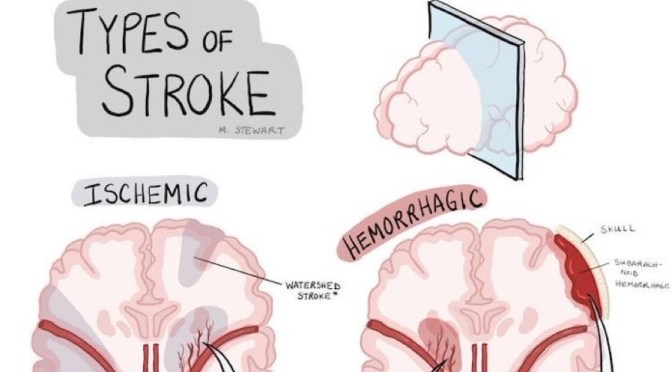
Ischemic stroke
Most strokes are ischemic strokes.2 An ischemic stroke occurs when blood clots or other particles block the blood vessels to the brain.
Fatty deposits called plaque can also cause blockages by building up in the blood vessels.
Hemorrhagic stroke
A hemorrhagic stroke happens when an artery in the brain leaks blood or ruptures (breaks open). The leaked blood puts too much pressure on brain cells, which damages them.
High blood pressure and aneurysms—balloon-like bulges in an artery that can stretch and burst—are examples of conditions that can cause a hemorrhagic stroke.
Transient ischemic attack (TIA or “mini-stroke”)
For Blanche Teal-Cruise, a smoker for 40 years who also had high blood pressure, the transient ischemic attack (sometimes called a mini-stroke) she had on the way to work was a wake-up call. Read Blanche’s story.
TIAs are sometimes known as “warning strokes.” It is important to know that
A TIA is a warning sign of a future stroke.
A TIA is a medical emergency, just like a major stroke.
Strokes and TIAs require emergency care. Call 9-1-1 right away if you feel signs of a stroke or see symptoms in someone around you.
There is no way to know in the beginning whether symptoms are from a TIA or from a major type of stroke.
Like ischemic strokes, blood clots often cause TIAs.
More than a third of people who have a TIA and don’t get treatment have a major stroke within 1 year. As many as 10% to 15% of people will have a major stroke within 3 months of a TIA.1
Recognizing and treating TIAs can lower the risk of a major stroke. If you have a TIA, your health care team can find the cause and take steps to prevent a major stroke.
Empowering Patients Through Education And Telemedicine







 Doctors Without Waiting Rooms