Benign prostatic hyperplasia, or benign enlargement of the prostate, is the most common prostate problem that will affect almost all men as they age. There are many treatment options available that range from medications to surgical options that destroy excess tissue. Learn more about them in this helpful video from Cleveland Clinic.
Chapters: 0:00 Introduction 0:10 What is BPH? 0:45 What are treatment options for BPH? 0:60 What are some medications used to treat BPH? 1:43 What are some surgical options used to treat BPH? 3:43 Call your doctor if you notice any of these symptoms
For more information benign prostatic hyperplasia (BPH) treatments, please visit https://cle.clinic/3tH5aox
— Nature Reviews Disease Primers (@DiseasePrimers) June 9, 2022
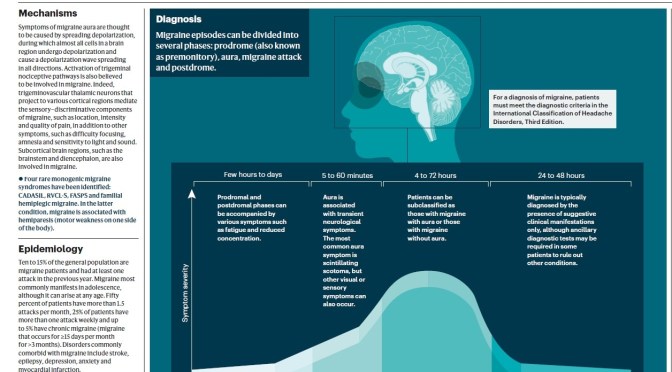
#Migraine is a common, chronic disorder that is typically characterized by recurrent disabling attacks of headache and accompanying symptoms, including aura.
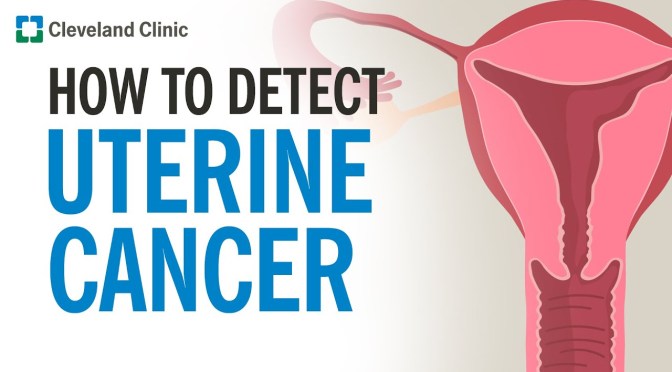
Uterine cancer is the most common cancer that affects a woman’s reproductive system, occurring mostly after menopause. It’s often diagnosed in an early stage. This video shares the symptoms and tests that may lead to a diagnosis.
Chapters: 0:00 What is uterine cancer? 0:10 What are the risk factors of uterine cancer? 0:27 What are symptoms of uterine cancer? 1:00 How is uterine cancer diagnosed? 2:21 What is the rate of successful outcomes for those diagnosed with uterine cancer?
If you have pain on the side of your wrist opposite your thumb, it’s called ulnar wrist pain. There are many things that can cause it, and there are several ways to treat it.
“Ulnar wrist pain is a small area from the pinky side of your hand. And it’s from this little knobbly bone called the ulnar to this area near the wrist,” says Dr. Sanj Kakar, a Mayo Clinic hand and wrist surgeon. “It’s very, very common.”
Ulnar wrist pain can occur after a fall onto an outstretched hand. But it also happens in people who play stickhandling sports, like tennis or hockey, and certain occupations that require lifting or using a repetitive motion in the wrist.
Postmenopausal women whose screening mammograms show signs of calcification in their breast arteries may have a higher risk of cardiovascular disease: https://t.co/iktQotQz5n#HarvardHealth
The routine mammograms women receive to check for breast cancer may also offer clues to their risk for heart disease, new research suggests.
White spots or lines visible on mammograms indicate a buildup of calcium in breast arteries. This breast arterial calcification is different from coronary artery calcification, which is known to be a marker for higher cardiovascular risk. For the study, researchers followed 5,059 postmenopausal women (ages 60 to 79) for six and a half years. They found that those with breast arterial calcification were 51% more likely to develop heart disease or have a stroke than those without calcification. The study was published March 15, 2022, in Circulation: Cardiovascular Imaging.
A new study suggests a high-fiber diet may protect against dementia. In a group of about 3,700 older adults, those who consumed the most fiber had the lowest rates of dementia, and those who ate the least fiber had the highest rates: https://t.co/XbUNndYghs#HarvardHealth
Fiber is known for keeping your digestive system healthy and lowering cholesterol levels. Now, study findings suggest it also may protect the brain from dementia.
The study involved approximately 3,700 healthy adults, ages 40 to 64, who completed routine dietary surveys for 16 years. Researchers then monitored the participants for two decades to see which ones developed dementia. The study revealed that people who consumed the most daily fiber had the lowest rates of dementia. The reverse also was true — those who ate the least fiber had the highest rates. Specifically, the low-risk group consumed an average of 20 grams daily, while those with the highest risk averaged only 8 grams. (The USDA recommends that men over age 50 eat 30 grams of fiber daily.)
Vulnerability to heart disease can be projected before symptoms occur, Mayo Clinic discovered in preclinical research. This proof-of-concept study revealed that heart muscle changes indicate who is vulnerable to disease later in life. These changes can be detected from blood samples through comprehensive protein and metabolite profiling. This exploratory mapping, conducted in the Marriott Family Comprehensive Cardiac Regenerative Program within Mayo Clinic’s Center for Regenerative Medicine, is published in Scientific Reports.
“The team implemented state-of-the-art technologies to predict who is vulnerable and who is protected from heart disease,” says Andre Terzic, M.D., Ph.D., a Mayo Clinic cardiologist and the senior author. “In this era of post-genomic medicine, the acquired foundational knowledge provides guidance for development of curative solutions targeted to correct the disease-causing maladaptation.” Dr. Terzic is the Marriott Family Director, Comprehensive Cardiac Regenerative Medicine, for the Center for Regenerative Medicine and the Marriott Family Professor of Cardiovascular Research.
— Science Magazine (@ScienceMagazine) June 2, 2022
Chronic pain can develop from an acute pain state. The mechanisms mediating the transition from acute to chronic pain remain to be elucidated. Here, Parisien et al. focused on the immune system using samples from patients and animal models. Transcriptomic analysis in immune cells from subjects with low back pain showed that neutrophil activation–dependent inflammatory genes were up-regulated in subjects with resolved pain, whereas no changes were observed in patients with persistent pain. In rodents, anti-inflammatory treatments prolonged pain duration and the effect was abolished by neutrophil administration. Last, clinical data showed that the use of anti-inflammatory drugs was associated with increased risk of persistent pain, suggesting that anti-inflammatory treatments might have negative effects on pain duration.
Empowering Patients Through Education And Telemedicine








 Doctors Without Waiting Rooms