

Robotically assisted heart surgery is a minimally invasive option most often used for mitral valve repair. Cleveland Clinic cardiothoracic surgeons explain how it works and what to expect.
Videos

Telehealth: Government & Regulatory Issues (Video)
In response to the COVID-19 pandemic, governments across the United States relaxed restrictions on telemedicine, allowing more patients to receive healthcare remotely than ever before. This development brought a number of questions about how telehealth should be regulated to the fore. Is remote care as effective as in-person care? Would long-turn expansion of telemedicine reduce costs for patients and healthcare providers? Might a greater reliance on telehealth actually reduce access to care for some patients?
HEALTH: HOW DEPRESSION AFFECTS THE BRAIN (YALE)
For many people, depression turns out to be one of the most disabling illnesses that we have in society. Despite the treatments that we have available, many people are not responding that well. It’s a disorder that can be very disabling in society. It’s also a disorder that has medical consequences.
By understanding the neurobiology of depression we hope to be able more to find the right treatment for the patient suffering from this disease. The current standard of care for the treatment of depression is based on what we call the monoamine deficiency hypothesis. Essentially, presuming that one of three neurotransmitters in the brain is deficient or underactive. But the reality is, there are more than 100 neurotransmitters in the brain. And billions of connections between neurons. So we know that that’s a limited hypothesis. Neurotransmitters can be thought of as the chemical messengers within the brain, it’s what helps one cell in the brain communicate with another, to pass that message along from one brain region to another. For decades, we thought that the primary pathology, the primary cause of depression was some abnormality in these neurotransmitters, specifically serotonin or norepinephrine. However, norepinephrine and serotonin did not seem to be able to account for this cause, or to cause the symptoms of depression in people who had major depression. Instead, the chemical messengers between the nerve cells in the higher centers of the brain, which include glutamate and GABA, were possibilities as alternative causes for the symptoms of depression. When you’re exposed to severe and chronic stress like people experience when they have depression, you lose some of the connections between the nerve cells. The communication in these circuits becomes inefficient and noisy, we think that the loss of these synaptic connections contributes to the biology of depression. There are clear differences between a healthy brain and a depressed brain. And the exciting thing is, when you treat that depression effectively, the brain goes back to looking like a healthy brain, both at the cellular level and at a global scale. It’s critical to understand the neurobiology of depression and how the brain plays a role in that for two main reasons. One, it helps us understand how the disease develops and progresses, and we can start to target treatments based on that. We are in a new era of psychiatry. This is a paradigm shift, away from a model of monoaminergic deficiency to a fuller understanding of the brain as a complex neurochemical organ. All of the research is driven by the imperative to alleviate human suffering. Depression is one of the most substantial contributors to human suffering. The opportunity to make even a tiny dent in that is an incredible opportunity.
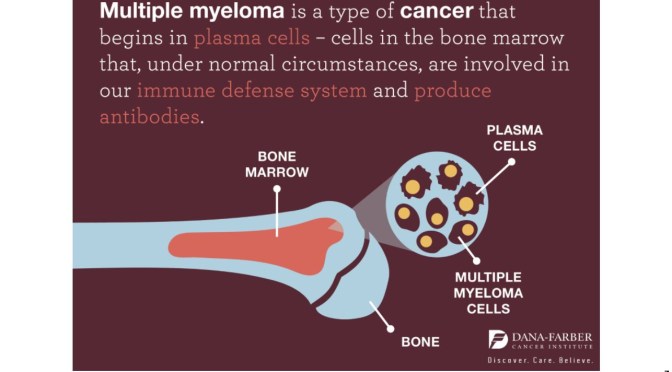
Cancers: What Is Multiple Myeloma? (Mayo Clinic)
Multiple myeloma is a relatively uncommon form of blood cancer that affects less than 1% of the U.S. population, according the American Cancer Society. People younger than 45 rarely get the disease, and it occurs more in older men than women. And your risk is doubled if you’re African American.
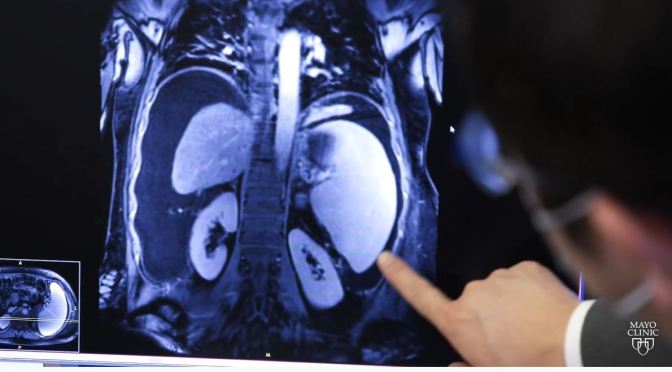
MEDICINE: WHEN COLON CANCER SPREADS TO THE LIVER (MAYO CLINIC VIDEO)
Colorectal cancer is a leading cancer among men and women around the world. Many colorectal cancers are likely to spread to other organs, with the most common site of metastases being the liver. In this Mayo Clinic Minute, Dr. Sean Cleary, a hepatobiliary and pancreas surgeon at Mayo Clinic explains what this means to patients.

Telemedicine: Pediatric Otolaryngology (Video)
Mayo Clinic is happy to offer telemedicine as an option for patients interested in seeking care. Modern technology provides a virtual platform for health care providers and patients to initiate partnership in care in a secure, safe and convenient way.

Mayo Clinic: ‘When Livers No Longer Function’
In the U.S., it’s estimated that 4.5 million adults are diagnosed with chronic liver disease. It develops over time and may be caused a number of conditions including hepatitis, genetics, alcohol overuse or cancer. Chronic liver disease is different than acute liver disease which can come on quickly and may be the result of an injury or a virus. Regardless of the cause, Dr. Bashar Aqel, a Mayo Clinic transplant hepatologist says when the liver can no longer function, a life-saving transplant may be needed.
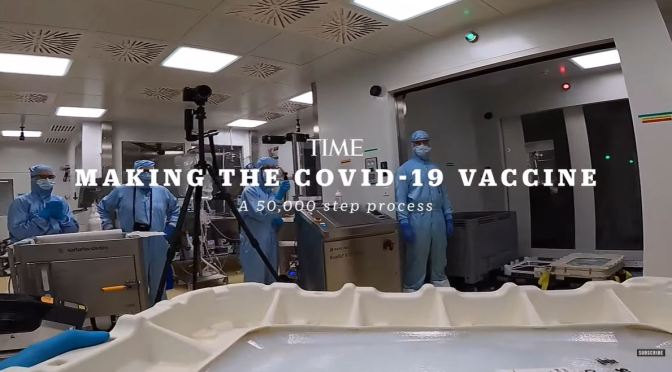
COVID-19: INSIDE THE BIONTECH LAB PRODUCING THE WORLD’S TOP VACCINE
Exclusive: Inside the facilities making the world’s most prevalent COVID-19 vaccine https://ti.me/3grX0v9
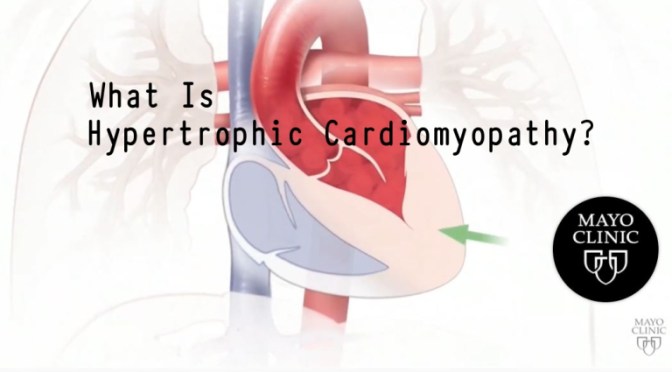
MAYO CLINIC HEART HEALTH: ‘WHAT IS HYPERTROPHIC CARDIOMYOPATHY? ‘ (VIDEO)
Hypertrophic cardiomyopathy is a thickening of the heart muscle, making it more difficult to pump blood. Dr. Steve Ommen is a Mayo Clinic cardiologist who specializes in the disease. He says shortness of breath or chest pain, especially during exercise, are common symptoms. Many people with the disease won’t have any significant health problems. But there are cases that require treatment. If a patient has symptoms that affect quality of life, the disease is treated with medications. Surgery or other procedures also may be necessary in some cases.
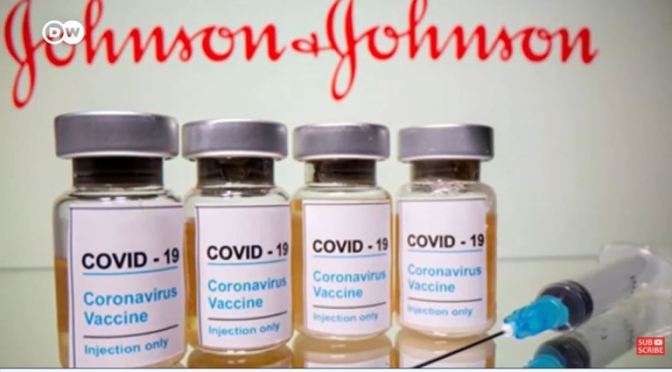
COVID-19: WHY ‘JOHNSON & JOHNSON VACCINE’ WAS ‘PAUSED’ IN U.S. & EUROPE
The rollout of the Johnson & Johnson vaccine has been paused in the US, Europe and South Africa after reports of rare blood clotting in a very small number of people. Health authorities said they were halting the use of the shot while they investigate the cases — and that they were doing this out of “an abundance of caution.” The Astra Zeneca jab was also recently temporarily suspended in some countries after being linked to rare blood clots. Authorities are calling it a short “pause.” The US’s Johnson and Johnson vaccine has hit the same stumbling block as the UK’s AstraZeneca jab did last month: a likely link to a rare and deadly blood clot. Use of Johnson and Johnson’s Janssen vaccine has now been halted across the US, Europe and South Africa, with health authorities investigating six incidents of clotting in younger women, one of them fatal. The US-developed vaccine uses an adenovirus to trigger immunity – the same mechanism as the UK’s AstraZeneca vaccine. It accounts for roughly 5 percent of vaccines delivered so far in the US. This is a setback to Europe, too. Johnson and Johnson announced it will delay it’s rollout on the continent. The company had already started processing an order from the EU of 200 million doses. The Janssen jab has been partially rolled out in Africa, where a majority of countries don’t have enough vaccines even for their healthcare workers. The African Union signed a deal for 220 million doses this year. But US authorities remain hopeful. They’re saying it could only be a matter of days before the rollout resumes.
 Doctors Without Waiting Rooms