
Tag Archives: Women

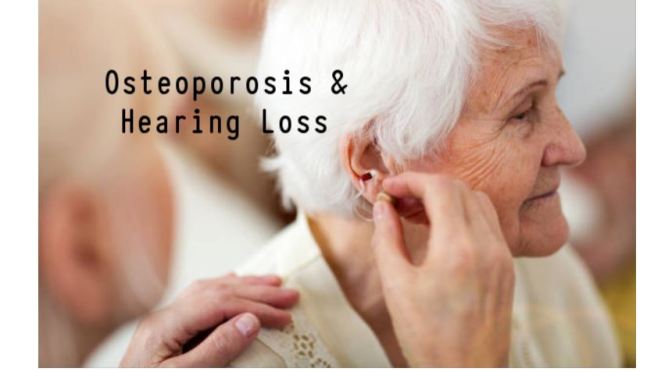
Osteoporosis: Study Finds Up To 40% Greater Risk Of Hearing Loss In Women

 As part of the Conservation of Hearing Study (CHEARS), researchers from Brigham and Women’s Hospital analyzed data from nearly 144,000 women who were followed for up to 34 years. They found that risk of subsequent moderate or worse hearing loss was up to 40 percent higher in study participants with osteoporosis or LBD. The study, published in the Journal of the American Geriatric Society, also found that bisphosphonates did not alter risk of hearing loss.

The researchers found that a history of vertebral fracture was associated with up to a 40 percent higher risk of hearing loss, but the same did not hold true for hip fractures, the two most common osteoporosis-related fractures. “The differing findings between these skeletal sites may reflect differences in the composition and metabolism of the bones in the spine and in the hip,” Curhan said. “These findings could provide new insight into the changes in the bone that surrounds the middle and inner ear that may contribute to hearing loss.”
Read more

WOMEN’S HEALTH: RISK FACTORS AND PREVENTION OF OSTEOPOROSIS

I have heard the same story over and over. You get older, you trip over your dog or on the edge of a rug, you fall and break your hip, and in treatment or convalescence, you get a pneumonia and die, or at least you get weaker, setting you up for the next fall. Your course is downhill.

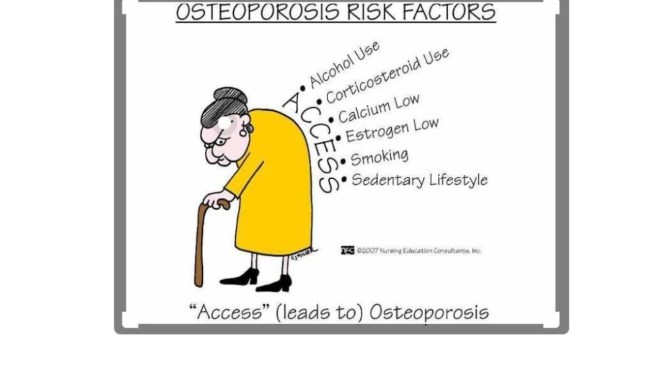
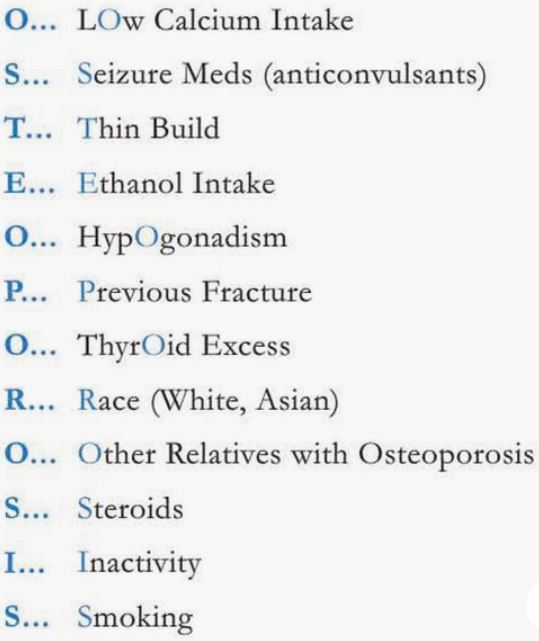
The culprit is often OSTEOPOROSIS. Osteoporosis is a disease characterized by loss of bone mass, as opposed to Osteomalacia, discussed in a recent podcast on this site, which is softening of bone The word itself is a MEMONIC for the RISK FACTORS; Then comes WHAT TO DO.

The RISK FACTORS and Prevention Strategies can be remembered in the following mnemonic:

Osteoporosis prevention begins when you are a child, with healthy diet rich in Calcium, and lots of exercise. Your bone mass peaks in the early 20s. While you are young, in your reproductive years, your reproductive hormones, Estrogen and Testosterone protect you.

Women should develop a Preventative strategy during menopause. Being THIN, like i am, is generally a marker of good health, much better than being Fat.

But especially as you get older and Lose muscle mass, Osteoporosis can become a problem, maybe because your bones don’t get the stress required to keep them strong.

BONE DENSITY DECLINES WITH AGE. I get a DEXASCAN as often as my insurance allows, about every 2 years, and am due this summer.

More and more treatments for Osteoporosis are emerging, if your bone loss becomes severe enough.

KEEP IN CONTACT WITH YOUR DOCTOR.

–Dr. C

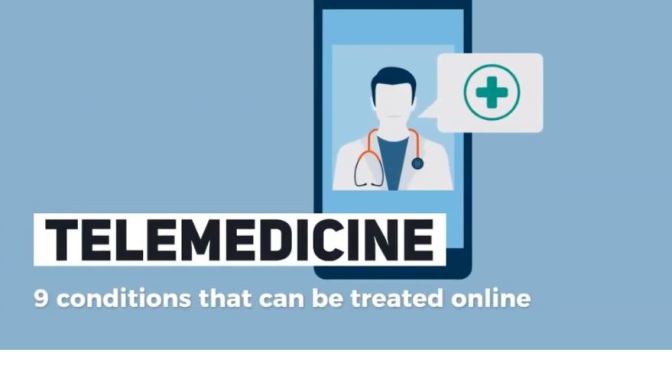
TELEMEDICINE: A REVIEW OF 9 CONDITIONS THAT CAN BE TREATED ONLINE (VIDEO)

TELEMEDICINE is here to stay! With all its’ advantages Patients will demand It!

This video is one of the few to highlight WOMENS’ HEALTH as an appropriate field for Telehealth. A remote visit first may at least let the Doctor order some tests that will accelerate your care.

Urinary problems can also be appropriate for telemedicine; the MEDICAL HISTORY is such a VALUABLE DIAGNOSTIC TOOL!

Psychological and Psychiatric care could be completely remote, by telemedicine. The Doctor could save on expenses, and deliver care less expensively.

Distance disappears as a barrier to Consultations and second opinions. A University medical center or prestigious multi specialty Clinic are on your doorstep.

Of course, barriers remain in the form of regulations, litigation, bureaucracy, and Insurance, but these can be overcome, if the Will is there.

—Dr. C

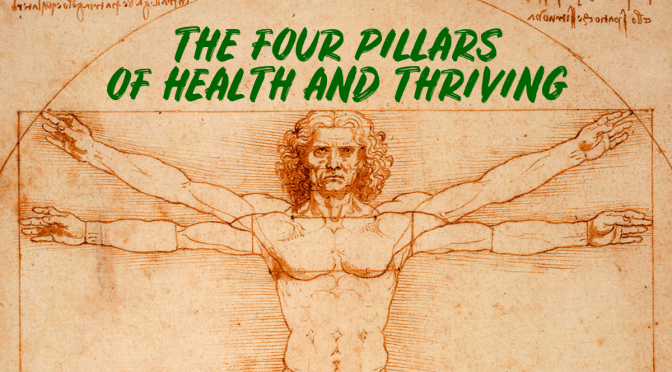
OPINION: THE ” FOUR PILLARS OF HEALTH AND THRIVING”

Homo sapiens have been around for upwards of 200,000 years and our bodies have evolved to deal with conditions far different than we experience in today’s life.

For about 95% of our species’ existence we have had:

  • Far more SLEEP. We were diurnal, going to bed at sundown, awakening at sunrise.
  • A more natural and varied DIET. We had to gather or kill what we ate.
  • Far more EXERCISE as we walked many miles on most days.
  • INTELLECTUAL STIMULATION. Well, here at least we moderns have an advantage, and our brains are better for it, If we get enough Sleep, Diet and Exercise.

Intellectual stimulation is really just a form of exercise. Exercise of the brain; as the brain is in a way like a muscle. If you don’t exercise your muscles, they waste away. If you don’t exercise your brain, your synapses waste away. To overwork a cliche : use it or lose it. Your muscles and brain are very energy-intensive and therefore expensive in evolutionary terms. Metabolic mechanisms have evolved to weed out that which is not needed and not used.

We could then say that there are the “Three Pillars of Health: Sleep, Diet, and Exercise, with the understanding that exercise refers to both muscles and brain. But they are exercised in such radically different ways, and each is prominent at different times in life. Children are reluctant to exercise their brains and are in constant motion. The elderly have much less muscle to exercise, but the aged brain still works quite well if you nurture and use it. So Intellectual Stimulation is best considered a separate category.

SLEEP, DIET, EXERCISE and INTELLECTUAL STIMULATION are then the “Four Pillars of HEALTH and THRIVING”.

These Four Pillars come as a package, reinforce each other, and are intricately interconnected. You can’t afford to neglect one without diminishing the others. But we will be discussing them separately, since they are separately researched and enacted.

Keep tuned.

—Dr. C.

Further reading

TELEMEDICINE: Obstetrics & Gynecology Services

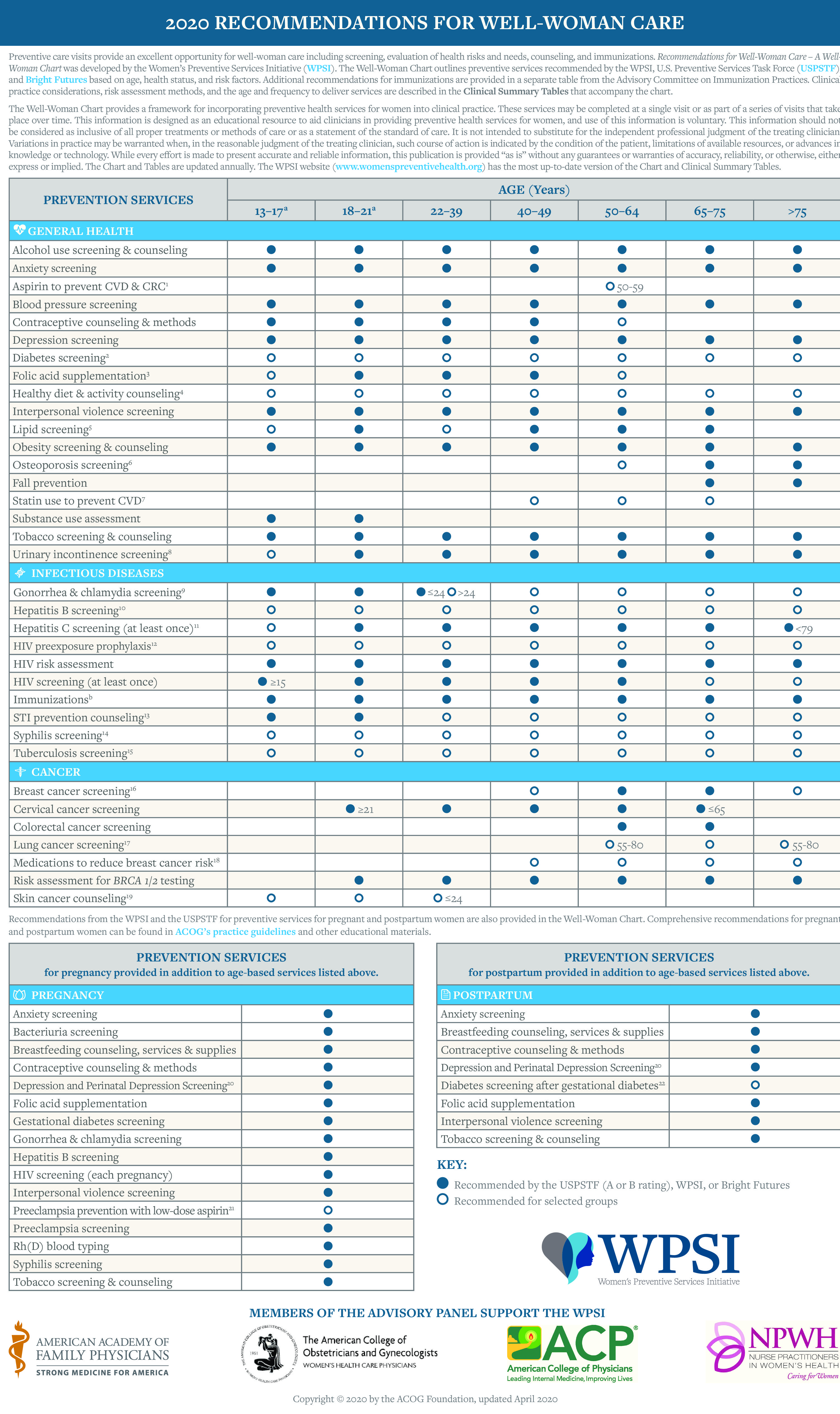
The following list contains preventive services that may be done via telehealth (from ACOG.org):

General Health

  • Alcohol screening and counseling regarding alcohol use
  • Anxiety Screening and referral*
  • Counseling regarding aspirin to prevent CVD and CRC
  • Blood pressure screening (if patient has appropriate resources available such as a blood pressure cuff)
  • Contraceptive counseling, discussion of methods, and prescribing contraceptives that do not require an in-person visit such as intrauterine devices or implants*
  • Depression screening and referral
  • Fall Prevention counseling
  • Counseling regarding folic acid supplementation
  • Healthy diet and activity counseling
  • Interpersonal and domestic violence screening and discussion of available resources*
  • Obesity screening (if patient has appropriate resources available such as a scale)
  • Substance use assessment (drug use)
  • Tobacco screening and cessation counseling
  • Urinary incontinence screening*
     

Infectious disease

  • HIV risk assessment*
  • Sexually Transmitted Infection prevention counseling*

Cancer

  • Counseling and possible prescribing of medications to reduce breast cancer risk 
  • Risk assessment for BRCA testing
  • Skin cancer counseling

Pregnancy and postpartum

  • Breastfeeding services and supplies*
  • Postpartum contraceptive counseling, discussion of methods, and  prescribing contraceptives that do not require an in-person visit such as intrauterine devices or implants
  • Depression screening and referral
  • Counseling regarding folic acid supplementation
  • Interpersonal and domestic violence screening and discussion of available resources*
  • Preeclampsia prevention with low-dose aspirin
  • Preeclampsia screening (if patient has appropriate resources available)
  • Tobacco screening and cessation counseling

*WPSI recommendation. For more information about each recommendation, please see our WPSI Recommendation page.

Download Well-Woman Care Chart

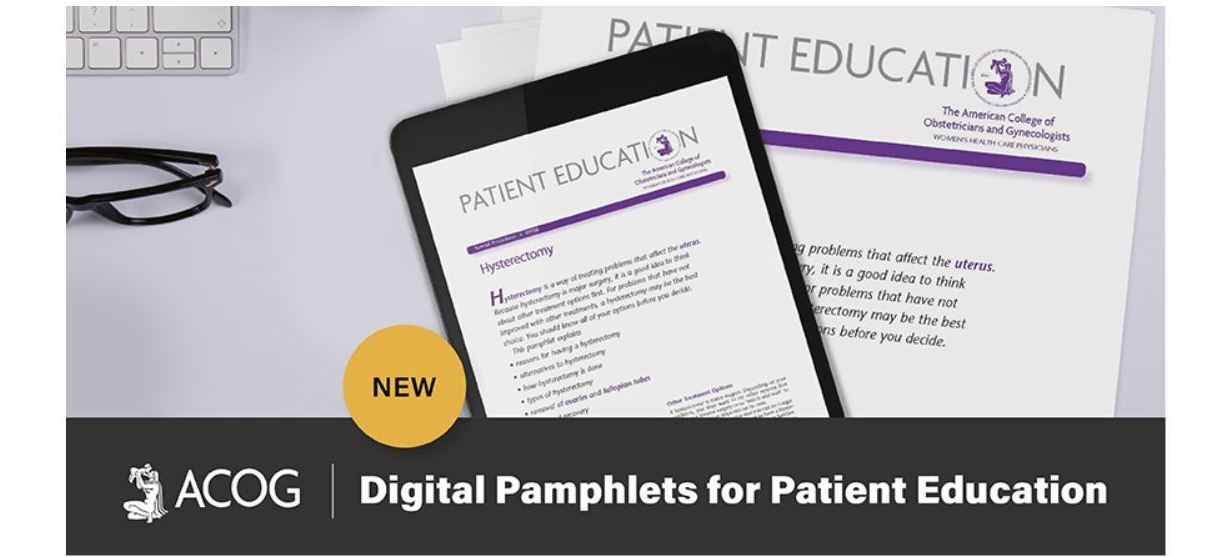
ACOG.org website

Read this May 4, 2020 “Women’sHealth” article for information about what a Telemedicine Visit is like